Public Steam disclosure research25,394 disclosures tracked
Where do games disclose AI use?
Search developers’ Steam disclosures, compare classified AI use across
games, and follow recorded changes.
This index adds cross-game classifications and statistics to
statements published on individual store pages.
Groups reflect automatic analysis of public disclosures; mature records are excluded. These counts do not measure AI use across all of Steam.
Missing or unclear statements cannot establish whether a game uses AI.
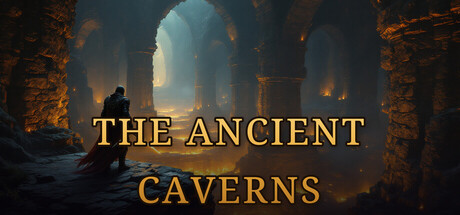
Some of the art and audio in The Ancient Caverns was created with the help of generative AI tools — including character and creature animations, item, weapon and environment art, and the musical soundtrack. All AI-assisted assets were reviewed, edited and integrated by the developer. The game does not generate any content with AI while you play; everything is fixed and created ahead of time.
Some fixed music tracks and selected pre-rendered promotional and manual artwork were created with generative AI tools. No AI content is generated during gameplay.
Generative AI tools were used during the development process to assist in creating and refining some visual assets. All AI-assisted content was reviewed, edited, and curated by the developer before being included in the game or its promotional materials.
Generative AI tools were used during development to assist with the creation of game content. All final content was reviewed and refined by the development team.
Some of this game's artwork — including key art, the main-menu background, and store/marketing images — was created with the help of generative AI (Midjourney) and then curated and edited by the developer.
Everything else, including gameplay, code, sound, and the in-game pixel art, is human-made or from licensed asset packs. No AI-generated content is produced live while you play.
Some in-game text translations were produced with AI assistance and reviewed for accuracy.
This game utilizes AI-assisted generation for certain art assets and the core code framework. Every element has undergone thorough manual review, fine-tuning, and integration by our developers, guaranteeing that the final output aligns with the game's intended aesthetic and quality standards.No live‑generated AI content appears during gameplay
Currently, the game uses around 10% conceptual/placeholder AI-generated textures. All of these placeholders will be completely replaced prior to the 1.0 full release.
The following are temporary AI placeholder textures:
- Most UI buttons
- Vehicle textures
- The home screen
- The mouse cursor
- Most of the shop scene
- All bridges
The following are NOT AI textures (100% custom-made):
- All enemy models and textures (minus the boss "evil reforged bot mk9001")
- All item icons and textures
- All levels (except for the underground bunker and frozen ridge, which temporarily share the home screen texture)
Some parts of the game were created with the help of generative AI tools. The music was made using Suno, and a few pieces of text were assisted by AI during development. Everything included in the game has been reviewed and approved by me before shipping.
'm a solo developer making this game with a very limited budget. While I was able to hire artists for some of the game's assets, I simply couldn't afford to commission every piece of content needed to complete the project.
Because of that, I used generative AI as a supplementary tool for certain assets and to assist with English translation. Since English isn't my native language, AI also helped me ensure that dialogue, jokes, and other text conveyed the intended meaning naturally.
Whenever possible, I chose to work with human artists, and all AI-generated content was carefully reviewed, edited, and integrated by me. My goal was never to replace artists, but to make it possible to finish the game as an independent developer.
Generative AI was used in a limited capacity for pre-generated visual assets and localization assistance during development. Temporary AI-generated artwork will be replaced with original artwork before the full release.
Since the game is still in active development, generative AI tools were used to create most of the artwork and text included in the game and on the store page. All generated content was carefully reviewed, heavily edited, and integrated by the developers.
Generative AI tools, including OpenAI ChatGPT/Codex, assisted during development with portions of the original C++ code, interface text, gameplay balancing, documentation, store-page materials, geometric visual design, and music synthesis. The developer reviewed, tested, selected, and integrated the resulting material. In-game graphics are procedurally drawn from original geometric shapes, while the original music and sound effects are synthesized by the game. No third-party characters, music recordings, voices, logos, or downloaded asset packs are included.
Generative AI tools were used during development to assist in creating some in-game visual assets, graphical assets, and store marketing artwork. All generated materials were selected, edited, adjusted, and reviewed by the developer before being included. The game does not use generative AI to generate content during gameplay.
Some art assets (sprites, icons, illustrations) and audio (sound effects, music, voices) were created using generative AI tools. All AI-generated content is pre-rendered and hand-integrated into the game — nothing is generated live during play. Each asset is reviewed and curated before inclusion, and we hold commercial-use rights for the tools involved.
Some of this game's code was written with the assistance of AI development tools. All art, music, audio, and text that ship in the game are human-created (from licensed asset packs) or procedurally rendered — no AI-generated art, audio, or text is included in the game.
Evo Ascension includes limited AI‑generated content. Some audio and select graphical elements were created using AI tools, with most visuals further refined and hand‑edited in Aseprite. All gameplay systems, pixel art characters, animations, and core design remain handcrafted by the developer.
We at GabaCool believe in the beauty of human art. Hence, we don't allow ourselves to create art by AI.
We use it for coding, no worries we are professional engineers. We also use it for voice line generation, as we are a small team in the bootstrap phase. Localization is another point. We are dedicated to remedy this.
Where we will never use it: Story, Art, Music, Models, and all creative. Because that's what makes us human.
This game uses generative AI tools to assist with voiceover production and localization. All AI-assisted content is reviewed and integrated by the development team.
Some content in this game was created with the assistance of generative AI tools, then curated, edited, and integrated by hand by the solo developer. This includes: character and enemy sprite animations (AI-generated video processed by hand into sprite animations), environment and background artwork, the story tapestry illustrations, title and store artwork, music, and some sound effects. All such content is pre-rendered and ships with the game — nothing is generated live at runtime. All content was reviewed by the developer to ensure it does not include illegal or infringing material.
Paste this for the "how" description:
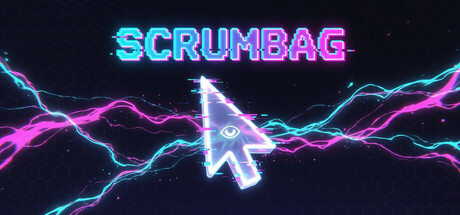
All AI-generated content in Scrumbag is pre-generated — baked into the build and curated by the developer, not generated live during play. This includes the game's artwork (character and enemy art, UI, icons, and store/marketing images) and its music (AI-generated arrangements and remixes based on songs by Andy Rehfeldt). AI tools were also used to assist development. All shipped content is reviewed and selected by the developer before release.
Some visual assets in its store and marketing materials were created with the help of generative AI image tools, and were then edited, refined, and integrated by hand.
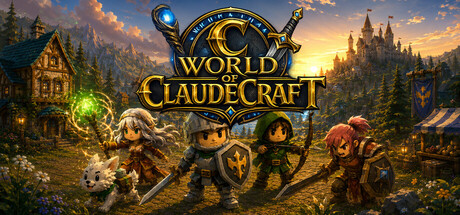
World of ClaudeCraft is, unapologetically, a game built with AI — the name is a hint. We used AI in two ways, and we want to be clear about both.
During development, the game's code was written with an AI coding assistant, and we used AI generation tools to create some of the assets that ship in the game as ordinary, fixed files:
Sound: Most in-game sound effects and all spoken NPC voice lines were generated with ElevenLabs' AI audio and text-to-speech models. The written dialogue itself is authored by us; AI produced the spoken audio.
3D models: A small number of creature models (the "Drowned Litany") were generated with Meshy AI (text-to-3D).
Everything else is either created by the game's own code (the world, towns, terrain, water, weather, and the music soundtrack are all generated procedurally at runtime) or is licensed third-party art — CC0 model, texture, and HDRI packs plus a purchased commercial icon set. That content is not AI-generated.
Critically: no generative AI runs while you play. Every AI-made asset was generated once, offline, during development and baked into the game as a static file. The running game makes no AI or LLM calls, and none of your gameplay or personal data is ever sent to an AI system. The simulation is fully deterministic — the same inputs always produce the same result.
Generative AI was used to enhance marketing assets such as steam capsule & early sketch concept before offloaded & polished by Humans.
All gameplay, art, and final content remain crafted by Human.
This game uses AI-generated content in two areas: background music tracks were created using Mureka AI, and some pixel art assets were generated using PixelLab. All AI-generated content was reviewed, curated, and integrated by the developer.
I know many players have reservations about AI-generated content, so I want to be upfront about exactly how it was used in this game.
I'm an ordinary gamer who has played games for almost twenty years and always dreamed of making one of my own. But I can't write code, and I've never been trained in art or music. This game exists because generative AI filled those gaps for me: parts of the code were written with the help of AI coding tools; some character, environment, and UI art was created with image-generation models, then hand-picked and adjusted by me; some animation, music, and sound effects were also made with AI tools.
Everything that makes it an actual game, though — the design, the balancing, the game feel, and every "is this fun?" decision — was done by me, across hundreds of playtests. The game contains no live-generated AI content.
For me, AI wasn't an assembly line making a game in my place. It's what let an ordinary player finally build the game he'd been dreaming about. I hope some of that comes through when you play — and I'd genuinely welcome your feedback.
Updated 8/24/2026 for Full Transparency:
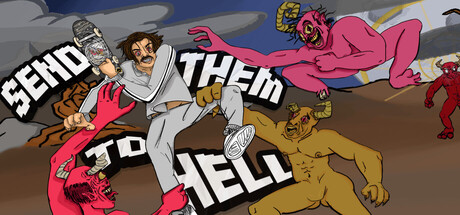
Send Them to Hell was built by a very small team with a very large appetite for demonic slaughter. Generative AI was used during development to create concept art and visual references for the graphic design team. These concepts were used as references during the creation and refinement of the game’s sprites and visual assets. The final assets were created and modified by the development team. The remainder of the artwork was created by human artists, who were compensated for their work and are credited in-game.
We used generative AI tools during development to create pre-generated background map textures and illustrations for the game stages. No live generative AI is used during gameplay, and all pre-generated assets are fully vetted to ensure they do not violate any copyright or third-party intellectual property rights.
Pre-generated AI tools were used during development to assist with the creation of selected 2D artwork, visual assets, and sound effects. All AI-assisted content was reviewed, edited, and integrated by the developer. The game does not use generative AI to create content during gameplay.
Some visual assets used in this game were created or assisted using generative AI and were further edited, refined, and integrated by the developers. No generative AI is used during gameplay.
Pre-generated: Steam store capsule and library key art was created using OpenAI image generation and then cropped, titled, and prepared by the developer. No generative AI runs during gameplay.
Some 2D art assets in MutantTide (including promotional key art) were created with the assistance of AI based pixel art tools. All game design, code, systems, and gameplay were hand crafted by the developer. No AI generated content is produced live during gameplay.
Generative AI was used to create some in-game visual assets, including skill icons, character art, and equipment/item icons. These assets were reviewed and edited by the developer before release. AI was not used for story writing, audio, or core gameplay logic. AI-assisted assets may also appear on the Steam store page and marketing materials.
Some of the art and audio in The Ancient Caverns was created with the help of generative AI tools — including character and creature animations, item, weapon and environment art, and the musical soundtrack. All AI-assisted assets were reviewed, edited and integrated by the developer. The game does not generate any content with AI while you play; everything is fixed and created ahead of time.
Some fixed music tracks and selected pre-rendered promotional and manual artwork were created with generative AI tools. No AI content is generated during gameplay.
Generative AI tools were used during the development process to assist in creating and refining some visual assets. All AI-assisted content was reviewed, edited, and curated by the developer before being included in the game or its promotional materials.
Generative AI tools were used during development to assist with the creation of game content. All final content was reviewed and refined by the development team.
Some of this game's artwork — including key art, the main-menu background, and store/marketing images — was created with the help of generative AI (Midjourney) and then curated and edited by the developer.
Everything else, including gameplay, code, sound, and the in-game pixel art, is human-made or from licensed asset packs. No AI-generated content is produced live while you play.
Some in-game text translations were produced with AI assistance and reviewed for accuracy.
This game utilizes AI-assisted generation for certain art assets and the core code framework. Every element has undergone thorough manual review, fine-tuning, and integration by our developers, guaranteeing that the final output aligns with the game's intended aesthetic and quality standards.No live‑generated AI content appears during gameplay
Currently, the game uses around 10% conceptual/placeholder AI-generated textures. All of these placeholders will be completely replaced prior to the 1.0 full release.
The following are temporary AI placeholder textures:
- Most UI buttons
- Vehicle textures
- The home screen
- The mouse cursor
- Most of the shop scene
- All bridges
The following are NOT AI textures (100% custom-made):
- All enemy models and textures (minus the boss "evil reforged bot mk9001")
- All item icons and textures
- All levels (except for the underground bunker and frozen ridge, which temporarily share the home screen texture)
Some parts of the game were created with the help of generative AI tools. The music was made using Suno, and a few pieces of text were assisted by AI during development. Everything included in the game has been reviewed and approved by me before shipping.
'm a solo developer making this game with a very limited budget. While I was able to hire artists for some of the game's assets, I simply couldn't afford to commission every piece of content needed to complete the project.
Because of that, I used generative AI as a supplementary tool for certain assets and to assist with English translation. Since English isn't my native language, AI also helped me ensure that dialogue, jokes, and other text conveyed the intended meaning naturally.
Whenever possible, I chose to work with human artists, and all AI-generated content was carefully reviewed, edited, and integrated by me. My goal was never to replace artists, but to make it possible to finish the game as an independent developer.
Generative AI was used in a limited capacity for pre-generated visual assets and localization assistance during development. Temporary AI-generated artwork will be replaced with original artwork before the full release.
Since the game is still in active development, generative AI tools were used to create most of the artwork and text included in the game and on the store page. All generated content was carefully reviewed, heavily edited, and integrated by the developers.
Generative AI tools, including OpenAI ChatGPT/Codex, assisted during development with portions of the original C++ code, interface text, gameplay balancing, documentation, store-page materials, geometric visual design, and music synthesis. The developer reviewed, tested, selected, and integrated the resulting material. In-game graphics are procedurally drawn from original geometric shapes, while the original music and sound effects are synthesized by the game. No third-party characters, music recordings, voices, logos, or downloaded asset packs are included.
Generative AI tools were used during development to assist in creating some in-game visual assets, graphical assets, and store marketing artwork. All generated materials were selected, edited, adjusted, and reviewed by the developer before being included. The game does not use generative AI to generate content during gameplay.
Some art assets (sprites, icons, illustrations) and audio (sound effects, music, voices) were created using generative AI tools. All AI-generated content is pre-rendered and hand-integrated into the game — nothing is generated live during play. Each asset is reviewed and curated before inclusion, and we hold commercial-use rights for the tools involved.
Some of this game's code was written with the assistance of AI development tools. All art, music, audio, and text that ship in the game are human-created (from licensed asset packs) or procedurally rendered — no AI-generated art, audio, or text is included in the game.
Evo Ascension includes limited AI‑generated content. Some audio and select graphical elements were created using AI tools, with most visuals further refined and hand‑edited in Aseprite. All gameplay systems, pixel art characters, animations, and core design remain handcrafted by the developer.
We at GabaCool believe in the beauty of human art. Hence, we don't allow ourselves to create art by AI.
We use it for coding, no worries we are professional engineers. We also use it for voice line generation, as we are a small team in the bootstrap phase. Localization is another point. We are dedicated to remedy this.
Where we will never use it: Story, Art, Music, Models, and all creative. Because that's what makes us human.
This game uses generative AI tools to assist with voiceover production and localization. All AI-assisted content is reviewed and integrated by the development team.
Some content in this game was created with the assistance of generative AI tools, then curated, edited, and integrated by hand by the solo developer. This includes: character and enemy sprite animations (AI-generated video processed by hand into sprite animations), environment and background artwork, the story tapestry illustrations, title and store artwork, music, and some sound effects. All such content is pre-rendered and ships with the game — nothing is generated live at runtime. All content was reviewed by the developer to ensure it does not include illegal or infringing material.
Paste this for the "how" description:
All AI-generated content in Scrumbag is pre-generated — baked into the build and curated by the developer, not generated live during play. This includes the game's artwork (character and enemy art, UI, icons, and store/marketing images) and its music (AI-generated arrangements and remixes based on songs by Andy Rehfeldt). AI tools were also used to assist development. All shipped content is reviewed and selected by the developer before release.
Some visual assets in its store and marketing materials were created with the help of generative AI image tools, and were then edited, refined, and integrated by hand.
World of ClaudeCraft is, unapologetically, a game built with AI — the name is a hint. We used AI in two ways, and we want to be clear about both.
During development, the game's code was written with an AI coding assistant, and we used AI generation tools to create some of the assets that ship in the game as ordinary, fixed files:
Sound: Most in-game sound effects and all spoken NPC voice lines were generated with ElevenLabs' AI audio and text-to-speech models. The written dialogue itself is authored by us; AI produced the spoken audio.
3D models: A small number of creature models (the "Drowned Litany") were generated with Meshy AI (text-to-3D).
Everything else is either created by the game's own code (the world, towns, terrain, water, weather, and the music soundtrack are all generated procedurally at runtime) or is licensed third-party art — CC0 model, texture, and HDRI packs plus a purchased commercial icon set. That content is not AI-generated.
Critically: no generative AI runs while you play. Every AI-made asset was generated once, offline, during development and baked into the game as a static file. The running game makes no AI or LLM calls, and none of your gameplay or personal data is ever sent to an AI system. The simulation is fully deterministic — the same inputs always produce the same result.
Generative AI was used to enhance marketing assets such as steam capsule & early sketch concept before offloaded & polished by Humans.
All gameplay, art, and final content remain crafted by Human.
This game uses AI-generated content in two areas: background music tracks were created using Mureka AI, and some pixel art assets were generated using PixelLab. All AI-generated content was reviewed, curated, and integrated by the developer.
I know many players have reservations about AI-generated content, so I want to be upfront about exactly how it was used in this game.
I'm an ordinary gamer who has played games for almost twenty years and always dreamed of making one of my own. But I can't write code, and I've never been trained in art or music. This game exists because generative AI filled those gaps for me: parts of the code were written with the help of AI coding tools; some character, environment, and UI art was created with image-generation models, then hand-picked and adjusted by me; some animation, music, and sound effects were also made with AI tools.
Everything that makes it an actual game, though — the design, the balancing, the game feel, and every "is this fun?" decision — was done by me, across hundreds of playtests. The game contains no live-generated AI content.
For me, AI wasn't an assembly line making a game in my place. It's what let an ordinary player finally build the game he'd been dreaming about. I hope some of that comes through when you play — and I'd genuinely welcome your feedback.
Updated 8/24/2026 for Full Transparency:
Send Them to Hell was built by a very small team with a very large appetite for demonic slaughter. Generative AI was used during development to create concept art and visual references for the graphic design team. These concepts were used as references during the creation and refinement of the game’s sprites and visual assets. The final assets were created and modified by the development team. The remainder of the artwork was created by human artists, who were compensated for their work and are credited in-game.
We used generative AI tools during development to create pre-generated background map textures and illustrations for the game stages. No live generative AI is used during gameplay, and all pre-generated assets are fully vetted to ensure they do not violate any copyright or third-party intellectual property rights.
Pre-generated AI tools were used during development to assist with the creation of selected 2D artwork, visual assets, and sound effects. All AI-assisted content was reviewed, edited, and integrated by the developer. The game does not use generative AI to create content during gameplay.
Some visual assets used in this game were created or assisted using generative AI and were further edited, refined, and integrated by the developers. No generative AI is used during gameplay.
Pre-generated: Steam store capsule and library key art was created using OpenAI image generation and then cropped, titled, and prepared by the developer. No generative AI runs during gameplay.
Some 2D art assets in MutantTide (including promotional key art) were created with the assistance of AI based pixel art tools. All game design, code, systems, and gameplay were hand crafted by the developer. No AI generated content is produced live during gameplay.
Generative AI was used to create some in-game visual assets, including skill icons, character art, and equipment/item icons. These assets were reviewed and edited by the developer before release. AI was not used for story writing, audio, or core gameplay logic. AI-assisted assets may also appear on the Steam store page and marketing materials.