Public Steam disclosure research25,383 disclosures tracked
Where do games disclose AI use?
Search developers’ Steam disclosures, compare classified AI use across
games, and follow recorded changes.
This index adds cross-game classifications and statistics to
statements published on individual store pages.
Groups reflect automatic analysis of public disclosures; mature records are excluded. These counts do not measure AI use across all of Steam.
Missing or unclear statements cannot establish whether a game uses AI.
Generative AI was used during development to assist with the creation of certain visual assets and development content. All AI-generated content was reviewed, modified, and integrated by the developer before inclusion in the final game. The game does not generate AI content during gameplay and does not connect to external AI services.
Some visual assets in this game (including 19 case file illustrations and the game icon) were created using generative AI tools during development and are embedded as static assets. The game does not use any real-time AI generation during gameplay. All player experiences are consistent and reproducible.
Note on AI-generated content:
Some of the visual assets used in our store page, including certain game scenes and character illustrations, were created with the assistance of AI generation tools.
Please rest assured that the core gameplay design, storyline, character development, and all game mechanics are entirely handcrafted by our solo developer.
We believe in transparency and honesty. If you have any questions about our development process, feel free to reach out. Thank you for your understanding and support.
Generative AI was used to assist with the localization of some in-game text in some languages. All AI-generated translations are reviewed and edited by the developer before being included in the game.
Some visual assets, such as icon/key art variations, may be generated or assisted using generative AI tools and then reviewed/edited by the developer before inclusion. The game does not use live generative AI during gameplay.
Some visual assets in the game were created or assisted using AI-based tools during development. All generated content has been reviewed, modified, and integrated to fit the game's style and design.
Character portraits were created using AI. As well, as modification to existing character portraits to create different expressions.
AI was not used for writing or audio purposes.
We use AI tools where appropriate to streamline our workflow, specifically for pre-generating certain in-game assets such as images and music, as well as assisting with translations
Generative AI video tools were used to assist in creating some trailer and marketing video materials. The game itself does not use live-generated AI content.
This game was developed with the assistance of generative artificial intelligence (AI) tools to help a solo developer complete the project.
Specific uses of AI include:
1. Art Assets: Some visual assets in the game, such as background images and UI elements, were created with the assistance of AI image generation tools.
2. Code and Logic Assistance: The basic code framework and certain gameplay logic scripts were developed with the assistance of AI coding tools.
This game does not contain any real-time AI-generated content. All game assets and content were generated in advance, manually reviewed by the developer, and packaged as fixed content within the game.
Generative AI was used only for a small portion of the game's visual and marketing materials, which were subsequently refined by the developer. The overwhelming majority of graphics and content were created manually or obtained from licensed sources.
This game uses AI-generated content, including art, music, code, and some narrative text. All AI-generated content has been reviewed, selected, edited, and integrated by the developer.
The overall concept, system design, content structure, debugging, and final quality control were completed independently by the developer.
Artwork, Sound design, Music, Gameplay and Programming are human-created. AI was used to pre-plan artwork, editing/extending images, generating background sounds and music, and to speed up coding.
AI images are being temporarily used in the Steam Store presence and will be removed and replaced before game's release.
Our development process incorporates some AI-assisted tools to help create ambient textures and environmental assets. All assets have been extensively refined and integrated by our artists to ensure they align with the game's unique PSX/VHS aesthetic. We are committed to maintaining a high-quality human-led artistic direction.
Generative AI was used to assist in the creation of some music and visual assets. All content is produced using licensed tools and reviewed by the development team to avoid copyright issues.
All AI art assets within the game were generated using Adobe Firefly, ensuring full commercial compliance. The prompts used were strictly limited to general artistic styles without imitating any specific copyrighted artists. Furthermore, all generated assets underwent substantial manual refinement, including photo-bashing, manual composition, and layout optimization by the developer.
AI tools were used to assist with the English localization of texts and dialogues. Additionally, some sound effects in the current Demo are AI-generated placeholders, which will be completely replaced with custom audio in the final release.
AI was used during development to assist with brainstorming, writing dialogue, generating character concepts, story planning, and organizing game data. All content was reviewed, edited, and implemented by the developer.
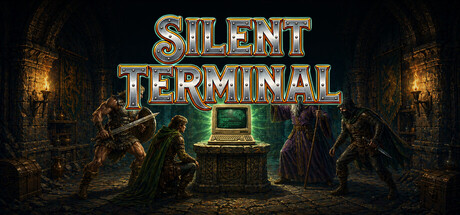
SILENT TERMINAL uses generative AI as a creative aid during development. Specifically, the promotional images on this store page (the capsule, header, key art and illustrations) were created with AI tools and then reviewed, edited and curated by our human team.
The game itself is built from human created and human supervised content: the ASCII art, maps, branching stories, dialogue and RPG systems are designed by the team. SILENT TERMINAL does not generate content with AI in real time during play. All adventures are loaded from pre authored files.
This game uses pre-generated AI-assisted content for some visual assets, promotional images, localization support, and marketing materials. All AI-assisted content has been reviewed and edited by the developer before inclusion in the game or store page.
Artificial intelligence was not used in writing the game’s story; the writing process was completed by the developer over approximately 4 months.
Some artworks on the gameplay to explain the story are generated by A.I with the developer's own detailed ideas.
Other works like coding, sound effects, map design, character design are by the developers.
Some designs use A.I to support of the creation, but they are customized, re-designed by the develooper.
The game DOES NOT include live-generated AI systems, chatbots, player-facing AI generation, or runtime generation of text, images, audio, or dialogue.
This game uses generative AI tools during development to assist with the creation of certain art assets and some repetitive development tasks. All content is manually designed, reviewed, selected, and integrated by the developer.
Generative AI tools are used during development for the creation and refinement of certain visual assets, animations, music, sound effects and voice content.
AI-assisted workflows are also utilized for localization support, historical research, narrative iteration and code review.
All AI-generated material is manually reviewed, edited and integrated into the final game experience by the developer.
The feedback on the in-game world state and the dynamic dialogues with NPCs are generated in real time during the game's operation by integrating a large language model (LLM).
AI-assisted tools were used during portions of concept exploration and creative iteration for certain visual and writing workflows.
All game systems, gameplay implementation, worldbuilding, design direction, editing, integration, UI construction, narrative structure, and final production decisions are created and directed by the developer.
AI tools are used as part of an assisted creative workflow rather than as fully autonomous content generation.
Artificial intelligence was used to create the game. With the help of ChatGPT, we were able to analyze and organize several thousand messages from eco-volunteer chat groups, as well as dozens of media articles, podcasts, and vlogs about the spill. All of this was necessary to identify key events, troubling themes, and the moods of people involved in disaster response, and was used by a human author to further develop the plot and dialogue. The images were created using Midjourney. Photos of real landscapes, but not people, were used to generate prompts. The game’s music was generated in Stability AI. The code to adapt the existing game structure to the Ren’py framework was written using Cursor AI.
The Moment of Panic uses generative artificial intelligence during gameplay to power its AI advisor characters. These locally running, open-source LLM-based advisors respond to intelligence signals, argue from assigned personalities, and attempt to influence the player’s decisions. Core game logic, threat truth, scoring, win/loss conditions, and outcomes are controlled by the game itself, not by the language model. Generative AI is used for dynamic in-game text responses only, and for some images shown alongside that text. Images are not generated at runtime.
Some visual assets used in this game, including character artwork, background images, UI-related artwork, and promotional images, were created or enhanced with the assistance of generative AI tools during development.
All AI-assisted assets were reviewed, selected, edited, and integrated by the development team before being included in the final game. The game does not generate AI content in real time during gameplay.
This game includes pre-generated content made with the assistance of generative AI tools, including some visual assets, audio/sound effects, text, localization, and other production materials. AI tools were also used during development to support programming and production workflows. All AI-assisted content included in the game has been manually reviewed and refined by the development team. The game does not generate AI content during gameplay.
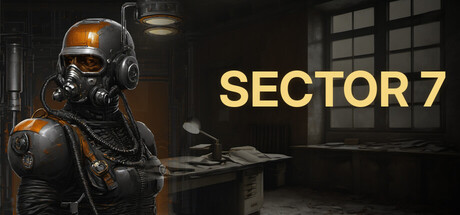
Some of Sector 7's artwork — including its store and marketing images — and its narrative text were created with AI assistance and then reviewed and edited by the developer. Localization into additional languages used AI translation with human review.
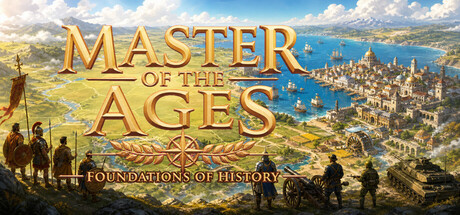
Master of the Ages is a grand strategy game engineered by a solo developer with 15+ years of senior software engineering and programming competition experience. To achieve grand-strategy scale as a single creator, a generative AI workflow was utilized to co-design the code architecture and write the codebase under the developer's supervision, backed by a rigorous framework of over 2,500 automated tests to catch edge-case bugs and prevent regressions during development. Generative AI was also used to produce all player-facing graphics (including all unit, building, and technology assets) and generate the historical text layers.
This game makes use of generative AI as a creative assistant during development. All AI-assisted output is reviewed, edited, and approved by the developer before being included in the final game. No content is generated live during gameplay.
Source code: Drafted with AI coding tools, then reviewed, tested, and integrated by the developer.
Visual assets: All main character designs and key visuals are based on the developer's hand-drawn illustrations. Some assets combine the developer's artwork with AI-assisted generation or refinement.
Scenario text: Story, dialogue, and worldbuilding are written by the developer, with AI used for drafting support, rewriting, and consistency checks.
Music: A portion of the in-game music is produced with AI assistance; the developer selects, edits, and finalizes all tracks used in the game.
Localization: The English translation is produced with AI assistance and reviewed by the developer.
We begin by defining detailed character backgrounds, which are then transformed into base concept art using generative AI. Subsequently, we perform local editing, detailed repainting, and textural refinement on these images to ensure every asset meets our specific design requirements.
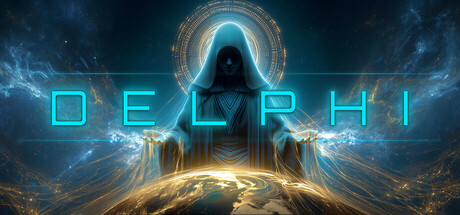
Delphi uses Midjourney for illustrated artwork (cards, events, key art, capsule art) and Kling for image-to-video trailer animation, all curated and edited by the developer. UI artwork is hand-made by a credited human artist.
No AI is used in design, writing, narrative or gameplay, and no AI runs at runtime — all in-game content is human-written static data.
Generative AI was used to create a small number of pre-rendered images used in optional easter eggs and hidden content. The core gameplay, programming, design, and the majority of the game’s assets were created manually by the developer. The game does not use real-time AI-generated content or AI-driven gameplay systems.
Generative AI was used during development to assist with the creation of certain visual assets and development content. All AI-generated content was reviewed, modified, and integrated by the developer before inclusion in the final game. The game does not generate AI content during gameplay and does not connect to external AI services.
Some visual assets in this game (including 19 case file illustrations and the game icon) were created using generative AI tools during development and are embedded as static assets. The game does not use any real-time AI generation during gameplay. All player experiences are consistent and reproducible.
Note on AI-generated content:
Some of the visual assets used in our store page, including certain game scenes and character illustrations, were created with the assistance of AI generation tools.
Please rest assured that the core gameplay design, storyline, character development, and all game mechanics are entirely handcrafted by our solo developer.
We believe in transparency and honesty. If you have any questions about our development process, feel free to reach out. Thank you for your understanding and support.
Generative AI was used to assist with the localization of some in-game text in some languages. All AI-generated translations are reviewed and edited by the developer before being included in the game.
Some visual assets, such as icon/key art variations, may be generated or assisted using generative AI tools and then reviewed/edited by the developer before inclusion. The game does not use live generative AI during gameplay.
Some visual assets in the game were created or assisted using AI-based tools during development. All generated content has been reviewed, modified, and integrated to fit the game's style and design.
Character portraits were created using AI. As well, as modification to existing character portraits to create different expressions.
AI was not used for writing or audio purposes.
We use AI tools where appropriate to streamline our workflow, specifically for pre-generating certain in-game assets such as images and music, as well as assisting with translations
Generative AI video tools were used to assist in creating some trailer and marketing video materials. The game itself does not use live-generated AI content.
This game was developed with the assistance of generative artificial intelligence (AI) tools to help a solo developer complete the project.
Specific uses of AI include:
1. Art Assets: Some visual assets in the game, such as background images and UI elements, were created with the assistance of AI image generation tools.
2. Code and Logic Assistance: The basic code framework and certain gameplay logic scripts were developed with the assistance of AI coding tools.
This game does not contain any real-time AI-generated content. All game assets and content were generated in advance, manually reviewed by the developer, and packaged as fixed content within the game.
Generative AI was used only for a small portion of the game's visual and marketing materials, which were subsequently refined by the developer. The overwhelming majority of graphics and content were created manually or obtained from licensed sources.
This game uses AI-generated content, including art, music, code, and some narrative text. All AI-generated content has been reviewed, selected, edited, and integrated by the developer.
The overall concept, system design, content structure, debugging, and final quality control were completed independently by the developer.
Artwork, Sound design, Music, Gameplay and Programming are human-created. AI was used to pre-plan artwork, editing/extending images, generating background sounds and music, and to speed up coding.
AI images are being temporarily used in the Steam Store presence and will be removed and replaced before game's release.
Our development process incorporates some AI-assisted tools to help create ambient textures and environmental assets. All assets have been extensively refined and integrated by our artists to ensure they align with the game's unique PSX/VHS aesthetic. We are committed to maintaining a high-quality human-led artistic direction.
Generative AI was used to assist in the creation of some music and visual assets. All content is produced using licensed tools and reviewed by the development team to avoid copyright issues.
All AI art assets within the game were generated using Adobe Firefly, ensuring full commercial compliance. The prompts used were strictly limited to general artistic styles without imitating any specific copyrighted artists. Furthermore, all generated assets underwent substantial manual refinement, including photo-bashing, manual composition, and layout optimization by the developer.
AI tools were used to assist with the English localization of texts and dialogues. Additionally, some sound effects in the current Demo are AI-generated placeholders, which will be completely replaced with custom audio in the final release.
AI was used during development to assist with brainstorming, writing dialogue, generating character concepts, story planning, and organizing game data. All content was reviewed, edited, and implemented by the developer.
SILENT TERMINAL uses generative AI as a creative aid during development. Specifically, the promotional images on this store page (the capsule, header, key art and illustrations) were created with AI tools and then reviewed, edited and curated by our human team.
The game itself is built from human created and human supervised content: the ASCII art, maps, branching stories, dialogue and RPG systems are designed by the team. SILENT TERMINAL does not generate content with AI in real time during play. All adventures are loaded from pre authored files.
This game uses pre-generated AI-assisted content for some visual assets, promotional images, localization support, and marketing materials. All AI-assisted content has been reviewed and edited by the developer before inclusion in the game or store page.
Artificial intelligence was not used in writing the game’s story; the writing process was completed by the developer over approximately 4 months.
Some artworks on the gameplay to explain the story are generated by A.I with the developer's own detailed ideas.
Other works like coding, sound effects, map design, character design are by the developers.
Some designs use A.I to support of the creation, but they are customized, re-designed by the develooper.
The game DOES NOT include live-generated AI systems, chatbots, player-facing AI generation, or runtime generation of text, images, audio, or dialogue.
This game uses generative AI tools during development to assist with the creation of certain art assets and some repetitive development tasks. All content is manually designed, reviewed, selected, and integrated by the developer.
Generative AI tools are used during development for the creation and refinement of certain visual assets, animations, music, sound effects and voice content.
AI-assisted workflows are also utilized for localization support, historical research, narrative iteration and code review.
All AI-generated material is manually reviewed, edited and integrated into the final game experience by the developer.
The feedback on the in-game world state and the dynamic dialogues with NPCs are generated in real time during the game's operation by integrating a large language model (LLM).
AI-assisted tools were used during portions of concept exploration and creative iteration for certain visual and writing workflows.
All game systems, gameplay implementation, worldbuilding, design direction, editing, integration, UI construction, narrative structure, and final production decisions are created and directed by the developer.
AI tools are used as part of an assisted creative workflow rather than as fully autonomous content generation.
Artificial intelligence was used to create the game. With the help of ChatGPT, we were able to analyze and organize several thousand messages from eco-volunteer chat groups, as well as dozens of media articles, podcasts, and vlogs about the spill. All of this was necessary to identify key events, troubling themes, and the moods of people involved in disaster response, and was used by a human author to further develop the plot and dialogue. The images were created using Midjourney. Photos of real landscapes, but not people, were used to generate prompts. The game’s music was generated in Stability AI. The code to adapt the existing game structure to the Ren’py framework was written using Cursor AI.
The Moment of Panic uses generative artificial intelligence during gameplay to power its AI advisor characters. These locally running, open-source LLM-based advisors respond to intelligence signals, argue from assigned personalities, and attempt to influence the player’s decisions. Core game logic, threat truth, scoring, win/loss conditions, and outcomes are controlled by the game itself, not by the language model. Generative AI is used for dynamic in-game text responses only, and for some images shown alongside that text. Images are not generated at runtime.
Some visual assets used in this game, including character artwork, background images, UI-related artwork, and promotional images, were created or enhanced with the assistance of generative AI tools during development.
All AI-assisted assets were reviewed, selected, edited, and integrated by the development team before being included in the final game. The game does not generate AI content in real time during gameplay.
This game includes pre-generated content made with the assistance of generative AI tools, including some visual assets, audio/sound effects, text, localization, and other production materials. AI tools were also used during development to support programming and production workflows. All AI-assisted content included in the game has been manually reviewed and refined by the development team. The game does not generate AI content during gameplay.
Some of Sector 7's artwork — including its store and marketing images — and its narrative text were created with AI assistance and then reviewed and edited by the developer. Localization into additional languages used AI translation with human review.
Master of the Ages is a grand strategy game engineered by a solo developer with 15+ years of senior software engineering and programming competition experience. To achieve grand-strategy scale as a single creator, a generative AI workflow was utilized to co-design the code architecture and write the codebase under the developer's supervision, backed by a rigorous framework of over 2,500 automated tests to catch edge-case bugs and prevent regressions during development. Generative AI was also used to produce all player-facing graphics (including all unit, building, and technology assets) and generate the historical text layers.
This game makes use of generative AI as a creative assistant during development. All AI-assisted output is reviewed, edited, and approved by the developer before being included in the final game. No content is generated live during gameplay.
Source code: Drafted with AI coding tools, then reviewed, tested, and integrated by the developer.
Visual assets: All main character designs and key visuals are based on the developer's hand-drawn illustrations. Some assets combine the developer's artwork with AI-assisted generation or refinement.
Scenario text: Story, dialogue, and worldbuilding are written by the developer, with AI used for drafting support, rewriting, and consistency checks.
Music: A portion of the in-game music is produced with AI assistance; the developer selects, edits, and finalizes all tracks used in the game.
Localization: The English translation is produced with AI assistance and reviewed by the developer.
We begin by defining detailed character backgrounds, which are then transformed into base concept art using generative AI. Subsequently, we perform local editing, detailed repainting, and textural refinement on these images to ensure every asset meets our specific design requirements.
Delphi uses Midjourney for illustrated artwork (cards, events, key art, capsule art) and Kling for image-to-video trailer animation, all curated and edited by the developer. UI artwork is hand-made by a credited human artist.
No AI is used in design, writing, narrative or gameplay, and no AI runs at runtime — all in-game content is human-written static data.
Generative AI was used to create a small number of pre-rendered images used in optional easter eggs and hidden content. The core gameplay, programming, design, and the majority of the game’s assets were created manually by the developer. The game does not use real-time AI-generated content or AI-driven gameplay systems.