Public Steam disclosure research25,383 disclosures tracked
Where do games disclose AI use?
Search developers’ Steam disclosures, compare classified AI use across
games, and follow recorded changes.
This index adds cross-game classifications and statistics to
statements published on individual store pages.
Groups reflect automatic analysis of public disclosures; mature records are excluded. These counts do not measure AI use across all of Steam.
Missing or unclear statements cannot establish whether a game uses AI.
Portions of this game's content were created with the assistance of generative AI tools under human direction and review. This includes much but not all of the visual artwork, the soundtrack, and the store page text and marketing copy. All AI-assisted content was curated, edited, and approved by the developer.
Team Commander uses generative AI to interpret player-issued natural-language commands and convert them into predefined in-game actions. The AI is used for command interpretation and does not generate unrestricted story, dialogue, images, or other free-form gameplay content. Generative AI was also used to assist with some visual and localized store materials.
Some temporary store page artwork (capsule images) and marketing text were created with the assistance of AI tools. The game itself does not contain AI-generated art, sound, or content, and does not use AI generation at runtime.
Generative AI tools were used to assist with translations of user interface text and game descriptions into some supported languages. All localization content is pre-generated and included in the game files. The game does not generate any content using AI at runtime.
The 2D art in OBOLUS is made with image generation models running locally on my own machine — Stable Diffusion XL through ComfyUI, including a style model I trained myself on 1930s cartoon references. None of it is a raw output: every sprite, backdrop, card frame and icon was directed through many passes, then cut out, colour-corrected, upscaled and assembled frame by frame into animation sheets.
Everything else is not AI: the rules, every card and every number on it, the balance, the 22 heroes, the six lands, the writing and the interface. The sound effects are synthesised by code written for this game.
Nothing is generated while you play. The game makes no network calls and ships with no model — nothing runs on your machine, and none of your data goes anywhere.
The visual art in Gearbound is made with PixelLab, an AI pixel-art tool. Every sprite, animation, tileset, background, prop, interface element and piece of marketing art was generated with PixelLab and then directed, edited and assembled by us.
The music and sound effects are rendered by synthesis scripts that were written with AI assistance. No generative audio model was used, and nothing was sourced from a music-generation service.
Nothing is generated by AI while you play. Every asset is finished and baked into the build before it ships, and the game makes no AI calls at runtime.
Generative AI was used for:
- The game's logo and Steam store capsule artwork (image generation)
- Translation of in-game text into Turkish, German, French and Spanish
-AI-generated images were reviewed and edited before use.
Generative AI tools were used during development to assist with the creation and iteration of some game assets and development code. AI-assisted content included in the final game is pre-generated and reviewed by the developer. The game does not generate AI content during gameplay.
Generative AI was used during development to create and iterate on selected pre-rendered 2D artwork, environmental textures, decals, and billboard/sign graphics. These assets were selected, edited, processed, and integrated by the developer. No AI content is generated during gameplay, and the game does not connect to external AI services.
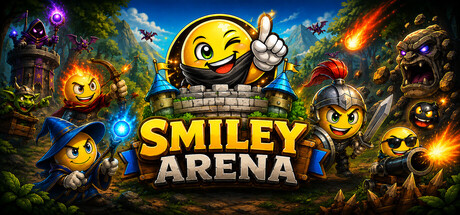
The game's visual assets (mascot design, logo, character art, store graphics, and in-game sprites) were created with the help of an AI image generator and were then selected, edited, and prepared by us for use in the game. This is exclusively pre-generated, fixed content – no content is generated by AI in real time while the game is being played.
All visual assets, audio, course designs / implementations are human created. The aim was to ensure all creative elements were human created with the majority coming from the original Xbox Indie Game.
Generative AI was used to port between the now defunct Xbox Indie (XGFW) platform to a modern platform (MonoGame) and to move to modern graphics cards (shaders). It was also used to add additional, optional, CRT visual modes and to do non-creative changes including identifying and resolving bugs and optimising play to improve framerate and minimum requirements.
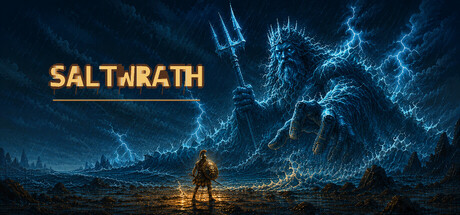
Some of SALTWRATH's audio and store artwork was created using generative AI tools and then edited by hand. The music and sound effects were generated with Suno, then trimmed, mixed and levelled manually before being used in the game. Some store page and capsule artwork was generated with an AI image tool and edited before use.
The game itself does not use generative AI while you play. Nothing is generated live during a run, no content changes between playthroughs because of AI, and no player input is ever sent to an AI service.
Generative AI tools were used in part during the development of this
game.
· Some character concept art and illustrations were produced using
generative AI tools. All such images were subsequently reviewed and
adjusted by our development team before being used in the game.
· The images shipped in the game are the result of that review and
adjustment process.
Game design, systems, programming, rules, and balancing were created
by our development team without generative AI.
Generative AI tools were used during development to assist with the creation and refinement of certain visual assets, including some user interface graphics, promotional artwork, and other supporting art elements. All AI-assisted content was reviewed, edited, and selected by the developer before being included in the game. Generative AI is not used to create content during gameplay.
Generative AI tools were used in the creation of some visual assets in the game. Some generated artwork was used directly after review, while other generated artwork was edited, modified, or used as a starting point for final assets.
AI tools including ChatGPT, Lovart, and others were used during development to generate early concept art for characters, weapons, props, UI, and pet animations. All final in-game assets were manually redrawn and refined by our art team.
Generative AI tools were used during development to assist with the creation of some pre-generated visual assets and development materials. All AI-assisted content is reviewed, selected, and integrated by the developer. The game does not generate AI content during gameplay.
AI tools were used to create some of the game's artwork, UI elements, backgrounds, music and sound effects. Visual effects generally combine or modify multiple generated assets, while sound effects are edited and layered from multiple generated sounds. Some generated artwork, including backgrounds and UI elements, is used largely as originally created. No AI content is generated during gameplay.
Generative AI tools were used during development to assist with the creation of some voice-over content, images, and written content. All AI-assisted content was generated and reviewed by the developer before being included in the game or its promotional materials. No generative AI is used during gameplay.
During development, OpenAI image generation tools were used to create portions of the game's 2D artwork, including characters, monsters, backgrounds, UI elements, and icons. Suno was used to create portions of the background music, and ElevenLabs was used to create portions of the sound effects. Generative AI was also used as a drafting and editing aid for some in-game writing and localization.
All generated material was selected, edited, processed, and reviewed by the developer before inclusion in the game. The game does not connect to generative AI services at runtime and does not generate content from player input.
Generative AI tools were used during development to assist with programming and Unreal Engine Blueprint creation, the creation of some 3D assets, selected music and audio, and some promotional artwork and marketing materials. AI-generated content is reviewed and edited by the development team before use. The game does not generate AI content during gameplay.
This work incorporates the use of generative artificial intelligence (AI) in the following areas:
Parts of the artwork, parts of the sound, and localization.
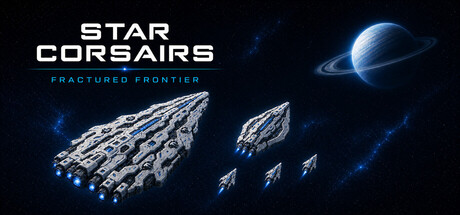
I'm not a professional game developer or artist. Making my own game had been a dream for years, but I never knew how to turn that dream into reality. Generative AI became the tool that finally made it possible.
With its help, I created many of the game's visual and audio assets, including item, UI, skill, and module icons, character portraits, ships, space stations, backgrounds, the game icon, the Steam store artwork, and some of the sound effects. It also assisted me with programming.
But Star Corsairs is not a game that AI simply generated. Every asset was reviewed, rejected, refined, or replaced until it matched the vision I had in mind. Every gameplay system was designed, tested, and reworked repeatedly until it felt right. The economy, ship balance, pirate AI, combat, and progression were all shaped through countless hours of playtesting and manual iteration. The story, world, and all of the writing were created by me.
Without generative AI, this game would probably never have existed. But without the countless creative decisions, revisions, and work behind every part of it, Star Corsairs wouldn't exist either.
Some of the game's 2D artwork - was created using generative AI tools, then manually curated and edited by the developer. Text
localization into non-English languages is AI-assisted and reviewed by
the developer. A planned voice for one character will use AI speech
generation. All game design, level design, code, gameplay systems, and
the English text are human-made.
Portions of this game's content were created with the assistance of generative AI tools under human direction and review. This includes much but not all of the visual artwork, the soundtrack, and the store page text and marketing copy. All AI-assisted content was curated, edited, and approved by the developer.
Team Commander uses generative AI to interpret player-issued natural-language commands and convert them into predefined in-game actions. The AI is used for command interpretation and does not generate unrestricted story, dialogue, images, or other free-form gameplay content. Generative AI was also used to assist with some visual and localized store materials.
Some temporary store page artwork (capsule images) and marketing text were created with the assistance of AI tools. The game itself does not contain AI-generated art, sound, or content, and does not use AI generation at runtime.
Generative AI tools were used to assist with translations of user interface text and game descriptions into some supported languages. All localization content is pre-generated and included in the game files. The game does not generate any content using AI at runtime.
The 2D art in OBOLUS is made with image generation models running locally on my own machine — Stable Diffusion XL through ComfyUI, including a style model I trained myself on 1930s cartoon references. None of it is a raw output: every sprite, backdrop, card frame and icon was directed through many passes, then cut out, colour-corrected, upscaled and assembled frame by frame into animation sheets.
Everything else is not AI: the rules, every card and every number on it, the balance, the 22 heroes, the six lands, the writing and the interface. The sound effects are synthesised by code written for this game.
Nothing is generated while you play. The game makes no network calls and ships with no model — nothing runs on your machine, and none of your data goes anywhere.
The visual art in Gearbound is made with PixelLab, an AI pixel-art tool. Every sprite, animation, tileset, background, prop, interface element and piece of marketing art was generated with PixelLab and then directed, edited and assembled by us.
The music and sound effects are rendered by synthesis scripts that were written with AI assistance. No generative audio model was used, and nothing was sourced from a music-generation service.
Nothing is generated by AI while you play. Every asset is finished and baked into the build before it ships, and the game makes no AI calls at runtime.
Generative AI was used for:
- The game's logo and Steam store capsule artwork (image generation)
- Translation of in-game text into Turkish, German, French and Spanish
-AI-generated images were reviewed and edited before use.
Generative AI tools were used during development to assist with the creation and iteration of some game assets and development code. AI-assisted content included in the final game is pre-generated and reviewed by the developer. The game does not generate AI content during gameplay.
Generative AI was used during development to create and iterate on selected pre-rendered 2D artwork, environmental textures, decals, and billboard/sign graphics. These assets were selected, edited, processed, and integrated by the developer. No AI content is generated during gameplay, and the game does not connect to external AI services.
The game's visual assets (mascot design, logo, character art, store graphics, and in-game sprites) were created with the help of an AI image generator and were then selected, edited, and prepared by us for use in the game. This is exclusively pre-generated, fixed content – no content is generated by AI in real time while the game is being played.
All visual assets, audio, course designs / implementations are human created. The aim was to ensure all creative elements were human created with the majority coming from the original Xbox Indie Game.
Generative AI was used to port between the now defunct Xbox Indie (XGFW) platform to a modern platform (MonoGame) and to move to modern graphics cards (shaders). It was also used to add additional, optional, CRT visual modes and to do non-creative changes including identifying and resolving bugs and optimising play to improve framerate and minimum requirements.
Some of SALTWRATH's audio and store artwork was created using generative AI tools and then edited by hand. The music and sound effects were generated with Suno, then trimmed, mixed and levelled manually before being used in the game. Some store page and capsule artwork was generated with an AI image tool and edited before use.
The game itself does not use generative AI while you play. Nothing is generated live during a run, no content changes between playthroughs because of AI, and no player input is ever sent to an AI service.
Generative AI tools were used in part during the development of this
game.
· Some character concept art and illustrations were produced using
generative AI tools. All such images were subsequently reviewed and
adjusted by our development team before being used in the game.
· The images shipped in the game are the result of that review and
adjustment process.
Game design, systems, programming, rules, and balancing were created
by our development team without generative AI.
Generative AI tools were used during development to assist with the creation and refinement of certain visual assets, including some user interface graphics, promotional artwork, and other supporting art elements. All AI-assisted content was reviewed, edited, and selected by the developer before being included in the game. Generative AI is not used to create content during gameplay.
Generative AI tools were used in the creation of some visual assets in the game. Some generated artwork was used directly after review, while other generated artwork was edited, modified, or used as a starting point for final assets.
AI tools including ChatGPT, Lovart, and others were used during development to generate early concept art for characters, weapons, props, UI, and pet animations. All final in-game assets were manually redrawn and refined by our art team.
Generative AI tools were used during development to assist with the creation of some pre-generated visual assets and development materials. All AI-assisted content is reviewed, selected, and integrated by the developer. The game does not generate AI content during gameplay.
AI tools were used to create some of the game's artwork, UI elements, backgrounds, music and sound effects. Visual effects generally combine or modify multiple generated assets, while sound effects are edited and layered from multiple generated sounds. Some generated artwork, including backgrounds and UI elements, is used largely as originally created. No AI content is generated during gameplay.
Generative AI tools were used during development to assist with the creation of some voice-over content, images, and written content. All AI-assisted content was generated and reviewed by the developer before being included in the game or its promotional materials. No generative AI is used during gameplay.
During development, OpenAI image generation tools were used to create portions of the game's 2D artwork, including characters, monsters, backgrounds, UI elements, and icons. Suno was used to create portions of the background music, and ElevenLabs was used to create portions of the sound effects. Generative AI was also used as a drafting and editing aid for some in-game writing and localization.
All generated material was selected, edited, processed, and reviewed by the developer before inclusion in the game. The game does not connect to generative AI services at runtime and does not generate content from player input.
Generative AI tools were used during development to assist with programming and Unreal Engine Blueprint creation, the creation of some 3D assets, selected music and audio, and some promotional artwork and marketing materials. AI-generated content is reviewed and edited by the development team before use. The game does not generate AI content during gameplay.
This work incorporates the use of generative artificial intelligence (AI) in the following areas:
Parts of the artwork, parts of the sound, and localization.
I'm not a professional game developer or artist. Making my own game had been a dream for years, but I never knew how to turn that dream into reality. Generative AI became the tool that finally made it possible.
With its help, I created many of the game's visual and audio assets, including item, UI, skill, and module icons, character portraits, ships, space stations, backgrounds, the game icon, the Steam store artwork, and some of the sound effects. It also assisted me with programming.
But Star Corsairs is not a game that AI simply generated. Every asset was reviewed, rejected, refined, or replaced until it matched the vision I had in mind. Every gameplay system was designed, tested, and reworked repeatedly until it felt right. The economy, ship balance, pirate AI, combat, and progression were all shaped through countless hours of playtesting and manual iteration. The story, world, and all of the writing were created by me.
Without generative AI, this game would probably never have existed. But without the countless creative decisions, revisions, and work behind every part of it, Star Corsairs wouldn't exist either.
Some of the game's 2D artwork - was created using generative AI tools, then manually curated and edited by the developer. Text
localization into non-English languages is AI-assisted and reviewed by
the developer. A planned voice for one character will use AI speech
generation. All game design, level design, code, gameplay systems, and
the English text are human-made.