Public Steam disclosure research25,376 disclosures tracked
Where do games disclose AI use?
Search developers’ Steam disclosures, compare classified AI use across
games, and follow recorded changes.
This index adds cross-game classifications and statistics to
statements published on individual store pages.
Groups reflect automatic analysis of public disclosures; mature records are excluded. These counts do not measure AI use across all of Steam.
Missing or unclear statements cannot establish whether a game uses AI.
We use generative AI tools during the pre-production phase to create specific pre-rendered assets for the final game build. Specifically, AI assistance was utilized to generate elements of the instrumental soundtrack, ambient sound effects, and select minor environment/prop assets within the game world. No AI content is generated live or dynamically during gameplay, and all assets have been thoroughly reviewed to ensure they do not infringe on existing copyrights.
Parts of this game's source code and in-game text were produced with the assistance of generative AI tools during development.
The planet itself is not AI-generated. It is built by conventional deterministic algorithms : noise functions, Voronoi tessellation, plate tectonics, erosion and climate simulation (the same family of techniques used in procedural generation for decades. Every world is reproducible from its seed).
No AI runs while you play, and the game never connects to an external AI service.
This game was developed with the assistance of generative AI tools during production. AI-generated 2D artwork (building icons, unit portraits, background illustrations, and UI elements) was created and curated by the development team as part of the game's visual assets. AI is not used to generate content dynamically during gameplay -- all art assets are fixed and shipped with the game. In-game opponent behavior uses traditional programmed game logic, not generative AI.
Generative AI tools assisted with parts of the development, iteration, and production process. The foundation of The Helios Accord—including its original concept, core ideas, world, systems, and narrative—was conceived, designed, and originally written by me. I direct, review, revise, and take responsibility for all AI-assisted material included in the game and its store presentation
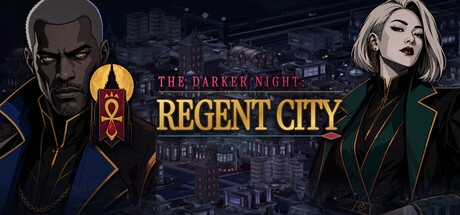
Regent City uses generative AI in parts of its production pipeline, including some character artwork and voice performances. All shipped assets are selected, edited, and art-directed by the solo developer to maintain a consistent visual and narrative identity.
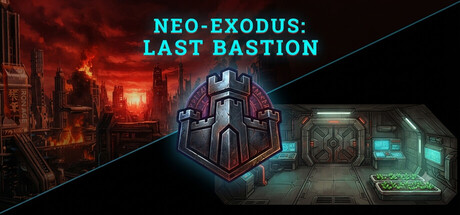
Our game, Neo-Exodus: Last Bastion, utilizes generative AI tools to assist in the creation of certain visual assets. Specifically, AI-generated content is used for some static background images, textures, and promotional art displayed on the store page and within the game. All AI-generated content is pre-generated; there is no real-time generation of content during gameplay. We have manually reviewed and curated all AI-assisted assets to ensure they meet our quality and safety standards.
Most of the art assets in this game are human-made, but there are some AI-generated portraits of African, Indian, and East Asian characters, since the (human-made) portrait packs used did not contain all ethnic groups represented in the game.
All dialogue in the game is human-directed and edited, but some was AI-generated in order to flesh out the world with unique dialogue for every region and situation.
None of the game's artwork, audio, or imagery is AI-generated. Portraits, interface, and all store and marketing art are hand-authored vector and procedural work, and that is a hard rule of the project. We do use AI assistance during development for writing and code, including drafting store text and the scripts that lay out our marketing art, all of it reviewed and edited by hand. No image-generation models are used anywhere, in the game or in its marketing.
Dialogue and narration are generated at runtime by a small language model running entirely on the player's machine. Nothing is sent to any server. The model has no authority over the game: a deterministic simulation decides every outcome, fact, and number, and the model only phrases scenes from state the engine hands it. Its output is structurally constrained and validated against the simulation before it appears, and invalid output is rejected. Prompts and validation keep generated text within the game's fiction and its PG-13 register. Player-typed orders go only to the local model and never leave the machine.
Artificial intelligence was used to generate the base concepts for the characters and planets in the game. All generated assets were then significantly edited, refined, and finalized manually to fit the game's unique art style.
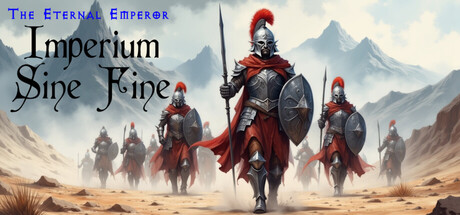
As a solo developer, I used generative AI tools to help create some of the game's icons, artwork, and written text, which I then reviewed and edited by hand. The game's design, code, and systems are my own work, and the world, its factions, and its story are built on lore I have developed across the Imperium Sine Fine saga. Nothing is AI-generated during gameplay.
Generative AI was used as an assistive tool for creating some visual assets. All AI-assisted assets were manually edited and refined by a human designer before being included in the game.
AI is used during our early Alpha development phase to create temporary placeholder art. The intent is to replace once the core game loop as been satisfied.
Generative AI was used as an assistive tool for some parts of the following game development tasks:
(Background images, item images, coloring of character artwork, sound, code review, optimization, and localization text.)
This game uses generative AI during development to assist in creating and refining certain content, including artwork, text, dialogue, and other game assets. All AI-generated content has been reviewed, edited, and approved by the development team before being included in the game. The game does not generate AI content during gameplay.
Some store assets (capsules, library art, promotional images) and some in-game terrain sprites (such as mountains and forests) started from drafts produced with AI image tools, then selected, color-graded, composited, and cropped by the developer. All publicly released assets are human-reviewed. UI, fonts, icons, player avatars, faction emblems, and other non-terrain art are drawn directly by the developer or built from licensed fonts / open-source resources — no AI generation involved. Player-to-player text messages produced at runtime by the AI model each player has chosen are disclosed separately under "Live-Generated AI".
Artificial intelligence (AI) was leveraged for key aspects of the game's development, including in-game logic, support systems, and certain artistic assets.
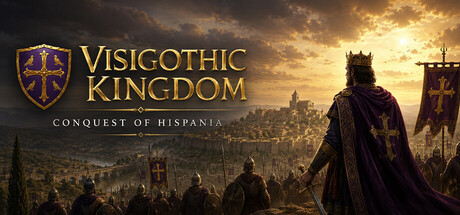
This game uses AI-generated images for some of its 2D artwork, character
scenes, and store page visuals. All AI-generated content is reviewed, edited,
and curated by our team to fit the game's historical setting. The game's
design, writing, story, and code are created by human developers.
Some visual assets used in the game were created or refined with the assistance of generative AI tools. These assets include certain icons, UI elements, and promotional artwork. All AI-generated content has been reviewed, edited, and integrated by the developer to ensure consistency with the game's artistic direction and quality standards. No real-time AI-generated content is used during gameplay.
Generative AI was used as an assistive tool during development to draft text and translations, and to create some 2D images and graphical assets. As there is currently no budget to hire a dedicated artist, certain visual elements are initially generated with AI and then manually modified and refined. No AI content is generated live at runtime.
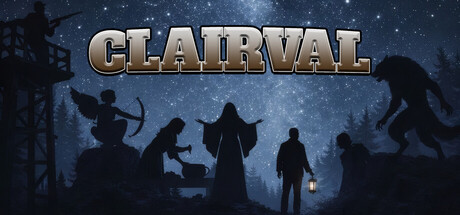
Clairval uses AI in the following limited ways:
1) Optional AI bot players: When a game host enables "Allow AI players", the server may fill empty seats with computer-controlled bot accounts at game start. These bots follow scripted server-side game logic (votes, night actions, chat). They are not powered by generative AI or large language models, and they do not learn from player conversations.
2) AI-generated visual assets (optional): Some provisional role card illustrations (placeholder JPG artwork) were created with AI-assisted tools during development. Final redrafted role cards (PNG) are human-made and always shown. Players can disable display of AI-generated placeholder art at any time in Account Settings → "Display AI-generated content?" (default: hidden until the player opts in).
Clairval does not use generative AI to create in-match dialogue, role assignments, game outcomes, moderation decisions, or real-time gameplay content. All core game rules and results are determined by the game server.
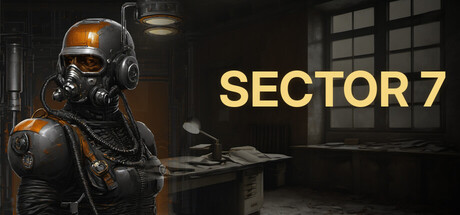
Some of Sector 7's artwork — including its store and marketing images — and its narrative text were created with AI assistance and then reviewed and edited by the developer. Localization into additional languages used AI translation with human review.
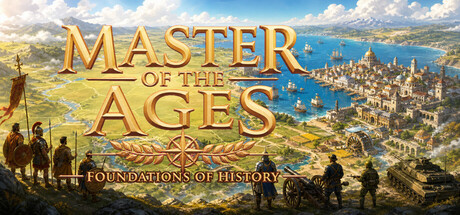
Master of the Ages is a grand strategy game engineered by a solo developer with 15+ years of senior software engineering and programming competition experience. To achieve grand-strategy scale as a single creator, a generative AI workflow was utilized to co-design the code architecture and write the codebase under the developer's supervision, backed by a rigorous framework of over 2,500 automated tests to catch edge-case bugs and prevent regressions during development. Generative AI was also used to produce all player-facing graphics (including all unit, building, and technology assets) and generate the historical text layers.
AI assisted assets and text are developer edited. The core game is playable without AI. Optional advisor commentary can use local Ollama or Anthropic only if the player enables it and provides their own key.
As a small indie studio, we use generative AI tools to assist in parts of our art creation process. This helps us improve the quality and consistency of artwork while allowing our team to work more efficiently. All AI-assisted content is reviewed, refined, and integrated by our developers to ensure it meets the artistic vision and quality standards of the game.
This game uses generative AI tools during development to assist with certain assets such as artwork, text, and design elements. All AI-assisted content has been reviewed, edited, and curated by the developer to ensure quality and appropriateness.
The game does not use AI to generate content during gameplay, and no external AI services are accessed while playing.
Nexus Legacy is made by a solo developer using AI-assisted production tools. These tools were used during development to help with visual iteration, asset production, prototyping and code assistance, making a larger persistent MMO possible with a small production pipeline.
The final game is not a live AI generator. Gameplay design, balance, economy, progression, PvE/PvP rules, server logic, world structure, final visuals and updates are selected, reviewed, edited and maintained by the developer.
No live generative AI is used to create player-facing content while the game is running.
EQUILIBRIUM uses generative AI to power its core gameplay mechanic: the Policy Terminal.
LIVE-GENERATED CONTENT
When a player types a directive or law in natural language (e.g., "Abolish the luxury car tax"), the AI Engine analyzes the request in real time and generates a structured governmental dossier, including:
- Legislative feasibility analysis
- Budget impact and financial coverage
- Macroeconomic effects (GDP, debt, inflation)
- Social and political consensus projections
- Parliamentary vote simulation
Model used: Anthropic Claude, accessed via API.
Guardrails: AI output is constrained to a fixed set of structured fields defined by the developer. All numeric effects are clamped within bounds enforced by the simulation engine, so no AI output can produce values outside the game's defined ranges. The model operates only on the simulation state provided to it and cannot invent game data: commands that cannot be mapped to a valid government action are refused, and the player is offered bounded policy alternatives instead. No image, audio, or user-data generation is involved, and no player data is used to train any model.
Because responses are generated at runtime, outputs vary between playthroughs: the same directive may produce different wording and different outcomes.
PRE-GENERATED CONTENT
The game's background music track was generated using AI tools during development and ships with the game.
Generative AI tools are used to translate text into different languages and to create visual assets. All content is reviewed and manually edited before being included in the game.
This game uses generative artificial intelligence tools during parts of its development process. AI assistance was used in a limited capacity for implementing certain minor systems and supporting the coding workflow, representing a small portion of the overall codebase.
In addition, some visual assets and UI elements were created or enhanced using AI-generated imagery, often combined with manual editing and integration to fit the game’s style and design.
AI is being used to do automated testing and code review. AI and Google Translate were used to generate the initial set of translations. There are currently people working on localization - it is just going to take time. If you would like to help with the localization please see: https://weblate.kuhnflix.app/ (I would appreciate your assistance!)
Generative AI was used during the development process to enhance and diversify the variety of card assets and narrative content. This technology allowed for the creation of a more expansive and unique library of scenarios, ensuring a richer and more varied gameplay experience for the player.
As a solo developer working on a passion project, I utilized generative AI tools to assist in creating some of the visual assets for the game. This includes character portraits, background art, and certain UI elements. All music, audio and localization in the game are entirely human-made and do not use any generative AI technologies.
We use generative AI tools during the pre-production phase to create specific pre-rendered assets for the final game build. Specifically, AI assistance was utilized to generate elements of the instrumental soundtrack, ambient sound effects, and select minor environment/prop assets within the game world. No AI content is generated live or dynamically during gameplay, and all assets have been thoroughly reviewed to ensure they do not infringe on existing copyrights.
Parts of this game's source code and in-game text were produced with the assistance of generative AI tools during development.
The planet itself is not AI-generated. It is built by conventional deterministic algorithms : noise functions, Voronoi tessellation, plate tectonics, erosion and climate simulation (the same family of techniques used in procedural generation for decades. Every world is reproducible from its seed).
No AI runs while you play, and the game never connects to an external AI service.
This game was developed with the assistance of generative AI tools during production. AI-generated 2D artwork (building icons, unit portraits, background illustrations, and UI elements) was created and curated by the development team as part of the game's visual assets. AI is not used to generate content dynamically during gameplay -- all art assets are fixed and shipped with the game. In-game opponent behavior uses traditional programmed game logic, not generative AI.
Generative AI tools assisted with parts of the development, iteration, and production process. The foundation of The Helios Accord—including its original concept, core ideas, world, systems, and narrative—was conceived, designed, and originally written by me. I direct, review, revise, and take responsibility for all AI-assisted material included in the game and its store presentation
Regent City uses generative AI in parts of its production pipeline, including some character artwork and voice performances. All shipped assets are selected, edited, and art-directed by the solo developer to maintain a consistent visual and narrative identity.
Our game, Neo-Exodus: Last Bastion, utilizes generative AI tools to assist in the creation of certain visual assets. Specifically, AI-generated content is used for some static background images, textures, and promotional art displayed on the store page and within the game. All AI-generated content is pre-generated; there is no real-time generation of content during gameplay. We have manually reviewed and curated all AI-assisted assets to ensure they meet our quality and safety standards.
Most of the art assets in this game are human-made, but there are some AI-generated portraits of African, Indian, and East Asian characters, since the (human-made) portrait packs used did not contain all ethnic groups represented in the game.
All dialogue in the game is human-directed and edited, but some was AI-generated in order to flesh out the world with unique dialogue for every region and situation.
None of the game's artwork, audio, or imagery is AI-generated. Portraits, interface, and all store and marketing art are hand-authored vector and procedural work, and that is a hard rule of the project. We do use AI assistance during development for writing and code, including drafting store text and the scripts that lay out our marketing art, all of it reviewed and edited by hand. No image-generation models are used anywhere, in the game or in its marketing.
Dialogue and narration are generated at runtime by a small language model running entirely on the player's machine. Nothing is sent to any server. The model has no authority over the game: a deterministic simulation decides every outcome, fact, and number, and the model only phrases scenes from state the engine hands it. Its output is structurally constrained and validated against the simulation before it appears, and invalid output is rejected. Prompts and validation keep generated text within the game's fiction and its PG-13 register. Player-typed orders go only to the local model and never leave the machine.
Artificial intelligence was used to generate the base concepts for the characters and planets in the game. All generated assets were then significantly edited, refined, and finalized manually to fit the game's unique art style.
As a solo developer, I used generative AI tools to help create some of the game's icons, artwork, and written text, which I then reviewed and edited by hand. The game's design, code, and systems are my own work, and the world, its factions, and its story are built on lore I have developed across the Imperium Sine Fine saga. Nothing is AI-generated during gameplay.
Generative AI was used as an assistive tool for creating some visual assets. All AI-assisted assets were manually edited and refined by a human designer before being included in the game.
AI is used during our early Alpha development phase to create temporary placeholder art. The intent is to replace once the core game loop as been satisfied.
Generative AI was used as an assistive tool for some parts of the following game development tasks:
(Background images, item images, coloring of character artwork, sound, code review, optimization, and localization text.)
This game uses generative AI during development to assist in creating and refining certain content, including artwork, text, dialogue, and other game assets. All AI-generated content has been reviewed, edited, and approved by the development team before being included in the game. The game does not generate AI content during gameplay.
Some store assets (capsules, library art, promotional images) and some in-game terrain sprites (such as mountains and forests) started from drafts produced with AI image tools, then selected, color-graded, composited, and cropped by the developer. All publicly released assets are human-reviewed. UI, fonts, icons, player avatars, faction emblems, and other non-terrain art are drawn directly by the developer or built from licensed fonts / open-source resources — no AI generation involved. Player-to-player text messages produced at runtime by the AI model each player has chosen are disclosed separately under "Live-Generated AI".
Artificial intelligence (AI) was leveraged for key aspects of the game's development, including in-game logic, support systems, and certain artistic assets.
This game uses AI-generated images for some of its 2D artwork, character
scenes, and store page visuals. All AI-generated content is reviewed, edited,
and curated by our team to fit the game's historical setting. The game's
design, writing, story, and code are created by human developers.
Some visual assets used in the game were created or refined with the assistance of generative AI tools. These assets include certain icons, UI elements, and promotional artwork. All AI-generated content has been reviewed, edited, and integrated by the developer to ensure consistency with the game's artistic direction and quality standards. No real-time AI-generated content is used during gameplay.
Generative AI was used as an assistive tool during development to draft text and translations, and to create some 2D images and graphical assets. As there is currently no budget to hire a dedicated artist, certain visual elements are initially generated with AI and then manually modified and refined. No AI content is generated live at runtime.
Clairval uses AI in the following limited ways:
1) Optional AI bot players: When a game host enables "Allow AI players", the server may fill empty seats with computer-controlled bot accounts at game start. These bots follow scripted server-side game logic (votes, night actions, chat). They are not powered by generative AI or large language models, and they do not learn from player conversations.
2) AI-generated visual assets (optional): Some provisional role card illustrations (placeholder JPG artwork) were created with AI-assisted tools during development. Final redrafted role cards (PNG) are human-made and always shown. Players can disable display of AI-generated placeholder art at any time in Account Settings → "Display AI-generated content?" (default: hidden until the player opts in).
Clairval does not use generative AI to create in-match dialogue, role assignments, game outcomes, moderation decisions, or real-time gameplay content. All core game rules and results are determined by the game server.
Some of Sector 7's artwork — including its store and marketing images — and its narrative text were created with AI assistance and then reviewed and edited by the developer. Localization into additional languages used AI translation with human review.
Master of the Ages is a grand strategy game engineered by a solo developer with 15+ years of senior software engineering and programming competition experience. To achieve grand-strategy scale as a single creator, a generative AI workflow was utilized to co-design the code architecture and write the codebase under the developer's supervision, backed by a rigorous framework of over 2,500 automated tests to catch edge-case bugs and prevent regressions during development. Generative AI was also used to produce all player-facing graphics (including all unit, building, and technology assets) and generate the historical text layers.
AI assisted assets and text are developer edited. The core game is playable without AI. Optional advisor commentary can use local Ollama or Anthropic only if the player enables it and provides their own key.
As a small indie studio, we use generative AI tools to assist in parts of our art creation process. This helps us improve the quality and consistency of artwork while allowing our team to work more efficiently. All AI-assisted content is reviewed, refined, and integrated by our developers to ensure it meets the artistic vision and quality standards of the game.
This game uses generative AI tools during development to assist with certain assets such as artwork, text, and design elements. All AI-assisted content has been reviewed, edited, and curated by the developer to ensure quality and appropriateness.
The game does not use AI to generate content during gameplay, and no external AI services are accessed while playing.
Nexus Legacy is made by a solo developer using AI-assisted production tools. These tools were used during development to help with visual iteration, asset production, prototyping and code assistance, making a larger persistent MMO possible with a small production pipeline.
The final game is not a live AI generator. Gameplay design, balance, economy, progression, PvE/PvP rules, server logic, world structure, final visuals and updates are selected, reviewed, edited and maintained by the developer.
No live generative AI is used to create player-facing content while the game is running.
EQUILIBRIUM uses generative AI to power its core gameplay mechanic: the Policy Terminal.
LIVE-GENERATED CONTENT
When a player types a directive or law in natural language (e.g., "Abolish the luxury car tax"), the AI Engine analyzes the request in real time and generates a structured governmental dossier, including:
- Legislative feasibility analysis
- Budget impact and financial coverage
- Macroeconomic effects (GDP, debt, inflation)
- Social and political consensus projections
- Parliamentary vote simulation
Model used: Anthropic Claude, accessed via API.
Guardrails: AI output is constrained to a fixed set of structured fields defined by the developer. All numeric effects are clamped within bounds enforced by the simulation engine, so no AI output can produce values outside the game's defined ranges. The model operates only on the simulation state provided to it and cannot invent game data: commands that cannot be mapped to a valid government action are refused, and the player is offered bounded policy alternatives instead. No image, audio, or user-data generation is involved, and no player data is used to train any model.
Because responses are generated at runtime, outputs vary between playthroughs: the same directive may produce different wording and different outcomes.
PRE-GENERATED CONTENT
The game's background music track was generated using AI tools during development and ships with the game.
Generative AI tools are used to translate text into different languages and to create visual assets. All content is reviewed and manually edited before being included in the game.
This game uses generative artificial intelligence tools during parts of its development process. AI assistance was used in a limited capacity for implementing certain minor systems and supporting the coding workflow, representing a small portion of the overall codebase.
In addition, some visual assets and UI elements were created or enhanced using AI-generated imagery, often combined with manual editing and integration to fit the game’s style and design.
AI is being used to do automated testing and code review. AI and Google Translate were used to generate the initial set of translations. There are currently people working on localization - it is just going to take time. If you would like to help with the localization please see: https://weblate.kuhnflix.app/ (I would appreciate your assistance!)
Generative AI was used during the development process to enhance and diversify the variety of card assets and narrative content. This technology allowed for the creation of a more expansive and unique library of scenarios, ensuring a richer and more varied gameplay experience for the player.
As a solo developer working on a passion project, I utilized generative AI tools to assist in creating some of the visual assets for the game. This includes character portraits, background art, and certain UI elements. All music, audio and localization in the game are entirely human-made and do not use any generative AI technologies.