Public Steam disclosure research25,394 disclosures tracked
Where do games disclose AI use?
Search developers’ Steam disclosures, compare classified AI use across
games, and follow recorded changes.
This index adds cross-game classifications and statistics to
statements published on individual store pages.
Groups reflect automatic analysis of public disclosures; mature records are excluded. These counts do not measure AI use across all of Steam.
Missing or unclear statements cannot establish whether a game uses AI.
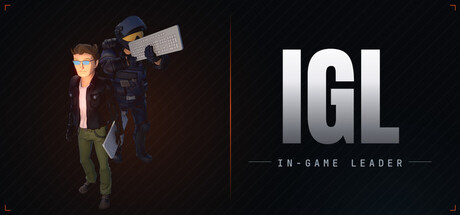
I have used generative AI tools to assist with localization of in-game text into additional languages, as I am a native English speaker. Source text (UI strings, menus, tutorial/coaching content) is authored in English; AI is used to produce initial translations, which are then reviewed and edited before shipping. The game contains no live/real-time AI-generated content. All other game content including artwork, audio and design, is created by real humans. This includes assets from the Unity store, Synty store, Humble Bundles and Fiverr artists.
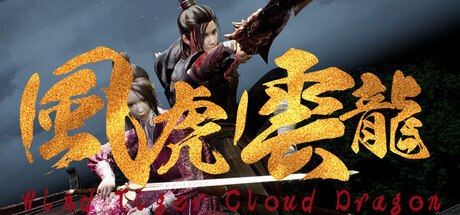
We plan to use generative AI to create partial assets including cutscenes and UI interfaces for this game. No AI-generated content has been implemented yet, and all planned AI materials will carry valid commercial licenses.
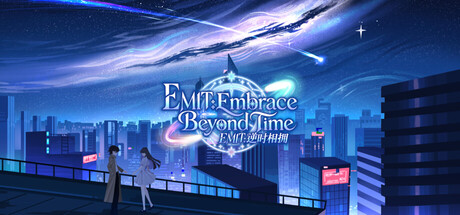
This game was developed with the assistance of generative AI tools. Specifically, generative AI was used to assist with the creation and refinement of some background art assets, the creation of some music assets, and the production of some promotional animation materials.
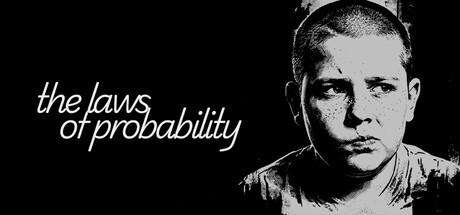
The story, code, mechanics, and every design decision of The Laws of Probability are entirely my own. The music was generated with AI tools based on my direction, and the backgrounds were AI-rendered from my hand-drawn sketches. Using this technology allowed me to bring the project's original vision to life and deliver a complete experience. I am sharing this openly because I respect your right to know.
Some store page marketing images and artwork
were created with the assistance of AI image
generation tools. All in-game artwork,
characters, backgrounds, and gameplay content
were created by the development team. No AI
is used to generate content during gameplay.
AI-assisted tools were used to create selected graphical assets, concept artwork and marketing materials. All generated content was reviewed, modified and integrated by the developer. No AI-generated content is created during gameplay.
We translated the game in German and French ourselves. For Japanese, Simplified Chinese, Spanish and Portuguese (BR), we used AI. If you see any translation mistakes, feel free to let us know!
All of the game's text was written by hand by Yohan Dupuy and translated by a qualified professional to achieve high-quality literary English (not AI). AI is only used partially for the visual and audio presentation.
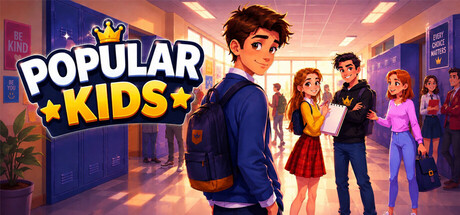
Popular Kids uses generative artificial intelligence to power conversations with student characters. Players can interact using voice or text, and AI-generated dialogue allows characters to respond dynamically based on the current situation, their personality, previous interactions, and the player’s choices throughout the game.
All storylines, characters, progression systems, popularity mechanics, reputation systems, and overall game design are created by the developer. Generative AI is used only to generate character dialogue and conversational responses during gameplay. AI-generated content is monitored and guided by character-specific instructions and game rules to maintain age-appropriate school-life interactions and narrative consistency.
Some visual assets used in this game's store page and promotional materials were created with the assistance of generative AI tools. All gameplay, code, writing, and audio were made by the developer.
Due to the very short development time frame (1 month) with a 1 man team some icons and images were AI generated and will be modified before the release.
Some images featured on this store page and parts of the game's localization were created with the assistance of generative AI tools and have been reviewed for the final release.
LAST RITE TD uses generative AI tools during development to assist with creating and iterating some visual concepts, marketing artwork, store capsule images, trailer-related promotional materials, voice/audio elements, and certain worldbuilding or text-drafting support.
Some voice/audio elements may also be AI-assisted. All AI-assisted content is reviewed, selected, edited, and integrated by the developer before being used in the game or on the Steam store page.
The game does not use generative AI to create unpredictable real-time gameplay content for players during normal play.
This game currently uses AI-generated artwork for its Steam capsule images.
No AI-generated art is used anywhere in the game itself, including gameplay, environments, UI, or other in-game assets.
We use generative AI as part of our development workflow to accelerate our production pipeline. Our artists use generative AI to quickly produce concept artwork. They then manually rework the selected pieces in Photoshop and other tools as needed, refining the work and adding or removing elements to reach the quality we require. Our Art Director gives final approval on all artwork. All AI-assisted content is generated during development and reworked by our team before it ships; no content is generated by AI at runtime. We have taken care to ensure this content does not include illegal or infringing material.
Some sound effects and a small number of textures in this game were created with the assistance of AI tools and refined by hand. Subtitle translations across our nine supported languages were generated using AI from the original English voice acting. Voice acting was performed by real people, with AI tools used only for noise reduction and audio mastering. All AI-generated content was curated and finalized by human creators before being included in the game.
This game uses generative AI tools in parts of the development and content creation process. Generative AI was used for concept exploration, drafting some 2D image/audio assets, and organizing text ideas. Final in-game content is reviewed and edited by the development team to ensure quality and consistency before release. We comply with applicable laws and platform policies, and will continue to refine or replace relevant content when needed.
I use AI tools in limited parts of the development process, including:
• Assisting with certain steps of creating game assets.
• Supporting debugging workflows.
• Helping with localization and translation.
Some placeholder assets have been AI generated. We are actively working with human artists to replace all of the AI art in the game with human made art.
The artwork (character art, backgrounds, and event illustrations), music, and the opening video in this game were created with the assistance of generative AI tools. All AI-assisted content is pre-generated during development — not generated live during gameplay — and was reviewed, edited, and arranged by the developer. We have taken care to ensure these outputs do not infringe existing copyrights and contain no illegal content.
This game does not contain any real-time generative AI features. Some game assets, including but not limited to animation effects, videos, card effects, and similar materials, were created with the assistance of AI.
AI-generated content is used only during the concept art and asset planning phase to generate initial creative ideas. No AI-generated content is present in the final game.
Wealth of Nations: Economic Strategy uses AI-assisted visual production for some store, capsule, and in-game artwork, including promotional key art and selected interface illustrations. These assets are curated, edited, and integrated by the developer to match the game’s political-economic strategy style.
During gameplay, the game can generate short newspaper-style articles, cabinet briefings, and political dilemmas based on the current simulation state, including economic indicators, policy choices, world conditions, and regional tensions. Gameplay text generation runs locally on the player’s machine. No gameplay data, prompts, or player data are sent to external AI providers.
Generative AI is used during development to assist with some character portraits, 3D environment assets, UI elements, narrative polish, and initial localization drafts.
AI-assisted visual content is based on concepts and art direction created by our team and is reviewed, edited, and refined before use. Localization will be reviewed and finalized by a professional localization provider.
AI-supported tools (Photoshop) were used to assist in the creation of selected pre-generated art and UI elements. There is no live-generated AI content.
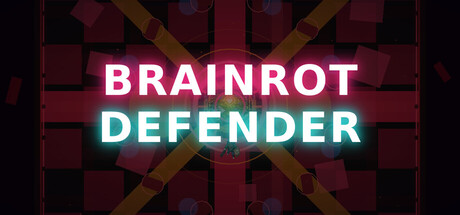
Some of this game's in-game text, including character dialogue and narrative/flavor writing was created with the help of generative AI tools during development, then reviewed and edited by the developer before release. The game's visual art is generated procedurally (algorithmically, not by AI). BrainRot Defender does not generate any content using AI in real time during gameplay, and does not connect to any external AI services.
Artificial intelligence was used solely for text localization and language translations. The pixel art visuals, animations, and the original game soundtrack were created by the professional artists and composer listed in the game's 'Credits' section. Generative AI was not used at any stage of the artistic, visual, or audio production.
This game uses generative AI tools during development for selected visual, audio, and programming-related tasks.
【AI-assisted content and development】
• Visual assets: Some in-game visuals, including ship sprites, scenario artwork, terrain textures, UI illustrations, and other decorative assets, were created with generative AI image tools, then selected, edited, modified, and integrated by the developer.
• Audio assets: Some background and combat music tracks were created with AI music generation tools, then edited, mastered, and loudness-normalized for in-game use.
• Programming assistance: AI coding tools are used to assist with code generation, implementation, debugging, and development. Game systems, mechanics, simulation rules, balance, and overall technical design are directed and determined by the developer.
【Runtime and game content】
• No generative AI operates during gameplay or at runtime. All required assets and game logic are included with the game and run locally.
• Scenario design, gameplay rules, ship statistics, historical information, and overall game design are researched, designed, reviewed, and integrated by the developer.
All AI-assisted assets and generated code are reviewed, tested, and integrated by the developer before being included in the released game.
We use AI to help generate our seamless 3D textures and certain in-game photos. The decision to use AI-generated images was made out of respect for individual privacy, by avoiding using real-life human references, we wanted to ensure no individuals or parties are misrepresented.
As a solo developer handling the entire scope of code, systems architecture, and design, generative AI tools were utilized during development to handle the massive volume of graphic assets. This includes illustrative 2D artwork for specific field environments, background landscapes, UI map layouts, and card illustration frames. Leveraging these tools allowed me to focus my full energy on what matters most: creating deep tactical gameplay, tight mechanical balance, and a compelling narrative. Every asset generated was extensively curated, manually edited, and visually polished to align perfectly with the game's aesthetic, storytelling, and tactical user interface. No live generative AI is used while the game is running.
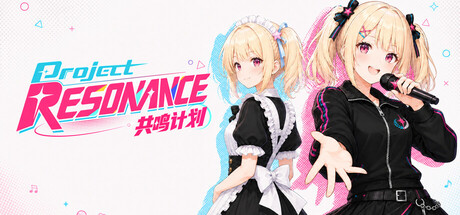
AI-driven real-time asset generation is a core part of the player experience in Project Resonance. Some of the game's in-game assets are generated in real time during play using generative AI—including music (melody, arrangement, and vocals), character art, expression and sprite variations, live-performance visuals, event illustrations, event storylines, and roleplay dialogue. Because this content is generated in response to your choices and progress, every playthrough produces music, visuals, and story unique to that session.
All AI-generated content is screened by our in-game filtering and review systems at runtime—before it reaches the player—to prevent inappropriate, infringing, or off-tone output and to keep everything consistent with the game's intended tone and content rating.
This game uses generative artificial intelligence to assist with the creation of some pre-rendered content, including visual, audio, translation, or marketing elements.
All AI-generated or AI-assisted content is selected, modified, corrected, and manually integrated by a human before final use. AI is used as a creative assistance tool, not as a replacement for human work.
No content is generated in real time by AI within the game, and no generative AI directly interacts with players during gameplay.
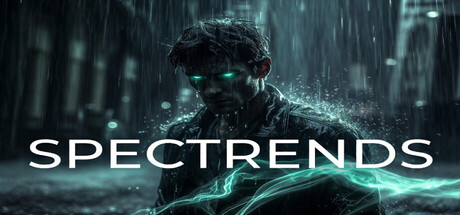
SPECTRENDS currently uses generative artificial intelligence for some placeholder visuals and promotional assets during development.
These AI-generated assets are temporary and will be fully replaced with original, hand-crafted art before the game's full release.
The final version of the game will not use generative AI for any assets.
Some card illustrations were created with the assistance of image-generation tools, then hand-selected, edited, and arranged by the developer. Game design, rules, code, UI, and writing are human-made
I have used generative AI tools to assist with localization of in-game text into additional languages, as I am a native English speaker. Source text (UI strings, menus, tutorial/coaching content) is authored in English; AI is used to produce initial translations, which are then reviewed and edited before shipping. The game contains no live/real-time AI-generated content. All other game content including artwork, audio and design, is created by real humans. This includes assets from the Unity store, Synty store, Humble Bundles and Fiverr artists.
We plan to use generative AI to create partial assets including cutscenes and UI interfaces for this game. No AI-generated content has been implemented yet, and all planned AI materials will carry valid commercial licenses.
This game was developed with the assistance of generative AI tools. Specifically, generative AI was used to assist with the creation and refinement of some background art assets, the creation of some music assets, and the production of some promotional animation materials.
The story, code, mechanics, and every design decision of The Laws of Probability are entirely my own. The music was generated with AI tools based on my direction, and the backgrounds were AI-rendered from my hand-drawn sketches. Using this technology allowed me to bring the project's original vision to life and deliver a complete experience. I am sharing this openly because I respect your right to know.
Some store page marketing images and artwork
were created with the assistance of AI image
generation tools. All in-game artwork,
characters, backgrounds, and gameplay content
were created by the development team. No AI
is used to generate content during gameplay.
AI-assisted tools were used to create selected graphical assets, concept artwork and marketing materials. All generated content was reviewed, modified and integrated by the developer. No AI-generated content is created during gameplay.
We translated the game in German and French ourselves. For Japanese, Simplified Chinese, Spanish and Portuguese (BR), we used AI. If you see any translation mistakes, feel free to let us know!
All of the game's text was written by hand by Yohan Dupuy and translated by a qualified professional to achieve high-quality literary English (not AI). AI is only used partially for the visual and audio presentation.
Popular Kids uses generative artificial intelligence to power conversations with student characters. Players can interact using voice or text, and AI-generated dialogue allows characters to respond dynamically based on the current situation, their personality, previous interactions, and the player’s choices throughout the game.
All storylines, characters, progression systems, popularity mechanics, reputation systems, and overall game design are created by the developer. Generative AI is used only to generate character dialogue and conversational responses during gameplay. AI-generated content is monitored and guided by character-specific instructions and game rules to maintain age-appropriate school-life interactions and narrative consistency.
Some visual assets used in this game's store page and promotional materials were created with the assistance of generative AI tools. All gameplay, code, writing, and audio were made by the developer.
Due to the very short development time frame (1 month) with a 1 man team some icons and images were AI generated and will be modified before the release.
Some images featured on this store page and parts of the game's localization were created with the assistance of generative AI tools and have been reviewed for the final release.
LAST RITE TD uses generative AI tools during development to assist with creating and iterating some visual concepts, marketing artwork, store capsule images, trailer-related promotional materials, voice/audio elements, and certain worldbuilding or text-drafting support.
Some voice/audio elements may also be AI-assisted. All AI-assisted content is reviewed, selected, edited, and integrated by the developer before being used in the game or on the Steam store page.
The game does not use generative AI to create unpredictable real-time gameplay content for players during normal play.
This game currently uses AI-generated artwork for its Steam capsule images.
No AI-generated art is used anywhere in the game itself, including gameplay, environments, UI, or other in-game assets.
We use generative AI as part of our development workflow to accelerate our production pipeline. Our artists use generative AI to quickly produce concept artwork. They then manually rework the selected pieces in Photoshop and other tools as needed, refining the work and adding or removing elements to reach the quality we require. Our Art Director gives final approval on all artwork. All AI-assisted content is generated during development and reworked by our team before it ships; no content is generated by AI at runtime. We have taken care to ensure this content does not include illegal or infringing material.
Some sound effects and a small number of textures in this game were created with the assistance of AI tools and refined by hand. Subtitle translations across our nine supported languages were generated using AI from the original English voice acting. Voice acting was performed by real people, with AI tools used only for noise reduction and audio mastering. All AI-generated content was curated and finalized by human creators before being included in the game.
This game uses generative AI tools in parts of the development and content creation process. Generative AI was used for concept exploration, drafting some 2D image/audio assets, and organizing text ideas. Final in-game content is reviewed and edited by the development team to ensure quality and consistency before release. We comply with applicable laws and platform policies, and will continue to refine or replace relevant content when needed.
I use AI tools in limited parts of the development process, including:
• Assisting with certain steps of creating game assets.
• Supporting debugging workflows.
• Helping with localization and translation.
Some placeholder assets have been AI generated. We are actively working with human artists to replace all of the AI art in the game with human made art.
The artwork (character art, backgrounds, and event illustrations), music, and the opening video in this game were created with the assistance of generative AI tools. All AI-assisted content is pre-generated during development — not generated live during gameplay — and was reviewed, edited, and arranged by the developer. We have taken care to ensure these outputs do not infringe existing copyrights and contain no illegal content.
This game does not contain any real-time generative AI features. Some game assets, including but not limited to animation effects, videos, card effects, and similar materials, were created with the assistance of AI.
AI-generated content is used only during the concept art and asset planning phase to generate initial creative ideas. No AI-generated content is present in the final game.
Wealth of Nations: Economic Strategy uses AI-assisted visual production for some store, capsule, and in-game artwork, including promotional key art and selected interface illustrations. These assets are curated, edited, and integrated by the developer to match the game’s political-economic strategy style.
During gameplay, the game can generate short newspaper-style articles, cabinet briefings, and political dilemmas based on the current simulation state, including economic indicators, policy choices, world conditions, and regional tensions. Gameplay text generation runs locally on the player’s machine. No gameplay data, prompts, or player data are sent to external AI providers.
Generative AI is used during development to assist with some character portraits, 3D environment assets, UI elements, narrative polish, and initial localization drafts.
AI-assisted visual content is based on concepts and art direction created by our team and is reviewed, edited, and refined before use. Localization will be reviewed and finalized by a professional localization provider.
AI-supported tools (Photoshop) were used to assist in the creation of selected pre-generated art and UI elements. There is no live-generated AI content.
Some of this game's in-game text, including character dialogue and narrative/flavor writing was created with the help of generative AI tools during development, then reviewed and edited by the developer before release. The game's visual art is generated procedurally (algorithmically, not by AI). BrainRot Defender does not generate any content using AI in real time during gameplay, and does not connect to any external AI services.
Artificial intelligence was used solely for text localization and language translations. The pixel art visuals, animations, and the original game soundtrack were created by the professional artists and composer listed in the game's 'Credits' section. Generative AI was not used at any stage of the artistic, visual, or audio production.
This game uses generative AI tools during development for selected visual, audio, and programming-related tasks.
【AI-assisted content and development】
• Visual assets: Some in-game visuals, including ship sprites, scenario artwork, terrain textures, UI illustrations, and other decorative assets, were created with generative AI image tools, then selected, edited, modified, and integrated by the developer.
• Audio assets: Some background and combat music tracks were created with AI music generation tools, then edited, mastered, and loudness-normalized for in-game use.
• Programming assistance: AI coding tools are used to assist with code generation, implementation, debugging, and development. Game systems, mechanics, simulation rules, balance, and overall technical design are directed and determined by the developer.
【Runtime and game content】
• No generative AI operates during gameplay or at runtime. All required assets and game logic are included with the game and run locally.
• Scenario design, gameplay rules, ship statistics, historical information, and overall game design are researched, designed, reviewed, and integrated by the developer.
All AI-assisted assets and generated code are reviewed, tested, and integrated by the developer before being included in the released game.
We use AI to help generate our seamless 3D textures and certain in-game photos. The decision to use AI-generated images was made out of respect for individual privacy, by avoiding using real-life human references, we wanted to ensure no individuals or parties are misrepresented.
As a solo developer handling the entire scope of code, systems architecture, and design, generative AI tools were utilized during development to handle the massive volume of graphic assets. This includes illustrative 2D artwork for specific field environments, background landscapes, UI map layouts, and card illustration frames. Leveraging these tools allowed me to focus my full energy on what matters most: creating deep tactical gameplay, tight mechanical balance, and a compelling narrative. Every asset generated was extensively curated, manually edited, and visually polished to align perfectly with the game's aesthetic, storytelling, and tactical user interface. No live generative AI is used while the game is running.
AI-driven real-time asset generation is a core part of the player experience in Project Resonance. Some of the game's in-game assets are generated in real time during play using generative AI—including music (melody, arrangement, and vocals), character art, expression and sprite variations, live-performance visuals, event illustrations, event storylines, and roleplay dialogue. Because this content is generated in response to your choices and progress, every playthrough produces music, visuals, and story unique to that session.
All AI-generated content is screened by our in-game filtering and review systems at runtime—before it reaches the player—to prevent inappropriate, infringing, or off-tone output and to keep everything consistent with the game's intended tone and content rating.
This game uses generative artificial intelligence to assist with the creation of some pre-rendered content, including visual, audio, translation, or marketing elements.
All AI-generated or AI-assisted content is selected, modified, corrected, and manually integrated by a human before final use. AI is used as a creative assistance tool, not as a replacement for human work.
No content is generated in real time by AI within the game, and no generative AI directly interacts with players during gameplay.
SPECTRENDS currently uses generative artificial intelligence for some placeholder visuals and promotional assets during development.
These AI-generated assets are temporary and will be fully replaced with original, hand-crafted art before the game's full release.
The final version of the game will not use generative AI for any assets.
Some card illustrations were created with the assistance of image-generation tools, then hand-selected, edited, and arranged by the developer. Game design, rules, code, UI, and writing are human-made