Public Steam disclosure research25,394 disclosures tracked
Where do games disclose AI use?
Search developers’ Steam disclosures, compare classified AI use across
games, and follow recorded changes.
This index adds cross-game classifications and statistics to
statements published on individual store pages.
Groups reflect automatic analysis of public disclosures; mature records are excluded. These counts do not measure AI use across all of Steam.
Missing or unclear statements cannot establish whether a game uses AI.
I am a solo indie developer and programmer. Some of the 2D graphics in the game and its store materials were created with the assistance of generative AI, then reviewed, edited, and integrated by me. No generative AI is used during gameplay.
Generative AI tools were used during development to create selected pre-generated visual assets, including the application icon, HUD texture, Property Marketplace illustrations, and Legacy Vault artwork. Four background-music tracks were also created using Google Gemini. All AI-assisted content was reviewed by the developer and packaged with the game. Hero Investor does not generate AI content during gameplay or send player data to an AI service.
Development is AI-assisted: source code, the procedural asset factories (meshes, MetaSound hero sounds, code-driven UMG) and docs are written with AI tooling under human review in-repo. No external generative-AI image/audio assets are imported; everything ships from the code-authored pipeline.
Breathtoll includes some AI-generated content, all of it created during development. Nothing is generated live while you play.
Cinematic cutscenes: the video imagery and animation are AI-generated.
Creatures: the 3D creature models began as AI-generated base meshes and were hand-refined through multiple Blender passes (cleanup, retopology, and texturing) before use in the game.
Store and marketing art: some capsule and store images are composed from frames of the AI-generated cutscenes.
All other content is human-made, including the game code, systems, design, all writing (scripts, narration, and story), and the hand-authored card art. We hold the rights to the AI-generated content under the generating tools' commercial licenses.
This disclosure reflects the current build. We are in the process of bringing on an artist for human-made renderings, and some of the AI-generated content above will be replaced with human-created work for the full launch. We will update this disclosure as that happens.
This game uses generative artificial intelligence (AI) tools to assist in the creation of certain visual assets, promotional store materials, and workflow scripts during development.
Generative AI was used as part of the development pipeline for selected 2D icons and some 3D model source assets. All included assets were reviewed, edited, optimized, and integrated by the developer.
AI was used to assist with code, art, and sfx. I have manually edited and polished all AI-assisted elements by hand to make them as unsloppy as I possibly can. If anything feels like slop, please let me know in the Community Discussions / Discord, and I'll do my best to fix it. Thanks! :)
Setter uses generative AI in a limited way. The portrait images for fictional and youth players were created with AI image tools during development and ship as fixed assets: the game does not generate any content live while you play. Some promotional materials on this store page may also include AI-assisted artwork.
This game uses artificial Intelligence to render some of the games artwork, such as 2D sprites and sound effects.
I've always loved the idle genre, AI has finally allowed me to create a game even with my somewhat limited artistic abilities.
The game contains a few voice lines that where generated using a text-to-speech service. I assume this service used some sort of gen-AI. For some translations an AI was used for proofreading.
Deepclaim was made by a solo developer working with an AI coding assistant (Anthropic's Claude). The AI assisted in writing the game's code, which draws all of the game's visuals procedurally at runtime (the game ships with no image files) and synthesizes all of its audio procedurally (no audio files). AI assistance was also used for some in-game text, the Steam store page description, and the store/marketing capsule images. All AI-assisted output was directed, reviewed, and edited by the developer.
AI was used only during early development for temporary placeholder assets. These materials are not intended to be included in the final shipped game.
The game does not use live-generated AI content during gameplay.
Operation: Horumus is a "vibe coding" experiment. Most of the game's content — code, game design, pixel art, sound effects, procedural music, narrative writing, and all four language localizations (English, Korean, Japanese, Simplified Chinese) — was developed with extensive use of generative AI tools, under the developer's direction. Every creative and technical decision was made by the developer, and all AI-generated output was reviewed and curated before inclusion.
No AI is invoked during gameplay. The game runs entirely offline and makes no calls to external AI services.
This is a parody experiment, and the use of AI is part of the experiment itself. We disclose it here so you can decide whether that approach is interesting to you.
Portions of this game's artwork were created with generative AI tools under human direction, curation, and editing — including aircraft counter sprites, scene illustrations, character portraits, achievement icons, and some store/marketing images. The store trailer's narration is AI-generated voiceover. Some code was developed with AI assistance and human review. The game does not generate any content with AI while running.
Some in-game text and store page copy was drafted with an AI assistant and edited by the developer. No generative AI runs in the game or generates content at runtime. All artwork is programmatically composited from photographs taken by the developer.
Parts of this game's source code and in-game text were produced with the assistance of generative AI tools during development.
The planet itself is not AI-generated. It is built by conventional deterministic algorithms : noise functions, Voronoi tessellation, plate tectonics, erosion and climate simulation (the same family of techniques used in procedural generation for decades. Every world is reproducible from its seed).
No AI runs while you play, and the game never connects to an external AI service.
Some BGM are AI-generated. Additionally, some textures were AI-generated based on human designs and fully refined by hand. AI tools were also used for translation and general development assistance.
This game uses generative artificial intelligence in its development.
Some visual assets — including character sprites, unit artwork, and related
game graphics — were created or assisted with generative AI tools and then
integrated into the game. AI was also used during development to assist with
programming and production workflows.
Generative AI is not used to create content live during gameplay. The game
does not connect to external AI services while you are playing.
Procession Engine is a hand-designed game that uses AI tools to speed up development. Every card, faction, and system was designed, balanced, and playtested by its developer. Generative AI tools were used under human direction as part of the production pipeline: 2D artwork (card illustrations and icons) and 3D model bases were generated to the developer's specifications and then reviewed, curated, and integrated by hand. Sound effects were produced with AI audio tools and individually selected and mixed. Portions of the game code were written with AI assistance and reviewed by a human. No AI content is generated at runtime.
This game uses generative AI to create some of its visual assets, including artwork, background imagery, and marketing graphics. All AI-generated images are reviewed and edited by a human before release.
Narrative dialogue and story text were generated with AI assistance. Placeholder textures generated with AI appear in store page screenshots and marketing assets.
This title uses generative artificial intelligence in software development, the creation of art assets, and foreign-language localization.
Given the constraints of our production schedule, the size of our team, and the professional responsibilities of our members outside this project, we chose to incorporate generative AI into certain parts of development in pursuit of a more complete and polished game. However, our team firmly believes that generative AI should help creators produce better work. It should never become an excuse for cutting corners, disregarding the creative process, or replacing skilled professionals.
While working to deliver the most complete experience possible, these technologies enabled our engineers to explore directions that had previously been difficult to pursue because of limited time and manpower. These efforts include machine-learning-based image segmentation and depth mapping using motion-aware techniques, as well as redesigning low-level director systems and asset-management systems for art and text beyond the assistance provided by conventional game-engine tooling.
We also recognize that the experience and judgment of professional creators cannot be replicated. Throughout the production of our artistic assets, the team has actively sought guidance from artists, engineers, and experienced professionals in relevant fields, and has continuously reviewed the final content in accordance with their professional advice. All generated output is subject to human review, selection, and adjustment. No generated material is included in the game without first being inspected.
With regard to our art assets, we take copyright and creators’ rights in connection with generative AI very seriously. We believe that artists’ creative work and aesthetic expertise deserve stronger copyright protection. We have never trained models on others’ work without authorization, nor have we used LoRA models of unknown or unverifiable origin. We will not use an artist’s name, work, or distinctive style to train models or create imitations without permission, and we will never claim another creator’s work as our own.
We understand that players may hold different views regarding generative AI, and we are committed to being transparent about how and where it has been used in this title, as well as the principles that guide our use of it.
We will continue striving to ensure that both our own technology and generative AI serve as tools for creating a more complete work—not as excuses for avoiding creative responsibility, undermining the trust between creators and consumers, or producing inexpensive imitations.
Finally, we sincerely thank you for your understanding and for holding us accountable.
Einige visuelle Elemente des Spiels wurden mithilfe generativer KI-Tools erstellt und anschließend vom Entwickler ausgewählt, bearbeitet und integriert. Während des Spielablaufs kommt keine generative KI zum Einsatz.
Generative AI tools were used during development to assist with the refinement of certain visual assets and to improve the quality and consistency of translations. All AI-assisted content was reviewed and edited by the developer before being included in the final game. No generative AI is used to create content dynamically during gameplay.
Some character portrait sprite sheets and brand/division imagery shipped with Bankr are produced with generative AI tools during development, then reviewed and edited by the team before inclusion. All game text, simulation code, balance-sheet math, ratio logic, and gameplay systems are human-authored. No content is AI-generated at runtime — every asset is pre-rendered and pinned in the build.
AI was used for some translations and visual assets. The game does not generate AI content during gameplay, and AI was not used to write the game's code.
Generative AI tools were used to create and refine some pre-generated 2D artwork and Steam store graphical assets. All outputs were reviewed, curated, and edited by the developer before inclusion. The game does not generate AI content at runtime or connect to external AI services.
I received assistance from text-generative AI (LLM) for the English translation (localization) of all in-game text (dialogues, UI, system messages) and for writing the English description on the Steam store page.
During the development process, I use procedural and AI-based tools to assist with content creation. In all such cases, the final product reflects my own creativity and vision as a solo developer. Examples include utilizing AI tools to help generate and refine certain textures and 3D models in the game.
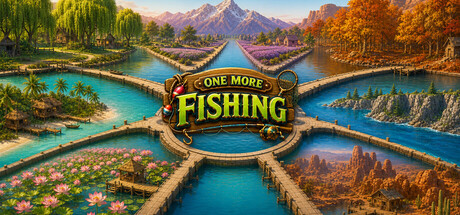
One More Fishing contains selected pre-generated content created or refined with generative AI tools during development. This includes selected in-game artwork and UI assets, selected Steam store and marketing artwork, audio assets such as music, ambience, sound effects and selected character voice lines, plus assistance with narrative and quest drafting and localization. All shipped content is selected, edited and integrated before release.
The game does not use live-generated AI. It does not contact generative AI services while running and does not send player prompts or player data to such services. At runtime it only loads, selects, animates, processes and mixes fixed content prepared before shipping.
Generative AI was used throughout nearly every aspect of this game's development and production. AI and a human developer formed an unholy union of sound and mind (a merge, if you will) to birth this production.
No generative AI runs during gameplay. Its contributions were created during development.
Algumas imagens presentes neste jogo foram criadas com auxílio de inteligência artificial generativa e posteriormente revisadas, editadas e integradas pelo desenvolvedor. Todo o restante do jogo, incluindo programação, design, mecânicas e direção criativa, foi desenvolvido manualmente.
Some of this game's assets were made with the assistance of generative AI tools and were reviewed, curated and hand-finished by the developer. No content is generated while you play.
During the development of this game, pre-generated AI tools were utilized to assist with text translations, programming scripts and optimization, and the creation of 2D artwork assets. All AI-generated content was directly reviewed, refined, and applied to the game by the developer.
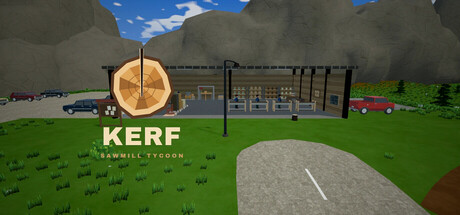
Kerf - Sawmill Tycoon was made almost entirely with AI tools. The developer directed the work, chose what went into the game and approved every result, but did not model, rig or write code by hand. What that means for the content that ships in the game:
- Code: written by an AI coding assistant.
- Characters: generated by an AI 3D tool from AI-generated reference images, then rigged and set up in the game by the AI assistant.
- Other 3D models: some came from an AI 3D tool - a vehicle and environment props such as rocks, mountains and bushes. The rest, including the valley, the buildings, the machines and the trees, were built in 3D software by the AI assistant writing scripts.
- Animation: all character animation was generated with an AI motion tool.
- Music: all of the in-game music was generated with an AI music tool.
- Sound: some sound effects were generated with an AI sound tool; the rest were sourced from sound libraries by the developer.
- Text: the in-game text was written with AI assistance, and the translations from English and Polish into the other 13 supported languages were made with AI.
Everything was reviewed and approved by the developer before release.
No content is generated by AI while the game is running. The Twitch integration only displays messages typed by real viewers.
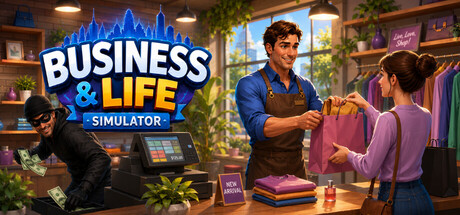
Business And Life Simulator, uses generative AI-assisted artwork in some packaging visuals for in-game products/items. Generative AI is not used in any other part of the game, and we are working to remove these AI-assisted visuals before the full release.
Some visual assets were created with the help of generative AI and then hand-finished: the store capsule/key art and a short promotional video are AI-assisted, and a small set of in-game background and decoration art (tile textures, decals) started from AI-generated images that were manually edited and integrated. All game code, game design, writing and gameplay systems are human-made. Screenshots on this page show real gameplay. The game does not generate any content with AI at runtime.
I am a solo indie developer and programmer. Some of the 2D graphics in the game and its store materials were created with the assistance of generative AI, then reviewed, edited, and integrated by me. No generative AI is used during gameplay.
Generative AI tools were used during development to create selected pre-generated visual assets, including the application icon, HUD texture, Property Marketplace illustrations, and Legacy Vault artwork. Four background-music tracks were also created using Google Gemini. All AI-assisted content was reviewed by the developer and packaged with the game. Hero Investor does not generate AI content during gameplay or send player data to an AI service.
Development is AI-assisted: source code, the procedural asset factories (meshes, MetaSound hero sounds, code-driven UMG) and docs are written with AI tooling under human review in-repo. No external generative-AI image/audio assets are imported; everything ships from the code-authored pipeline.
Breathtoll includes some AI-generated content, all of it created during development. Nothing is generated live while you play.
Cinematic cutscenes: the video imagery and animation are AI-generated.
Creatures: the 3D creature models began as AI-generated base meshes and were hand-refined through multiple Blender passes (cleanup, retopology, and texturing) before use in the game.
Store and marketing art: some capsule and store images are composed from frames of the AI-generated cutscenes.
All other content is human-made, including the game code, systems, design, all writing (scripts, narration, and story), and the hand-authored card art. We hold the rights to the AI-generated content under the generating tools' commercial licenses.
This disclosure reflects the current build. We are in the process of bringing on an artist for human-made renderings, and some of the AI-generated content above will be replaced with human-created work for the full launch. We will update this disclosure as that happens.
This game uses generative artificial intelligence (AI) tools to assist in the creation of certain visual assets, promotional store materials, and workflow scripts during development.
Generative AI was used as part of the development pipeline for selected 2D icons and some 3D model source assets. All included assets were reviewed, edited, optimized, and integrated by the developer.
AI was used to assist with code, art, and sfx. I have manually edited and polished all AI-assisted elements by hand to make them as unsloppy as I possibly can. If anything feels like slop, please let me know in the Community Discussions / Discord, and I'll do my best to fix it. Thanks! :)
Setter uses generative AI in a limited way. The portrait images for fictional and youth players were created with AI image tools during development and ship as fixed assets: the game does not generate any content live while you play. Some promotional materials on this store page may also include AI-assisted artwork.
This game uses artificial Intelligence to render some of the games artwork, such as 2D sprites and sound effects.
I've always loved the idle genre, AI has finally allowed me to create a game even with my somewhat limited artistic abilities.
The game contains a few voice lines that where generated using a text-to-speech service. I assume this service used some sort of gen-AI. For some translations an AI was used for proofreading.
Deepclaim was made by a solo developer working with an AI coding assistant (Anthropic's Claude). The AI assisted in writing the game's code, which draws all of the game's visuals procedurally at runtime (the game ships with no image files) and synthesizes all of its audio procedurally (no audio files). AI assistance was also used for some in-game text, the Steam store page description, and the store/marketing capsule images. All AI-assisted output was directed, reviewed, and edited by the developer.
AI was used only during early development for temporary placeholder assets. These materials are not intended to be included in the final shipped game.
The game does not use live-generated AI content during gameplay.
Operation: Horumus is a "vibe coding" experiment. Most of the game's content — code, game design, pixel art, sound effects, procedural music, narrative writing, and all four language localizations (English, Korean, Japanese, Simplified Chinese) — was developed with extensive use of generative AI tools, under the developer's direction. Every creative and technical decision was made by the developer, and all AI-generated output was reviewed and curated before inclusion.
No AI is invoked during gameplay. The game runs entirely offline and makes no calls to external AI services.
This is a parody experiment, and the use of AI is part of the experiment itself. We disclose it here so you can decide whether that approach is interesting to you.
Portions of this game's artwork were created with generative AI tools under human direction, curation, and editing — including aircraft counter sprites, scene illustrations, character portraits, achievement icons, and some store/marketing images. The store trailer's narration is AI-generated voiceover. Some code was developed with AI assistance and human review. The game does not generate any content with AI while running.
Some in-game text and store page copy was drafted with an AI assistant and edited by the developer. No generative AI runs in the game or generates content at runtime. All artwork is programmatically composited from photographs taken by the developer.
Parts of this game's source code and in-game text were produced with the assistance of generative AI tools during development.
The planet itself is not AI-generated. It is built by conventional deterministic algorithms : noise functions, Voronoi tessellation, plate tectonics, erosion and climate simulation (the same family of techniques used in procedural generation for decades. Every world is reproducible from its seed).
No AI runs while you play, and the game never connects to an external AI service.
Some BGM are AI-generated. Additionally, some textures were AI-generated based on human designs and fully refined by hand. AI tools were also used for translation and general development assistance.
This game uses generative artificial intelligence in its development.
Some visual assets — including character sprites, unit artwork, and related
game graphics — were created or assisted with generative AI tools and then
integrated into the game. AI was also used during development to assist with
programming and production workflows.
Generative AI is not used to create content live during gameplay. The game
does not connect to external AI services while you are playing.
Procession Engine is a hand-designed game that uses AI tools to speed up development. Every card, faction, and system was designed, balanced, and playtested by its developer. Generative AI tools were used under human direction as part of the production pipeline: 2D artwork (card illustrations and icons) and 3D model bases were generated to the developer's specifications and then reviewed, curated, and integrated by hand. Sound effects were produced with AI audio tools and individually selected and mixed. Portions of the game code were written with AI assistance and reviewed by a human. No AI content is generated at runtime.
This game uses generative AI to create some of its visual assets, including artwork, background imagery, and marketing graphics. All AI-generated images are reviewed and edited by a human before release.
Narrative dialogue and story text were generated with AI assistance. Placeholder textures generated with AI appear in store page screenshots and marketing assets.
This title uses generative artificial intelligence in software development, the creation of art assets, and foreign-language localization.
Given the constraints of our production schedule, the size of our team, and the professional responsibilities of our members outside this project, we chose to incorporate generative AI into certain parts of development in pursuit of a more complete and polished game. However, our team firmly believes that generative AI should help creators produce better work. It should never become an excuse for cutting corners, disregarding the creative process, or replacing skilled professionals.
While working to deliver the most complete experience possible, these technologies enabled our engineers to explore directions that had previously been difficult to pursue because of limited time and manpower. These efforts include machine-learning-based image segmentation and depth mapping using motion-aware techniques, as well as redesigning low-level director systems and asset-management systems for art and text beyond the assistance provided by conventional game-engine tooling.
We also recognize that the experience and judgment of professional creators cannot be replicated. Throughout the production of our artistic assets, the team has actively sought guidance from artists, engineers, and experienced professionals in relevant fields, and has continuously reviewed the final content in accordance with their professional advice. All generated output is subject to human review, selection, and adjustment. No generated material is included in the game without first being inspected.
With regard to our art assets, we take copyright and creators’ rights in connection with generative AI very seriously. We believe that artists’ creative work and aesthetic expertise deserve stronger copyright protection. We have never trained models on others’ work without authorization, nor have we used LoRA models of unknown or unverifiable origin. We will not use an artist’s name, work, or distinctive style to train models or create imitations without permission, and we will never claim another creator’s work as our own.
We understand that players may hold different views regarding generative AI, and we are committed to being transparent about how and where it has been used in this title, as well as the principles that guide our use of it.
We will continue striving to ensure that both our own technology and generative AI serve as tools for creating a more complete work—not as excuses for avoiding creative responsibility, undermining the trust between creators and consumers, or producing inexpensive imitations.
Finally, we sincerely thank you for your understanding and for holding us accountable.
Einige visuelle Elemente des Spiels wurden mithilfe generativer KI-Tools erstellt und anschließend vom Entwickler ausgewählt, bearbeitet und integriert. Während des Spielablaufs kommt keine generative KI zum Einsatz.
Generative AI tools were used during development to assist with the refinement of certain visual assets and to improve the quality and consistency of translations. All AI-assisted content was reviewed and edited by the developer before being included in the final game. No generative AI is used to create content dynamically during gameplay.
Some character portrait sprite sheets and brand/division imagery shipped with Bankr are produced with generative AI tools during development, then reviewed and edited by the team before inclusion. All game text, simulation code, balance-sheet math, ratio logic, and gameplay systems are human-authored. No content is AI-generated at runtime — every asset is pre-rendered and pinned in the build.
AI was used for some translations and visual assets. The game does not generate AI content during gameplay, and AI was not used to write the game's code.
Generative AI tools were used to create and refine some pre-generated 2D artwork and Steam store graphical assets. All outputs were reviewed, curated, and edited by the developer before inclusion. The game does not generate AI content at runtime or connect to external AI services.
I received assistance from text-generative AI (LLM) for the English translation (localization) of all in-game text (dialogues, UI, system messages) and for writing the English description on the Steam store page.
During the development process, I use procedural and AI-based tools to assist with content creation. In all such cases, the final product reflects my own creativity and vision as a solo developer. Examples include utilizing AI tools to help generate and refine certain textures and 3D models in the game.
One More Fishing contains selected pre-generated content created or refined with generative AI tools during development. This includes selected in-game artwork and UI assets, selected Steam store and marketing artwork, audio assets such as music, ambience, sound effects and selected character voice lines, plus assistance with narrative and quest drafting and localization. All shipped content is selected, edited and integrated before release.
The game does not use live-generated AI. It does not contact generative AI services while running and does not send player prompts or player data to such services. At runtime it only loads, selects, animates, processes and mixes fixed content prepared before shipping.
Generative AI was used throughout nearly every aspect of this game's development and production. AI and a human developer formed an unholy union of sound and mind (a merge, if you will) to birth this production.
No generative AI runs during gameplay. Its contributions were created during development.
Algumas imagens presentes neste jogo foram criadas com auxílio de inteligência artificial generativa e posteriormente revisadas, editadas e integradas pelo desenvolvedor. Todo o restante do jogo, incluindo programação, design, mecânicas e direção criativa, foi desenvolvido manualmente.
Some of this game's assets were made with the assistance of generative AI tools and were reviewed, curated and hand-finished by the developer. No content is generated while you play.
During the development of this game, pre-generated AI tools were utilized to assist with text translations, programming scripts and optimization, and the creation of 2D artwork assets. All AI-generated content was directly reviewed, refined, and applied to the game by the developer.
Kerf - Sawmill Tycoon was made almost entirely with AI tools. The developer directed the work, chose what went into the game and approved every result, but did not model, rig or write code by hand. What that means for the content that ships in the game:
- Code: written by an AI coding assistant.
- Characters: generated by an AI 3D tool from AI-generated reference images, then rigged and set up in the game by the AI assistant.
- Other 3D models: some came from an AI 3D tool - a vehicle and environment props such as rocks, mountains and bushes. The rest, including the valley, the buildings, the machines and the trees, were built in 3D software by the AI assistant writing scripts.
- Animation: all character animation was generated with an AI motion tool.
- Music: all of the in-game music was generated with an AI music tool.
- Sound: some sound effects were generated with an AI sound tool; the rest were sourced from sound libraries by the developer.
- Text: the in-game text was written with AI assistance, and the translations from English and Polish into the other 13 supported languages were made with AI.
Everything was reviewed and approved by the developer before release.
No content is generated by AI while the game is running. The Twitch integration only displays messages typed by real viewers.
Business And Life Simulator, uses generative AI-assisted artwork in some packaging visuals for in-game products/items. Generative AI is not used in any other part of the game, and we are working to remove these AI-assisted visuals before the full release.
Some visual assets were created with the help of generative AI and then hand-finished: the store capsule/key art and a short promotional video are AI-assisted, and a small set of in-game background and decoration art (tile textures, decals) started from AI-generated images that were manually edited and integrated. All game code, game design, writing and gameplay systems are human-made. Screenshots on this page show real gameplay. The game does not generate any content with AI at runtime.