Public Steam disclosure research25,497 disclosures tracked
Where do games disclose AI use?
Search developers’ Steam disclosures, compare classified AI use across
games, and follow recorded changes.
This index adds cross-game classifications and statistics to
statements published on individual store pages.
Groups reflect automatic analysis of public disclosures; mature records are excluded. These counts do not measure AI use across all of Steam.
Missing or unclear statements cannot establish whether a game uses AI.
All gameplay systems, game design decisions, balancing decisions, story/context decisions, implementation choices, and final creative decisions were made by the development team.
Generative AI tools were used only as assistive tools during development. This may include support for brainstorming, improving workflows, and creating or refining some static 2D visual materials used in the game and its marketing, such as item icons, UI-related images, capsule/key art elements, and visuals that may appear in trailers or screenshots.
All AI-assisted materials were reviewed, selected, edited, and approved by the developers before being included. No AI system makes gameplay decisions, controls game logic, generates levels, creates player-facing content, or produces images, videos, text, audio, or any other content in real time during gameplay.
Some visual assets used in Runemoria – Blades of Memory were created with the assistance of generative AI tools and have been modified, curated, and integrated as part of the game’s development process. AI-generated content is limited to pre-rendered visual assets and does not generate gameplay content during play.
AI-assisted tools were used as reference material during early character design iteration. The final in-game assets were significantly modified and finalized manually by the developer. No live-generated AI content is present during gameplay.
As a small indie studio, we use generative AI tools to assist in parts of our art creation process. This helps us improve the quality and consistency of artwork while allowing our team to work more efficiently. All AI-assisted content is reviewed, refined, and integrated by our developers to ensure it meets the artistic vision and quality standards of the game.
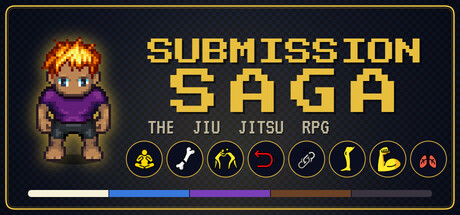
Some UI icons, character and creature sprites, and other in-game graphics in Submission Saga were created with the assistance of generative AI image tools (including Pixellab.ai), and portions of the store page text were drafted with AI writing assistance. Portions of the game's source code were also written with the assistance of an AI coding assistant. All AI-generated content was reviewed, edited, and curated by the developer before inclusion. No AI is used to generate content live during gameplay.
We use AI to code faster and generate placeholder art assets. All the AI-generated art assets (and most of the stock assets) will be replaced before the game is launched. The game design, art direction, and overall vision is all from our (human!) team.
Some of the text descriptions on the game’s store page, certain in-game localization texts, and some images used in the test version were generated with the help of AI technology.
We use generative AI in a limited capacity for certain visual and written content.
Generative AI may be used for:
- Marketing materials, including promotional artwork, trailer graphics, and store page content.
- Loading screen images and decorative in-game poster artwork.
- Assistance with some written text, such as tutorials and informational content.
Generative AI is not used for:
- Live content generation during gameplay.
- Gameplay screenshots shown on the Steam store page.
- Maps, level geometry, character models, weapons, gameplay assets, game mechanics, or networking systems.
- Player-generated content.
As a solo indie developer, I use AI to assist with multi-language localization and the creation of some background images. This helps me provide a smoother, more accessible player experience while allowing me to focus more time on gameplay, systems, level design, and other core parts of the game.
Generative AI tools were used during development to assist with portions of the game's programming workflow, including prototyping, debugging, and code iteration. All code is reviewed, modified, integrated, and validated by the developer.
Some visual assets, promotional images, and audio content for this game were created or assisted using generative AI tools. All AI-generated content was reviewed and edited by the developer before inclusion in the game.
Some cosmetic assets and sticker designs used in the game were created or assisted with the help of generative AI tools. All AI-generated content was reviewed and modified before being included in the final product.
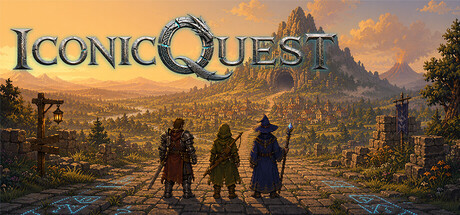
Some music tracks in IconicQuest are generated using AI based on the developer's creative direction and prompts, then curated and edited for in-game use. Some sound effects are generated using AI.
Promotional artwork on the Steam store page (capsule images) was generated with AI image tools as a creative starting point, then edited, composited with hand-crafted typography, and color-corrected by the developer in post-production.
All in-game artwork, character sprites, tiles, environments, UI
elements, and animations, is created entirely by the developer in Aseprite or sourced from art professionals. No AI is used for in-game pixel art.
All in-game text content (quest dialogue, item names, NPC scripts, lore, and tutorials) is written by the developer and AI.
No live AI generation occurs during gameplay. All AI-assisted content is finalized and shipped as static assets.
- Two in-game images have been upscaled/enhanced using generative AI: the NeuroLink portrait and one UI border asset.
- Achievement icon art is AI assisted.
While we prefer to avoid the use of generative AI, its limited use helped improve presentation given the constraints of our team.
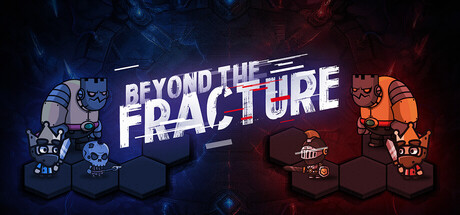
Beyond the Fracture contains both pre-generated and live-generated AI content.
Pre-generated AI content:
Some visual, audio, and voice assets were generated with AI tools during development and reviewed, edited, and curated by the developers before being included in the game. This includes selected construct opponent portraits, spoken name clips, character histories, and HERALD-7 commentary voice clips in German and English.
Live-generated AI content:
During first-time onboarding, the game uses external AI services to generate three candidate player identities live. Each identity includes a generated profile portrait and a generated spoken name introduction. The profile portraits are additionally guided by internal short character descriptions generated from predefined archetypes and prompt templates.
This live generation is constrained by predefined prompts, fixed character archetypes, a controlled name system, and no free-form text input from players. The player selects one of the three generated identities. The chosen identity cannot be changed during the current Playtest, and repeated regeneration is not available during normal gameplay.
No live AI generation occurs during normal matches after onboarding.
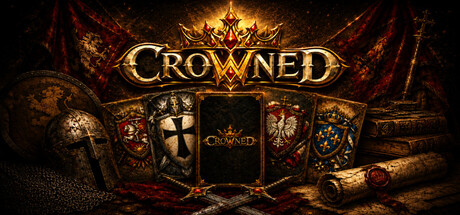
Some artwork and visual assets in Crowned, including
card illustrations and background graphics, were created with the assistance of generative AI tools. All content was
reviewed, curated and integrated by the developer.
Most of this game is AI-generated. In-game text (UI, game names, descriptions), graphics (player icons, vector elements), code and the majority of the micro-game implementations — all AI, then reviewed and curated by the developer. Localization to all non-English languages is AI-translated. No AI runs at runtime; everything is pre-generated and shipped statically.
Generative AI tools were used as supportive assistance in the creation of certain promotional materials, concept art, temporary text, and marketing content during development.
All final in-game content is manually reviewed, edited, and integrated by the development team.
Temporary pre-rendered visual assets were created with the assistance of generative AI tools. The game does not use generative AI during gameplay and does not connect to external AI services while running.
World of Qreatures features a cutting-edge 'Qreature Lab' where players can scan real-world QR codes or breed existing creatures to discover entirely new species.
The game utilizes a custom generative AI pipeline to create these unique assets at runtime, including 3D meshes, textures, procedural audio cries, and combat statistics. Additionally, some wild monsters found in the handcrafted world are pre-generated using this same pipeline and carefully curated by the developer to ensure high-quality gameplay and visual consistency. Every Qreature generated is a unique biological signature within the game's ecosystem.
ARB: Alien Races Battle is developed by a solo human author (Raphael Tremblay) with assistance from Anthropic's Claude AI as a coding, art, and writing collaborator throughout production. Specifically:
- Some pixel-art unit sprites, ability icons, and UI elements were generated as SVG code with Claude's help, then reviewed, edited, and approved by the developer.
- In-game ability descriptions, Field Manual codex entries, and supplementary lore text were written with Claude as a writing collaborator, all building on the existing canon of The Alien Races Book (a separate, fully human-authored book by the same author that predates this game by years).
- Game code (gameplay engine, multiplayer infrastructure, UI logic) was developed with Claude as a coding-pair assistant.
Every piece of AI-assisted content was reviewed and edited by the human developer before shipping. The game's core IP — the 60+ documented alien races, their homeworlds, and their first-contact records — comes from The Alien Races Book and is entirely human-authored.
ARB does not use AI to generate content live during gameplay. All in-game content (units, sprites, abilities, sound, text, music) is finalized at build time and shipped as static assets.
I believe in being fully transparent with my players regarding the tools used to bring this project to life. As a solo developer and non-native English speaker, I have utilized AI as a supportive tool to enhance the experience, though the core vision and logic of the game remain my own.
Art & Visuals: To ensure the game has a polished aesthetic, I used AI to refine my hand-drawn concepts into final assets. This allowed me to translate my original sketches into high-quality visuals that I otherwise could not have afforded as an independent creator.
Language & Localization: With over 1,500 unique glyphs and numerous Rune combinations, I used AI to assist with naming and linguistic consistency. This ensures that the English translation is natural and clear for all players.
Real-Time Community Chat: To foster an inclusive community, the game features an integrated translation tool. This allows players to chat in their native languages while providing instant translations for others, ensuring everyone can participate in the conversation.
Development & Optimization: AI assisted in proofing my original combat code and expanding on my base mechanics to create more diverse gameplay options. It also serves as a diagnostic tool to help me identify and patch bugs quickly, ensuring a stable and fair experience for everyone.
AI is a tool to empower my creativity, not a replacement for it. My goal is to use these technologies to deliver a deeper, more polished game than a solo project would typically allow.
Billionaire MAX is an indie game where the core game design, mechanics, balance, and creative direction were authored by the developer, while the implementation work was assisted by AI tools.
The following content was created with AI assistance:
- Source code: Game logic, UI, networking, and other code was written with the help of AI coding assistants. All code was reviewed, tested, and integrated by the developer.
- Visual assets: Achievement icons, sector illustrations, and in-game card art were generated with AI image generation tools. The developer curated, edited, and selected every asset before inclusion.
- Sound effects: Created with AI audio generation tools. The developer curated and selected each sound effect before inclusion.
- Localization: Initial drafts of English, Korean, and Simplified Chinese translations were produced with AI assistance, then proofread and refined by the developer.
The following content was NOT created with AI:
- Game design and rules
- Music
- Final QA and gameplay tuning
No AI generation occurs at runtime. The game does not invoke any AI service during gameplay; players never see content produced live by AI.
WinBolo's core engine and gameplay code was originally written by John Morrison between 1998 and 2008. The 2.0 modernization — including build system updates, the networking rewrite and platform ports — was developed with assistance from AI coding tools, with all architectural decisions, code review, and final integration handled by John Morrison.
Some non-gameplay marketing materials — including images and video elements used in trailers, social media, and the store page — were created using AI image generation as a starting point, with composition, editing, effects, and final selection done by hand. Gameplay screenshots and video footage are unedited captures from the actual game.
The game itself contains no generative AI content at runtime. Player-facing in-game assets (graphics, sound, music, text, UI) are human-created. The in-game AI opponents ("Brains," including NewAutopilot and future ML-trained agents) use traditional game AI techniques and trained reinforcement-learning models — they don't generate text, images, or audio during play.
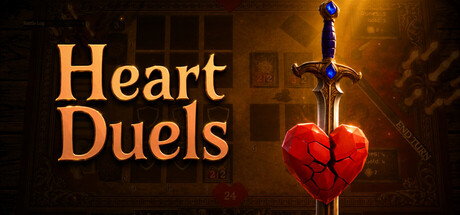
Heart Duels is a solo-developed game. I use AI-assisted tools for some art and audio. All assets are curated and integrated by me to create a cohesive experience.
All gameplay systems, game design decisions, balancing decisions, story/context decisions, implementation choices, and final creative decisions were made by the development team.
Generative AI tools were used only as assistive tools during development. This may include support for brainstorming, improving workflows, and creating or refining some static 2D visual materials used in the game and its marketing, such as item icons, UI-related images, capsule/key art elements, and visuals that may appear in trailers or screenshots.
All AI-assisted materials were reviewed, selected, edited, and approved by the developers before being included. No AI system makes gameplay decisions, controls game logic, generates levels, creates player-facing content, or produces images, videos, text, audio, or any other content in real time during gameplay.
Some visual assets used in Runemoria – Blades of Memory were created with the assistance of generative AI tools and have been modified, curated, and integrated as part of the game’s development process. AI-generated content is limited to pre-rendered visual assets and does not generate gameplay content during play.
AI-assisted tools were used as reference material during early character design iteration. The final in-game assets were significantly modified and finalized manually by the developer. No live-generated AI content is present during gameplay.
As a small indie studio, we use generative AI tools to assist in parts of our art creation process. This helps us improve the quality and consistency of artwork while allowing our team to work more efficiently. All AI-assisted content is reviewed, refined, and integrated by our developers to ensure it meets the artistic vision and quality standards of the game.
Some UI icons, character and creature sprites, and other in-game graphics in Submission Saga were created with the assistance of generative AI image tools (including Pixellab.ai), and portions of the store page text were drafted with AI writing assistance. Portions of the game's source code were also written with the assistance of an AI coding assistant. All AI-generated content was reviewed, edited, and curated by the developer before inclusion. No AI is used to generate content live during gameplay.
We use AI to code faster and generate placeholder art assets. All the AI-generated art assets (and most of the stock assets) will be replaced before the game is launched. The game design, art direction, and overall vision is all from our (human!) team.
Some of the text descriptions on the game’s store page, certain in-game localization texts, and some images used in the test version were generated with the help of AI technology.
We use generative AI in a limited capacity for certain visual and written content.
Generative AI may be used for:
- Marketing materials, including promotional artwork, trailer graphics, and store page content.
- Loading screen images and decorative in-game poster artwork.
- Assistance with some written text, such as tutorials and informational content.
Generative AI is not used for:
- Live content generation during gameplay.
- Gameplay screenshots shown on the Steam store page.
- Maps, level geometry, character models, weapons, gameplay assets, game mechanics, or networking systems.
- Player-generated content.
As a solo indie developer, I use AI to assist with multi-language localization and the creation of some background images. This helps me provide a smoother, more accessible player experience while allowing me to focus more time on gameplay, systems, level design, and other core parts of the game.
Generative AI tools were used during development to assist with portions of the game's programming workflow, including prototyping, debugging, and code iteration. All code is reviewed, modified, integrated, and validated by the developer.
Some visual assets, promotional images, and audio content for this game were created or assisted using generative AI tools. All AI-generated content was reviewed and edited by the developer before inclusion in the game.
Some cosmetic assets and sticker designs used in the game were created or assisted with the help of generative AI tools. All AI-generated content was reviewed and modified before being included in the final product.
Some music tracks in IconicQuest are generated using AI based on the developer's creative direction and prompts, then curated and edited for in-game use. Some sound effects are generated using AI.
Promotional artwork on the Steam store page (capsule images) was generated with AI image tools as a creative starting point, then edited, composited with hand-crafted typography, and color-corrected by the developer in post-production.
All in-game artwork, character sprites, tiles, environments, UI
elements, and animations, is created entirely by the developer in Aseprite or sourced from art professionals. No AI is used for in-game pixel art.
All in-game text content (quest dialogue, item names, NPC scripts, lore, and tutorials) is written by the developer and AI.
No live AI generation occurs during gameplay. All AI-assisted content is finalized and shipped as static assets.
- Two in-game images have been upscaled/enhanced using generative AI: the NeuroLink portrait and one UI border asset.
- Achievement icon art is AI assisted.
While we prefer to avoid the use of generative AI, its limited use helped improve presentation given the constraints of our team.
Beyond the Fracture contains both pre-generated and live-generated AI content.
Pre-generated AI content:
Some visual, audio, and voice assets were generated with AI tools during development and reviewed, edited, and curated by the developers before being included in the game. This includes selected construct opponent portraits, spoken name clips, character histories, and HERALD-7 commentary voice clips in German and English.
Live-generated AI content:
During first-time onboarding, the game uses external AI services to generate three candidate player identities live. Each identity includes a generated profile portrait and a generated spoken name introduction. The profile portraits are additionally guided by internal short character descriptions generated from predefined archetypes and prompt templates.
This live generation is constrained by predefined prompts, fixed character archetypes, a controlled name system, and no free-form text input from players. The player selects one of the three generated identities. The chosen identity cannot be changed during the current Playtest, and repeated regeneration is not available during normal gameplay.
No live AI generation occurs during normal matches after onboarding.
Some artwork and visual assets in Crowned, including
card illustrations and background graphics, were created with the assistance of generative AI tools. All content was
reviewed, curated and integrated by the developer.
Most of this game is AI-generated. In-game text (UI, game names, descriptions), graphics (player icons, vector elements), code and the majority of the micro-game implementations — all AI, then reviewed and curated by the developer. Localization to all non-English languages is AI-translated. No AI runs at runtime; everything is pre-generated and shipped statically.
Generative AI tools were used as supportive assistance in the creation of certain promotional materials, concept art, temporary text, and marketing content during development.
All final in-game content is manually reviewed, edited, and integrated by the development team.
Temporary pre-rendered visual assets were created with the assistance of generative AI tools. The game does not use generative AI during gameplay and does not connect to external AI services while running.
World of Qreatures features a cutting-edge 'Qreature Lab' where players can scan real-world QR codes or breed existing creatures to discover entirely new species.
The game utilizes a custom generative AI pipeline to create these unique assets at runtime, including 3D meshes, textures, procedural audio cries, and combat statistics. Additionally, some wild monsters found in the handcrafted world are pre-generated using this same pipeline and carefully curated by the developer to ensure high-quality gameplay and visual consistency. Every Qreature generated is a unique biological signature within the game's ecosystem.
ARB: Alien Races Battle is developed by a solo human author (Raphael Tremblay) with assistance from Anthropic's Claude AI as a coding, art, and writing collaborator throughout production. Specifically:
- Some pixel-art unit sprites, ability icons, and UI elements were generated as SVG code with Claude's help, then reviewed, edited, and approved by the developer.
- In-game ability descriptions, Field Manual codex entries, and supplementary lore text were written with Claude as a writing collaborator, all building on the existing canon of The Alien Races Book (a separate, fully human-authored book by the same author that predates this game by years).
- Game code (gameplay engine, multiplayer infrastructure, UI logic) was developed with Claude as a coding-pair assistant.
Every piece of AI-assisted content was reviewed and edited by the human developer before shipping. The game's core IP — the 60+ documented alien races, their homeworlds, and their first-contact records — comes from The Alien Races Book and is entirely human-authored.
ARB does not use AI to generate content live during gameplay. All in-game content (units, sprites, abilities, sound, text, music) is finalized at build time and shipped as static assets.
I believe in being fully transparent with my players regarding the tools used to bring this project to life. As a solo developer and non-native English speaker, I have utilized AI as a supportive tool to enhance the experience, though the core vision and logic of the game remain my own.
Art & Visuals: To ensure the game has a polished aesthetic, I used AI to refine my hand-drawn concepts into final assets. This allowed me to translate my original sketches into high-quality visuals that I otherwise could not have afforded as an independent creator.
Language & Localization: With over 1,500 unique glyphs and numerous Rune combinations, I used AI to assist with naming and linguistic consistency. This ensures that the English translation is natural and clear for all players.
Real-Time Community Chat: To foster an inclusive community, the game features an integrated translation tool. This allows players to chat in their native languages while providing instant translations for others, ensuring everyone can participate in the conversation.
Development & Optimization: AI assisted in proofing my original combat code and expanding on my base mechanics to create more diverse gameplay options. It also serves as a diagnostic tool to help me identify and patch bugs quickly, ensuring a stable and fair experience for everyone.
AI is a tool to empower my creativity, not a replacement for it. My goal is to use these technologies to deliver a deeper, more polished game than a solo project would typically allow.
Billionaire MAX is an indie game where the core game design, mechanics, balance, and creative direction were authored by the developer, while the implementation work was assisted by AI tools.
The following content was created with AI assistance:
- Source code: Game logic, UI, networking, and other code was written with the help of AI coding assistants. All code was reviewed, tested, and integrated by the developer.
- Visual assets: Achievement icons, sector illustrations, and in-game card art were generated with AI image generation tools. The developer curated, edited, and selected every asset before inclusion.
- Sound effects: Created with AI audio generation tools. The developer curated and selected each sound effect before inclusion.
- Localization: Initial drafts of English, Korean, and Simplified Chinese translations were produced with AI assistance, then proofread and refined by the developer.
The following content was NOT created with AI:
- Game design and rules
- Music
- Final QA and gameplay tuning
No AI generation occurs at runtime. The game does not invoke any AI service during gameplay; players never see content produced live by AI.
WinBolo's core engine and gameplay code was originally written by John Morrison between 1998 and 2008. The 2.0 modernization — including build system updates, the networking rewrite and platform ports — was developed with assistance from AI coding tools, with all architectural decisions, code review, and final integration handled by John Morrison.
Some non-gameplay marketing materials — including images and video elements used in trailers, social media, and the store page — were created using AI image generation as a starting point, with composition, editing, effects, and final selection done by hand. Gameplay screenshots and video footage are unedited captures from the actual game.
The game itself contains no generative AI content at runtime. Player-facing in-game assets (graphics, sound, music, text, UI) are human-created. The in-game AI opponents ("Brains," including NewAutopilot and future ML-trained agents) use traditional game AI techniques and trained reinforcement-learning models — they don't generate text, images, or audio during play.
Heart Duels is a solo-developed game. I use AI-assisted tools for some art and audio. All assets are curated and integrated by me to create a cohesive experience.