








Disclosure
This game uses the assistance of Claude Code for code generation, ChatGPT for image generation, and Meshy for model generation.
- Creator
- Milk Barf Games
- Reviews
- -
- Added
- Jun 7, 2026
Public Steam disclosure research 25,497 disclosures tracked
Search developers’ Steam disclosures, compare classified AI use across games, and follow recorded changes. This index adds cross-game classifications and statistics to statements published on individual store pages.
Code help, debugging and other development work.
Capsule art, trailers and promotional material.
Pre-made art, audio, writing and other game assets.
Interactive or runtime AI features disclosed by the developer.
Groups reflect automatic analysis of public disclosures; mature records are excluded. These counts do not measure AI use across all of Steam. Missing or unclear statements cannot establish whether a game uses AI.
This game uses the assistance of Claude Code for code generation, ChatGPT for image generation, and Meshy for model generation.
Generative AI was used for a very limited portion of the programming and for most of the English translation. However, all textures and 3D models were created by human artists.
As a small indie team of 3 developers, we utilized AI technologies as a supplementary tool in highly specific areas to optimize our development pipeline and deliver a more immersive experience: Voice Acting: The character voice-overs in the game were generated using AI-assisted voice models. Concept Art: For the portrait designs appearing after the 2nd planet, AI was used strictly during the initial concept and ideation phase. All final assets were carefully refined and finalized by us to ensure strict visual consistency and match our artistic vision. Beyond these specific use cases, all programming, core game design, narrative, and primary in-game assets were handcrafted by our team. The game does not feature any live-generated AI content, and player safety/experience is fully controlled.
Some visual assets in this game were created with the assistance of generative AI tools. All generated content has been reviewed and curated by the developer before being included in the game.
Generative AI was used to assist in the creation of promotional artwork, marketing images, and store page assets. No AI-generated content is produced during gameplay, and no gameplay features rely on generative AI.
This product uses AI to generate conversation responses and voice output in real time. All AI processing runs locally on the user's machine. No content is pre-generated or stored on external servers.
Static art assets (store-page capsules, in-game card art, in-game icons) and audio placeholders are generated via Replicate (Google Nano Banana Pro for image, Lyria-2 / AudioGen for audio) using human-authored prompts. Outputs are reviewed by the developer before shipping. No live AI generation occurs during gameplay; all assets are baked at build time. I would like to pay for human assets, but I am moving fast. In the same way that AI turned 12 months of dev time into 2, it also affected how I skinned the MVP. This is best for communicating intention, and I can polish it with human art if there is traction.
AIvy is a next-generation desktop mascot whose character dialogue is generated by AI on the fly.When you talk to AIvy, or when the character spontaneously speaks up about something happening on your PC, the words aren't pre-written scripts — the AI thinks them up and replies in real time. The generated dialogue is then read aloud by a text-to-speech engine, synchronized to the character's lip movements.[What the AI generates]- The character's dialogue (text)[What the AI does NOT generate]The 3D character itself (VRM model), facial expressions, animations, UI, and sound effects are all pre-authored assets. No images, video, or music are generated by AI during use.[About the AI models]Dialogue generation (default, local inference): AIvy is a local LLM runner built on llama.cpp (the same kind of architecture used by LM Studio, Jan, GPT4All). On first launch you pick from a dropdown the open-source language model best suited to your language — Sarashina 2.2 3B (MIT) for Japanese, Qwen 2.5 3B (Apache 2.0) for the others — and download it once from HuggingFace. From then on inference happens entirely on your PC, and your conversations are never transmitted externally. The in-app catalog only offers models under permissive licenses (Apache 2.0 / MIT).Dialogue generation (optional, cloud LLM): For users without local-LLM-capable hardware, AIvy additionally offers optional cloud LLM integration with OpenAI, Anthropic Claude, and Google Gemini. Network traffic occurs only when the user has explicitly registered their own API key with the chosen provider in the in-app settings. API keys are stored with OS-level encryption (Windows DPAPI) on the user's device and are never sent to any AIvy server (we don't run one). Usage costs are billed directly by the chosen provider. When this feature is not used, no external traffic occurs and inference runs entirely locally.[Streaming / video creation]You may freely stream, record, and share content created with AIvy. Just follow the license terms of the VRM model, each TTS engine, and the language model you actually use — commercial use, monetization, and credit requirements vary per VRM/engine/model.[Things to know]AI responses vary every time, depending on the model you choose, the personality you configure, and what you say. For the rare case of an unexpected response, you can switch personality presets, change models, or pause speech at any time.
Character portraits and some narrative text were created with AI tool assistance during development. Game design, story direction, building sprites, music, and sound effects are human-authored. All content is reviewed and approved by the developer.
Enemy head textures were AI generated to avoid use of the likenesses of real people. All other assets were human-made.
Its used for some Art and some of the Code
LLM coding tools were used to assist programming and for localizing text into non-English languages. No AI tools were used in the art process, audio, game design, or balancing. No version prior to 0.9 contained LLM output.
We are using AI generated images for our store page materials and some in game visuals (some icons etc.)
Some artwork used on this game's store page and in promotional materials, as well as certain in-game art assets, was created with the assistance of generative AI tools. All AI-assisted content was reviewed and curated by the developer.
本游戏部分美术资产(包括武将立绘、音乐音效等)由 AI 工具辅助创作初稿,所有素材均经开发者人工筛选、修改与后期处理(PS 重绘、切图、上色调整等)。 游戏的玩法机制、剧情设计、文案撰写均由开发者独立完成,未使用AI 生成内容。
Artificial intelligence (AI) was leveraged for key aspects of the game's development, including in-game logic, support systems, and certain artistic assets.
Some visual assets in OMNICORIUM were generated using AI tools, either directly during development or sourced from third-party creators who used AI-assisted generation. AI is used exclusively for selected visual assets. It is not used for gameplay systems, player interactions, procedural mechanics, or dynamic content generation.
Clairval uses AI in the following limited ways: 1) Optional AI bot players: When a game host enables "Allow AI players", the server may fill empty seats with computer-controlled bot accounts at game start. These bots follow scripted server-side game logic (votes, night actions, chat). They are not powered by generative AI or large language models, and they do not learn from player conversations. 2) AI-generated visual assets (optional): Some provisional role card illustrations (placeholder JPG artwork) were created with AI-assisted tools during development. Final redrafted role cards (PNG) are human-made and always shown. Players can disable display of AI-generated placeholder art at any time in Account Settings → "Display AI-generated content?" (default: hidden until the player opts in). Clairval does not use generative AI to create in-match dialogue, role assignments, game outcomes, moderation decisions, or real-time gameplay content. All core game rules and results are determined by the game server.
AI was used to translate the game into several languages and generate some background images for the menus; the rest was done by hand.
Some of the sound designs we used partial ai sound effects and after we adjusted.
Artificial intelligence (AI) was leveraged for key aspects of the game's development, including in-game logic, support systems, and certain artistic assets.
This game uses generative AI tools during development to assist with the creation of certain art assets and some repetitive development tasks. All content is manually designed, reviewed, selected, and integrated by the developer.
This game was developed with the assistance of generative AI tools. However, AI does not generate any content in real-time or directly within the application. It was used exclusively during the production phase to create certain user interface elements, including visual components visible in-game. All AI-generated content was reviewed and approved by the development team prior to integration.
Deep In The Mine was developed by a single person. Artificial intelligence was used to save time and correct certain shortcomings, particularly in audio creation and mesh generation.
AI was used in the creation of decorative paintings in the game. Some model assets were generated using AI before being reworked.
通过人工智能把语音转成文字。
The Logo while temporary, uses AI
Generative AI tools were used during development as an assistance tool for programming, debugging, design iteration, documentation, and store-page text drafting. All final game content, gameplay systems, assets, and published materials are reviewed, selected, and implemented by the developer. Sol Survivor does not use live generative AI during gameplay. Players do not interact with an AI text, image, audio, or content-generation system while playing.
Some Steam community assets were created or refined with the assistance of generative AI.
Backgrounds and Icon created by AI.
Parts of the localization and most character portraits were created with the assistance of AI. All relevant content was manually reviewed and edited by me where possible and necessary.
A few icons in the game are in made by taking a screenshot and adding a filter over the screenshot.
"Generative AI tools were used during the development of this game to assist with programming and narrative dialogue writing. All AI-assisted content has been reviewed and approved by the developer. No artificial intelligence generates content live during gameplay — ▎ all text, audio, and visuals are pre-authored and fixed."
Given I am a solo developer, Generative AI tools were utilized as development assistants to optimize workflows. Also, some of the backgrounds are based on images created with AI, as well as a few items. They were only used as a basis to start from and have been heavily edited manually afterwards to make them fit with the rest of the game's pixel art artstyle.
Generative AI tools are used exclusively during the development process to assist with creating store page and community-related visual materials. No generative AI content is used in the core gameplay experience or real-time in-game systems.
Used for creating the game banner
AI tools were used only for creating promotional visual materials.
Built solo with Cursor AI, Realmlords is a one-developer passion project: an action roguelite forged through rapid iteration, creative experimentation, and nonstop refinement from a single creator’s vision. Over 2 years in the making.
I used AI for localization.
Some NPC portraits and player character face options in Starminer were created with the assistance of generative AI image tools during development. Generative AI was also used to help generate some informational dialogue, help texts, and tooltips. All AI-generated assets and text were reviewed, curated, and edited by our team before being integrated into the final build. No generative AI is used at runtime. All content shipped in the game is static and pre-authored.
KI wird ungesetzt zur Unerstützung bei der Programmierung und der Grafikerstellung.
Only several 2D icons are generated with AI.
Gen AI is used for localisation on the store page and ingame.
Artificial intelligence was used to create the game. With the help of ChatGPT, we were able to analyze and organize several thousand messages from eco-volunteer chat groups, as well as dozens of media articles, podcasts, and vlogs about the spill. All of this was necessary to identify key events, troubling themes, and the moods of people involved in disaster response, and was used by a human author to further develop the plot and dialogue. The images were created using Midjourney. Photos of real landscapes, but not people, were used to generate prompts. The game’s music was generated in Stability AI. The code to adapt the existing game structure to the Ren’py framework was written using Cursor AI.
The Moment of Panic uses generative artificial intelligence during gameplay to power its AI advisor characters. These locally running, open-source LLM-based advisors respond to intelligence signals, argue from assigned personalities, and attempt to influence the player’s decisions. Core game logic, threat truth, scoring, win/loss conditions, and outcomes are controlled by the game itself, not by the language model. Generative AI is used for dynamic in-game text responses only, and for some images shown alongside that text. Images are not generated at runtime.
Audio in the development of this game was created using AI tools.
The music and background tracks in the game were pre-generated using generative AI platforms. These AI-generated audio files were curated to fit the project's atmosphere and statically included in the game. The game does not use any real-time AI generation for content or music.
This game uses AI-generated fighter portraits and promotional artwork. All AI content is pre-generated and included with the game. No AI content is generated live during gameplay.
Some code assistance tools and limited generative AI techniques were used during development. Some card artwork has been refined with the assistance of AI-based editing tools.
Some promotional artwork and store graphic backgrounds may include AI-assisted elements. The core gameplay, UI, ships, enemies, mechanics, systems and visual identity are created and edited by the developer using original game assets.
| Title⇅ | Disclosure | Creator⇅ | Src | Reviews⇅ | Added↓ |
|---|---|---|---|---|---|
 Direlands: Extraction In-game content artcode | This game uses the assistance of Claude Code for code generation, ChatGPT for image generation, and Meshy for model generation. | Milk Barf Games | - | Jun 7, 2026 | |
 Spider Subway In-game content textcode | Generative AI was used for a very limited portion of the programming and for most of the English translation. However, all textures and 3D models were created by human artists. | Bronzeman Socks | - | Jun 6, 2026 | |
 Sodaman In-game content audioart | As a small indie team of 3 developers, we utilized AI technologies as a supplementary tool in highly specific areas to optimize our development pipeline and deliver a more immersive experience:
Voice Acting: The character voice-overs in the game were generated using AI-assisted voice models.
Concept Art: For the portrait designs appearing after the 2nd planet, AI was used strictly during the initial concept and ideation phase. All final assets were carefully refined and finalized by us to ensure strict visual consistency and match our artistic vision.
Beyond these specific use cases, all programming, core game design, narrative, and primary in-game assets were handcrafted by our team. The game does not feature any live-generated AI content, and player safety/experience is fully controlled. | Tape Corps | 692 | Jun 6, 2026 | |
 Voxenvale In-game content art | Some visual assets in this game were created with the assistance of generative AI tools. All generated content has been reviewed and curated by the developer before being included in the game. | PixelCat | - | Jun 6, 2026 | |
 Surviving The Island Store/marketing art | Generative AI was used to assist in the creation of promotional artwork, marketing images, and store page assets. No AI-generated content is produced during gameplay, and no gameplay features rely on generative AI. | DragoPiccolino | - | Jun 6, 2026 | |
 PrivaEmanator Live AI textaudio | This product uses AI to generate conversation responses and voice output in real time. All AI processing runs locally on the user's machine. No content is pre-generated or stored on external servers. | Priva Studio | - | Jun 6, 2026 | |
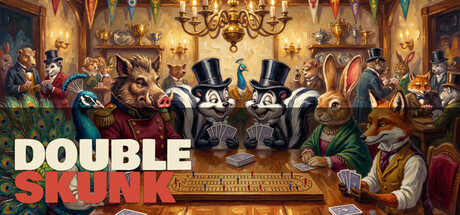 Double Skunk In-game content artaudio | Static art assets (store-page capsules, in-game card art, in-game icons) and audio placeholders are generated via Replicate (Google Nano Banana Pro for image, Lyria-2 / AudioGen for audio) using human-authored prompts. Outputs are reviewed by the developer before shipping. No live AI generation occurs during gameplay; all assets are baked at build time.
I would like to pay for human assets, but I am moving fast. In the same way that AI turned 12 months of dev time into 2, it also affected how I skinned the MVP. This is best for communicating intention, and I can polish it with human art if there is traction. | Kerrberry Systems | - | Jun 5, 2026 | |
 AIvy Live AI text | AIvy is a next-generation desktop mascot whose character dialogue is generated by AI on the fly.When you talk to AIvy, or when the character spontaneously speaks up about something happening on your PC, the words aren't pre-written scripts — the AI thinks them up and replies in real time. The generated dialogue is then read aloud by a text-to-speech engine, synchronized to the character's lip movements.[What the AI generates]- The character's dialogue (text)[What the AI does NOT generate]The 3D character itself (VRM model), facial expressions, animations, UI, and sound effects are all pre-authored assets. No images, video, or music are generated by AI during use.[About the AI models]Dialogue generation (default, local inference): AIvy is a local LLM runner built on llama.cpp (the same kind of architecture used by LM Studio, Jan, GPT4All). On first launch you pick from a dropdown the open-source language model best suited to your language — Sarashina 2.2 3B (MIT) for Japanese, Qwen 2.5 3B (Apache 2.0) for the others — and download it once from HuggingFace. From then on inference happens entirely on your PC, and your conversations are never transmitted externally. The in-app catalog only offers models under permissive licenses (Apache 2.0 / MIT).Dialogue generation (optional, cloud LLM): For users without local-LLM-capable hardware, AIvy additionally offers optional cloud LLM integration with OpenAI, Anthropic Claude, and Google Gemini. Network traffic occurs only when the user has explicitly registered their own API key with the chosen provider in the in-app settings. API keys are stored with OS-level encryption (Windows DPAPI) on the user's device and are never sent to any AIvy server (we don't run one). Usage costs are billed directly by the chosen provider. When this feature is not used, no external traffic occurs and inference runs entirely locally.[Streaming / video creation]You may freely stream, record, and share content created with AIvy. Just follow the license terms of the VRM model, each TTS engine, and the language model you actually use — commercial use, monetization, and credit requirements vary per VRM/engine/model.[Things to know]AI responses vary every time, depending on the model you choose, the personality you configure, and what you say. For the rare case of an unexpected response, you can switch personality presets, change models, or pause speech at any time. | Quon System LLC | - | Jun 5, 2026 | |
 Luna Meridian In-game content arttext | Character portraits and some narrative text were created with AI tool assistance during development. Game design, story direction, building sprites, music, and sound effects are human-authored. All content is reviewed and approved by the developer. | Field Noise Co. | - | Jun 5, 2026 | |
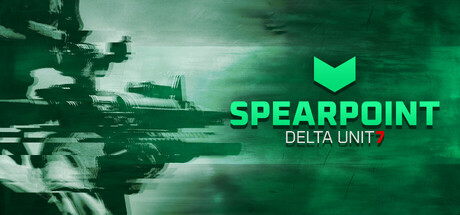 SPEARPOINT - Delta Unit 7 In-game content art | Enemy head textures were AI generated to avoid use of the likenesses of real people. All other assets were human-made. | wtx | - | Jun 5, 2026 | |
 Geometry Fight In-game content artcode | Its used for some Art and some of the Code | DiaP | - | Jun 5, 2026 | |
 Antistatic In-game content text | LLM coding tools were used to assist programming and for localizing text into non-English languages. No AI tools were used in the art process, audio, game design, or balancing. No version prior to 0.9 contained LLM output. | bluehexagons | - | Jun 5, 2026 | |
 All For $1 In-game content art | We are using AI generated images for our store page materials and some in game visuals (some icons etc.) | loot ducks | - | Jun 5, 2026 | |
 Send Them Fly In-game content art | Some artwork used on this game's store page and in promotional materials, as well as certain in-game art assets, was created with the assistance of generative AI tools. All AI-assisted content was reviewed and curated by the developer. | 奕枫 Aurel Voss | - | Jun 5, 2026 | |
 三国义 In-game content artaudio | 本游戏部分美术资产(包括武将立绘、音乐音效等)由 AI 工具辅助创作初稿,所有素材均经开发者人工筛选、修改与后期处理(PS 重绘、切图、上色调整等)。
游戏的玩法机制、剧情设计、文案撰写均由开发者独立完成,未使用AI 生成内容。 | XL Studio | 63 | Jun 5, 2026 | |
 Cold Site In-game content artcode | Artificial intelligence (AI) was leveraged for key aspects of the game's development, including in-game logic, support systems, and certain artistic assets. | PHANTOM PRODUCTIONS YAZILIM LIMITED SIRKETI | - | Jun 4, 2026 | |
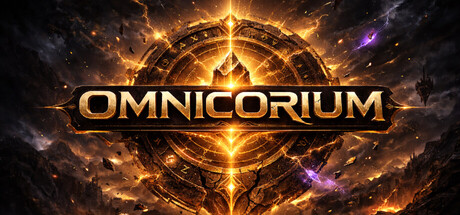 OMNICORIUM In-game content art | Some visual assets in OMNICORIUM were generated using AI tools, either directly during development or sourced from third-party creators who used AI-assisted generation.
AI is used exclusively for selected visual assets. It is not used for gameplay systems, player interactions, procedural mechanics, or dynamic content generation. | Malakyel | - | Jun 4, 2026 | |
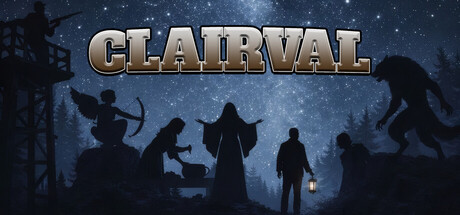 Clairval Live AI art | Clairval uses AI in the following limited ways:
1) Optional AI bot players: When a game host enables "Allow AI players", the server may fill empty seats with computer-controlled bot accounts at game start. These bots follow scripted server-side game logic (votes, night actions, chat). They are not powered by generative AI or large language models, and they do not learn from player conversations.
2) AI-generated visual assets (optional): Some provisional role card illustrations (placeholder JPG artwork) were created with AI-assisted tools during development. Final redrafted role cards (PNG) are human-made and always shown. Players can disable display of AI-generated placeholder art at any time in Account Settings → "Display AI-generated content?" (default: hidden until the player opts in).
Clairval does not use generative AI to create in-match dialogue, role assignments, game outcomes, moderation decisions, or real-time gameplay content. All core game rules and results are determined by the game server. | Alpharkane | - | Jun 4, 2026 | |
 Gardens Of Lutonia In-game content textart | AI was used to translate the game into several languages and generate some background images for the menus; the rest was done by hand. | VOXELMANA | - | Jun 4, 2026 | |
 SCAVENGE PROTOCOL In-game content audio | Some of the sound designs we used partial ai sound effects and after we adjusted. | GORILLA DEV | - | Jun 4, 2026 | |
 Cypherpunk In-game content artcode | Artificial intelligence (AI) was leveraged for key aspects of the game's development, including in-game logic, support systems, and certain artistic assets. | PHANTOM PRODUCTIONS YAZILIM LIMITED SIRKETI | - | Jun 4, 2026 | |
 留学模拟器 In-game content art | This game uses generative AI tools during development to assist with the creation of certain art assets and some repetitive development tasks. All content is manually designed, reviewed, selected, and integrated by the developer. | Sleepless Studio | - | Jun 4, 2026 | |
 Farming Chillhood In-game content art | This game was developed with the assistance of generative AI tools. However, AI does not generate any content in real-time or directly within the application. It was used exclusively during the production phase to create certain user interface elements, including visual components visible in-game. All AI-generated content was reviewed and approved by the development team prior to integration. | Keyboard Smasherz | - | Jun 4, 2026 | |
 Deep in The Mine In-game content audioart | Deep In The Mine was developed by a single person. Artificial intelligence was used to save time and correct certain shortcomings, particularly in audio creation and mesh generation. | HanoriaStudio | - | Jun 4, 2026 | |
 Spirimonz In-game content art | AI was used in the creation of decorative paintings in the game. Some model assets were generated using AI before being reworked. | Featherworks Studio | - | Jun 4, 2026 | |
 言灵 In-game content audio | 通过人工智能把语音转成文字。 | 言灵AI实验室 | - | Jun 4, 2026 | |
 Shopkeeper's Legacy Store/marketing art | The Logo while temporary, uses AI | PhoenixDev | - | Jun 4, 2026 | |
 Sol Survivor In-game content codetext | Generative AI tools were used during development as an assistance tool for programming, debugging, design iteration, documentation, and store-page text drafting. All final game content, gameplay systems, assets, and published materials are reviewed, selected, and implemented by the developer.
Sol Survivor does not use live generative AI during gameplay. Players do not interact with an AI text, image, audio, or content-generation system while playing. | Evil Space Games | - | Jun 3, 2026 | |
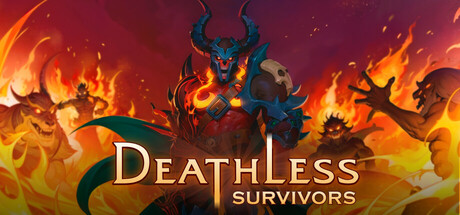 Deathless Store/marketing art | Some Steam community assets were created or refined with the assistance of generative AI. | OneTwoPlay | 181 | Jun 3, 2026 | |
 Wild Climbers Peak Panic In-game content art | Backgrounds and Icon created by AI. | DeepFra | - | Jun 3, 2026 | |
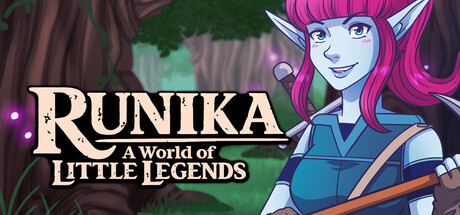 Runika: A World of Little Legends In-game content textart | Parts of the localization and most character portraits were created with the assistance of AI. All relevant content was manually reviewed and edited by me where possible and necessary. | Pascal Dittrich | 88 | Jun 3, 2026 | |
 Lorne In-game content art | A few icons in the game are in made by taking a screenshot and adding a filter over the screenshot. | Lorne Studios | - | Jun 3, 2026 | |
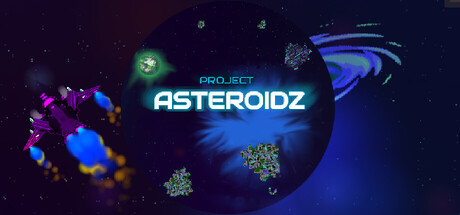 Project AsteroidZ In-game content textcode | "Generative AI tools were used during the development of this game to assist with programming and narrative dialogue writing. All AI-assisted content has been reviewed and approved by the developer. No artificial intelligence generates content live during gameplay —
▎ all text, audio, and visuals are pre-authored and fixed." | Timothy E. Winnie | - | Jun 3, 2026 | |
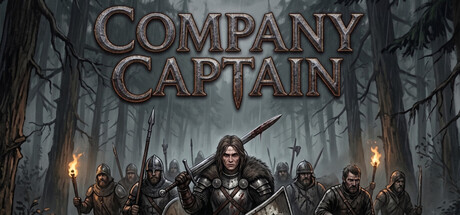 Company Captain: Westashes In-game content art | Given I am a solo developer, Generative AI tools were utilized as development assistants to optimize workflows.
Also, some of the backgrounds are based on images created with AI, as well as a few items. They were only used as a basis to start from and have been heavily edited manually afterwards to make them fit with the rest of the game's pixel art artstyle. | C&T | - | Jun 3, 2026 | |
 Kaizen Kitchen: A Restaurant Simulator Store/marketing art | Generative AI tools are used exclusively during the development process to assist with creating store page and community-related visual materials. No generative AI content is used in the core gameplay experience or real-time in-game systems. | Dark Secrets Studio | - | Jun 3, 2026 | |
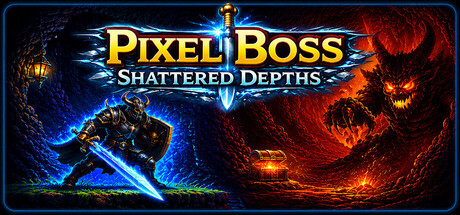 PixelBoss: Shattered Depths Store/marketing art | Used for creating the game banner | Quacky Games | 147 | Jun 3, 2026 | |
 Blockmind Store/marketing art | AI tools were used only for creating promotional visual materials. | Quacky Games | 142 | Jun 3, 2026 | |
 Realmlords Dev only code | Built solo with Cursor AI, Realmlords is a one-developer passion project: an action roguelite forged through rapid iteration, creative experimentation, and nonstop refinement from a single creator’s vision. Over 2 years in the making. | UltraPwned Gaming | - | Jun 3, 2026 | |
 Type For Speed In-game content text | I used AI for localization. | Akduman | - | Jun 3, 2026 | |
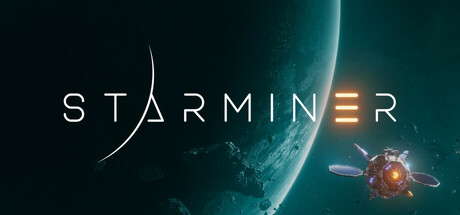 Starminer In-game content arttext | Some NPC portraits and player character face options in Starminer were created with the assistance of generative AI image tools during development. Generative AI was also used to help generate some informational dialogue, help texts, and tooltips. All AI-generated assets and text were reviewed, curated, and edited by our team before being integrated into the final build. No generative AI is used at runtime. All content shipped in the game is static and pre-authored. | CoolAndGoodGames | 1.8k | Jun 3, 2026 | |
 Passage 5 In-game content artcode | KI wird ungesetzt zur Unerstützung bei der Programmierung und der Grafikerstellung. | netmin games GmbH | - | Jun 3, 2026 | |
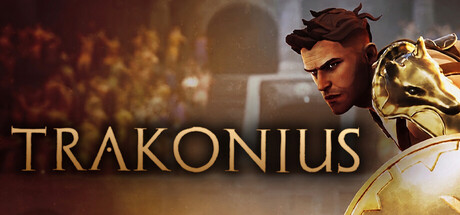 Trakonius In-game content art | Only several 2D icons are generated with AI. | Edvar Studio | 285 | Jun 3, 2026 | |
 Contract Cooks In-game content text | Gen AI is used for localisation on the store page and ingame. | Potato Peoples | - | Jun 3, 2026 | |
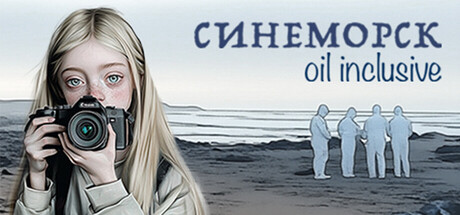 Синеморск oil inclusive In-game content artaudiotextcode | Artificial intelligence was used to create the game. With the help of ChatGPT, we were able to analyze and organize several thousand messages from eco-volunteer chat groups, as well as dozens of media articles, podcasts, and vlogs about the spill. All of this was necessary to identify key events, troubling themes, and the moods of people involved in disaster response, and was used by a human author to further develop the plot and dialogue. The images were created using Midjourney. Photos of real landscapes, but not people, were used to generate prompts. The game’s music was generated in Stability AI. The code to adapt the existing game structure to the Ren’py framework was written using Cursor AI. | 7x7 Games | - | Jun 3, 2026 | |
 The Moment of Panic Live AI textart | The Moment of Panic uses generative artificial intelligence during gameplay to power its AI advisor characters. These locally running, open-source LLM-based advisors respond to intelligence signals, argue from assigned personalities, and attempt to influence the player’s decisions. Core game logic, threat truth, scoring, win/loss conditions, and outcomes are controlled by the game itself, not by the language model. Generative AI is used for dynamic in-game text responses only, and for some images shown alongside that text. Images are not generated at runtime. | Badinc, LLC | - | Jun 3, 2026 | |
 Deep Drill Simulator In-game content audio | Audio in the development of this game was created using AI tools. | Renvati Games | - | Jun 3, 2026 | |
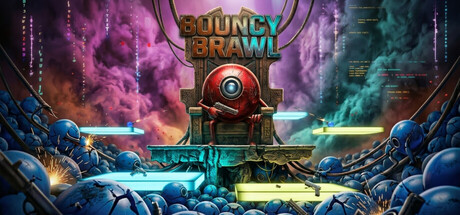 Bouncy Brawl In-game content audio | The music and background tracks in the game were pre-generated using generative AI platforms. These AI-generated audio files were curated to fit the project's atmosphere and statically included in the game. The game does not use any real-time AI generation for content or music. | Sky Software Studios | - | Jun 3, 2026 | |
 OPEN GUARD Store/marketing art | This game uses AI-generated fighter portraits and promotional artwork. All AI content is pre-generated and included with the game. No AI content is generated live during gameplay. | Goyski | - | Jun 3, 2026 | |
 Cycling Champion In-game content artcode | Some code assistance tools and limited generative AI techniques were used during development. Some card artwork has been refined with the assistance of AI-based editing tools. | RaulM | - | Jun 3, 2026 | |
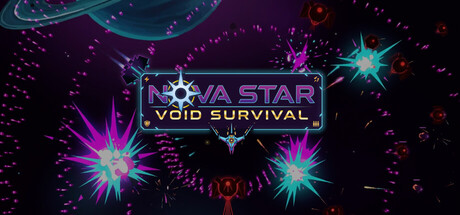 Nova Star: Void Survival In-game content art | Some promotional artwork and store graphic backgrounds may include AI-assisted elements. The core gameplay, UI, ships, enemies, mechanics, systems and visual identity are created and edited by the developer using original game assets. | A.C. ANDRADE SUPORTE EM TI | - | Jun 3, 2026 |


