








Disclosure
Some visual assets used in the game and/or its promotional materials were created with the assistance of generative AI tools and were reviewed and edited by the developer before use.
- Creator
- Quikgames
- Reviews
- -
- Added
- Sep 18, 2026
Public Steam disclosure research 25,376 disclosures tracked
Search developers’ Steam disclosures, compare classified AI use across games, and follow recorded changes. This index adds cross-game classifications and statistics to statements published on individual store pages.
Code help, debugging and other development work.
Capsule art, trailers and promotional material.
Pre-made art, audio, writing and other game assets.
Interactive or runtime AI features disclosed by the developer.
Groups reflect automatic analysis of public disclosures; mature records are excluded. These counts do not measure AI use across all of Steam. Missing or unclear statements cannot establish whether a game uses AI.
Some visual assets used in the game and/or its promotional materials were created with the assistance of generative AI tools and were reviewed and edited by the developer before use.
We conducted game testing with AI bots and fine-tuned the balance. TIC.EXE does not use AI while you play. The procedurally generated boards, runs and the chiptune soundtrack are all produced by hand-written algorithms, and no content is generated at runtime.
Shiny Gen ships over thirty original games and scenes. Their art, animation frames, music and sound effects were produced with the same AI generation tools the product offers to players, using the third party services listed in our Live-Generated answer. All of it was directed, reviewed and assembled by us before it shipped, and the game code itself is authored and hand edited by our team. No pre generated content in the shipping build is produced from a player's input, and none of it is generated at runtime from our side. Shiny Gen is a game creation tool, so live generation is the product rather than a feature of it. When a player asks for something, we call third party AI services to generate game code, images, animation frames, music, sound effects and 3D models from the text they type. Generation always happens at the player's explicit request, never in the background, and always requires a free Shiny Gen account and an internet connection. Every request goes to an established commercial AI provider: Anthropic, OpenAI, Google, OpenRouter, Cloudflare Workers AI, Runware, Retro Diffusion, Replicate and ElevenLabs. Each request is governed by that provider's usage policy and runs under the provider's own built-in safety systems at their default settings. We never disable, weaken or opt out of a provider's safety system anywhere in our product. OpenAI image generation runs under OpenAI's default moderation, and Google image generation carries Google's SynthID provenance watermarking. Guardrails on our side: - Our Community Rules, which are binding under our Terms of Service and published on our website, set out what may not be generated or shared. They prohibit, among other things, any sexual content involving a minor and sexual imagery of a real person without their consent, and they treat a prompt asking for prohibited content as a breach whether or not the model produces it. - Generation requires a signed in Shiny Gen account. There is no anonymous generation, so every request is attributable to an account. - Generation is rate limited per account and per address, and it is metered against a paid credit balance, so volume abuse is bounded rather than free. - The prompt and the resulting asset are retained against the account that made them, which is what lets us act on a report. - Anyone can report content to support@shinygen.ai. A person on our team reviews each report and can remove the content and close the account responsible. - The in app feed cannot receive player made content. It is served from our own catalogue and is enforced in code: the publish endpoint refuses any caller that is not our own account. Nothing a player generates can appear in another player's feed. - Multiplayer contains no free text channel of any kind. Communication is a closed set of eight fixed emotes, so there is no user to user text surface to moderate. - Player made games are never separate programs. They run as interpreted scripts inside our own sandbox, which is an allowlist: it has no filesystem, network, process or operating system access, and no reflection or dynamic dispatch. A generated game cannot execute native code, start a process, reach the network or read the player's files. We do not permit and do not support the generation of Adult Only sexual content, and we will act on reports received through Steam's in game reporting system and at support@shinygen.ai.
Generative AI was used only to create pre-generated background artwork for the Steam store and library images. The official logo, text, user interface, and gameplay screenshots were created separately. The game does not generate content during gameplay and does not connect to any third-party AI service.
Q-Rely uses locally running artificial intelligence to provide interactive AI-generated responses during use. The AI can generate text responses based on the user's input and, depending on the user's configuration, can also generate voice output using locally installed Text-to-Speech (TTS) engines. Generative AI was used during development to assist in creating the application's logo. The logo is a fixed visual asset and is not generated or modified by generative AI during use of the application. Q-Rely does not use generative AI to create the application's default character artwork, backgrounds, or other visual assets during use. The application's AI-generated content is primarily conversational text and, when voice output is enabled, synthesized speech. Q-Rely is designed to allow users to run AI models locally on their own computer. Users can select and install compatible AI models and configure the application's AI and voice settings according to their preferences.
During the development process, we may use procedural- and AI-based tools to assist with content creation. In all such cases, the final product reflects the creativity and expression of our own development team.
The branching narrative in FOREST QUEST '88 was generated during development using a locally-run AI language model (an offline Dolphin/LLaMA-family model via Ollama). All AI-generated text was produced ahead of time, then reviewed, edited, and curated by the developer before being baked into the finished game as fixed, hand-checked content. The shipped game contains no live AI generation — it plays back a static, pre-authored story. No player data is sent to any AI service; the game runs fully offline.
Some: posters, product photos on packaging, and songs were created or modified using AI.
AI Cultivation Sandbox uses generative AI technology to assist in creating game content. The AI systems in the game may generate or assist with generating character backgrounds, character dialogue, world events, story content, and visual assets. AI-generated content is guided by game systems and safety mechanisms to create a more dynamic and personalized cultivation world experience.
Xuanji · Diaochan uses a live generative AI to produce Diaochan's dialogue and spoken responses in real time. Every line of conversation and every spoken reply is generated by the model during play, not pre-written. The character artwork, scene illustrations, music, and sound effects in this game are created by our team without generative AI. Guardrails in place: A historical-fiction persona that keeps Diaochan in character as a 2nd-century figure and prevents her from speaking as a modern AI assistant. Retrieval-augmented responses grounded in a curated corpus of Han dynasty historical texts, so factual claims can be checked against primary sources. Pre-filtering of user inputs and post-filtering of model outputs against blocklists for sexual, violent, and politically sensitive content. An in-product report button on every response, plus mute and memory-reset controls. Players can also report any in-game AI response they consider inappropriate through the Steam overlay.
Some store visuals (capsule art) were created using AI image generation tools. Game text translations for languages other than English/Turkish were done with the assistance of AI translation and manual review. Cutscenes and the visual slides featuring dialogue were created with the assistance of AI.
Some visual assets, icons, and artwork in this game were created or refined with the assistance of generative AI. All AI-generated content was reviewed, edited, and approved by the developer before being included in the game. No AI-generated content is created during gameplay, and the game does not rely on AI services while being played.
Vectorline uses on-device AI for its optional voice features. When you speak commands to aircraft, a local speech-recognition model transcribes your voice into ATC instructions. Pilot and controller radio readbacks are spoken aloud using a local neural text-to-speech model. Both models run entirely on your own machine — no audio, text, or data is ever sent to an external server, and no internet connection is required for these features. The spoken content is limited to standard air-traffic-control phraseology generated by the simulator itself. You can disable these features in the settings without impacting gameplay.
I (Sean) use AI coding assistants: GitHub Copilot and Claude Code. I've written software for years and I teach games programming at university, and I use AI tools the way I use a profiler or a compiler. They helped build web tools Dave and I use to balance the ecosystem across long simulations, they're very good at finding edge-case bugs (I'm looking at you, pathing system), and they write the boilerplate for things like save states and UI. I never ship code I haven't read and thoroughly tested. No content in this game is AI-generated, and no generative AI runs while you play. Every sound, art and music asset in this game was made by a human. The game started out as the idea of “Asset Safari” around the concept of buying sprite packs from artists, which is what we have done. The music, sound and writing is also all human generated.
AI-assisted tools were used to help create some splash screen visuals and store page promotional artwork. All assets were reviewed and finalized by the developer before being included in the game and store materials.
This game uses a large language model to generate the AI companion’s dialogue and ending titles in real time. Dialogue responses are generated based on player input and conversation context. Generative AI tools were also used to help create or edit some store and promotional artwork and assist with text translation and localization.
Generative AI tools were used during development to create some pre-generated visual artwork used in marketing/store assets and some pre-generated background music used in the game. The game does not use generative AI to create content during gameplay.
AI was used to develop this game.
Capsule art has been created with the assistance of generative AI. NPC dialogue has also been created with the assistance of generative AI.
The game will connect to an open-source local large language model that is already built into the game upon first launch, and use it during gameplay to generate NPC dialogues, host responses, and reasoning review feedback. Players may also choose to access compatible third‑party large language model APIs. The text generated at runtime is based on player questions and current story data.
Some pre-generated visual assets in the game were created or assisted with generative AI tools, including environment artwork, interface illustrations, textures, and source material used for certain 3D assets. All such material was reviewed, edited, integrated, and tested by the developer. The game does not generate AI content during gameplay or connect to external AI services while running.
Generative AI tools were used to assist with English localization/translation of text originally written by the developer. No AI-generated content is created dynamically during gameplay. We do our best to rely on high-quality human translations whenever possible.
English: This game uses generative AI to create case stories, suspect dialogues, and investigative clues in real time during play. AI is provided by third-party services — you bring your own API key (entered in the in-game settings). No microtransactions.
Generative AI is used as a support tool during development, mainly to assist with the creation and iteration of some visual assets and promotional materials. All content is selected, edited, adapted, composed and implemented by the developer. No AI-generated content is created in real time during gameplay.
AI assistance was used in the development of this game. Players are strongly advised to play using mainstream free "flash" AI APIs such as Agnes API or Qwen API — simply fill in your API information in the game settings. For the sake of speed, enabling thinking mode is not recommended. This game contains optional generative AI features. In “AI-Enhanced Narrative Mode”, the game calls the third-party LLM API you provide yourself, generating more immersive event text in real time as you play. This mode is entirely optional: even without connecting any API, you can still fully experience all of the built-in, human-written historical content and the core gameplay. The game will not use your gameplay data to train any models. All AI-generated content is controlled by your own API key and quota, and you are responsible for your own usage.
This game uses generative artificial intelligence to assist with story planning, writing, and editing, as well as to create character artwork, backgrounds, event illustrations, music, and selected sound effects. All generated content was reviewed, selected, revised, and edited by the developer before being incorporated into the game. All AI-generated content was created in advance during development. The game does not generate new content while you play, and no player input or personal information is sent to any generative AI service.
Generative AI was used to prototype and stylize most pixel art. Generative AI was NOT used for writing, music, or mechanics.
Pre-generated: Some 2D illustrations and the pre-recorded narration were produced with AI tools and reviewed by the developers before inclusion. Live-generated: An on-device language model (no internet connection) writes in-game text such as narration, dialogue, and the names and lore of items, relics and skills, and selects among game-defined options for certain run content. Damage, stats, difficulty and progression are governed by the game's own rules. Generated text is checked before it is shown, and no art or audio is generated at runtime.
- Used generative AI to adjust the game program - Used generative AI to create art assets - Used generative AI to generate background music
Metlivi Adventure uses generative AI to create certain in-game content, including narrative text, visual elements, and, where applicable, music. AI-generated content is used to support dynamic, player-driven adventures.
This game was created with AI‑assisted generation
Lumi uses generative AI to create dynamic conversations and spoken responses in real time. AI inference, speech recognition and speech synthesis run locally on the player's PC. AI model files are downloaded during setup, but player conversations and generated responses are not sent to an external AI service. Available capabilities may vary depending on the locally selected model.
i used ai for some images
Asiden uses generative AI to create companion conversations, custom personality text and spoken responses during use. When screen awareness is enabled, AI can interpret screen content to inform its responses. Local AI features run on your computer. Optional cloud features send the information needed for the selected feature through Asiden’s managed service to external AI providers. Generated responses may be inaccurate and can include mature language, humour and non-explicit flirtation.
Pre-generated generative AI was used during development to create and refine some character illustrations, 3D character models, and selected visual or marketing assets. All generated material was reviewed and edited by the developer before inclusion. The game does not generate AI content during play.
The application icon and the promotional artwork on this store page were created with the assistance of generative AI tools, then selected and reviewed by a human. The application itself does not generate any content during use: it bundles open-source, pre-trained AI models (Qwen3-VL-Embedding-2B and Qwen3-VL-Reranker-2B, Apache-2.0) that run entirely locally and offline on your PC. These models are used solely to analyze your own photos and videos — converting them into numeric feature vectors — to enable private, offline semantic search. No images, text, audio or other content is generated, and no data ever leaves your device.
To enhance the gaming experience, a very small portion of the video footage, visual effects, and game interface were created with the assistance of artificial intelligence. AI-generated content accounts for less than 1% of the total content. Thank you for your understanding.
The game features AI‑versus‑AI gameplay, but you need to provide access information for the general‑purpose AI.This may consume your tokens. Alternatively, you can skip the AI connection, which will not affect your gameplay experience.
Some images are AI-generated. Speech is synthesized using text-to-speech (TTS).
i used some AI made images along with human made art. i may remove them before the full release.
Anomaly profile image
This game was created by a solo developer. During development, generative AI was used to assist with some artwork, store promotional images, localized text, and narrative materials. While the game is running, it connects to external AI services to dynamically generate Froggy’s dialogue, travel letters, postcard images, and parts of its travel stories based on player conversations, character memories, real-world weather, and current travel status. Generated content may vary depending on player input and service availability.
We used generative AI tools (such as Claude) during development to assist with creating certain in-game assets, textures, or text elements. All AI-generated content has been reviewed, selected, and integrated by human creators into the final game.
Generative AI tools were used during development to assist with the creation of some visual assets and development materials. All AI-assisted content was reviewed and integrated by the developer. No generative AI is used during gameplay.
this game is made by ai
Neural Defense was developed by a five-person indie team using a combination of hand-crafted work and generative AI tools. Generative AI was used during development to assist with music composition, concept art, portions of the game's code, and the editing and expansion of some narrative text. All final in-game assets — including 3D models, textures, and visual art seen during gameplay — were hand-crafted by the studio's artists. No content or code is generated live during gameplay; everything was created, reviewed, and finalized by the team prior to release.
Dream Simulators uses generative AI to create dynamic dialogue, story continuations, characters, missions, and narrative events based on player input and the active Lore system. Each Expansion Pack features its own world, Lore, characters, and adventures, creating a unique storytelling experience. The AI also generates creative scene descriptions and prompts that players can use as inspiration for creating images and videos. Because the experience is driven by player input, generated content may vary between playthroughs.
This game uses generative AI to provide personalized choices and free-form conversations based on player input and profile information. The main story and scenarios are written by human writers.
Generative AI was used in the creation of the background images and certain sound elements of this game.
During the development process, we may use procedural- and AI-based tools to assist with content creation. In all such cases, the final product reflects the creativity and expression of our own development team.
| Title⇅ | Disclosure | Creator⇅ | Src | Reviews⇅ | Added↓ |
|---|---|---|---|---|---|
 Shopping Center Simulator In-game content art | Some visual assets used in the game and/or its promotional materials were created with the assistance of generative AI tools and were reviewed and edited by the developer before use. | Quikgames | - | Sep 18, 2026 | |
 TIC.EXE Dev only | We conducted game testing with AI bots and fine-tuned the balance.
TIC.EXE does not use AI while you play. The procedurally generated boards, runs and the chiptune soundtrack are all produced by hand-written algorithms, and no content is generated at runtime. | RedRock Games | - | Sep 18, 2026 | |
 Shiny Gen Live AI artaudiotextcode | Shiny Gen ships over thirty original games and scenes. Their art, animation frames, music and sound effects were produced with the same AI generation tools the product offers to players, using the third party services listed in our Live-Generated answer. All of it was directed, reviewed and assembled by us before it shipped, and the game code itself is authored and hand edited by our team. No pre generated content in the shipping build is produced from a player's input, and none of it is generated at runtime from our side.
Shiny Gen is a game creation tool, so live generation is the product rather than a feature of it. When a player asks for something, we call third party AI services to generate game code, images, animation frames, music, sound effects and 3D models from the text they type. Generation always happens at the player's explicit request, never in the background, and always requires a free Shiny Gen account and an internet connection.
Every request goes to an established commercial AI provider: Anthropic, OpenAI, Google, OpenRouter, Cloudflare Workers AI, Runware, Retro Diffusion, Replicate and ElevenLabs. Each request is governed by that provider's usage policy and runs under the provider's own built-in safety systems at their default settings. We never disable, weaken or opt out of a provider's safety system anywhere in our product. OpenAI image generation runs under OpenAI's default moderation, and Google image generation carries Google's SynthID provenance watermarking.
Guardrails on our side:
- Our Community Rules, which are binding under our Terms of Service and published on our website, set out what may not be generated or shared. They prohibit, among other things, any sexual content involving a minor and sexual imagery of a real person without their consent, and they treat a prompt asking for prohibited content as a breach whether or not the model produces it.
- Generation requires a signed in Shiny Gen account. There is no anonymous generation, so every request is attributable to an account.
- Generation is rate limited per account and per address, and it is metered against a paid credit balance, so volume abuse is bounded rather than free.
- The prompt and the resulting asset are retained against the account that made them, which is what lets us act on a report.
- Anyone can report content to support@shinygen.ai. A person on our team reviews each report and can remove the content and close the account responsible.
- The in app feed cannot receive player made content. It is served from our own catalogue and is enforced in code: the publish endpoint refuses any caller that is not our own account. Nothing a player generates can appear in another player's feed.
- Multiplayer contains no free text channel of any kind. Communication is a closed set of eight fixed emotes, so there is no user to user text surface to moderate.
- Player made games are never separate programs. They run as interpreted scripts inside our own sandbox, which is an allowlist: it has no filesystem, network, process or operating system access, and no reflection or dynamic dispatch. A generated game cannot execute native code, start a process, reach the network or read the player's files.
We do not permit and do not support the generation of Adult Only sexual content, and we will act on reports received through Steam's in game reporting system and at support@shinygen.ai. | David Walter | - | Sep 18, 2026 | |
 Silicon Empire: Chip Tycoon Store/marketing art | Generative AI was used only to create pre-generated background artwork for the Steam store and library images. The official logo, text, user interface, and gameplay screenshots were created separately. The game does not generate content during gameplay and does not connect to any third-party AI service. | Ringare | - | Sep 18, 2026 | |
 Q-Rely: AI Friend Live AI arttextaudio | Q-Rely uses locally running artificial intelligence to provide interactive AI-generated responses during use. The AI can generate text responses based on the user's input and, depending on the user's configuration, can also generate voice output using locally installed Text-to-Speech (TTS) engines.
Generative AI was used during development to assist in creating the application's logo. The logo is a fixed visual asset and is not generated or modified by generative AI during use of the application.
Q-Rely does not use generative AI to create the application's default character artwork, backgrounds, or other visual assets during use. The application's AI-generated content is primarily conversational text and, when voice output is enabled, synthesized speech.
Q-Rely is designed to allow users to run AI models locally on their own computer. Users can select and install compatible AI models and configure the application's AI and voice settings according to their preferences. | Q-RI PRODUCTIONS | - | Sep 18, 2026 | |
 Fieldmade Dev only | During the development process, we may use procedural- and AI-based tools to assist with content creation. In all such cases, the final product reflects the creativity and expression of our own development team. | Andrew Brown | - | Sep 18, 2026 | |
 Forest Quest 88 In-game content text | The branching narrative in FOREST QUEST '88 was generated during development using a locally-run AI language model (an offline Dolphin/LLaMA-family model via Ollama). All AI-generated text was produced ahead of time, then reviewed, edited, and curated by the developer before being baked into the finished game as fixed, hand-checked content. The shipped game contains no live AI generation — it plays back a static, pre-authored story. No player data is sent to any AI service; the game runs fully offline. | ShangkoStudio | - | Sep 18, 2026 | |
 Sticks and Stones Store/marketing artaudio | Some: posters, product photos on packaging, and songs were created or modified using AI. | DiveDev | - | Sep 17, 2026 | |
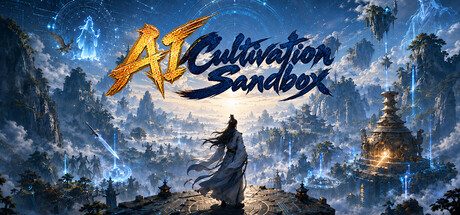 AI修仙沙盒 In-game content arttext | AI Cultivation Sandbox uses generative AI technology to assist in creating game content.
The AI systems in the game may generate or assist with generating character backgrounds, character dialogue, world events, story content, and visual assets.
AI-generated content is guided by game systems and safety mechanisms to create a more dynamic and personalized cultivation world experience. | AIGame工作室 | - | Sep 17, 2026 | |
 璇玑貂蝉 Live AI text | Xuanji · Diaochan uses a live generative AI to produce Diaochan's dialogue and spoken responses in real time. Every line of conversation and every spoken reply is generated by the model during play, not pre-written.
The character artwork, scene illustrations, music, and sound effects in this game are created by our team without generative AI.
Guardrails in place:
A historical-fiction persona that keeps Diaochan in character as a 2nd-century figure and prevents her from speaking as a modern AI assistant.
Retrieval-augmented responses grounded in a curated corpus of Han dynasty historical texts, so factual claims can be checked against primary sources.
Pre-filtering of user inputs and post-filtering of model outputs against blocklists for sexual, violent, and politically sensitive content.
An in-product report button on every response, plus mute and memory-reset controls.
Players can also report any in-game AI response they consider inappropriate through the Steam overlay. | liikana | - | Sep 16, 2026 | |
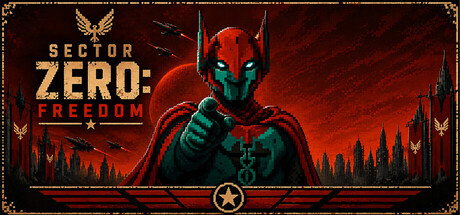 Sector Zero: Freedom In-game content arttext | Some store visuals (capsule art) were created using AI image generation tools.
Game text translations for languages other than English/Turkish were done with the assistance of AI translation and manual review.
Cutscenes and the visual slides featuring dialogue were created with the assistance of AI. | Shift Orbit Games | - | Sep 13, 2026 | |
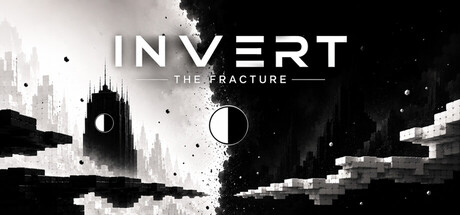 INVERT: The Fracture In-game content art | Some visual assets, icons, and artwork in this game were created or refined with the assistance of generative AI. All AI-generated content was reviewed, edited, and approved by the developer before being included in the game. No AI-generated content is created during gameplay, and the game does not rely on AI services while being played. | Rahib Games | - | Sep 13, 2026 | |
 Vectorline: Air Traffic Control Simulator Live AI audiotext | Vectorline uses on-device AI for its optional voice features. When you speak commands to aircraft, a local speech-recognition model transcribes your voice into ATC instructions. Pilot and controller radio readbacks are spoken aloud using a local neural text-to-speech model. Both models run entirely on your own machine — no audio, text, or data is ever sent to an external server, and no internet connection is required for these features. The spoken content is limited to standard air-traffic-control phraseology generated by the simulator itself.
You can disable these features in the settings without impacting gameplay. | Axonos Games | - | Sep 13, 2026 | |
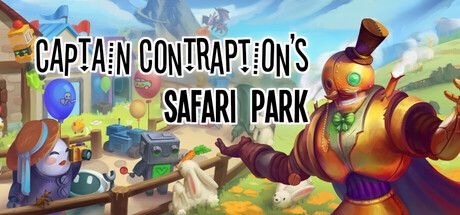 Captain Contraption’s Safari Park Dev only codeartaudiotext | I (Sean) use AI coding assistants: GitHub Copilot and Claude Code. I've written software for years and I teach games programming at university, and I use AI tools the way I use a profiler or a compiler. They helped build web tools Dave and I use to balance the ecosystem across long simulations, they're very good at finding edge-case bugs (I'm looking at you, pathing system), and they write the boilerplate for things like save states and UI. I never ship code I haven't read and thoroughly tested.
No content in this game is AI-generated, and no generative AI runs while you play.
Every sound, art and music asset in this game was made by a human. The game started out as the idea of “Asset Safari” around the concept of buying sprite packs from artists, which is what we have done. The music, sound and writing is also all human generated. | Pill Bug Interactive | - | Sep 13, 2026 | |
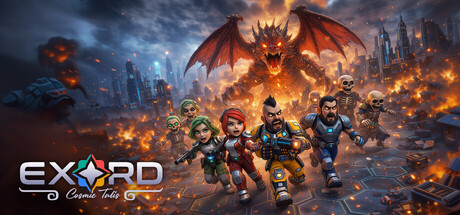 Exord: Cosmic Talis In-game content art | AI-assisted tools were used to help create some splash screen visuals and store page promotional artwork. All assets were reviewed and finalized by the developer before being included in the game and store materials. | Pinfox | - | Sep 12, 2026 | |
 Prompt Crisis Live AI textart | This game uses a large language model to generate the AI companion’s dialogue and ending titles in real time. Dialogue responses are generated based on player input and conversation context. Generative AI tools were also used to help create or edit some store and promotional artwork and assist with text translation and localization. | Second Reality | - | Sep 12, 2026 | |
 Serene Chess In-game content artaudio | Generative AI tools were used during development to create some pre-generated visual artwork used in marketing/store assets and some pre-generated background music used in the game. The game does not use generative AI to create content during gameplay. | Bordi-Meszaros Andras | - | Sep 12, 2026 | |
 MaMills Unclear | AI was used to develop this game. | Department of Ducks | - | Sep 12, 2026 | |
 Haze There In-game content arttext | Capsule art has been created with the assistance of generative AI. NPC dialogue has also been created with the assistance of generative AI. | Clayton Games | - | Sep 10, 2026 | |
 海龟汤世界 Live AI text | The game will connect to an open-source local large language model that is already built into the game upon first launch, and use it during gameplay to generate NPC dialogues, host responses, and reasoning review feedback. Players may also choose to access compatible third‑party large language model APIs. The text generated at runtime is based on player questions and current story data. | Xufan Studio | - | Sep 10, 2026 | |
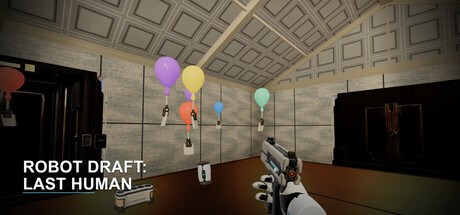 ROBOT DRAFT: LAST HUMAN In-game content art | Some pre-generated visual assets in the game were created or assisted with generative AI tools, including environment artwork, interface illustrations, textures, and source material used for certain 3D assets. All such material was reviewed, edited, integrated, and tested by the developer. The game does not generate AI content during gameplay or connect to external AI services while running. | Zhengkai Zhang | - | Sep 10, 2026 | |
 CYBERLIFE In-game content text | Generative AI tools were used to assist with English localization/translation of text originally written by the developer. No AI-generated content is created dynamically during gameplay. We do our best to rely on high-quality human translations whenever possible. | CYBERLIFE Studios | - | Sep 10, 2026 | |
 未结案 Live AI text | English: This game uses generative AI to create case stories, suspect dialogues, and investigative clues in real time during play. AI is provided by third-party services — you bring your own API key (entered in the in-game settings). No microtransactions. | Tricky Cat | - | Sep 10, 2026 | |
 LoHa Beta Bot Store/marketing art | Generative AI is used as a support tool during development, mainly to assist with the creation and iteration of some visual assets and promotional materials. All content is selected, edited, adapted, composed and implemented by the developer. No AI-generated content is created in real time during gameplay. | CBA Entertainment | - | Sep 9, 2026 | |
 Choice of History Live AI text | AI assistance was used in the development of this game. Players are strongly advised to play using mainstream free "flash" AI APIs such as Agnes API or Qwen API — simply fill in your API information in the game settings. For the sake of speed, enabling thinking mode is not recommended. This game contains optional generative AI features. In “AI-Enhanced Narrative Mode”, the game calls the third-party LLM API you provide yourself, generating more immersive event text in real time as you play. This mode is entirely optional: even without connecting any API, you can still fully experience all of the built-in, human-written historical content and the core gameplay. The game will not use your gameplay data to train any models. All AI-generated content is controlled by your own API key and quota, and you are responsible for your own usage. | 凭雨听风 | - | Sep 9, 2026 | |
 水迎え星 Where Stella Meets Water In-game content artaudiotext | This game uses generative artificial intelligence to assist with story planning, writing, and editing, as well as to create character artwork, backgrounds, event illustrations, music, and selected sound effects. All generated content was reviewed, selected, revised, and edited by the developer before being incorporated into the game.
All AI-generated content was created in advance during development. The game does not generate new content while you play, and no player input or personal information is sent to any generative AI service. | Yomoyama Factory | - | Sep 9, 2026 | |
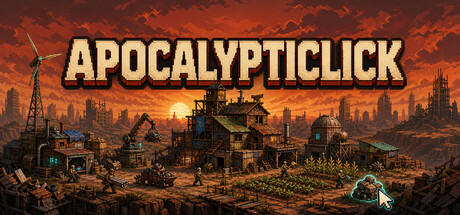 Apocalypticlick In-game content art | Generative AI was used to prototype and stylize most pixel art. Generative AI was NOT used for writing, music, or mechanics. | Aaron Meier | - | Sep 9, 2026 | |
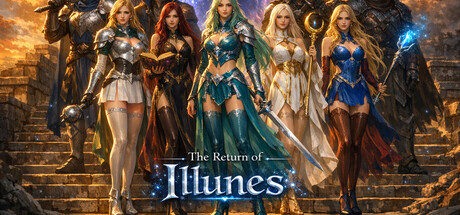 The Return of Illunes Live AI text | Pre-generated: Some 2D illustrations and the pre-recorded narration were produced with AI tools and reviewed by the developers before inclusion.
Live-generated: An on-device language model (no internet connection) writes in-game text such as narration, dialogue, and the names and lore of items, relics and skills, and selects among game-defined options for certain run content. Damage, stats, difficulty and progression are governed by the game's own rules. Generated text is checked before it is shown, and no art or audio is generated at runtime. | 14Dimension Enterprise | - | Sep 7, 2026 | |
 与AI的最后一战! In-game content artaudiocode | - Used generative AI to adjust the game program
- Used generative AI to create art assets
- Used generative AI to generate background music | 小w的游戏开发小组 | - | Sep 7, 2026 | |
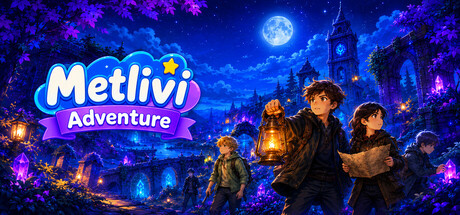 Metlivi Adventure In-game content arttextaudio | Metlivi Adventure uses generative AI to create certain in-game content, including narrative text, visual elements, and, where applicable, music. AI-generated content is used to support dynamic, player-driven adventures. | Metlivi | - | Sep 7, 2026 | |
 手搓代码大作战 Unclear | This game was created with AI‑assisted generation | anxinrelief | - | Sep 7, 2026 | |
 Your Desktop Companion - Lumi Live AI textaudio | Lumi uses generative AI to create dynamic conversations and spoken responses in real time. AI inference, speech recognition and speech synthesis run locally on the player's PC. AI model files are downloaded during setup, but player conversations and generated responses are not sent to an external AI service. Available capabilities may vary depending on the locally selected model. | AuraCore Studio | - | Sep 7, 2026 | |
 itmoves Unclear art | i used ai for some images | Catchy | - | Sep 6, 2026 | |
 Asiden Live AI text | Asiden uses generative AI to create companion conversations, custom personality text and spoken responses during use. When screen awareness is enabled, AI can interpret screen content to inform its responses. Local AI features run on your computer. Optional cloud features send the information needed for the selected feature through Asiden’s managed service to external AI providers. Generated responses may be inaccurate and can include mature language, humour and non-explicit flirtation. | Asiden Labs LTD | - | Sep 6, 2026 | |
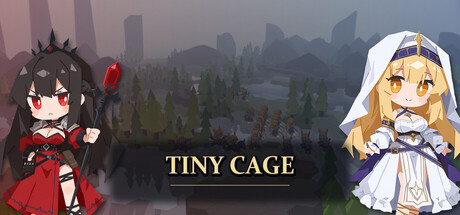 微小牢笼 Store/marketing art | Pre-generated generative AI was used during development to create and refine some character illustrations, 3D character models, and selected visual or marketing assets. All generated material was reviewed and edited by the developer before inclusion. The game does not generate AI content during play. | HOMULILIES | - | Sep 6, 2026 | |
 拾光 ShiGuang In-game content art | The application icon and the promotional artwork on this store page were created with the assistance of generative AI tools, then selected and reviewed by a human. The application itself does not generate any content during use: it bundles open-source, pre-trained AI models (Qwen3-VL-Embedding-2B and Qwen3-VL-Reranker-2B, Apache-2.0) that run entirely locally and offline on your PC. These models are used solely to analyze your own photos and videos — converting them into numeric feature vectors — to enable private, offline semantic search. No images, text, audio or other content is generated, and no data ever leaves your device. | StartMap | - | Sep 6, 2026 | |
 Studio Zero In-game content art | To enhance the gaming experience, a very small portion of the video footage, visual effects, and game interface were created with the assistance of artificial intelligence. AI-generated content accounts for less than 1% of the total content. Thank you for your understanding. | Plot18 | - | Sep 6, 2026 | |
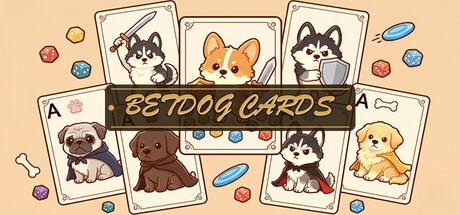 赌狗牌 general | The game features AI‑versus‑AI gameplay, but you need to provide access information for the general‑purpose AI.This may consume your tokens. Alternatively, you can skip the AI connection, which will not affect your gameplay experience. | shikongmengyounpc | - | Sep 6, 2026 | |
 知秋~英语日语单词背诵学习陪伴桌宠~ In-game content artaudio | Some images are AI-generated. Speech is synthesized using text-to-speech (TTS). | 无水硫酸铜 | - | Sep 6, 2026 | |
 IT THINKS! Unclear art | i used some AI made images along with human made art. i may remove them before the full release. | Catchy | - | Sep 4, 2026 | |
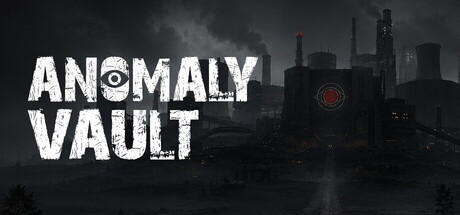 AnomalyVault Store/marketing art | Anomaly profile image | PostSIM | - | Sep 4, 2026 | |
 Froggy Roams Live AI arttext | This game was created by a solo developer. During development, generative AI was used to assist with some artwork, store promotional images, localized text, and narrative materials. While the game is running, it connects to external AI services to dynamically generate Froggy’s dialogue, travel letters, postcard images, and parts of its travel stories based on player conversations, character memories, real-world weather, and current travel status. Generated content may vary depending on player input and service availability. | Amber | - | Sep 4, 2026 | |
 Can You Beat The AI God? In-game content arttext | We used generative AI tools (such as Claude) during development to assist with creating certain in-game assets, textures, or text elements. All AI-generated content has been reviewed, selected, and integrated by human creators into the final game. | Radaruss | - | Sep 4, 2026 | |
 Human Protocol Dev only art | Generative AI tools were used during development to assist with the creation of some visual assets and development materials. All AI-assisted content was reviewed and integrated by the developer. No generative AI is used during gameplay. | IONAR Studio Games | - | Sep 4, 2026 | |
 mechakucha pakurion Unclear | this game is made by ai | KCKCKCKC | - | Sep 4, 2026 | |
 Neural Defense In-game content audioarttextcode | Neural Defense was developed by a five-person indie team using a combination of hand-crafted work and generative AI tools. Generative AI was used during development to assist with music composition, concept art, portions of the game's code, and the editing and expansion of some narrative text. All final in-game assets — including 3D models, textures, and visual art seen during gameplay — were hand-crafted by the studio's artists. No content or code is generated live during gameplay; everything was created, reviewed, and finalized by the team prior to release. | Synapse Game Studios | - | Sep 4, 2026 | |
 Dream Simulators Live AI text | Dream Simulators uses generative AI to create dynamic dialogue, story continuations, characters, missions, and narrative events based on player input and the active Lore system. Each Expansion Pack features its own world, Lore, characters, and adventures, creating a unique storytelling experience. The AI also generates creative scene descriptions and prompts that players can use as inspiration for creating images and videos. Because the experience is driven by player input, generated content may vary between playthroughs. | Angelkiss Games | - | Sep 4, 2026 | |
 Love, Lies and Memories. Live AI text | This game uses generative AI to provide personalized choices and free-form conversations based on player input and profile information. The main story and scenarios are written by human writers. | Tridot Inc. | - | Sep 3, 2026 | |
 Auto Squad RPG In-game content artaudio | Generative AI was used in the creation of the background images and certain sound elements of this game. | Sena Interactive | - | Sep 3, 2026 | |
 Ultracapitalism Dev only | During the development process, we may use procedural- and AI-based tools to assist with content creation. In all such cases, the final product reflects the creativity and expression of our own development team. | Andrew Brown | - | Sep 3, 2026 |


