Public Steam disclosure research25,376 disclosures tracked
Where do games disclose AI use?
Search developers’ Steam disclosures, compare classified AI use across
games, and follow recorded changes.
This index adds cross-game classifications and statistics to
statements published on individual store pages.
Groups reflect automatic analysis of public disclosures; mature records are excluded. These counts do not measure AI use across all of Steam.
Missing or unclear statements cannot establish whether a game uses AI.
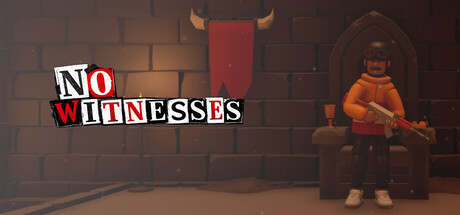
No Witnesses is developed by a two-man team, therefore generative AI has been used to assist in the creation of marketing assets and other player facing interfaces. All generated content is reviewed and perfected by a human before use.No Witnesses utilises third-party assets, of which we cannot attest to the creation of.
Generative AI tools were used during the production of the game as creative and technical support. This applies only to content prepared in advance during development.
AI was used in several areas, including:
Artwork and promotional materials — generating base images, character concepts, interface concepts, reference images, and materials later used as a foundation for manual editing or further production.
3D models — some models are created with the help of AI tools and an image-to-3D workflow, then selected, adjusted, and integrated into the game.
Voice acting — character voices are created using AI-based voice synthesis.
Code and production tools — AI assistants support coding, code analysis, refactoring, and optimization.
Design consultation — AI tools are used as support for analyzing ideas, designing interfaces, refining descriptions, and planning game systems.
The main concept of the game, story structure, quest dependencies, world direction, and dialogue content are created and supervised by the game’s author. Content created with the help of AI is selected, edited, and implemented manually.
The game does not contain AI-generated content created in real time during gameplay.
Generative AI was used in creating the fictional high schools, nicknames, and logos. I encourage all users to utilize the editing abilities in this game to create your very own universe. Generative AI is a great way to do this, so pick your favorite AI and build away!
The game does not use live AI-generated content. All gameplay assets were created by an artist. Some promotional images and UI artwork were initially generated with AI and then manually edited and refined.
Suho's background music was produced with the help of a generative AI music tool, and some store-page text was drafted with AI assistance and edited by a human. We intend to replace the AI-generated music with commissioned, original music. All gameplay, game design, code, and in-game visual art are human-authored or rendered programmatically (not AI-generated), and no AI content is generated live during play - the soundtrack ships as fixed, pre-made audio files.
Generative AI tools were used during development to assist with some early visual concepts, select sprite bases, music/audio drafts, and voice/audio prototypes. All AI-assisted content included in the game was selected, edited, refined, and reviewed by the development team to fit the game’s final style and direction. The game does not generate AI content during gameplay.
In this work, much of the text is interactively generated by a language generation AI. In addition, language generation AI is used for various judgments on the text entered by players. Furthermore, all the illustrations in this work are created using image generation AI.
The art, music, and writing in this game were created with AI tools during development, directed by the developer through written prompts. The development process is documented publicly, prompt by prompt. The shipped game contains no live or runtime AI generation — the in-game assistant “Aya” is a hand-authored, deterministic simulation, and the game makes no network or model calls during play.
This game and its store page may include pre-generated AI-assisted content, such as visual assets, store artwork, marketing images, text drafts and localization support. All AI-assisted content is reviewed, selected and edited manually before inclusion.
The game does not use live-generated AI during gameplay.
Some art assets, textures, and sound effects are created with the assistance of AI tools, then curated and edited by the developer. All game design, gameplay systems, code architecture, physics simulation, and mission design are human-made. No AI-generated content is created at runtime.
As a solo developer with a limited budget, I use AI tools to help produce some assets and sounds. This lets me keep my time focused where a solo dev's hours matter most — the core gameplay, the physics simulation, and mission design — while still delivering production quality that would normally require an extended team. Every AI-assisted asset is curated, edited, and integrated by hand.
Slimeball Castle Wars was made by a solo developer with the help of generative AI tools. AI was used during development to help create:
Music and audio — background music tracks were made using AI music-generation tools.
Art and sprites — building art, unit sprites, and other in-game graphics were created or assisted with AI image tools.
In-game text — some descriptions and written content were drafted with AI assistance.
Code — parts of the game's code were written with the help of an AI coding assistant.
In order to realize my childhood dream of building this game, I have leveraged AI in every step of the development process, augmenting my capabilities as an engineer and visual designer by having AI generate some of the sprites, music, sound effects, voices, and code used to build this game.
I pledge that if Card Knight: Astral Arcana is successful, the sequel title will be brought to life by a team of human artists, composers, and programmers.
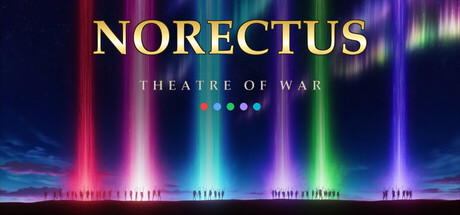
Some of the artwork currently in Norectus: Theatre of War was created with generative AI tools during development, including card art, in-game backgrounds, and store images. We use it as placeholder art so we can build, balance, and expand the game during Early Access. We are commissioning human artists and replacing this AI-generated art over time. Every AI-assisted asset is reviewed by our team before it goes into the game.
AI was utilized in the following areas:
* Art Assets: Two textures (the move marker and UI background) were generated using AI tools.
* Development: AI was primarily used for code review, debugging, and localization support.
* Audio: Some musical tracks and voices may have been AI-generated.
Text: Help text was generated and proofread with AI assistance.
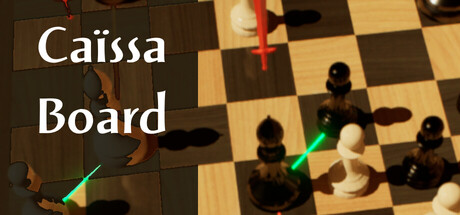
* In-Game Feature: The game includes llama.cpp, enabling an experimental feature where players can consult an AI about chess moves.
Generative AI tools were used during development to assist with the creation of some pre-generated visual assets, audio, written content, and localization. All AI-assisted content was reviewed and edited by the developer before being included in the game. The game does not generate content during gameplay.
Generative AI disclosure
Some visual assets in American Dream were created with the help of generative artificial intelligence during development, then reviewed and edited by the developer before release.
This includes the main menu background art and related promotional graphics used on the Steam store page and in Steam library/marketing images (such as header, capsule, and hero artwork). Gameplay screenshots are captured from the actual game and are not AI-generated.
Generative AI is not used to create content while you play. The game does not generate artwork, audio, narrative, or code during gameplay, and it does not connect to any third-party AI services while running.
Some store assets (capsules, library art, promotional images) and some in-game terrain sprites (such as mountains and forests) started from drafts produced with AI image tools, then selected, color-graded, composited, and cropped by the developer. All publicly released assets are human-reviewed. UI, fonts, icons, player avatars, faction emblems, and other non-terrain art are drawn directly by the developer or built from licensed fonts / open-source resources — no AI generation involved. Player-to-player text messages produced at runtime by the AI model each player has chosen are disclosed separately under "Live-Generated AI".
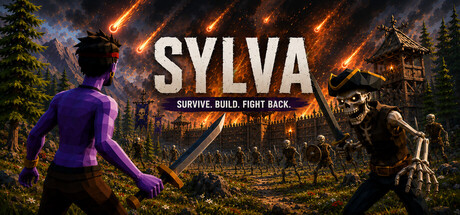
SYLVA contains pre-generated AI-assisted content. Generative AI tools were used during development to create and refine certain store page artwork, capsule images, library assets, loading screen artwork, logos, promotional materials, visual concepts, text drafts, localization assistance, and software development workflows.
All AI-assisted content was reviewed, modified, and approved by the developer before being included in the game or published on the Steam store page. The final game design, gameplay systems, progression, balancing, world design, and creative direction are determined by the developer.
SYLVA does not generate real-time AI content during gameplay.
Generative AI was used only for certain voice and audio elements featured in the game and its trailer. All gameplay systems, visual assets, game design, programming, and other content were created and implemented by the developer.
Players cannot generate content using AI within the game, and no AI-generated content is created during gameplay.
Some of the images and sounds in this game were created using generative AI.
This allows us to reduce development costs and deliver more content faster, providing players with a richer and more engaging experience.
Stickplosion makes extensive use of generative AI in its creation. Visual assets — including character art, environment art, UI elements, and logo — were generated with AI tools and curated by the developer. Sound effects and music were similarly produced with AI assistance. In-game text and store-page copy were written with AI assistance as well. All generated content was reviewed, selected, and edited by the developer before inclusion in the final game.
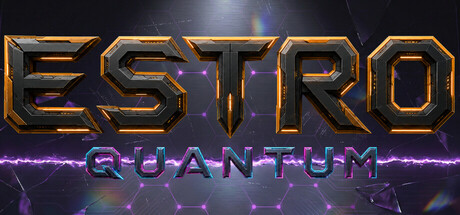
ESTRO Quantum uses generative AI only for some of its 2D/3D visual assets. Card illustrations and cosmetic art (card skins, backdrops, card backs) were created with the help of generative AI image-generation tools, then curated and reviewed by the developer before being included in the game. No AI-generated content is produced live during gameplay; the single-player "AI opponents" are traditional rule-based systems and do not use generative AI.
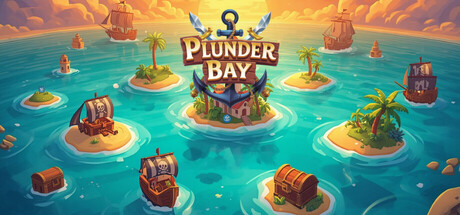
During the development of Plunder Bay, AI-powered tools were used to assist in the creation of the following content:
- Store Page Graphics: Promotional images and capsule art were created with AI image generation tools (Leonardo AI) and edited manually.
- Sound Effects: Some sound effects were generated using AI audio tools (ElevenLabs) for specific game events.
- Menu Background: The main menu background visual was created with AI video generation tools (Runway).
All AI-generated content was reviewed, edited, and curated by the developer to ensure quality and consistency. AI was used as a creative tool to assist a solo developer, not as a replacement for game design decisions.
We use generative AI as part of our development workflow to accelerate our production pipeline. Our artists use generative AI to quickly produce concept artwork. They then manually rework the selected pieces in Photoshop and other tools as needed, refining the work and adding or removing elements to reach the quality we require. Our Art Director gives final approval on all artwork. All AI-assisted content is generated during development and reworked by our team before it ships; no content is generated by AI at runtime. We have taken care to ensure this content does not include illegal or infringing material.
We will use AI-generated marketing images for our promotional visuals. These will be applied in the following locations: the main promotional banner, vertical promotional banner, library promotional banner, library profile image, and library homepage image on the store page. The original materials are self-created and will be processed with AI for subsequent use. The game includes some UI icons /3D Asset that were initially generated by AI and subsequently edited manually for further application.
Generative AI tools were used to create some assets
in this game, including capsule art, promotional
images, background music, and select NPC voice lines.
All AI-generated content is pre-rendered and included
as static game assets. No AI content is generated in
real time during gameplay, and the game does not
connect to external AI services while playing.
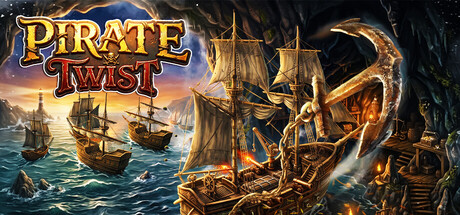
Pirate Twist is made by a solo developer, and generative AI tools were used across production. Specifically:
Art — some in-game visual art and the store capsule art were generated with Higgsfield image models against a fixed art-direction style, then hand-edited by the developer's wife: cut out, composited, colour-matched and retouched before going into the build.
Audio — the seven music tracks were generated with Suno (Premier). Sound effects were generated with the ElevenLabs Sound Effects API (Creator). All were then edited, pitch-shifted and mastered by the developer's wife.
Code — written with AI coding assistance.
No AI runs at runtime. Nothing is generated on your machine while you play, and the game makes no AI service calls during play.
Full commissioned art and audio is one of the items on the Roadmap for final release.
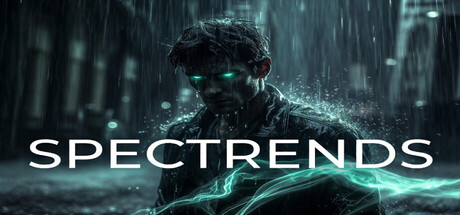
SPECTRENDS currently uses generative artificial intelligence for some placeholder visuals and promotional assets during development.
These AI-generated assets are temporary and will be fully replaced with original, hand-crafted art before the game's full release.
The final version of the game will not use generative AI for any assets.
dreamstrobe uses generative AI as a core live feature. When you chat with the visualizer, your prompt is sent to Anthropic's Claude model. Claude writes a Three.js scene — geometry, shaders, motion, post-processing, and audio-reactive behavior — in real time, and the running engine loads and renders it on the fly. Each scene you create is freshly, generated JavaScript that runs in a sandboxed browser context. Outputs are filtered by Anthropic's built-in safety systems to block illegal or harmful content. Generated code is executed locally; no model weights ship with the game. Some textures, environment maps, and sample assets used by the engine were also created or refined with generative AI tools during development, and were reviewed before inclusion. You can use dreamstrobe without writing prompts — a library of pre-authored scenes ships with the game and runs on its own.
Generative AI was used as a supplementary tool for certain visual and audio assets. Every AI-assisted asset underwent substantial manual editing, refinement, quality control, and integration by the development team.
No Witnesses is developed by a two-man team, therefore generative AI has been used to assist in the creation of marketing assets and other player facing interfaces. All generated content is reviewed and perfected by a human before use.No Witnesses utilises third-party assets, of which we cannot attest to the creation of.
Generative AI tools were used during the production of the game as creative and technical support. This applies only to content prepared in advance during development.
AI was used in several areas, including:
Artwork and promotional materials — generating base images, character concepts, interface concepts, reference images, and materials later used as a foundation for manual editing or further production.
3D models — some models are created with the help of AI tools and an image-to-3D workflow, then selected, adjusted, and integrated into the game.
Voice acting — character voices are created using AI-based voice synthesis.
Code and production tools — AI assistants support coding, code analysis, refactoring, and optimization.
Design consultation — AI tools are used as support for analyzing ideas, designing interfaces, refining descriptions, and planning game systems.
The main concept of the game, story structure, quest dependencies, world direction, and dialogue content are created and supervised by the game’s author. Content created with the help of AI is selected, edited, and implemented manually.
The game does not contain AI-generated content created in real time during gameplay.
Generative AI was used in creating the fictional high schools, nicknames, and logos. I encourage all users to utilize the editing abilities in this game to create your very own universe. Generative AI is a great way to do this, so pick your favorite AI and build away!
The game does not use live AI-generated content. All gameplay assets were created by an artist. Some promotional images and UI artwork were initially generated with AI and then manually edited and refined.
Suho's background music was produced with the help of a generative AI music tool, and some store-page text was drafted with AI assistance and edited by a human. We intend to replace the AI-generated music with commissioned, original music. All gameplay, game design, code, and in-game visual art are human-authored or rendered programmatically (not AI-generated), and no AI content is generated live during play - the soundtrack ships as fixed, pre-made audio files.
Generative AI tools were used during development to assist with some early visual concepts, select sprite bases, music/audio drafts, and voice/audio prototypes. All AI-assisted content included in the game was selected, edited, refined, and reviewed by the development team to fit the game’s final style and direction. The game does not generate AI content during gameplay.
In this work, much of the text is interactively generated by a language generation AI. In addition, language generation AI is used for various judgments on the text entered by players. Furthermore, all the illustrations in this work are created using image generation AI.
The art, music, and writing in this game were created with AI tools during development, directed by the developer through written prompts. The development process is documented publicly, prompt by prompt. The shipped game contains no live or runtime AI generation — the in-game assistant “Aya” is a hand-authored, deterministic simulation, and the game makes no network or model calls during play.
This game and its store page may include pre-generated AI-assisted content, such as visual assets, store artwork, marketing images, text drafts and localization support. All AI-assisted content is reviewed, selected and edited manually before inclusion.
The game does not use live-generated AI during gameplay.
Some art assets, textures, and sound effects are created with the assistance of AI tools, then curated and edited by the developer. All game design, gameplay systems, code architecture, physics simulation, and mission design are human-made. No AI-generated content is created at runtime.
As a solo developer with a limited budget, I use AI tools to help produce some assets and sounds. This lets me keep my time focused where a solo dev's hours matter most — the core gameplay, the physics simulation, and mission design — while still delivering production quality that would normally require an extended team. Every AI-assisted asset is curated, edited, and integrated by hand.
Slimeball Castle Wars was made by a solo developer with the help of generative AI tools. AI was used during development to help create:
Music and audio — background music tracks were made using AI music-generation tools.
Art and sprites — building art, unit sprites, and other in-game graphics were created or assisted with AI image tools.
In-game text — some descriptions and written content were drafted with AI assistance.
Code — parts of the game's code were written with the help of an AI coding assistant.
In order to realize my childhood dream of building this game, I have leveraged AI in every step of the development process, augmenting my capabilities as an engineer and visual designer by having AI generate some of the sprites, music, sound effects, voices, and code used to build this game.
I pledge that if Card Knight: Astral Arcana is successful, the sequel title will be brought to life by a team of human artists, composers, and programmers.
Some of the artwork currently in Norectus: Theatre of War was created with generative AI tools during development, including card art, in-game backgrounds, and store images. We use it as placeholder art so we can build, balance, and expand the game during Early Access. We are commissioning human artists and replacing this AI-generated art over time. Every AI-assisted asset is reviewed by our team before it goes into the game.
AI was utilized in the following areas:
* Art Assets: Two textures (the move marker and UI background) were generated using AI tools.
* Development: AI was primarily used for code review, debugging, and localization support.
* Audio: Some musical tracks and voices may have been AI-generated.
Text: Help text was generated and proofread with AI assistance.
* In-Game Feature: The game includes llama.cpp, enabling an experimental feature where players can consult an AI about chess moves.
Generative AI tools were used during development to assist with the creation of some pre-generated visual assets, audio, written content, and localization. All AI-assisted content was reviewed and edited by the developer before being included in the game. The game does not generate content during gameplay.
Generative AI disclosure
Some visual assets in American Dream were created with the help of generative artificial intelligence during development, then reviewed and edited by the developer before release.
This includes the main menu background art and related promotional graphics used on the Steam store page and in Steam library/marketing images (such as header, capsule, and hero artwork). Gameplay screenshots are captured from the actual game and are not AI-generated.
Generative AI is not used to create content while you play. The game does not generate artwork, audio, narrative, or code during gameplay, and it does not connect to any third-party AI services while running.
Some store assets (capsules, library art, promotional images) and some in-game terrain sprites (such as mountains and forests) started from drafts produced with AI image tools, then selected, color-graded, composited, and cropped by the developer. All publicly released assets are human-reviewed. UI, fonts, icons, player avatars, faction emblems, and other non-terrain art are drawn directly by the developer or built from licensed fonts / open-source resources — no AI generation involved. Player-to-player text messages produced at runtime by the AI model each player has chosen are disclosed separately under "Live-Generated AI".
SYLVA contains pre-generated AI-assisted content. Generative AI tools were used during development to create and refine certain store page artwork, capsule images, library assets, loading screen artwork, logos, promotional materials, visual concepts, text drafts, localization assistance, and software development workflows.
All AI-assisted content was reviewed, modified, and approved by the developer before being included in the game or published on the Steam store page. The final game design, gameplay systems, progression, balancing, world design, and creative direction are determined by the developer.
SYLVA does not generate real-time AI content during gameplay.
Generative AI was used only for certain voice and audio elements featured in the game and its trailer. All gameplay systems, visual assets, game design, programming, and other content were created and implemented by the developer.
Players cannot generate content using AI within the game, and no AI-generated content is created during gameplay.
Some of the images and sounds in this game were created using generative AI.
This allows us to reduce development costs and deliver more content faster, providing players with a richer and more engaging experience.
Stickplosion makes extensive use of generative AI in its creation. Visual assets — including character art, environment art, UI elements, and logo — were generated with AI tools and curated by the developer. Sound effects and music were similarly produced with AI assistance. In-game text and store-page copy were written with AI assistance as well. All generated content was reviewed, selected, and edited by the developer before inclusion in the final game.
ESTRO Quantum uses generative AI only for some of its 2D/3D visual assets. Card illustrations and cosmetic art (card skins, backdrops, card backs) were created with the help of generative AI image-generation tools, then curated and reviewed by the developer before being included in the game. No AI-generated content is produced live during gameplay; the single-player "AI opponents" are traditional rule-based systems and do not use generative AI.
During the development of Plunder Bay, AI-powered tools were used to assist in the creation of the following content:
- Store Page Graphics: Promotional images and capsule art were created with AI image generation tools (Leonardo AI) and edited manually.
- Sound Effects: Some sound effects were generated using AI audio tools (ElevenLabs) for specific game events.
- Menu Background: The main menu background visual was created with AI video generation tools (Runway).
All AI-generated content was reviewed, edited, and curated by the developer to ensure quality and consistency. AI was used as a creative tool to assist a solo developer, not as a replacement for game design decisions.
We use generative AI as part of our development workflow to accelerate our production pipeline. Our artists use generative AI to quickly produce concept artwork. They then manually rework the selected pieces in Photoshop and other tools as needed, refining the work and adding or removing elements to reach the quality we require. Our Art Director gives final approval on all artwork. All AI-assisted content is generated during development and reworked by our team before it ships; no content is generated by AI at runtime. We have taken care to ensure this content does not include illegal or infringing material.
We will use AI-generated marketing images for our promotional visuals. These will be applied in the following locations: the main promotional banner, vertical promotional banner, library promotional banner, library profile image, and library homepage image on the store page. The original materials are self-created and will be processed with AI for subsequent use. The game includes some UI icons /3D Asset that were initially generated by AI and subsequently edited manually for further application.
Generative AI tools were used to create some assets
in this game, including capsule art, promotional
images, background music, and select NPC voice lines.
All AI-generated content is pre-rendered and included
as static game assets. No AI content is generated in
real time during gameplay, and the game does not
connect to external AI services while playing.
Pirate Twist is made by a solo developer, and generative AI tools were used across production. Specifically:
Art — some in-game visual art and the store capsule art were generated with Higgsfield image models against a fixed art-direction style, then hand-edited by the developer's wife: cut out, composited, colour-matched and retouched before going into the build.
Audio — the seven music tracks were generated with Suno (Premier). Sound effects were generated with the ElevenLabs Sound Effects API (Creator). All were then edited, pitch-shifted and mastered by the developer's wife.
Code — written with AI coding assistance.
No AI runs at runtime. Nothing is generated on your machine while you play, and the game makes no AI service calls during play.
Full commissioned art and audio is one of the items on the Roadmap for final release.
SPECTRENDS currently uses generative artificial intelligence for some placeholder visuals and promotional assets during development.
These AI-generated assets are temporary and will be fully replaced with original, hand-crafted art before the game's full release.
The final version of the game will not use generative AI for any assets.
dreamstrobe uses generative AI as a core live feature. When you chat with the visualizer, your prompt is sent to Anthropic's Claude model. Claude writes a Three.js scene — geometry, shaders, motion, post-processing, and audio-reactive behavior — in real time, and the running engine loads and renders it on the fly. Each scene you create is freshly, generated JavaScript that runs in a sandboxed browser context. Outputs are filtered by Anthropic's built-in safety systems to block illegal or harmful content. Generated code is executed locally; no model weights ship with the game. Some textures, environment maps, and sample assets used by the engine were also created or refined with generative AI tools during development, and were reviewed before inclusion. You can use dreamstrobe without writing prompts — a library of pre-authored scenes ships with the game and runs on its own.
Generative AI was used as a supplementary tool for certain visual and audio assets. Every AI-assisted asset underwent substantial manual editing, refinement, quality control, and integration by the development team.