Public Steam disclosure research25,376 disclosures tracked
Where do games disclose AI use?
Search developers’ Steam disclosures, compare classified AI use across
games, and follow recorded changes.
This index adds cross-game classifications and statistics to
statements published on individual store pages.
Groups reflect automatic analysis of public disclosures; mature records are excluded. These counts do not measure AI use across all of Steam.
Missing or unclear statements cannot establish whether a game uses AI.
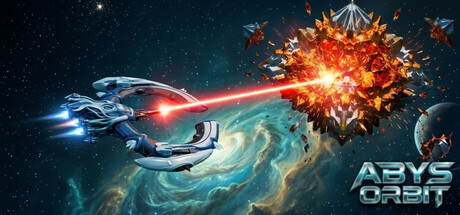
Most of the 2D art in Abys Orbit is AI-assisted, generated with Google Gemini
during development. Ship and NPC sprite sheets begin as Gemini concept images,
are converted to 3D meshes with Meshy.ai, and are then rendered to 2D sprites
in Blender. One dashboard background is a NASA public-domain photograph revised
with AI. All AI-generated assets are reviewed and edited by us before shipping.
The following content is NOT AI-generated: rank insignia (drawn by hand in
Adobe Illustrator), the Scout ship model (a commercially licensed 3D asset
rendered in 3ds Max), UI and research icons (licensed from CraftPix under their
commercial license), two NASA public-domain images, and all audio, which we
produced ourselves.
No AI-generated content is created at runtime; all generation happens during
development.
Generative AI tools assisted with parts of the development, iteration, and production process. The foundation of The Helios Accord—including its original concept, core ideas, world, systems, and narrative—was conceived, designed, and originally written by me. I direct, review, revise, and take responsibility for all AI-assisted material included in the game and its store presentation
Some pre-generated visual assets and localization text were created with the assistance of generative AI and were reviewed and edited by the developer. The game does not generate AI content during gameplay.
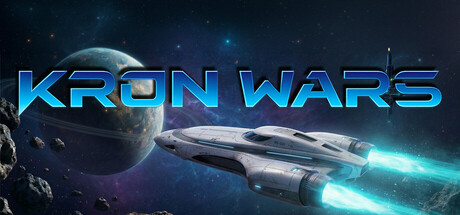
Some visual assets in Kron Wars — including spaceship designs, environment artwork, and promotional videos — were created with the assistance of generative AI tools. All AI-generated content has been reviewed, curated, and integrated by our development team. No AI is used to generate gameplay content, in-game text, or player-facing decisions at runtime.
Some of the game's visual assets — UI textures, illustrations, icons and marketing artwork — were created with the assistance of generative AI tools, then manually curated, edited and integrated by the developer. All game design, writing, code and systems are human-made. No AI content is generated at runtime.
This game uses content created or assisted by generative AI. Generative AI was used to help create and edit some visual assets, music/sound materials, and scripts. All final content was reviewed, selected, and adjusted by the developer before being included in the game.
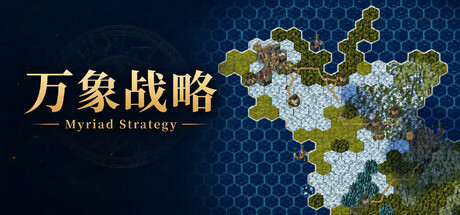
The core gameplay of this game adopts an independent AI warlord confrontation system. All Three Kingdoms generals and regional lord NPCs make autonomous decisions on their own, and can independently launch alliances, declarations of war, diplomatic negotiations, grain supply trades, secret betrayals and other political strategic behaviors. In-game plot dialogues and interactions among warlords are dynamically generated by AI. A built-in content safety filter is activated throughout the game to prevent the generation of illegal, violent and inappropriate content.
None of the game's artwork, audio, or imagery is AI-generated. Portraits, interface, and all store and marketing art are hand-authored vector and procedural work, and that is a hard rule of the project. We do use AI assistance during development for writing and code, including drafting store text and the scripts that lay out our marketing art, all of it reviewed and edited by hand. No image-generation models are used anywhere, in the game or in its marketing.
Dialogue and narration are generated at runtime by a small language model running entirely on the player's machine. Nothing is sent to any server. The model has no authority over the game: a deterministic simulation decides every outcome, fact, and number, and the model only phrases scenes from state the engine hands it. Its output is structurally constrained and validated against the simulation before it appears, and invalid output is rejected. Prompts and validation keep generated text within the game's fiction and its PG-13 register. Player-typed orders go only to the local model and never leave the machine.
For complete transparency with our players, here is our stance on how this game is built:
1. Human Craftsmanship First
Human creativity and hands-on talent are always our highest priority. Where development is handled by skilled creators and artists, the work is crafted traditionally. AI is never used to replace active human contribution.
2. Bridging the Resource Gap
Where specialized resources, budgets, or personnel are missing, we use AI tools to bridge the gaps and keep development moving forward. As an independent project, we do not have the luxury of waiting on corporate budgets; we use every tool available to ensure the game actually gets finished and delivered to you.
3. Moving Forward, Never Backward
Our development philosophy is built on momentum. We will never delay updates, halt progress, or backtrack to remove or replace AI-assisted elements just to appease online discourse. If the game secures funding or high sales down the line, those resources will be used exclusively to hire real people to build new features, content, and expansions. We only move forward.
The Bottom Line
We refuse to let a lack of corporate backing stop us from making a great game. We choose to embrace the tools of the future to deliver a unique RTS experience today. If you value raw independent drive, transparency, and a studio focused entirely on delivering great gameplay "by any means necessary," thank you for your support.
This game uses AI-generated artwork for store page assets, including capsule images,
promotional graphics, and character illustrations. The game logo and visual marketing
materials were created with the assistance of AI image generation tools.
No AI content is generated during gameplay — all in-game content is pre-authored.
No third-party AI services are connected during gameplay.
Generative AI was used during development for certain text descriptions and for a limited number of illustrative assets. These visuals were subsequently reworked by the game’s artist for consistency with the game’s final style. No generative AI is used during gameplay.
This game uses generative AI to assist with parts of the localization process. All AI-assisted translations are reviewed and edited by the developer before being included in the game.
Some visual assets in this game (such as illustrations, icons, and background images) were created with the assistance of generative AI tools. All AI-generated content was reviewed, edited, and curated by our development team before being included in the game.
GridIron Grit is made with love, for us hardcore football sim fans, but AI did much of the heavy lifting.
AI helped me bring my dream game to life, writing code and generating game assets.
The game itself uses no generative AI within.
As a solo developer, I used generative AI tools to help create some of the game's icons, artwork, and written text, which I then reviewed and edited by hand. The game's design, code, and systems are my own work, and the world, its factions, and its story are built on lore I have developed across the Imperium Sine Fine saga. Nothing is AI-generated during gameplay.
Some visual assets in this game (such as illustrations, icons, and background images) were created with the assistance of generative AI tools. All AI-generated content was reviewed, edited, and curated by our development team before being included in the game.
This game used AI tools to assist in generating some visual assets and code. All AI-generated content has been manually reviewed and edited by the developer to ensure quality.
Some static art candidate assets were assisted by generative AI tools during development. Any such assets included in the game are manually reviewed, selected, edited, cleaned, style-matched, and checked before being shipped as fixed static game assets. The game does not use generative AI at runtime and does not generate text, images, audio, video, or other content in response to player input while the game is running.
Pueblo Duerme uses generative AI during gameplay to create short in-game text chat messages for bot players in social deduction matches. The game includes local Qwen3 GGUF models that run on the player's PC through a local llama-server process, with Quality and Performance modes available in the settings menu. Player messages are not sent to an external AI service. The system is limited to gameplay dialogue and uses validation and fallback responses to keep messages within the game's rules.
We used generative AI tools during development to create game icons. All assets were reviewed and integrated manually. The game does not generate content in real-time.
Galaxor uses generative AI tools to support the creation and revision of selected visual content, including icons, artwork, banners, store graphics and marketing materials. Generated content is reviewed, selected and, where necessary, manually adjusted before being used in the game or on the store page. No live-generated AI content is created during gameplay.
Generative AI was used to create some promotional images for the Steam store page. The game itself and its gameplay do not contain AI-generated content.
The game's code, artwork, text content, and some marketing assets were created with the assistance of generative AI tools during development. All AI-generated content was reviewed, tested, and curated by the developer before inclusion. The game does not generate any content in real time using AI — all content is pre-rendered and static.
During production we use generative AI in one narrow way: internal placeholders. Rough concept sketches and scratch voice lines hold a spot while the real assets are being made. Every placeholder is flagged in-engine, and none of it ships in the game players buy — the release version contains no generative AI content. Testers in early builds may spot flagged placeholders; that's what the flags are for. All art, writing, and voice work in the finished game is made by people. We know even placeholder use is a fair thing to question, so where we do use these tools, we aim for ones that license their training data and compensate the creators behind it.
This game uses generative artificial intelligence to create dynamic content during gameplay. AI systems may generate political advice, news articles, speeches, social media posts, events, narrative responses, and other text-based content based on player actions and the current game state. AI-generated content is intended to enhance replayability and create unique gameplay experiences. Some store, library, and character artwork was created with the assistance of generative AI image tools.
Some of the images in the game were generated using AI during the prototype stage. Such assets may be present in the game up until the release of the demo (inclusive). During the development process, we gradually get rid of generated assets and replace them with hand-made ones. By the time of the official release, all generated content will be removed. This is a normal process for developing an indie game.
Generative AI was used as an assistive tool in the development of this game. It was used to help create some in-game icon images and to assist with programming code.
This game actively supports human creativity, notably musicians and programmers - but uses AI in the design of marketing materials and some aspects of software development. Neither the game itself - nor the procedural generation techniques used to create the world, music, or audio - use AI or AI-generated art.
AI has been used to refine the game balance, produce the graphics and the code for Conglomerate. As a solo indie dev, AI is used to bounce ideas and support the game development, replicating having a development partner.
Generative AI disclosure
Some visual assets in American Dream were created with the help of generative artificial intelligence during development, then reviewed and edited by the developer before release.
This includes the main menu background art and related promotional graphics used on the Steam store page and in Steam library/marketing images (such as header, capsule, and hero artwork). Gameplay screenshots are captured from the actual game and are not AI-generated.
Generative AI is not used to create content while you play. The game does not generate artwork, audio, narrative, or code during gameplay, and it does not connect to any third-party AI services while running.
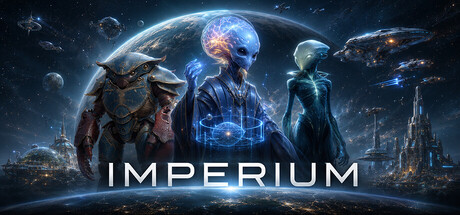
Imperium is a solo-developed game that makes extensive use of generative AI
to create its content:
• Visual art and graphical assets — planet surfaces, buildings, species and
ship artwork, interface art, and store/marketing imagery — were generated
using Midjourney and ChatGPT, then extensively edited, composited, and
refined by hand in Photoshop (including Photoshop's AI tools) to fit the
game's art direction.
• Music was generated using Suno.
• Sound effects were generated using ElevenLabs.
Every asset is reviewed, edited, and approved by the developer before it
ships, and the game's design, systems, and balance are the developer's own.
Imperium's in-game opponents use traditional algorithmic AI, not generative AI.
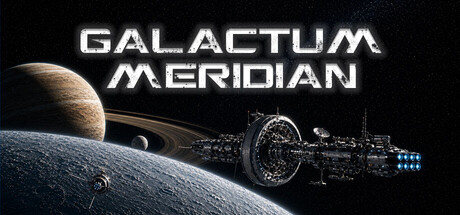
Galactum Meridian was developed with generative AI assistance under direct human creative direction. AI tools supported coding, writing, design exploration, production workflows, and selected visual and promotional assets. All material was reviewed, edited, and integrated by the developer. The game does not use live generative AI during gameplay.
Generative AI was used in this game’s development and related asset creation, including the game code, three music tracks, selected visual assets, and multilingual localization translation.
Generative AI (OpenAI ChatGPT) was used to create the title/boot key art and the 20 achievement badge icons. The game's code — which procedurally generates the city, UI and synthesized music — was written with AI coding assistance (Anthropic Claude).
Most of the 2D art in Abys Orbit is AI-assisted, generated with Google Gemini
during development. Ship and NPC sprite sheets begin as Gemini concept images,
are converted to 3D meshes with Meshy.ai, and are then rendered to 2D sprites
in Blender. One dashboard background is a NASA public-domain photograph revised
with AI. All AI-generated assets are reviewed and edited by us before shipping.
The following content is NOT AI-generated: rank insignia (drawn by hand in
Adobe Illustrator), the Scout ship model (a commercially licensed 3D asset
rendered in 3ds Max), UI and research icons (licensed from CraftPix under their
commercial license), two NASA public-domain images, and all audio, which we
produced ourselves.
No AI-generated content is created at runtime; all generation happens during
development.
Generative AI tools assisted with parts of the development, iteration, and production process. The foundation of The Helios Accord—including its original concept, core ideas, world, systems, and narrative—was conceived, designed, and originally written by me. I direct, review, revise, and take responsibility for all AI-assisted material included in the game and its store presentation
Some pre-generated visual assets and localization text were created with the assistance of generative AI and were reviewed and edited by the developer. The game does not generate AI content during gameplay.
Some visual assets in Kron Wars — including spaceship designs, environment artwork, and promotional videos — were created with the assistance of generative AI tools. All AI-generated content has been reviewed, curated, and integrated by our development team. No AI is used to generate gameplay content, in-game text, or player-facing decisions at runtime.
Some of the game's visual assets — UI textures, illustrations, icons and marketing artwork — were created with the assistance of generative AI tools, then manually curated, edited and integrated by the developer. All game design, writing, code and systems are human-made. No AI content is generated at runtime.
This game uses content created or assisted by generative AI. Generative AI was used to help create and edit some visual assets, music/sound materials, and scripts. All final content was reviewed, selected, and adjusted by the developer before being included in the game.
The core gameplay of this game adopts an independent AI warlord confrontation system. All Three Kingdoms generals and regional lord NPCs make autonomous decisions on their own, and can independently launch alliances, declarations of war, diplomatic negotiations, grain supply trades, secret betrayals and other political strategic behaviors. In-game plot dialogues and interactions among warlords are dynamically generated by AI. A built-in content safety filter is activated throughout the game to prevent the generation of illegal, violent and inappropriate content.
None of the game's artwork, audio, or imagery is AI-generated. Portraits, interface, and all store and marketing art are hand-authored vector and procedural work, and that is a hard rule of the project. We do use AI assistance during development for writing and code, including drafting store text and the scripts that lay out our marketing art, all of it reviewed and edited by hand. No image-generation models are used anywhere, in the game or in its marketing.
Dialogue and narration are generated at runtime by a small language model running entirely on the player's machine. Nothing is sent to any server. The model has no authority over the game: a deterministic simulation decides every outcome, fact, and number, and the model only phrases scenes from state the engine hands it. Its output is structurally constrained and validated against the simulation before it appears, and invalid output is rejected. Prompts and validation keep generated text within the game's fiction and its PG-13 register. Player-typed orders go only to the local model and never leave the machine.
For complete transparency with our players, here is our stance on how this game is built:
1. Human Craftsmanship First
Human creativity and hands-on talent are always our highest priority. Where development is handled by skilled creators and artists, the work is crafted traditionally. AI is never used to replace active human contribution.
2. Bridging the Resource Gap
Where specialized resources, budgets, or personnel are missing, we use AI tools to bridge the gaps and keep development moving forward. As an independent project, we do not have the luxury of waiting on corporate budgets; we use every tool available to ensure the game actually gets finished and delivered to you.
3. Moving Forward, Never Backward
Our development philosophy is built on momentum. We will never delay updates, halt progress, or backtrack to remove or replace AI-assisted elements just to appease online discourse. If the game secures funding or high sales down the line, those resources will be used exclusively to hire real people to build new features, content, and expansions. We only move forward.
The Bottom Line
We refuse to let a lack of corporate backing stop us from making a great game. We choose to embrace the tools of the future to deliver a unique RTS experience today. If you value raw independent drive, transparency, and a studio focused entirely on delivering great gameplay "by any means necessary," thank you for your support.
This game uses AI-generated artwork for store page assets, including capsule images,
promotional graphics, and character illustrations. The game logo and visual marketing
materials were created with the assistance of AI image generation tools.
No AI content is generated during gameplay — all in-game content is pre-authored.
No third-party AI services are connected during gameplay.
Generative AI was used during development for certain text descriptions and for a limited number of illustrative assets. These visuals were subsequently reworked by the game’s artist for consistency with the game’s final style. No generative AI is used during gameplay.
This game uses generative AI to assist with parts of the localization process. All AI-assisted translations are reviewed and edited by the developer before being included in the game.
Some visual assets in this game (such as illustrations, icons, and background images) were created with the assistance of generative AI tools. All AI-generated content was reviewed, edited, and curated by our development team before being included in the game.
GridIron Grit is made with love, for us hardcore football sim fans, but AI did much of the heavy lifting.
AI helped me bring my dream game to life, writing code and generating game assets.
The game itself uses no generative AI within.
As a solo developer, I used generative AI tools to help create some of the game's icons, artwork, and written text, which I then reviewed and edited by hand. The game's design, code, and systems are my own work, and the world, its factions, and its story are built on lore I have developed across the Imperium Sine Fine saga. Nothing is AI-generated during gameplay.
Some visual assets in this game (such as illustrations, icons, and background images) were created with the assistance of generative AI tools. All AI-generated content was reviewed, edited, and curated by our development team before being included in the game.
This game used AI tools to assist in generating some visual assets and code. All AI-generated content has been manually reviewed and edited by the developer to ensure quality.
Some static art candidate assets were assisted by generative AI tools during development. Any such assets included in the game are manually reviewed, selected, edited, cleaned, style-matched, and checked before being shipped as fixed static game assets. The game does not use generative AI at runtime and does not generate text, images, audio, video, or other content in response to player input while the game is running.
Pueblo Duerme uses generative AI during gameplay to create short in-game text chat messages for bot players in social deduction matches. The game includes local Qwen3 GGUF models that run on the player's PC through a local llama-server process, with Quality and Performance modes available in the settings menu. Player messages are not sent to an external AI service. The system is limited to gameplay dialogue and uses validation and fallback responses to keep messages within the game's rules.
We used generative AI tools during development to create game icons. All assets were reviewed and integrated manually. The game does not generate content in real-time.
Galaxor uses generative AI tools to support the creation and revision of selected visual content, including icons, artwork, banners, store graphics and marketing materials. Generated content is reviewed, selected and, where necessary, manually adjusted before being used in the game or on the store page. No live-generated AI content is created during gameplay.
Generative AI was used to create some promotional images for the Steam store page. The game itself and its gameplay do not contain AI-generated content.
The game's code, artwork, text content, and some marketing assets were created with the assistance of generative AI tools during development. All AI-generated content was reviewed, tested, and curated by the developer before inclusion. The game does not generate any content in real time using AI — all content is pre-rendered and static.
During production we use generative AI in one narrow way: internal placeholders. Rough concept sketches and scratch voice lines hold a spot while the real assets are being made. Every placeholder is flagged in-engine, and none of it ships in the game players buy — the release version contains no generative AI content. Testers in early builds may spot flagged placeholders; that's what the flags are for. All art, writing, and voice work in the finished game is made by people. We know even placeholder use is a fair thing to question, so where we do use these tools, we aim for ones that license their training data and compensate the creators behind it.
This game uses generative artificial intelligence to create dynamic content during gameplay. AI systems may generate political advice, news articles, speeches, social media posts, events, narrative responses, and other text-based content based on player actions and the current game state. AI-generated content is intended to enhance replayability and create unique gameplay experiences. Some store, library, and character artwork was created with the assistance of generative AI image tools.
Some of the images in the game were generated using AI during the prototype stage. Such assets may be present in the game up until the release of the demo (inclusive). During the development process, we gradually get rid of generated assets and replace them with hand-made ones. By the time of the official release, all generated content will be removed. This is a normal process for developing an indie game.
Generative AI was used as an assistive tool in the development of this game. It was used to help create some in-game icon images and to assist with programming code.
This game actively supports human creativity, notably musicians and programmers - but uses AI in the design of marketing materials and some aspects of software development. Neither the game itself - nor the procedural generation techniques used to create the world, music, or audio - use AI or AI-generated art.
AI has been used to refine the game balance, produce the graphics and the code for Conglomerate. As a solo indie dev, AI is used to bounce ideas and support the game development, replicating having a development partner.
Generative AI disclosure
Some visual assets in American Dream were created with the help of generative artificial intelligence during development, then reviewed and edited by the developer before release.
This includes the main menu background art and related promotional graphics used on the Steam store page and in Steam library/marketing images (such as header, capsule, and hero artwork). Gameplay screenshots are captured from the actual game and are not AI-generated.
Generative AI is not used to create content while you play. The game does not generate artwork, audio, narrative, or code during gameplay, and it does not connect to any third-party AI services while running.
Imperium is a solo-developed game that makes extensive use of generative AI
to create its content:
• Visual art and graphical assets — planet surfaces, buildings, species and
ship artwork, interface art, and store/marketing imagery — were generated
using Midjourney and ChatGPT, then extensively edited, composited, and
refined by hand in Photoshop (including Photoshop's AI tools) to fit the
game's art direction.
• Music was generated using Suno.
• Sound effects were generated using ElevenLabs.
Every asset is reviewed, edited, and approved by the developer before it
ships, and the game's design, systems, and balance are the developer's own.
Imperium's in-game opponents use traditional algorithmic AI, not generative AI.
Galactum Meridian was developed with generative AI assistance under direct human creative direction. AI tools supported coding, writing, design exploration, production workflows, and selected visual and promotional assets. All material was reviewed, edited, and integrated by the developer. The game does not use live generative AI during gameplay.
Generative AI was used in this game’s development and related asset creation, including the game code, three music tracks, selected visual assets, and multilingual localization translation.
Generative AI (OpenAI ChatGPT) was used to create the title/boot key art and the 20 achievement badge icons. The game's code — which procedurally generates the city, UI and synthesized music — was written with AI coding assistance (Anthropic Claude).