Public Steam disclosure research25,376 disclosures tracked
Where do games disclose AI use?
Search developers’ Steam disclosures, compare classified AI use across
games, and follow recorded changes.
This index adds cross-game classifications and statistics to
statements published on individual store pages.
Groups reflect automatic analysis of public disclosures; mature records are excluded. These counts do not measure AI use across all of Steam.
Missing or unclear statements cannot establish whether a game uses AI.
This game utilizes pre-generated AI content to enhance the visual and audio experience. This includes 2D assets for UI/menus, marketing capsule images, and synthesized voiceovers for characters. All AI-generated elements have been manually reviewed, edited, and integrated by the development team to ensure they align with the game's creative vision and adhere to platform guidelines.
Some marketing and promotional materials for this game were created or assisted using generative AI tools. These materials are used solely for marketing purposes and do not affect gameplay or in-game content.
I used AI as a helping tool for all aspects of the game, programming, art, and narration. This is the only way for me to make my vision come true in a reasonable time.
AI is used to create creative elements such as text or visual ideas.
All gameplay systems, rules, and mechanics are handcrafted by the developer.
AI content is moderated and does not generate executable code or copyrighted material.
Generative AI tools were used in a supportive role for some character visuals and promotional materials.
All AI-assisted artwork was manually edited and refined.
The game’s design, mechanics, and code were created manually.
If you could peek inside my code or topology, you would BEG me to use AI to fix it. BUT NO. This crap is handmade and stays that way! The soundtrack, however, is a hybrid: I used generative AI to create raw textures, which I then manually arranged and mixed.
How Does It Work? The Human-Led Creative Process
Players will start their game by participating in a time traveling Ritual.
AI doesn't write our story; it writes a story within a world which our creative team has designed. The Ritual takes what you describe and the world we’ve built – its art, biomes, enemy types, magic systems and overarching lore – and turns it into gameplay that’s personal to you.
These aren't AI suggestions; they are human-designed game mechanics and rules that AI must follow. During The Ritual, you describe your hero – their name, and how they look, plus curious nuggets about what they love, hate, are known for etc.
When you describe your hero as "a punk rocker who fears spiders and loves the color red," our platform triggers a process and system instructions that work hand-in-hand with Gemini AI. We send your input along with our own carefully crafted guidelines that tell Gemini exactly how to evaluate content appropriateness.
All storytelling is orchestrated by logic the engineering team designed, not AI deciding what happens next, alongside a story bible and character descriptions, creating assets, in real time, to craft your customized gaming experience.
All character visuals are generated using a custom AI model (LoRA) trained exclusively on our own artwork. It understands how we draw faces, hairstyles, armour, and bodies – the rules, proportions, and style choices behind the art – rather than copying individual images or creating its own.
This means when your character gets generated, it is not generic AI art; it is our artistic DNA interpreting your imagination. The result is a caricature of your hero, rendered in our visual language.
Similarly, character abilities aren't randomly generated; they follow strict mathematical systems. When Gemini generates a Unique Spell, for example, the damage, archetype, name, colours, and parameters, come from us.
While The Ritual could find anyone at all in the past, we’ve also implemented layers of safeguards to ensure only true heroes can be recruited to the war effort.
Bird Game 3 is a franchise heavily influenced by AI meme culture. Bird Game 3 will be referencing this kind of content. However for the development of Bird Game 3, especially Artworks etc. Birdgame Studios will NOT use generative AI.
This game uses pre-generated AI only for certain UI background images and promotional store visuals. These assets were created before release and remain fixed. The game does not include any live AI generation during gameplay.
Some of the visuals in this game were created with the help of AI-based tools to speed up the art process and visualize ideas more efficiently.
However, all final designs were edited, refined, and color-corrected by artists to match the game tone and atmosphere.
The goal was never to let AI make the art, but to use it as a creative tool like an extra brush in the process.
AI Usage in Content Generation :
Portraits and Illustrations: Initial portrait concepts are generated using AI tools. These generated images are then extensively modified, redrawn, and finished manually in Krita and Photoshop using a graphics tablet to ensure compliance with the game's artistic direction.
Characters (3D Models): AI generative tools are used solely to create the base mesh for character models. These bases are subsequently refined, resculpted, remeshed, unwrapped, retextured, and animated using traditional softwares.
Audio: All voiceovers and musical tracks are fully generated by Artificial Intelligence tools.
During development, we used some AI tools to speed things up in areas where we weren’t as experienced. That saved us a lot of time, letting us focus on the fun stuff — creating cool gameplay mechanics, improving performance, and making sure the game runs smoothly without annoying bugs.
Much of the enemy graphics were made with the help of generative AI. However, none of them are simply used "as is." Getting the artwork to match Hong Kong 97's SNES graphics requires downscaling resolution and adjusting contrast, saturation etc.
AI was used to assist with marketing materials and development support as a solo developer. Specifically: generated promotional artwork for trailers, helped brainstorm game concepts and mechanics, assisted with writing store descriptions and marketing copy, and provided coding assistance and debugging support. No AI-generated content appears in the actual gameplay - all core game mechanics, design, and player experience are original creations.
The music in the trailer, title screen graphics, game over screen graphics, bouncy ball graphic, and airplane graphic were all generated with AI. Everything else was produced by the people who helped develop this product.
This game does not include AI "art". Anything with an artistic quality, rather than an attempt to emulate a realistic texture, was created by a human.
Photorealistic AI-generated images were sampled to create some of the game's textures, and often heavily edited since raw output is unsuitable.
3D models, sounds, and music in this game were created by a human with zero AI assistance.
During the development of this game, artificial intelligence was used to create some of the content:
🎨 A portion of the images and illustrations
🎵 The soundtrack
📝 Some in-game texts and localizations
All AI-generated content was carefully curated and reviewed to ensure high quality and alignment with the game's vision. AI was used as a tool in the creative process, but the final artistic oversight and approval of all content was performed by the game's author.
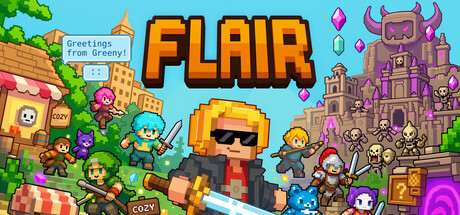
FLAIR uses generative AI to bring your ideas to life. Players can describe characters, items, buildings, or world elements, and the game will generate them directly in-game. Your creativity shapes the world.
User might use AI as necessary outside the the game. Any use of AI by players is done outside the executable itself. User generated content will NOT YET have a way to be imported to the game. The game is isolated and closed from interactions with AI beyond its simple assets.
Some 2D art in Scalpers’ Spoils began as AI-assisted concepts and were then hand-edited and finalized by our artist. No AI runs during gameplay, and players do not submit prompts or generate content in-game.
AI assisted development was used to enhance visual effects, polish animations, and streamline design workflow helping deliver a smoother, more visually dynamic experience for players. No gameplay decisions or in-game character behavior are controlled by AI.
A small number of sound effects were generated using AI. Please note all voice acting in the game was created and performed by human actors. AI was also used to translate the game from English to other languages.
I used AI tools to generate certain background images and meme-style assets. These AI-generated elements were designed to be original, humorous, and do not include any real-world individuals, brands, or copyrighted material. All assets were carefully reviewed to ensure they do not infringe on third-party intellectual property.
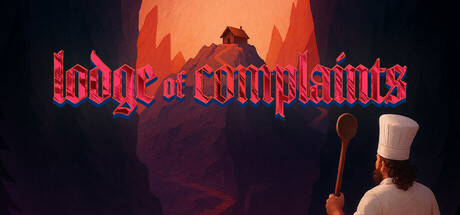
Lodge of Complaints' content systems are built to be highly customizable, from storylines to visual content. The game is still in development and subject to change. It currently contains AI generated art assets which may not be included in the final release.
The major portion of the stories in the game is fundamentally human-made. See below for details.
All raw graphics are generated using AI. Subsequently, manual work is performed by our developer, including composition revisions, visual detail correction, and color synchronization of images.
For Graphics
For all stories, raw graphics are generated by AI. Depending on the image structure and complexity, one to three hours of manual graphics work is required to achieve the final result.
For Stories
Magical Cats: After the images are created by artificial intelligence, we use our natural intelligence to imagine and write appropriate stories for each image. Since these stories make little sense as they are intended to.
Moon Shade Tarot: After the images are created by artificial intelligence, the core story concept and event for each card have been devised by our developer. AI is then used to expand and rewrite this content for narrative fluency and readability.
Missing Velsoro (Rangers Under The Moons): The story, characters, and narrative are written by our writer. Some adjustments are done by our developer. The images are composed of multiple raw images to match the story.
To improve fluency and enjoyment for native speakers, artificial intelligence is used to perform final grammatical and stylistic corrections on all of the stories.
Please check the respective DLC explanations for similar usage details regarding their content.
This game utilizes pre-generated AI content to enhance the visual and audio experience. This includes 2D assets for UI/menus, marketing capsule images, and synthesized voiceovers for characters. All AI-generated elements have been manually reviewed, edited, and integrated by the development team to ensure they align with the game's creative vision and adhere to platform guidelines.
Some marketing and promotional materials for this game were created or assisted using generative AI tools. These materials are used solely for marketing purposes and do not affect gameplay or in-game content.
I used AI as a helping tool for all aspects of the game, programming, art, and narration. This is the only way for me to make my vision come true in a reasonable time.
AI is used to create creative elements such as text or visual ideas.
All gameplay systems, rules, and mechanics are handcrafted by the developer.
AI content is moderated and does not generate executable code or copyrighted material.
Generative AI tools were used in a supportive role for some character visuals and promotional materials.
All AI-assisted artwork was manually edited and refined.
The game’s design, mechanics, and code were created manually.
If you could peek inside my code or topology, you would BEG me to use AI to fix it. BUT NO. This crap is handmade and stays that way! The soundtrack, however, is a hybrid: I used generative AI to create raw textures, which I then manually arranged and mixed.
How Does It Work? The Human-Led Creative Process
Players will start their game by participating in a time traveling Ritual.
AI doesn't write our story; it writes a story within a world which our creative team has designed. The Ritual takes what you describe and the world we’ve built – its art, biomes, enemy types, magic systems and overarching lore – and turns it into gameplay that’s personal to you.
These aren't AI suggestions; they are human-designed game mechanics and rules that AI must follow. During The Ritual, you describe your hero – their name, and how they look, plus curious nuggets about what they love, hate, are known for etc.
When you describe your hero as "a punk rocker who fears spiders and loves the color red," our platform triggers a process and system instructions that work hand-in-hand with Gemini AI. We send your input along with our own carefully crafted guidelines that tell Gemini exactly how to evaluate content appropriateness.
All storytelling is orchestrated by logic the engineering team designed, not AI deciding what happens next, alongside a story bible and character descriptions, creating assets, in real time, to craft your customized gaming experience.
All character visuals are generated using a custom AI model (LoRA) trained exclusively on our own artwork. It understands how we draw faces, hairstyles, armour, and bodies – the rules, proportions, and style choices behind the art – rather than copying individual images or creating its own.
This means when your character gets generated, it is not generic AI art; it is our artistic DNA interpreting your imagination. The result is a caricature of your hero, rendered in our visual language.
Similarly, character abilities aren't randomly generated; they follow strict mathematical systems. When Gemini generates a Unique Spell, for example, the damage, archetype, name, colours, and parameters, come from us.
While The Ritual could find anyone at all in the past, we’ve also implemented layers of safeguards to ensure only true heroes can be recruited to the war effort.
Bird Game 3 is a franchise heavily influenced by AI meme culture. Bird Game 3 will be referencing this kind of content. However for the development of Bird Game 3, especially Artworks etc. Birdgame Studios will NOT use generative AI.
This game uses pre-generated AI only for certain UI background images and promotional store visuals. These assets were created before release and remain fixed. The game does not include any live AI generation during gameplay.
Some of the visuals in this game were created with the help of AI-based tools to speed up the art process and visualize ideas more efficiently.
However, all final designs were edited, refined, and color-corrected by artists to match the game tone and atmosphere.
The goal was never to let AI make the art, but to use it as a creative tool like an extra brush in the process.
AI Usage in Content Generation :
Portraits and Illustrations: Initial portrait concepts are generated using AI tools. These generated images are then extensively modified, redrawn, and finished manually in Krita and Photoshop using a graphics tablet to ensure compliance with the game's artistic direction.
Characters (3D Models): AI generative tools are used solely to create the base mesh for character models. These bases are subsequently refined, resculpted, remeshed, unwrapped, retextured, and animated using traditional softwares.
Audio: All voiceovers and musical tracks are fully generated by Artificial Intelligence tools.
During development, we used some AI tools to speed things up in areas where we weren’t as experienced. That saved us a lot of time, letting us focus on the fun stuff — creating cool gameplay mechanics, improving performance, and making sure the game runs smoothly without annoying bugs.
Much of the enemy graphics were made with the help of generative AI. However, none of them are simply used "as is." Getting the artwork to match Hong Kong 97's SNES graphics requires downscaling resolution and adjusting contrast, saturation etc.
AI was used to assist with marketing materials and development support as a solo developer. Specifically: generated promotional artwork for trailers, helped brainstorm game concepts and mechanics, assisted with writing store descriptions and marketing copy, and provided coding assistance and debugging support. No AI-generated content appears in the actual gameplay - all core game mechanics, design, and player experience are original creations.
The music in the trailer, title screen graphics, game over screen graphics, bouncy ball graphic, and airplane graphic were all generated with AI. Everything else was produced by the people who helped develop this product.
This game does not include AI "art". Anything with an artistic quality, rather than an attempt to emulate a realistic texture, was created by a human.
Photorealistic AI-generated images were sampled to create some of the game's textures, and often heavily edited since raw output is unsuitable.
3D models, sounds, and music in this game were created by a human with zero AI assistance.
During the development of this game, artificial intelligence was used to create some of the content:
🎨 A portion of the images and illustrations
🎵 The soundtrack
📝 Some in-game texts and localizations
All AI-generated content was carefully curated and reviewed to ensure high quality and alignment with the game's vision. AI was used as a tool in the creative process, but the final artistic oversight and approval of all content was performed by the game's author.
FLAIR uses generative AI to bring your ideas to life. Players can describe characters, items, buildings, or world elements, and the game will generate them directly in-game. Your creativity shapes the world.
User might use AI as necessary outside the the game. Any use of AI by players is done outside the executable itself. User generated content will NOT YET have a way to be imported to the game. The game is isolated and closed from interactions with AI beyond its simple assets.
Some 2D art in Scalpers’ Spoils began as AI-assisted concepts and were then hand-edited and finalized by our artist. No AI runs during gameplay, and players do not submit prompts or generate content in-game.
AI assisted development was used to enhance visual effects, polish animations, and streamline design workflow helping deliver a smoother, more visually dynamic experience for players. No gameplay decisions or in-game character behavior are controlled by AI.
A small number of sound effects were generated using AI. Please note all voice acting in the game was created and performed by human actors. AI was also used to translate the game from English to other languages.
I used AI tools to generate certain background images and meme-style assets. These AI-generated elements were designed to be original, humorous, and do not include any real-world individuals, brands, or copyrighted material. All assets were carefully reviewed to ensure they do not infringe on third-party intellectual property.
Lodge of Complaints' content systems are built to be highly customizable, from storylines to visual content. The game is still in development and subject to change. It currently contains AI generated art assets which may not be included in the final release.
The major portion of the stories in the game is fundamentally human-made. See below for details.
All raw graphics are generated using AI. Subsequently, manual work is performed by our developer, including composition revisions, visual detail correction, and color synchronization of images.
For Graphics
For all stories, raw graphics are generated by AI. Depending on the image structure and complexity, one to three hours of manual graphics work is required to achieve the final result.
For Stories
Magical Cats: After the images are created by artificial intelligence, we use our natural intelligence to imagine and write appropriate stories for each image. Since these stories make little sense as they are intended to.
Moon Shade Tarot: After the images are created by artificial intelligence, the core story concept and event for each card have been devised by our developer. AI is then used to expand and rewrite this content for narrative fluency and readability.
Missing Velsoro (Rangers Under The Moons): The story, characters, and narrative are written by our writer. Some adjustments are done by our developer. The images are composed of multiple raw images to match the story.
To improve fluency and enjoyment for native speakers, artificial intelligence is used to perform final grammatical and stylistic corrections on all of the stories.
Please check the respective DLC explanations for similar usage details regarding their content.