Public Steam disclosure research25,376 disclosures tracked
Where do games disclose AI use?
Search developers’ Steam disclosures, compare classified AI use across
games, and follow recorded changes.
This index adds cross-game classifications and statistics to
statements published on individual store pages.
Groups reflect automatic analysis of public disclosures; mature records are excluded. These counts do not measure AI use across all of Steam.
Missing or unclear statements cannot establish whether a game uses AI.
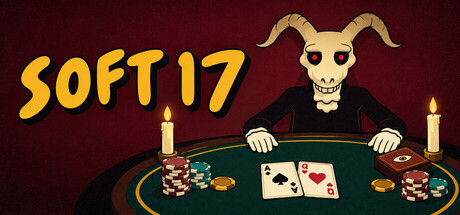
SOFT 17's visuals and audio are generated procedurally from code: the dealers, the
cards, the table and every sound are drawn and synthesized while you play, rather than
imported as files.
Generative AI contributed to some of the content that ships with the game: eight
interface icons in the main menu, the artwork used on this store page, and part of the
in-game text and its English translation. All of it was produced from written briefs,
then reviewed, edited and assembled by hand.
Pre-generated content only, nothing is generated while you play. All image motifs (130 modifier cards, 44 enemy portraits, 24 dice, 5 items, 7 set emblems, the title logo) were generated with Google's Gemini image model from written prompts and then hand-reduced to the game's palette and pixel size. Music: the fight track was generated with Suno, the title, boss and shop tracks with Eleven Music (ElevenLabs). Thirteen sound effects (boss entrance, curse, win, loss, dice shaking, dice landing, clicks, coins) were generated with ElevenLabs Sound Generation; all remaining sounds are synthesized in code. Rules, code, texts and translations were written by the developer, with AI assistance during development.
Some art, music and the non-English translations were created with the help of AI tools during development, then edited by hand. Everything ships as static files; nothing is generated while you play.
In-game icons and background assets were generated with AI and then manually adjusted
Promotional images and promotional videos were generated with AI and then manually adjusted
Card Monarchy was made using AI tools.
PRE-GENERATED CONTENT
- Artwork. The card art, character portraits, backgrounds and store images are AI-generated from hand-written prompts, then selected, cropped, composited and corrected by hand against a written art bible. Curation and prompt iteration are entirely at the hands of the producer until the style and output matches the vision.
- Music, voice and sound. Generated with ElevenLabs under a commercial license. Every generation is logged with its ID and date. Many of the sound effects were hand created. Some of the music has been sourced from free for commercial use sources.
NOTHING IS GENERATED WHILE YOU PLAY
The game makes no network calls of any kind and creates no content at runtime. Your opponent is not a machine-learning model. The play engine was generated by AI with extensive prompting and tuning by actual an actual programmer. The developer authored and tuned against millions of simulated battles and test harnesses to make the card battle combat feel challenging and fair.
Game illustrations and some sound effects, as well as part of the text and localization, are created using generative AI tools, then manually refined and validated. No content is generated by AI in real time, and the game design is human-made.
Some of the game's artwork — item and skill icons, character portraits, and the store capsule illustrations — was created with the help of generative AI tools, then reviewed, selected, and edited by hand. Localization drafts were machine-translated and then reviewed and corrected. No AI content is generated while you play: all content ships with the game.
Visual assets and translations were created with the assistance of generative AI tools.
All assets and translations were reviewed, edited, and incorporated by the developer to align with the game’s established art direction.
Pie Paw includes pre-generated, AI-assisted artwork used in the game and on the Steam store page. All such content is created before release, then reviewed, selected, and edited by the development team. The game does not use generative AI during gameplay and does not connect to external AI services.
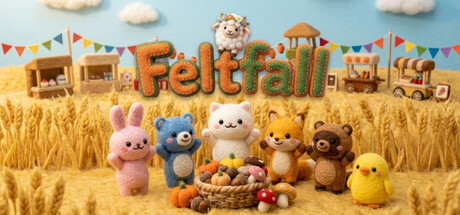
Feltfall uses pre-generated AI content. The felt-style illustrations (characters, animals, cards, backgrounds and key visuals), enemy sprite animations, the logo and parts of the promotional videos were generated with generative AI image and video tools, then selected, retouched and composited by the developer. Some of the source code was written with the help of AI coding assistants and reviewed by the developer. No content is generated by AI while you play, and the game does not connect to any external AI service.
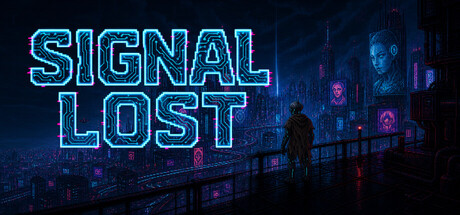
SignalLost uses generative AI only during development to create and refine selected 2D artwork, promotional images, and trailer assets. No AI content is generated during gameplay, and the game does not connect to external AI services. All shipped assets are reviewed, edited, and integrated by the developer before release.
Generative AI tools are used during development to write and revise game code, create artwork, music and sound effects, and assist with writing and localization. This includes content in the game and its store and promotional materials. The developer directs and reviews the work before inclusion. No content is generated using generative AI during gameplay.
In the process of creating some 2D prop assets, generative AI technology was used in an assistive capacity. Any such assets are subject to our production pipeline, where they will be reviewed and replaced by our art and development teams to ensure they meet our quality standards and creative direction.
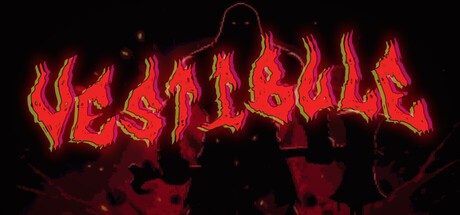
Vestibule's pixel art was generated with an AI art tool, with every design directed, refined, and hand-edited by the developer. Individual trailer and cinematic clips were generated with an AI video tool, built from the game's own artwork and developer-written scene descriptions — the final edit, scene sequencing, and music timing were done manually by the developer in After Effects. All game design, systems, writing, and code are original work.
AI was used to assist with localization of the game's store page into additional languages as a placeholder until I am able to hire a localization team. All localized text was reviewed and edited before publication.
The English and Turkish text in Slots & Skulls is written entirely by the developer. Gen AI was used only to translate in game and store text into the game's other supported languages.
No AI tools were used to create any visual or audio asset: all art, animation, UI, music and sound effects are made by hand or licensed from human creators.
Some marketing artwork for the store page (the capsule's sky, city backdrop, rain and lettering layers) was produced with generative image tools (OpenAI image generation, Google Gemini) and then composited and edited by hand. A few placeholder textures currently in the build (the city seen through the office window and its signs, and the sample sheets in the customization menu) were AI-generated and are scheduled to be replaced with licensed or hand-made art before release. AI coding and writing assistants were used during development for parts of the source code, documentation and drafts of store text; all game rules, design decisions and final art direction are the developer's own. The game does not generate content with AI at runtime.
The illustrations in Dead Market — the 247 card images, the cutscene plates, the premises backdrops and the nine-slice chrome — were generated with image models during development, then selected, corrected, composed and integrated by hand against the game's own manifest. Everything that displays a live value is drawn procedurally in the engine rather than being an image. The spoken lines were synthesised from a written script, one voice per character, and edited into the game.
Nothing is generated while the game runs. There is no model in the build, no network code and no telemetry.
Setlist Shuffle ships two categories of pre-generated, player-facing AI content. They are the card illustrations and the genre music tracks.
Both sets were reviewed and hand-selected before release and ship as fixed assets. No content is generated live during play, and the game contains no AI-driven chat or dialogue.
Everything else is not AI-generated: the achievement icons are hand-drawn vectors, and all game text, design and simulation logic are the developer's own.
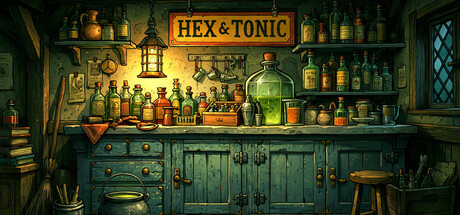
I am a professional artist who lost the majority of my vision many years ago. Now legally blind, I use AI to generate base images and I create what I call "Hybrid Art", in which I combine my own art and skills with the generations to still create art that I love. This technique has been used in Hex & Tonic for card art, store page art, etc. I hope it brings you as much joy as I got creating for you.
AI-assisted generation of small code snippets and early visual concepts. All content has been manually reviewed and optimized. Real-time AI generation is not involved; it is entirely locally packaged and does not rely on external APIs.
This game was developed with AI coding agents (Anthropic Claude / OpenAI Codex). All in-game pixel art (ingredients, relics, character faces, UI) is rendered by drawing code and pixel-placement scripts written by these agents; no diffusion/image-generation model output is included. Music and SFX are procedurally generated at runtime from AI-assisted code. In-game text, store page copy, and translations into 10 languages were produced with AI assistance and reviewed by the developer. Trailer scripts and captions were also AI-assisted. All content has been reviewed by the developer.
Some assets in this game were created with the help of generative AI. Generative AI was used to produce background art, background music, sound effects, and in-game icons.
Some art assets including card illustrations, character and prop art were created with the assistance of generative‑AI tools during development. All AI‑assisted materials have been manually reviewed, edited and reworked. No content is dynamically generated by AI during gameplay.
Some of this game's assets were made with the assistance of generative AI tools and were reviewed, curated and hand-finished by the developer. No content is generated while you play.
Some of the artwork, audio, text, and program code in this game were created with the assistance of generative AI tools and were reviewed, edited, and integrated by the developer. The game does not use generative AI to create content in real time during gameplay.
AI helps us bring our creative ideas to life. In true indie fashion, we are two starving game developers—figuratively, and occasionally quite literally. It’s the only way for us to produce the art we need while saving our remaining coins for developing the game. If the budget grows, we’ll consider buying the better cheese from the local market.
AI tools were used during the creation of draft visual assets. All AI-generated material is reviewed, edited, and manually refined by professional artists before being included in the final product.
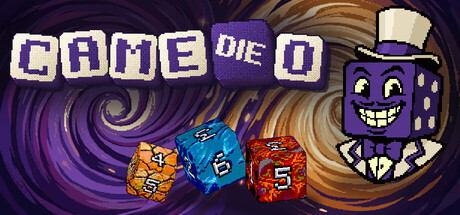
Generative AI tools were used in the creation of certain assets for Camedieo.
Each was reviewed, reworked and integrated by us so the finished product holds a single consistent direction.
Some visual artwork and marketing assets were created or edited with generative AI under developer direction. All gameplay systems are authored, and no content is generated during gameplay.
Generative AI tools were used during development to create selected pre-generated content, including character and environment artwork, some user interface artwork, music, some voice-over audio, and localization. The visual assets were subsequently edited and customized by the developer. All AI-assisted content is selected, reviewed, and integrated by the developer before inclusion. The game does not generate content during gameplay or connect to external AI services.
During development, this game used generative AI to assist in creating certain visual assets and text content. All final content has been reviewed, edited, and approved by the developer; the game does not include any functionality that dynamically generates content with AI during gameplay.
We used AI to assist in creating portions of the game text, and leveraged AI tools to translate in-game content into English. All AI-generated content has been manually reviewed and vetted before being finalized for inclusion in the game.
Some of this game's 2D art (such as item icons and UI illustrations) was created with the help of generative AI, and AI was also used to help write and translate some in-game and store page text. All of it was reviewed and finalized by the developer, and no content is generated by AI while you play.
The development of this game makes extensive use of generative AI. AI tools were used to help create the game's art and visual assets, sound and music, text and narrative, code, and localization. All AI-assisted content is reviewed by our team before release to ensure quality and appropriateness.
Pre-rendered Content:
Generative AI tools and agentic AI development workflows were utilized during the creation of this game to assist in:
- Code & Systems: Writing and optimizing core gameplay logic, typescript structures, and simulation algorithms.
- Visual Assets: Creating and pre-rendering all visual assets used in-game, including boot screen artworks, drive interfaces, and graphical components.
- Localization: Translating and reviewing in-game text and UI labels.
Please note that all AI-assisted assets and code were pre-rendered and compiled during the development phase. The game runs entirely locally and does not perform any real-time (live) AI generation, nor does it connect to any external AI APIs or services during gameplay.
Generative AI tools (OpenAI ChatGPT and Anthropic Claude) were used during development to help create or transform some visual assets and to assist in designing the procedural audio recipes used for the game’s background music and most sound effects. All AI-assisted materials were reviewed, selected, edited, and integrated by the developer, who made all final creative decisions. The game does not use generative AI during gameplay, and no player input or data is sent to AI services.
Generative AI tools were used during development to assist in creating some of the game's visual art assets, primarily including certain card illustrations and related image assets. AI-generated content is used only during the development process and is not generated live while the game is running. All AI-assisted assets included in the final game are manually reviewed, selected, adjusted, and approved by the developer before being added to the game.
SOFT 17's visuals and audio are generated procedurally from code: the dealers, the
cards, the table and every sound are drawn and synthesized while you play, rather than
imported as files.
Generative AI contributed to some of the content that ships with the game: eight
interface icons in the main menu, the artwork used on this store page, and part of the
in-game text and its English translation. All of it was produced from written briefs,
then reviewed, edited and assembled by hand.
Pre-generated content only, nothing is generated while you play. All image motifs (130 modifier cards, 44 enemy portraits, 24 dice, 5 items, 7 set emblems, the title logo) were generated with Google's Gemini image model from written prompts and then hand-reduced to the game's palette and pixel size. Music: the fight track was generated with Suno, the title, boss and shop tracks with Eleven Music (ElevenLabs). Thirteen sound effects (boss entrance, curse, win, loss, dice shaking, dice landing, clicks, coins) were generated with ElevenLabs Sound Generation; all remaining sounds are synthesized in code. Rules, code, texts and translations were written by the developer, with AI assistance during development.
Some art, music and the non-English translations were created with the help of AI tools during development, then edited by hand. Everything ships as static files; nothing is generated while you play.
In-game icons and background assets were generated with AI and then manually adjusted
Promotional images and promotional videos were generated with AI and then manually adjusted
Card Monarchy was made using AI tools.
PRE-GENERATED CONTENT
- Artwork. The card art, character portraits, backgrounds and store images are AI-generated from hand-written prompts, then selected, cropped, composited and corrected by hand against a written art bible. Curation and prompt iteration are entirely at the hands of the producer until the style and output matches the vision.
- Music, voice and sound. Generated with ElevenLabs under a commercial license. Every generation is logged with its ID and date. Many of the sound effects were hand created. Some of the music has been sourced from free for commercial use sources.
NOTHING IS GENERATED WHILE YOU PLAY
The game makes no network calls of any kind and creates no content at runtime. Your opponent is not a machine-learning model. The play engine was generated by AI with extensive prompting and tuning by actual an actual programmer. The developer authored and tuned against millions of simulated battles and test harnesses to make the card battle combat feel challenging and fair.
Game illustrations and some sound effects, as well as part of the text and localization, are created using generative AI tools, then manually refined and validated. No content is generated by AI in real time, and the game design is human-made.
Some of the game's artwork — item and skill icons, character portraits, and the store capsule illustrations — was created with the help of generative AI tools, then reviewed, selected, and edited by hand. Localization drafts were machine-translated and then reviewed and corrected. No AI content is generated while you play: all content ships with the game.
Visual assets and translations were created with the assistance of generative AI tools.
All assets and translations were reviewed, edited, and incorporated by the developer to align with the game’s established art direction.
Pie Paw includes pre-generated, AI-assisted artwork used in the game and on the Steam store page. All such content is created before release, then reviewed, selected, and edited by the development team. The game does not use generative AI during gameplay and does not connect to external AI services.
Feltfall uses pre-generated AI content. The felt-style illustrations (characters, animals, cards, backgrounds and key visuals), enemy sprite animations, the logo and parts of the promotional videos were generated with generative AI image and video tools, then selected, retouched and composited by the developer. Some of the source code was written with the help of AI coding assistants and reviewed by the developer. No content is generated by AI while you play, and the game does not connect to any external AI service.
SignalLost uses generative AI only during development to create and refine selected 2D artwork, promotional images, and trailer assets. No AI content is generated during gameplay, and the game does not connect to external AI services. All shipped assets are reviewed, edited, and integrated by the developer before release.
Generative AI tools are used during development to write and revise game code, create artwork, music and sound effects, and assist with writing and localization. This includes content in the game and its store and promotional materials. The developer directs and reviews the work before inclusion. No content is generated using generative AI during gameplay.
In the process of creating some 2D prop assets, generative AI technology was used in an assistive capacity. Any such assets are subject to our production pipeline, where they will be reviewed and replaced by our art and development teams to ensure they meet our quality standards and creative direction.
Vestibule's pixel art was generated with an AI art tool, with every design directed, refined, and hand-edited by the developer. Individual trailer and cinematic clips were generated with an AI video tool, built from the game's own artwork and developer-written scene descriptions — the final edit, scene sequencing, and music timing were done manually by the developer in After Effects. All game design, systems, writing, and code are original work.
AI was used to assist with localization of the game's store page into additional languages as a placeholder until I am able to hire a localization team. All localized text was reviewed and edited before publication.
The English and Turkish text in Slots & Skulls is written entirely by the developer. Gen AI was used only to translate in game and store text into the game's other supported languages.
No AI tools were used to create any visual or audio asset: all art, animation, UI, music and sound effects are made by hand or licensed from human creators.
Some marketing artwork for the store page (the capsule's sky, city backdrop, rain and lettering layers) was produced with generative image tools (OpenAI image generation, Google Gemini) and then composited and edited by hand. A few placeholder textures currently in the build (the city seen through the office window and its signs, and the sample sheets in the customization menu) were AI-generated and are scheduled to be replaced with licensed or hand-made art before release. AI coding and writing assistants were used during development for parts of the source code, documentation and drafts of store text; all game rules, design decisions and final art direction are the developer's own. The game does not generate content with AI at runtime.
The illustrations in Dead Market — the 247 card images, the cutscene plates, the premises backdrops and the nine-slice chrome — were generated with image models during development, then selected, corrected, composed and integrated by hand against the game's own manifest. Everything that displays a live value is drawn procedurally in the engine rather than being an image. The spoken lines were synthesised from a written script, one voice per character, and edited into the game.
Nothing is generated while the game runs. There is no model in the build, no network code and no telemetry.
Setlist Shuffle ships two categories of pre-generated, player-facing AI content. They are the card illustrations and the genre music tracks.
Both sets were reviewed and hand-selected before release and ship as fixed assets. No content is generated live during play, and the game contains no AI-driven chat or dialogue.
Everything else is not AI-generated: the achievement icons are hand-drawn vectors, and all game text, design and simulation logic are the developer's own.
I am a professional artist who lost the majority of my vision many years ago. Now legally blind, I use AI to generate base images and I create what I call "Hybrid Art", in which I combine my own art and skills with the generations to still create art that I love. This technique has been used in Hex & Tonic for card art, store page art, etc. I hope it brings you as much joy as I got creating for you.
AI-assisted generation of small code snippets and early visual concepts. All content has been manually reviewed and optimized. Real-time AI generation is not involved; it is entirely locally packaged and does not rely on external APIs.
This game was developed with AI coding agents (Anthropic Claude / OpenAI Codex). All in-game pixel art (ingredients, relics, character faces, UI) is rendered by drawing code and pixel-placement scripts written by these agents; no diffusion/image-generation model output is included. Music and SFX are procedurally generated at runtime from AI-assisted code. In-game text, store page copy, and translations into 10 languages were produced with AI assistance and reviewed by the developer. Trailer scripts and captions were also AI-assisted. All content has been reviewed by the developer.
Some assets in this game were created with the help of generative AI. Generative AI was used to produce background art, background music, sound effects, and in-game icons.
Some art assets including card illustrations, character and prop art were created with the assistance of generative‑AI tools during development. All AI‑assisted materials have been manually reviewed, edited and reworked. No content is dynamically generated by AI during gameplay.
Some of this game's assets were made with the assistance of generative AI tools and were reviewed, curated and hand-finished by the developer. No content is generated while you play.
Some of the artwork, audio, text, and program code in this game were created with the assistance of generative AI tools and were reviewed, edited, and integrated by the developer. The game does not use generative AI to create content in real time during gameplay.
AI helps us bring our creative ideas to life. In true indie fashion, we are two starving game developers—figuratively, and occasionally quite literally. It’s the only way for us to produce the art we need while saving our remaining coins for developing the game. If the budget grows, we’ll consider buying the better cheese from the local market.
AI tools were used during the creation of draft visual assets. All AI-generated material is reviewed, edited, and manually refined by professional artists before being included in the final product.
Generative AI tools were used in the creation of certain assets for Camedieo.
Each was reviewed, reworked and integrated by us so the finished product holds a single consistent direction.
Some visual artwork and marketing assets were created or edited with generative AI under developer direction. All gameplay systems are authored, and no content is generated during gameplay.
Generative AI tools were used during development to create selected pre-generated content, including character and environment artwork, some user interface artwork, music, some voice-over audio, and localization. The visual assets were subsequently edited and customized by the developer. All AI-assisted content is selected, reviewed, and integrated by the developer before inclusion. The game does not generate content during gameplay or connect to external AI services.
During development, this game used generative AI to assist in creating certain visual assets and text content. All final content has been reviewed, edited, and approved by the developer; the game does not include any functionality that dynamically generates content with AI during gameplay.
We used AI to assist in creating portions of the game text, and leveraged AI tools to translate in-game content into English. All AI-generated content has been manually reviewed and vetted before being finalized for inclusion in the game.
Some of this game's 2D art (such as item icons and UI illustrations) was created with the help of generative AI, and AI was also used to help write and translate some in-game and store page text. All of it was reviewed and finalized by the developer, and no content is generated by AI while you play.
The development of this game makes extensive use of generative AI. AI tools were used to help create the game's art and visual assets, sound and music, text and narrative, code, and localization. All AI-assisted content is reviewed by our team before release to ensure quality and appropriateness.
Pre-rendered Content:
Generative AI tools and agentic AI development workflows were utilized during the creation of this game to assist in:
- Code & Systems: Writing and optimizing core gameplay logic, typescript structures, and simulation algorithms.
- Visual Assets: Creating and pre-rendering all visual assets used in-game, including boot screen artworks, drive interfaces, and graphical components.
- Localization: Translating and reviewing in-game text and UI labels.
Please note that all AI-assisted assets and code were pre-rendered and compiled during the development phase. The game runs entirely locally and does not perform any real-time (live) AI generation, nor does it connect to any external AI APIs or services during gameplay.
Generative AI tools (OpenAI ChatGPT and Anthropic Claude) were used during development to help create or transform some visual assets and to assist in designing the procedural audio recipes used for the game’s background music and most sound effects. All AI-assisted materials were reviewed, selected, edited, and integrated by the developer, who made all final creative decisions. The game does not use generative AI during gameplay, and no player input or data is sent to AI services.
Generative AI tools were used during development to assist in creating some of the game's visual art assets, primarily including certain card illustrations and related image assets. AI-generated content is used only during the development process and is not generated live while the game is running. All AI-assisted assets included in the final game are manually reviewed, selected, adjusted, and approved by the developer before being added to the game.