Public Steam disclosure research25,497 disclosures tracked
Where do games disclose AI use?
Search developers’ Steam disclosures, compare classified AI use across
games, and follow recorded changes.
This index adds cross-game classifications and statistics to
statements published on individual store pages.
Groups reflect automatic analysis of public disclosures; mature records are excluded. These counts do not measure AI use across all of Steam.
Missing or unclear statements cannot establish whether a game uses AI.
Pre-Generated Content:
We used generative AI tools to create some of the background music (BGM) and environmental sounds. Additionally, some 2D background artwork, such as loading screens, was generated using AI. All AI-generated assets have been strictly reviewed and heavily edited by the developer to fit the game's stylized direction and ensure they do not infringe on any third-party copyrights.
Live-Generated Content:
This game does not contain any live-generated AI content.
Artificial Intelligence was used as a supportive tool during the early stages of development, primarily for idea generation, documentation structuring, and general content review.
AI was also used to create certain placeholder images during the conceptual phase. These assets are temporary and will be replaced, as they are not intended to be part of the final version of the game.
All final game content, including design, gameplay systems, mechanics, artwork, and programming, has been manually created, implemented, and validated by the developer, along with licensed assets from the Unity Asset Store and contributions from freelancers (all properly credited).
Generative AI was used as one of many development tools while creating Snake: Gridbreaker.
As a solo developer, I used it to support programming, localization, UI work, visual assets, icons, and the development of quality-of-life and accessibility improvements.
Every AI-assisted element was reviewed, edited, tested, and implemented by me. I designed the game, its mechanics, progression, and creative direction, and I remain fully responsible for the final experience.
The game does not generate content with AI during gameplay.
Character portraits, UI icons, and background art in this game were generated using AI image tools (Google Gemini) and then edited, composited, and finalized by the developer. Music and sound effects were AI-generated (Suno / ElevenLabs) and edited by the developer. AI (Claude Code) was also used as a coding assistant during development. No AI content is generated live during gameplay — all assets are fixed and authored before release.
Generative AI was used as a supplementary tool for certain visual and audio assets. Every AI-assisted asset underwent substantial manual editing, refinement, quality control, and integration by the development team.
AI Generated Content Disclosure
The developers describe how their game uses AI Generated Content like this:
Generative AI tools were used in limited cases during the production of certain game assets. AI-generated content was not used as-is, and any such assets were revised, refined, and finalized by our art and development teams to ensure they meet our quality standards and creative direction.
Some of the CC0 soundtracks I found online turned out to be ai generated.
I'm currently working with a talented composer to replace them all with human-made ones.
Generative AI tools were used to assist in the creation of some music, sound effects, and promotional artwork associated with the game. The game's programming, design, and in-game visual content were created by the developer.
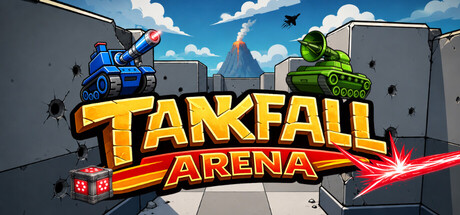
TankFall Arena contains certain pre-generated assets created with the assistance of generative AI tools during development. These assets may include promotional artwork, visual elements, audio content, and music. All AI-assisted content has been reviewed, curated, modified, and integrated by the developer as part of the game's overall design and presentation.
TankFall Arena does not generate AI content during gameplay and does not connect to external AI services while the game is running.
I use AI tools to assist with code review, translations, Steam capsule design, and music production tasks. All final game design, programming, and implementation decisions are made, reviewed, and supervised by me.
Small quantity of images/textures are ai-generated.
Small quantity of sound waves are ai-generated.
Some parts of code are ai-genereted and ai-assissted always tested by a human.
I used AI to generate much of the code for this game. I did a lot of reviewing and tweaking the code, but a large portion of the core code for the game was generated by AI.
The AI also generate the player and enemy "models". I had them generate to game scene files (tscn files in Godot) which are just simple text files. I tweaked many of them after initial generation.
I also used AI to generate the various store page and icon art, and 4 images that are findable in the game as items
AI was not used for the music in game, or the various art assets and SFX not mentioned above.
Some of the playable character and enemy models currently in the game were made with help from generative AI tools. I’m still working on these assets during development, and some or all of them may be replaced before release. I’ll update this disclosure if that changes.
Some of the visuals and text in this game were initially created using generative AI tools as part of the development process. All content was subsequently reviewed, edited, and adapted manually by the team to ensure its quality, consistency, and suitability for the final gaming experience.
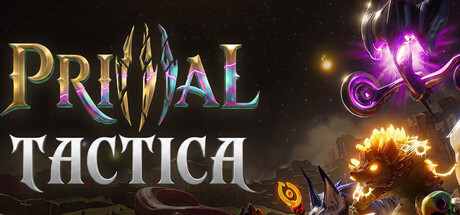
We believe that no person should be replaced by AI. All Primals — their models, animation, rigging, textures, SFX, and VFX — have been handcrafted by skilled artists.
Our developers may choose to use generative AI as part of an iterative, exploratory development process, but how and when is left to individual team members, and the final product always reflects the creativity and expression of our own development team.
As a small team, we have licensed some icons and 2D assets from external creators, and it is possible that some of these creators have used generative AI.
Generative AI was used to assist in the creation of promotional visual assets, including the game's logo and certain store page artwork. No gameplay content, code, story, dialogue, quests, characters, or game mechanics are generated by AI. All gameplay screenshots represent actual in-game content.
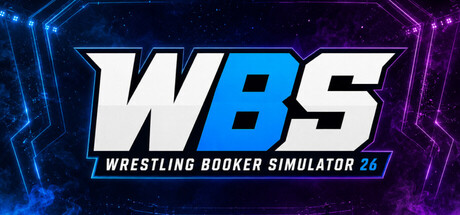
Generative AI tools may be used during the development and marketing of WBS26 to assist with concept art, promotional images, placeholder visual materials, character portraits, text editing, localization support, and production workflow.
Some character portraits or visual assets may be created or assisted by generative AI tools and then reviewed, selected, and edited by the developer before being included in the game.
The game does not use generative AI to create gameplay content in real time for the player. AI-assisted materials are reviewed and edited by the developer before being included in the game or on the Steam store page.
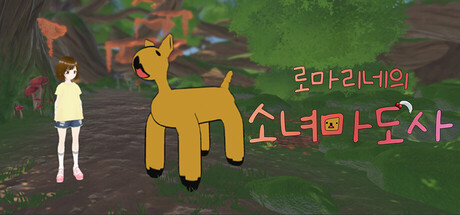
이 게임의 아래 항목은 생성형 인공지능을 활용해 제작되었습니다.
하기된 모델링은 생성형 인공지능을 활용해 제작되었습니다.
- 보스 1개체
하기된 사운드트랙은 제작된 사운드트랙을 Suno.ai를 활용해 리믹스 되었습니다.
- 06.Boss3_Night Of Fear_Rock Ver
- 07.Boss4_Time For Proof_Rock Ver
- 08.Final Boss_A Glorious Battle
- 09.Luminal Trace_Ending Ver
Generative AI was used during the development of Phantom Fools as a helper tool. It was used for some images, sound effects, music, and small parts of code. The 3D models, animations, most of the code, and the main game design were made by the developers without generative AI. Everything made with AI was checked, edited, and added to the game manually.
The game does not use generative AI during gameplay. No live AI-generated content is shown to players.
Static art assets (store-page capsules, in-game card art, in-game icons) and audio placeholders are generated via Replicate (Google Nano Banana Pro for image, Lyria-2 / AudioGen for audio) using human-authored prompts. Outputs are reviewed by the developer before shipping. No live AI generation occurs during gameplay; all assets are baked at build time.
I would like to pay for human assets, but I am moving fast. In the same way that AI turned 12 months of dev time into 2, it also affected how I skinned the MVP. This is best for communicating intention, and I can polish it with human art if there is traction.
Generative AI tools were used during development to assist in creating select pre-rendered 2D background environments, UI icons, and character voice-over audio for cutscenes and narration. All AI-generated content was pre-generated and manually reviewed to ensure quality and compliance before being integrated into the game. The game does not generate any AI content live during gameplay.
Current store artwork, in-game loading screen images, and background music were created with assistance from generative AI tools. These assets were manually reviewed and edited by the development team.
Some visual assets in OMNICORIUM were generated using AI tools, either directly during development or sourced from third-party creators who used AI-assisted generation.
AI is used exclusively for selected visual assets. It is not used for gameplay systems, player interactions, procedural mechanics, or dynamic content generation.
Some of this game's marketing artwork (Steam store capsules and banners) was generated with the help of an AI image model (FLUX via Runware) and then composited and edited by hand for the final assets.
Translations for 14 of the 16 supported languages — Danish, Finnish, French, German, Italian, Japanese, Korean, Norwegian, Polish, Portuguese, Simplified Chinese, Slovak, Spanish, and Swedish — were produced by machine translation (DeepL). Only English and Czech are reviewed and edited by a human; the other translations may contain mistakes, and corrections are welcome.
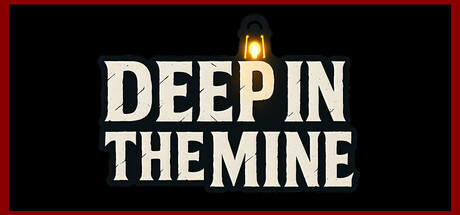
Deep In The Mine was developed by a single person. Artificial intelligence was used to save time and correct certain shortcomings, particularly in audio creation and mesh generation.
Pre-Generated Content:
We used generative AI tools to create some of the background music (BGM) and environmental sounds. Additionally, some 2D background artwork, such as loading screens, was generated using AI. All AI-generated assets have been strictly reviewed and heavily edited by the developer to fit the game's stylized direction and ensure they do not infringe on any third-party copyrights.
Live-Generated Content:
This game does not contain any live-generated AI content.
Artificial Intelligence was used as a supportive tool during the early stages of development, primarily for idea generation, documentation structuring, and general content review.
AI was also used to create certain placeholder images during the conceptual phase. These assets are temporary and will be replaced, as they are not intended to be part of the final version of the game.
All final game content, including design, gameplay systems, mechanics, artwork, and programming, has been manually created, implemented, and validated by the developer, along with licensed assets from the Unity Asset Store and contributions from freelancers (all properly credited).
Generative AI was used as one of many development tools while creating Snake: Gridbreaker.
As a solo developer, I used it to support programming, localization, UI work, visual assets, icons, and the development of quality-of-life and accessibility improvements.
Every AI-assisted element was reviewed, edited, tested, and implemented by me. I designed the game, its mechanics, progression, and creative direction, and I remain fully responsible for the final experience.
The game does not generate content with AI during gameplay.
Character portraits, UI icons, and background art in this game were generated using AI image tools (Google Gemini) and then edited, composited, and finalized by the developer. Music and sound effects were AI-generated (Suno / ElevenLabs) and edited by the developer. AI (Claude Code) was also used as a coding assistant during development. No AI content is generated live during gameplay — all assets are fixed and authored before release.
Generative AI was used as a supplementary tool for certain visual and audio assets. Every AI-assisted asset underwent substantial manual editing, refinement, quality control, and integration by the development team.
AI Generated Content Disclosure
The developers describe how their game uses AI Generated Content like this:
Generative AI tools were used in limited cases during the production of certain game assets. AI-generated content was not used as-is, and any such assets were revised, refined, and finalized by our art and development teams to ensure they meet our quality standards and creative direction.
Some of the CC0 soundtracks I found online turned out to be ai generated.
I'm currently working with a talented composer to replace them all with human-made ones.
Generative AI tools were used to assist in the creation of some music, sound effects, and promotional artwork associated with the game. The game's programming, design, and in-game visual content were created by the developer.
TankFall Arena contains certain pre-generated assets created with the assistance of generative AI tools during development. These assets may include promotional artwork, visual elements, audio content, and music. All AI-assisted content has been reviewed, curated, modified, and integrated by the developer as part of the game's overall design and presentation.
TankFall Arena does not generate AI content during gameplay and does not connect to external AI services while the game is running.
I use AI tools to assist with code review, translations, Steam capsule design, and music production tasks. All final game design, programming, and implementation decisions are made, reviewed, and supervised by me.
Small quantity of images/textures are ai-generated.
Small quantity of sound waves are ai-generated.
Some parts of code are ai-genereted and ai-assissted always tested by a human.
I used AI to generate much of the code for this game. I did a lot of reviewing and tweaking the code, but a large portion of the core code for the game was generated by AI.
The AI also generate the player and enemy "models". I had them generate to game scene files (tscn files in Godot) which are just simple text files. I tweaked many of them after initial generation.
I also used AI to generate the various store page and icon art, and 4 images that are findable in the game as items
AI was not used for the music in game, or the various art assets and SFX not mentioned above.
Some of the playable character and enemy models currently in the game were made with help from generative AI tools. I’m still working on these assets during development, and some or all of them may be replaced before release. I’ll update this disclosure if that changes.
Some of the visuals and text in this game were initially created using generative AI tools as part of the development process. All content was subsequently reviewed, edited, and adapted manually by the team to ensure its quality, consistency, and suitability for the final gaming experience.
We believe that no person should be replaced by AI. All Primals — their models, animation, rigging, textures, SFX, and VFX — have been handcrafted by skilled artists.
Our developers may choose to use generative AI as part of an iterative, exploratory development process, but how and when is left to individual team members, and the final product always reflects the creativity and expression of our own development team.
As a small team, we have licensed some icons and 2D assets from external creators, and it is possible that some of these creators have used generative AI.
Generative AI was used to assist in the creation of promotional visual assets, including the game's logo and certain store page artwork. No gameplay content, code, story, dialogue, quests, characters, or game mechanics are generated by AI. All gameplay screenshots represent actual in-game content.
Generative AI tools may be used during the development and marketing of WBS26 to assist with concept art, promotional images, placeholder visual materials, character portraits, text editing, localization support, and production workflow.
Some character portraits or visual assets may be created or assisted by generative AI tools and then reviewed, selected, and edited by the developer before being included in the game.
The game does not use generative AI to create gameplay content in real time for the player. AI-assisted materials are reviewed and edited by the developer before being included in the game or on the Steam store page.
이 게임의 아래 항목은 생성형 인공지능을 활용해 제작되었습니다.
하기된 모델링은 생성형 인공지능을 활용해 제작되었습니다.
- 보스 1개체
하기된 사운드트랙은 제작된 사운드트랙을 Suno.ai를 활용해 리믹스 되었습니다.
- 06.Boss3_Night Of Fear_Rock Ver
- 07.Boss4_Time For Proof_Rock Ver
- 08.Final Boss_A Glorious Battle
- 09.Luminal Trace_Ending Ver
Generative AI was used during the development of Phantom Fools as a helper tool. It was used for some images, sound effects, music, and small parts of code. The 3D models, animations, most of the code, and the main game design were made by the developers without generative AI. Everything made with AI was checked, edited, and added to the game manually.
The game does not use generative AI during gameplay. No live AI-generated content is shown to players.
Static art assets (store-page capsules, in-game card art, in-game icons) and audio placeholders are generated via Replicate (Google Nano Banana Pro for image, Lyria-2 / AudioGen for audio) using human-authored prompts. Outputs are reviewed by the developer before shipping. No live AI generation occurs during gameplay; all assets are baked at build time.
I would like to pay for human assets, but I am moving fast. In the same way that AI turned 12 months of dev time into 2, it also affected how I skinned the MVP. This is best for communicating intention, and I can polish it with human art if there is traction.
Generative AI tools were used during development to assist in creating select pre-rendered 2D background environments, UI icons, and character voice-over audio for cutscenes and narration. All AI-generated content was pre-generated and manually reviewed to ensure quality and compliance before being integrated into the game. The game does not generate any AI content live during gameplay.
Current store artwork, in-game loading screen images, and background music were created with assistance from generative AI tools. These assets were manually reviewed and edited by the development team.
Some visual assets in OMNICORIUM were generated using AI tools, either directly during development or sourced from third-party creators who used AI-assisted generation.
AI is used exclusively for selected visual assets. It is not used for gameplay systems, player interactions, procedural mechanics, or dynamic content generation.
Some of this game's marketing artwork (Steam store capsules and banners) was generated with the help of an AI image model (FLUX via Runware) and then composited and edited by hand for the final assets.
Translations for 14 of the 16 supported languages — Danish, Finnish, French, German, Italian, Japanese, Korean, Norwegian, Polish, Portuguese, Simplified Chinese, Slovak, Spanish, and Swedish — were produced by machine translation (DeepL). Only English and Czech are reviewed and edited by a human; the other translations may contain mistakes, and corrections are welcome.
Deep In The Mine was developed by a single person. Artificial intelligence was used to save time and correct certain shortcomings, particularly in audio creation and mesh generation.