Public Steam disclosure research25,376 disclosures tracked
Where do games disclose AI use?
Search developers’ Steam disclosures, compare classified AI use across
games, and follow recorded changes.
This index adds cross-game classifications and statistics to
statements published on individual store pages.
Groups reflect automatic analysis of public disclosures; mature records are excluded. These counts do not measure AI use across all of Steam.
Missing or unclear statements cannot establish whether a game uses AI.
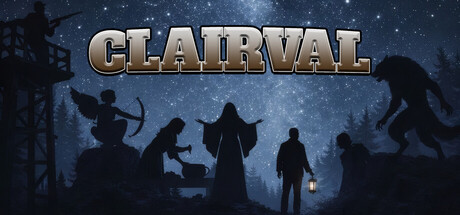
Clairval uses AI in the following limited ways:
1) Optional AI bot players: When a game host enables "Allow AI players", the server may fill empty seats with computer-controlled bot accounts at game start. These bots follow scripted server-side game logic (votes, night actions, chat). They are not powered by generative AI or large language models, and they do not learn from player conversations.
2) AI-generated visual assets (optional): Some provisional role card illustrations (placeholder JPG artwork) were created with AI-assisted tools during development. Final redrafted role cards (PNG) are human-made and always shown. Players can disable display of AI-generated placeholder art at any time in Account Settings → "Display AI-generated content?" (default: hidden until the player opts in).
Clairval does not use generative AI to create in-match dialogue, role assignments, game outcomes, moderation decisions, or real-time gameplay content. All core game rules and results are determined by the game server.
The following aspects of this game's development were assisted by AI tools:
• Code architecture planning and refactoring suggestions
• Debugging assistance
• Localization (English / Simplified Chinese / Japanese / and other supported languages)
• Initial drafts of select art assets
• Background music generation (SUNO)
All AI-generated output was reviewed, edited, and integrated by a human before inclusion in the final build. Core gameplay design, balancing, and final decisions were made by the developer.
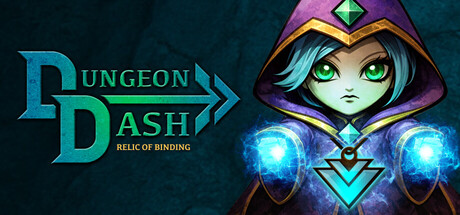
As a solo developer, I used every tool available to bring Dungeon Dash to life. The game design, mechanics, storyline, and level designs are entirely original, conceived long before AI tools entered the picture. The artwork combines hand drawn, stock, and AI generated assets, all of which have been further modified and animated by hand to fit the vision of the game.
Some visual assets, store assets, localization drafts, and marketing materials for SEO OR DIE were created or enhanced with the assistance of generative AI tools.
All AI-assisted content was reviewed, edited, and integrated by the developer to match the game's final art direction, narrative tone, and quality standards.
The game does not use real-time AI generation during gameplay.
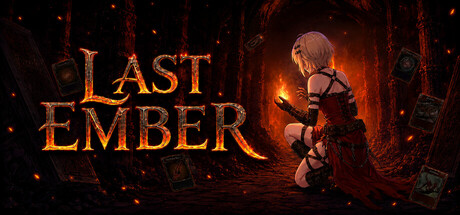
We're a small indie team, and we used generative AI to help make some of the art in Last Ember — card illustrations, backgrounds, character portraits, and a few short animations. We also used it on a handful of sound effects. Everything you see and hear in the game was picked, edited, and signed off by us. The game itself doesn't run any AI while you play — what ships is what you get.
This game includes pre-generated AI-assisted assets created during development, including selected background music and some visual art assets. All AI-assisted content was reviewed, curated, and edited by the developer before inclusion in the game. The game does not use live generative AI during gameplay.
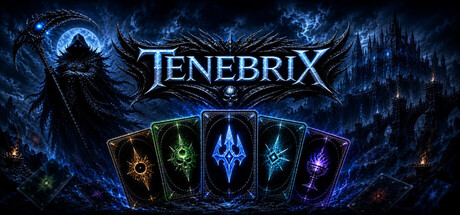
AI tools were used as part of the development process for Tenebrix, primarily to assist with early concept exploration, visual ideation, and asset prototyping. These tools helped accelerate iteration during the design phase, allowing for rapid testing of themes, compositions, and stylistic direction.
All AI-assisted content was reviewed, refined, and integrated manually to ensure consistency with the game’s vision and quality standards. Final assets, gameplay systems, and overall design were shaped through hands-on development and creative direction.
AI was used as a tool to support development—not as a replacement for it.
Chrongrid is a narrative experience product powered by large language models (LLMs). In-game dialogue, scene descriptions, and character responses are generated in real time by an AI model — you can choose a third-party API service (such as DeepSeek, OpenAI, or Anthropic), or run a model locally on your machine via Ollama. You provide your own API credentials and bear the associated costs; we do not operate any server to relay your requests. The AI generates dialogue and descriptive text at runtime, always within the constraints of pre-authored narrative blueprints, characters, and world settings.
RogueQuest was made by a solo developer with the help of generative AI across most of its production: artwork (character portraits, environments, card illustrations), code (written collaboratively with AI coding assistants), and music/sound. Game design, writing, curation, and final decisions are made by a human. All AI-generated assets are pre-generated and shipped as static content. The game does not call any AI services while you play.
"The game utilizes generative AI tools for the creation of concept art, UI icons, and English-to-Turkish localization. These assets are pre-generated during the development phase and are fully reviewed and polished by our team to ensure quality and originality."
Some sound effects and voice related audio assets were created or assisted using generative AI tools. These assets are used as part of the game's horror atmosphere and enemy audio design. The game does not generate AI content in real time during gameplay.
"This game uses pre-generated content created with the assistance of generative AI. Specifically: some 2D character, enemy, and environment art was sourced from AI-assisted asset packs; portions of the store page description and in-game flavor text were drafted with AI writing tools and then human-edited. No generative AI content is produced live at runtime — all assets are fixed and shipped with the build. The developer has confirmed appropriate rights/licenses for all included assets."
Generative artificial intelligence was used during the development of this game to create some of the visual art, as well as some of the music and sound effects. AI-generated assets were reviewed/edited/finalized by a human before release.
Pre-Generated Content (AI-assisted art):
Some promotional and marketing artwork & game arts of the tiles & the facilities was created with the assistance of AI image generation tools used as a starting point, subsequently edited and modified by the developer. All in-game characters & effects are hand-crafted by the developer.
One developer. AI tools helped with images and text because some things are bigger than one pair of hands. Everything you see reflects my own creative decisions.
Dead Reckoning is written, and designed by one person. I want to be precise about where AI tools do and don't appear in it.
Creative content — no generative AI. All writing, narrative, and design is mine. I've worked as a technical writer for twelve years; the game's voice is my own. All art and visual assets are hand-made or licensed from named human artists. All music and sound effects are licensed from named human creators (public domain / Creative Commons) — none of it is AI-generated. This is a hard line and I intend to keep it.
Development & release tooling — where AI assists. I use AI in the engineering and release pipeline only, never to author the game itself:
- Coding assistance while writing the game's GDScript.
- An automated QA/test harness that plays the simulation thousands of times to catch crashes and balance regressions.
- Assistance in building linters (Valve YAML sheets) that check the project's text.
- Drafting and summarizing the release notes (patch notes) from the project's changelog.
None of this creates any of the writing, art, audio, or design inside the game.
Localization. The four translations (German, French, Italian, Spanish) are machine-translated by DeepL from my English source, with automated guards that fall back to English wherever a translation would break. This is an accessibility vs. quality decision, and I decided on the former. Proper localizations are planned and will be contracted out if the budget allows.
Yes, I use AI tools to help build this game, and I'm not going to pretend I don't.
I'm one person. Every system, mechanic, and design decision is made, tested, and tuned by me personally. I use the best tools available, AI among them, to let a one-person studio punch way above its weight. That's the entire point of being indie: no rules except the ones that make a better game.
Assets are a fluid mix of commercially licensed, hand-crafted, AI-generated, AI-generated then hand-adjusted, and hand-crafted then AI-polished. I'll use whatever it takes to make this the best game it can be.
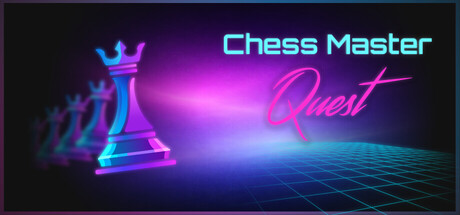
Chess Master Quest was developed by a solo developer with assistance from generative AI tools during development.
• Code: AI coding assistants (GitHub Copilot, Claude) were used to help write and refine parts of the game code. All code was reviewed and tested by the developer.
• Text: AI was used to help draft and edit some in-game text, including puzzle annotations and educational commentary. All text was reviewed and edited by the developer.
No AI-generated visual art or music is used in the game. Chess piece graphics are open-source vector assets. Store capsule images and artwork were created by a professional artist. The chess engine (Stockfish) is traditional software, not generative AI. No content is generated by AI at runtime during gameplay.
Burner Empire uses generative AI in the following ways:
During Development
Some visual assets in the game were created with the assistance of AI image generation tools. These assets were reviewed, curated, and integrated by the development team as part of the game's overall visual design.
In Gameplay
Burner Empire features an AI-driven bot fleet that populates the game world with computer-controlled players. These bots use a combination of scripted decision logic and AI-driven behavior modeling to simulate realistic player activity — cooking drugs, deploying dealers, traveling between districts, and engaging in PvP. The bot fleet exists to ensure the game world feels active and competitive regardless of the current number of human players online.
The bot fleet is not generative AI in the traditional sense — it does not produce text, images, or creative content. It is a behavioral simulation system designed to make the multiplayer environment feel alive during off-peak hours and at launch while the player community grows.
What AI Does Not Do
No generative AI is used to create real-time dialogue, procedurally generate game content during play, or make decisions that affect monetization or player accounts.
AI is used to generate some art and sound during parts of development. As a solo dev this is a way for me to test gameplay easy.
Translations for store pages are also made with AI
Football Conquerors uses generative AI tools during development for some pre-generated assets and iteration workflows, including concept visuals, selected card/store artwork drafts, music drafts, and writing/code assistance.
All AI-assisted outputs are reviewed, edited, and approved by the developer before release.
The released game does not generate player-facing content or code in real time during gameplay, and it does not require a live third-party generative AI service during play.
Some promotional assets created during development, including certain store-page media, used generative AI-assisted artwork. The shipped game does not use live AI-generated gameplay content, and it does not connect to any external AI service during play.
The background music for Geometry Attack was created using Soundraw, an AI-powered music generation tool. All musical tracks were pre-generated during development and are included as static assets in the final game.
Generative AI tools were used exclusively for the creation of marketing materials and store capsules. No generative AI was used to create the in-game assets, which consist of a mix of custom work and hand-crafted assets from third-party creators.
Generative AI tools were used to assist with the creation and editing of artwork for some Steam Store and Library assets, as well as with the translation and localization of game-related text. All AI-assisted content was reviewed, edited, and finalized by the development team. Generative AI is not used to generate content during gameplay, and the game does not connect to any external AI services.
English and Italian localization have been handled internally by our team. All other currently available languages, such as Simplified Chinese, Spanish, Brazilian Portuguese, German, Japanese, Russian, and French, are temporarily supported through AI-assisted translation.
These translations are placeholder versions and will be gradually replaced with finalized localizations leading up to the 1.0 release of the game.
No AI-generated content has been used for any other aspect of development, including coding, art, music, or 3D modeling.
Throughout our development, we may leverage AI-based tools to assist our team in programming logic and audio production. Please rest assured that the final gameplay and soundscapes reflect the creativity and hard work of our team. Examples include code optimization and musical composition aids.
The development of War Lab is aided by AI as a tool. This is, as of now, a single dev project, no jobs are being taken by AI.
-Coding: script templates, help refactoring, commenting, and optimizing human-written code. It also helps solve problems, errors/warnings and find more optimized ways of doing human-designed functionality.
-Sound effects: some computer interactions with fictional devices, and voices (NOT MUSIC)
-Textures: some textures have been upscaled using AI or edited to better depict the desired effects we were aiming for.
-No decisions are taken by AI
-No lore/story elements are written or decided by AI
-No 3D models have been made using AI
Last updated: March 22 2026 (5th game anniversary)
Possible changes in the future:
-Realtime AI NPC actions
-AI-driven text-to-speech for NPCs
-Player mimics (takes in player voices and movements to create player "doppelgangers")
Clairval uses AI in the following limited ways:
1) Optional AI bot players: When a game host enables "Allow AI players", the server may fill empty seats with computer-controlled bot accounts at game start. These bots follow scripted server-side game logic (votes, night actions, chat). They are not powered by generative AI or large language models, and they do not learn from player conversations.
2) AI-generated visual assets (optional): Some provisional role card illustrations (placeholder JPG artwork) were created with AI-assisted tools during development. Final redrafted role cards (PNG) are human-made and always shown. Players can disable display of AI-generated placeholder art at any time in Account Settings → "Display AI-generated content?" (default: hidden until the player opts in).
Clairval does not use generative AI to create in-match dialogue, role assignments, game outcomes, moderation decisions, or real-time gameplay content. All core game rules and results are determined by the game server.
The following aspects of this game's development were assisted by AI tools:
• Code architecture planning and refactoring suggestions
• Debugging assistance
• Localization (English / Simplified Chinese / Japanese / and other supported languages)
• Initial drafts of select art assets
• Background music generation (SUNO)
All AI-generated output was reviewed, edited, and integrated by a human before inclusion in the final build. Core gameplay design, balancing, and final decisions were made by the developer.
As a solo developer, I used every tool available to bring Dungeon Dash to life. The game design, mechanics, storyline, and level designs are entirely original, conceived long before AI tools entered the picture. The artwork combines hand drawn, stock, and AI generated assets, all of which have been further modified and animated by hand to fit the vision of the game.
Some visual assets, store assets, localization drafts, and marketing materials for SEO OR DIE were created or enhanced with the assistance of generative AI tools.
All AI-assisted content was reviewed, edited, and integrated by the developer to match the game's final art direction, narrative tone, and quality standards.
The game does not use real-time AI generation during gameplay.
We're a small indie team, and we used generative AI to help make some of the art in Last Ember — card illustrations, backgrounds, character portraits, and a few short animations. We also used it on a handful of sound effects. Everything you see and hear in the game was picked, edited, and signed off by us. The game itself doesn't run any AI while you play — what ships is what you get.
This game includes pre-generated AI-assisted assets created during development, including selected background music and some visual art assets. All AI-assisted content was reviewed, curated, and edited by the developer before inclusion in the game. The game does not use live generative AI during gameplay.
AI tools were used as part of the development process for Tenebrix, primarily to assist with early concept exploration, visual ideation, and asset prototyping. These tools helped accelerate iteration during the design phase, allowing for rapid testing of themes, compositions, and stylistic direction.
All AI-assisted content was reviewed, refined, and integrated manually to ensure consistency with the game’s vision and quality standards. Final assets, gameplay systems, and overall design were shaped through hands-on development and creative direction.
AI was used as a tool to support development—not as a replacement for it.
Chrongrid is a narrative experience product powered by large language models (LLMs). In-game dialogue, scene descriptions, and character responses are generated in real time by an AI model — you can choose a third-party API service (such as DeepSeek, OpenAI, or Anthropic), or run a model locally on your machine via Ollama. You provide your own API credentials and bear the associated costs; we do not operate any server to relay your requests. The AI generates dialogue and descriptive text at runtime, always within the constraints of pre-authored narrative blueprints, characters, and world settings.
RogueQuest was made by a solo developer with the help of generative AI across most of its production: artwork (character portraits, environments, card illustrations), code (written collaboratively with AI coding assistants), and music/sound. Game design, writing, curation, and final decisions are made by a human. All AI-generated assets are pre-generated and shipped as static content. The game does not call any AI services while you play.
"The game utilizes generative AI tools for the creation of concept art, UI icons, and English-to-Turkish localization. These assets are pre-generated during the development phase and are fully reviewed and polished by our team to ensure quality and originality."
Some sound effects and voice related audio assets were created or assisted using generative AI tools. These assets are used as part of the game's horror atmosphere and enemy audio design. The game does not generate AI content in real time during gameplay.
"This game uses pre-generated content created with the assistance of generative AI. Specifically: some 2D character, enemy, and environment art was sourced from AI-assisted asset packs; portions of the store page description and in-game flavor text were drafted with AI writing tools and then human-edited. No generative AI content is produced live at runtime — all assets are fixed and shipped with the build. The developer has confirmed appropriate rights/licenses for all included assets."
Generative artificial intelligence was used during the development of this game to create some of the visual art, as well as some of the music and sound effects. AI-generated assets were reviewed/edited/finalized by a human before release.
Pre-Generated Content (AI-assisted art):
Some promotional and marketing artwork & game arts of the tiles & the facilities was created with the assistance of AI image generation tools used as a starting point, subsequently edited and modified by the developer. All in-game characters & effects are hand-crafted by the developer.
One developer. AI tools helped with images and text because some things are bigger than one pair of hands. Everything you see reflects my own creative decisions.
Dead Reckoning is written, and designed by one person. I want to be precise about where AI tools do and don't appear in it.
Creative content — no generative AI. All writing, narrative, and design is mine. I've worked as a technical writer for twelve years; the game's voice is my own. All art and visual assets are hand-made or licensed from named human artists. All music and sound effects are licensed from named human creators (public domain / Creative Commons) — none of it is AI-generated. This is a hard line and I intend to keep it.
Development & release tooling — where AI assists. I use AI in the engineering and release pipeline only, never to author the game itself:
- Coding assistance while writing the game's GDScript.
- An automated QA/test harness that plays the simulation thousands of times to catch crashes and balance regressions.
- Assistance in building linters (Valve YAML sheets) that check the project's text.
- Drafting and summarizing the release notes (patch notes) from the project's changelog.
None of this creates any of the writing, art, audio, or design inside the game.
Localization. The four translations (German, French, Italian, Spanish) are machine-translated by DeepL from my English source, with automated guards that fall back to English wherever a translation would break. This is an accessibility vs. quality decision, and I decided on the former. Proper localizations are planned and will be contracted out if the budget allows.
Yes, I use AI tools to help build this game, and I'm not going to pretend I don't.
I'm one person. Every system, mechanic, and design decision is made, tested, and tuned by me personally. I use the best tools available, AI among them, to let a one-person studio punch way above its weight. That's the entire point of being indie: no rules except the ones that make a better game.
Assets are a fluid mix of commercially licensed, hand-crafted, AI-generated, AI-generated then hand-adjusted, and hand-crafted then AI-polished. I'll use whatever it takes to make this the best game it can be.
Chess Master Quest was developed by a solo developer with assistance from generative AI tools during development.
• Code: AI coding assistants (GitHub Copilot, Claude) were used to help write and refine parts of the game code. All code was reviewed and tested by the developer.
• Text: AI was used to help draft and edit some in-game text, including puzzle annotations and educational commentary. All text was reviewed and edited by the developer.
No AI-generated visual art or music is used in the game. Chess piece graphics are open-source vector assets. Store capsule images and artwork were created by a professional artist. The chess engine (Stockfish) is traditional software, not generative AI. No content is generated by AI at runtime during gameplay.
Burner Empire uses generative AI in the following ways:
During Development
Some visual assets in the game were created with the assistance of AI image generation tools. These assets were reviewed, curated, and integrated by the development team as part of the game's overall visual design.
In Gameplay
Burner Empire features an AI-driven bot fleet that populates the game world with computer-controlled players. These bots use a combination of scripted decision logic and AI-driven behavior modeling to simulate realistic player activity — cooking drugs, deploying dealers, traveling between districts, and engaging in PvP. The bot fleet exists to ensure the game world feels active and competitive regardless of the current number of human players online.
The bot fleet is not generative AI in the traditional sense — it does not produce text, images, or creative content. It is a behavioral simulation system designed to make the multiplayer environment feel alive during off-peak hours and at launch while the player community grows.
What AI Does Not Do
No generative AI is used to create real-time dialogue, procedurally generate game content during play, or make decisions that affect monetization or player accounts.
AI is used to generate some art and sound during parts of development. As a solo dev this is a way for me to test gameplay easy.
Translations for store pages are also made with AI
Football Conquerors uses generative AI tools during development for some pre-generated assets and iteration workflows, including concept visuals, selected card/store artwork drafts, music drafts, and writing/code assistance.
All AI-assisted outputs are reviewed, edited, and approved by the developer before release.
The released game does not generate player-facing content or code in real time during gameplay, and it does not require a live third-party generative AI service during play.
Some promotional assets created during development, including certain store-page media, used generative AI-assisted artwork. The shipped game does not use live AI-generated gameplay content, and it does not connect to any external AI service during play.
The background music for Geometry Attack was created using Soundraw, an AI-powered music generation tool. All musical tracks were pre-generated during development and are included as static assets in the final game.
Generative AI tools were used exclusively for the creation of marketing materials and store capsules. No generative AI was used to create the in-game assets, which consist of a mix of custom work and hand-crafted assets from third-party creators.
Generative AI tools were used to assist with the creation and editing of artwork for some Steam Store and Library assets, as well as with the translation and localization of game-related text. All AI-assisted content was reviewed, edited, and finalized by the development team. Generative AI is not used to generate content during gameplay, and the game does not connect to any external AI services.
English and Italian localization have been handled internally by our team. All other currently available languages, such as Simplified Chinese, Spanish, Brazilian Portuguese, German, Japanese, Russian, and French, are temporarily supported through AI-assisted translation.
These translations are placeholder versions and will be gradually replaced with finalized localizations leading up to the 1.0 release of the game.
No AI-generated content has been used for any other aspect of development, including coding, art, music, or 3D modeling.
Throughout our development, we may leverage AI-based tools to assist our team in programming logic and audio production. Please rest assured that the final gameplay and soundscapes reflect the creativity and hard work of our team. Examples include code optimization and musical composition aids.
The development of War Lab is aided by AI as a tool. This is, as of now, a single dev project, no jobs are being taken by AI.
-Coding: script templates, help refactoring, commenting, and optimizing human-written code. It also helps solve problems, errors/warnings and find more optimized ways of doing human-designed functionality.
-Sound effects: some computer interactions with fictional devices, and voices (NOT MUSIC)
-Textures: some textures have been upscaled using AI or edited to better depict the desired effects we were aiming for.
-No decisions are taken by AI
-No lore/story elements are written or decided by AI
-No 3D models have been made using AI
Last updated: March 22 2026 (5th game anniversary)
Possible changes in the future:
-Realtime AI NPC actions
-AI-driven text-to-speech for NPCs
-Player mimics (takes in player voices and movements to create player "doppelgangers")