Public Steam disclosure research25,380 disclosures tracked
Where do games disclose AI use?
Search developers’ Steam disclosures, compare classified AI use across
games, and follow recorded changes.
This index adds cross-game classifications and statistics to
statements published on individual store pages.
Groups reflect automatic analysis of public disclosures; mature records are excluded. These counts do not measure AI use across all of Steam.
Missing or unclear statements cannot establish whether a game uses AI.
Generative AI was used only for certain voice and audio elements featured in the game and its trailer. All gameplay systems, visual assets, game design, programming, and other content were created and implemented by the developer.
Players cannot generate content using AI within the game, and no AI-generated content is created during gameplay.
Some game assets and content were created with the assistance of generative AI tools during development. AI-assisted content was reviewed, curated, edited, and integrated into the final game by the developer. Generative AI is not used to create content during gameplay.
Generative AI was used to create some initial concept imagery during development and marketing. All AI generated content is reviewed, heavily modified, edited and incorporated into final artwork by our art team before use. No AI generated content is produced during gameplay.
Some placeholder assets have been AI generated. We are actively working with human artists to replace all of the AI art in the game with human made art.
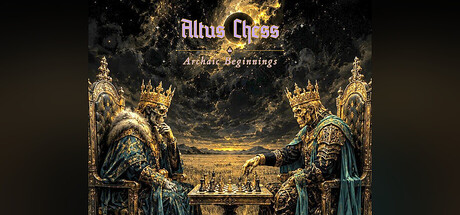
All visual artwork in Altus Chess: Archaic Beginnings — piece designs, board and background art, and promotional/store imagery — was created using generative AI image tools, directed by the developer through human-written prompts based on the game's own pieces and concepts, then reviewed and edited by hand. No content is generated live during gameplay. The game's opponent is a proprietary, hand-built algorithmic chess engine, not generative AI.
Wealth of Nations: Economic Strategy uses AI-assisted visual production for some store, capsule, and in-game artwork, including promotional key art and selected interface illustrations. These assets are curated, edited, and integrated by the developer to match the game’s political-economic strategy style.
During gameplay, the game can generate short newspaper-style articles, cabinet briefings, and political dilemmas based on the current simulation state, including economic indicators, policy choices, world conditions, and regional tensions. Gameplay text generation runs locally on the player’s machine. No gameplay data, prompts, or player data are sent to external AI providers.
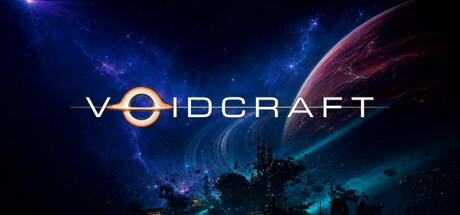
VoidCraft uses generative AI in two ways. During development, AI tools assisted in creating written content that ships with the game (lore, item and research descriptions, mission templates, NPC flavour text) and in exploring marketing artwork concepts; all of it was reviewed by the developer before inclusion. During gameplay, two features generate text live using large language models: the optional in-game Advisor, which analyses your empire and offers strategy advice in character, and contract mission briefings (titles, short stories, and NPC names) on station contract boards. Players cannot type free-form prompts into these systems - the AI receives only structured game-state data assembled by our servers, and every output is validated server-side before it appears in the game. Core gameplay (combat, economy, progression, rewards) is governed by deterministic game rules, not by AI.
We have utilized open-source, self-hosted AI tools for our localization process to make the game available to as many players as possible. Additionally, local AI tooling was used during development to assist with codebase navigation and a single instance of asset recovery for a lost legacy logo. No proprietary or cloud-based AI services were used.
Generative AI was used as an assistive tool during development to draft text and translations, and to create some 2D images and graphical assets. As there is currently no budget to hire a dedicated artist, certain visual elements are initially generated with AI and then manually modified and refined. No AI content is generated live at runtime.
Some of the visuals and text in this game were initially created using generative AI tools as part of the development process. All content was subsequently reviewed, edited, and adapted manually by the team to ensure its quality, consistency, and suitability for the final gaming experience.
Generative AI has been used during development to create certain concept art, promotional materials, visual mockups, and marketing assets. These assets are used for early-stage presentation and community engagement.
Gameplay systems, game design, programming, and final in-game content are developed and curated by the development team. No live-generated AI content is currently generated for players during gameplay.
The feedback on the in-game world state and the dynamic dialogues with NPCs are generated in real time during the game's operation by integrating a large language model (LLM).
I have used AI to design some parts of the main menu, data models, design of the multiplayer system and room system and to improve the heuristic armies behavior.
Some 2D art (such as cosmetic items) and the background music were created using generative AI tools based on developer reference images, then reviewed and edited by the developer. No AI runs during gameplay.
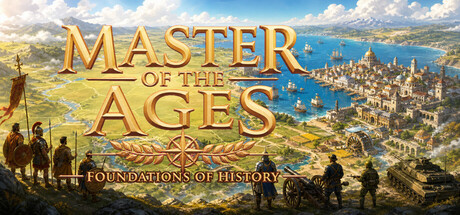
Master of the Ages is a grand strategy game engineered by a solo developer with 15+ years of senior software engineering and programming competition experience. To achieve grand-strategy scale as a single creator, a generative AI workflow was utilized to co-design the code architecture and write the codebase under the developer's supervision, backed by a rigorous framework of over 2,500 automated tests to catch edge-case bugs and prevent regressions during development. Generative AI was also used to produce all player-facing graphics (including all unit, building, and technology assets) and generate the historical text layers.
Some 2D visual assets in Hollow Stars were created with the help of generative AI image tools during development. This includes parts of the store and marketing artwork, the achievement icons, and background art used in the game's cinematic intro. Every AI-assisted asset was reviewed, edited and curated by the development team before release.
Generative AI is not used while you play. The game runs no generative AI at runtime — the in-game faction "AI" is a fully deterministic, rule-based simulation, not a generative model. No player input or data is sent to any AI service.
Pre-generated AI-assisted artwork is used for fictional chess player avatars and selected promotional visuals. These assets are reviewed before inclusion. No live generative AI is used during gameplay.
AI assisted assets and text are developer edited. The core game is playable without AI. Optional advisor commentary can use local Ollama or Anthropic only if the player enables it and provides their own key.
Some visual, audio, and creative assets used during development were created or assisted with generative AI tools. All content was reviewed, edited, and integrated into the final game experience by the developer.
This game uses generative AI tools during development to assist with certain assets such as artwork, text, and design elements. All AI-assisted content has been reviewed, edited, and curated by the developer to ensure quality and appropriateness.
The game does not use AI to generate content during gameplay, and no external AI services are accessed while playing.
We use generative AI tools to assist with the creation and refinement of some pre-generated content, including store page text, translations, marketing copy, and selected promotional/static visual assets. The game does not use generative AI to create content in real time during gameplay.
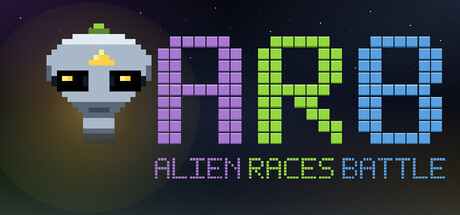
ARB: Alien Races Battle is developed by a solo human author (Raphael Tremblay) with assistance from Anthropic's Claude AI as a coding, art, and writing collaborator throughout production. Specifically:
- Some pixel-art unit sprites, ability icons, and UI elements were generated as SVG code with Claude's help, then reviewed, edited, and approved by the developer.
- In-game ability descriptions, Field Manual codex entries, and supplementary lore text were written with Claude as a writing collaborator, all building on the existing canon of The Alien Races Book (a separate, fully human-authored book by the same author that predates this game by years).
- Game code (gameplay engine, multiplayer infrastructure, UI logic) was developed with Claude as a coding-pair assistant.
Every piece of AI-assisted content was reviewed and edited by the human developer before shipping. The game's core IP — the 60+ documented alien races, their homeworlds, and their first-contact records — comes from The Alien Races Book and is entirely human-authored.
ARB does not use AI to generate content live during gameplay. All in-game content (units, sprites, abilities, sound, text, music) is finalized at build time and shipped as static assets.
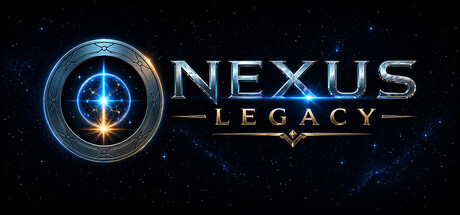
Nexus Legacy is made by a solo developer using AI-assisted production tools. These tools were used during development to help with visual iteration, asset production, prototyping and code assistance, making a larger persistent MMO possible with a small production pipeline.
The final game is not a live AI generator. Gameplay design, balance, economy, progression, PvE/PvP rules, server logic, world structure, final visuals and updates are selected, reviewed, edited and maintained by the developer.
No live generative AI is used to create player-facing content while the game is running.
EQUILIBRIUM uses generative AI to power its core gameplay mechanic: the Policy Terminal.
LIVE-GENERATED CONTENT
When a player types a directive or law in natural language (e.g., "Abolish the luxury car tax"), the AI Engine analyzes the request in real time and generates a structured governmental dossier, including:
- Legislative feasibility analysis
- Budget impact and financial coverage
- Macroeconomic effects (GDP, debt, inflation)
- Social and political consensus projections
- Parliamentary vote simulation
Model used: Anthropic Claude, accessed via API.
Guardrails: AI output is constrained to a fixed set of structured fields defined by the developer. All numeric effects are clamped within bounds enforced by the simulation engine, so no AI output can produce values outside the game's defined ranges. The model operates only on the simulation state provided to it and cannot invent game data: commands that cannot be mapped to a valid government action are refused, and the player is offered bounded policy alternatives instead. No image, audio, or user-data generation is involved, and no player data is used to train any model.
Because responses are generated at runtime, outputs vary between playthroughs: the same directive may produce different wording and different outcomes.
PRE-GENERATED CONTENT
The game's background music track was generated using AI tools during development and ships with the game.
This game incorporates generative AI to enhance visual storytelling and character depth in the following ways:
Video Content: A portion of the ending cinematic utilizes footage generated by Sora 2, which can be identified by its watermark.
Character Illustrations: Three soldier profile photos displayed within the Personnel Search Center were created using ChatGPT (DALL-E).
We have used these tools to supplement the creative vision of our team and ensure a more immersive atmosphere for our players.
This game's development used generative AI in three specific areas:
1. Source code: Portions of the source code were authored with assistance from large language model (LLM) coding tools.
2. Localization: In-game text translations for 10 languages (English, Simplified Chinese, Traditional Chinese, Korean, Russian, German, French, Spanish, Brazilian Portuguese, and Italian) were generated
using LLM-based tools from the original Japanese source text.
3. Visual assets (UI graphics and logo): Generative AI was used in some cases to assist with creating certain in-game UI icons and the game logo. These AI-assisted assets are limited to generic UI elements
(icons, indicators) and abstract logo designs, and do not depict real-world characters, brands, or copyrighted materials.
Generative AI tools are used to translate text into different languages and to create visual assets. All content is reviewed and manually edited before being included in the game.
Smoke Town utilizes artificial intelligence in the following areas:
We only use AI-generated content in our game as reference material for backgrounds, which are then refined and reviewed by humans. And also for interface translations.
All AI-generated content has been human-reviewed and refined for quality and technical integration.
World maps in National Transit are created with procedural (algorithmic) generation — not AI. Terrain, rivers, coastlines, and city placement are generated algorithmically at the start of each playthrough.
Generative AI is used in the following place(s):
• Some of the in-game icons/2D art — a portion are AI-generated; the rest are hand-drawn.
In-game text is written by hand; localisation into other languages was produced with the help of machine/AI translation.
AI is being used to do automated testing and code review. AI and Google Translate were used to generate the initial set of translations. There are currently people working on localization - it is just going to take time. If you would like to help with the localization please see: https://weblate.kuhnflix.app/ (I would appreciate your assistance!)
American Football Coach utilises artificial intelligence to randomise players and finances at the start of each game load, for the gameplay of each individual match, the questions posed by the media and the occasional random event, which can effect your finances and prestige positively or negatively.
This game includes some pre-generated visual assets created or assisted with generative AI (including certain promotional images on the Steam store page and library).
All AI-generated content is static and was reviewed and edited by the development team before release.
The game does not generate AI content in real time during gameplay and does not connect to external AI services while playing.
Generative AI was used only for certain voice and audio elements featured in the game and its trailer. All gameplay systems, visual assets, game design, programming, and other content were created and implemented by the developer.
Players cannot generate content using AI within the game, and no AI-generated content is created during gameplay.
Some game assets and content were created with the assistance of generative AI tools during development. AI-assisted content was reviewed, curated, edited, and integrated into the final game by the developer. Generative AI is not used to create content during gameplay.
Generative AI was used to create some initial concept imagery during development and marketing. All AI generated content is reviewed, heavily modified, edited and incorporated into final artwork by our art team before use. No AI generated content is produced during gameplay.
Some placeholder assets have been AI generated. We are actively working with human artists to replace all of the AI art in the game with human made art.
All visual artwork in Altus Chess: Archaic Beginnings — piece designs, board and background art, and promotional/store imagery — was created using generative AI image tools, directed by the developer through human-written prompts based on the game's own pieces and concepts, then reviewed and edited by hand. No content is generated live during gameplay. The game's opponent is a proprietary, hand-built algorithmic chess engine, not generative AI.
Wealth of Nations: Economic Strategy uses AI-assisted visual production for some store, capsule, and in-game artwork, including promotional key art and selected interface illustrations. These assets are curated, edited, and integrated by the developer to match the game’s political-economic strategy style.
During gameplay, the game can generate short newspaper-style articles, cabinet briefings, and political dilemmas based on the current simulation state, including economic indicators, policy choices, world conditions, and regional tensions. Gameplay text generation runs locally on the player’s machine. No gameplay data, prompts, or player data are sent to external AI providers.
VoidCraft uses generative AI in two ways. During development, AI tools assisted in creating written content that ships with the game (lore, item and research descriptions, mission templates, NPC flavour text) and in exploring marketing artwork concepts; all of it was reviewed by the developer before inclusion. During gameplay, two features generate text live using large language models: the optional in-game Advisor, which analyses your empire and offers strategy advice in character, and contract mission briefings (titles, short stories, and NPC names) on station contract boards. Players cannot type free-form prompts into these systems - the AI receives only structured game-state data assembled by our servers, and every output is validated server-side before it appears in the game. Core gameplay (combat, economy, progression, rewards) is governed by deterministic game rules, not by AI.
We have utilized open-source, self-hosted AI tools for our localization process to make the game available to as many players as possible. Additionally, local AI tooling was used during development to assist with codebase navigation and a single instance of asset recovery for a lost legacy logo. No proprietary or cloud-based AI services were used.
Generative AI was used as an assistive tool during development to draft text and translations, and to create some 2D images and graphical assets. As there is currently no budget to hire a dedicated artist, certain visual elements are initially generated with AI and then manually modified and refined. No AI content is generated live at runtime.
Some of the visuals and text in this game were initially created using generative AI tools as part of the development process. All content was subsequently reviewed, edited, and adapted manually by the team to ensure its quality, consistency, and suitability for the final gaming experience.
Generative AI has been used during development to create certain concept art, promotional materials, visual mockups, and marketing assets. These assets are used for early-stage presentation and community engagement.
Gameplay systems, game design, programming, and final in-game content are developed and curated by the development team. No live-generated AI content is currently generated for players during gameplay.
The feedback on the in-game world state and the dynamic dialogues with NPCs are generated in real time during the game's operation by integrating a large language model (LLM).
I have used AI to design some parts of the main menu, data models, design of the multiplayer system and room system and to improve the heuristic armies behavior.
Some 2D art (such as cosmetic items) and the background music were created using generative AI tools based on developer reference images, then reviewed and edited by the developer. No AI runs during gameplay.
Master of the Ages is a grand strategy game engineered by a solo developer with 15+ years of senior software engineering and programming competition experience. To achieve grand-strategy scale as a single creator, a generative AI workflow was utilized to co-design the code architecture and write the codebase under the developer's supervision, backed by a rigorous framework of over 2,500 automated tests to catch edge-case bugs and prevent regressions during development. Generative AI was also used to produce all player-facing graphics (including all unit, building, and technology assets) and generate the historical text layers.
Some 2D visual assets in Hollow Stars were created with the help of generative AI image tools during development. This includes parts of the store and marketing artwork, the achievement icons, and background art used in the game's cinematic intro. Every AI-assisted asset was reviewed, edited and curated by the development team before release.
Generative AI is not used while you play. The game runs no generative AI at runtime — the in-game faction "AI" is a fully deterministic, rule-based simulation, not a generative model. No player input or data is sent to any AI service.
Pre-generated AI-assisted artwork is used for fictional chess player avatars and selected promotional visuals. These assets are reviewed before inclusion. No live generative AI is used during gameplay.
AI assisted assets and text are developer edited. The core game is playable without AI. Optional advisor commentary can use local Ollama or Anthropic only if the player enables it and provides their own key.
Some visual, audio, and creative assets used during development were created or assisted with generative AI tools. All content was reviewed, edited, and integrated into the final game experience by the developer.
This game uses generative AI tools during development to assist with certain assets such as artwork, text, and design elements. All AI-assisted content has been reviewed, edited, and curated by the developer to ensure quality and appropriateness.
The game does not use AI to generate content during gameplay, and no external AI services are accessed while playing.
We use generative AI tools to assist with the creation and refinement of some pre-generated content, including store page text, translations, marketing copy, and selected promotional/static visual assets. The game does not use generative AI to create content in real time during gameplay.
ARB: Alien Races Battle is developed by a solo human author (Raphael Tremblay) with assistance from Anthropic's Claude AI as a coding, art, and writing collaborator throughout production. Specifically:
- Some pixel-art unit sprites, ability icons, and UI elements were generated as SVG code with Claude's help, then reviewed, edited, and approved by the developer.
- In-game ability descriptions, Field Manual codex entries, and supplementary lore text were written with Claude as a writing collaborator, all building on the existing canon of The Alien Races Book (a separate, fully human-authored book by the same author that predates this game by years).
- Game code (gameplay engine, multiplayer infrastructure, UI logic) was developed with Claude as a coding-pair assistant.
Every piece of AI-assisted content was reviewed and edited by the human developer before shipping. The game's core IP — the 60+ documented alien races, their homeworlds, and their first-contact records — comes from The Alien Races Book and is entirely human-authored.
ARB does not use AI to generate content live during gameplay. All in-game content (units, sprites, abilities, sound, text, music) is finalized at build time and shipped as static assets.
Nexus Legacy is made by a solo developer using AI-assisted production tools. These tools were used during development to help with visual iteration, asset production, prototyping and code assistance, making a larger persistent MMO possible with a small production pipeline.
The final game is not a live AI generator. Gameplay design, balance, economy, progression, PvE/PvP rules, server logic, world structure, final visuals and updates are selected, reviewed, edited and maintained by the developer.
No live generative AI is used to create player-facing content while the game is running.
EQUILIBRIUM uses generative AI to power its core gameplay mechanic: the Policy Terminal.
LIVE-GENERATED CONTENT
When a player types a directive or law in natural language (e.g., "Abolish the luxury car tax"), the AI Engine analyzes the request in real time and generates a structured governmental dossier, including:
- Legislative feasibility analysis
- Budget impact and financial coverage
- Macroeconomic effects (GDP, debt, inflation)
- Social and political consensus projections
- Parliamentary vote simulation
Model used: Anthropic Claude, accessed via API.
Guardrails: AI output is constrained to a fixed set of structured fields defined by the developer. All numeric effects are clamped within bounds enforced by the simulation engine, so no AI output can produce values outside the game's defined ranges. The model operates only on the simulation state provided to it and cannot invent game data: commands that cannot be mapped to a valid government action are refused, and the player is offered bounded policy alternatives instead. No image, audio, or user-data generation is involved, and no player data is used to train any model.
Because responses are generated at runtime, outputs vary between playthroughs: the same directive may produce different wording and different outcomes.
PRE-GENERATED CONTENT
The game's background music track was generated using AI tools during development and ships with the game.
This game incorporates generative AI to enhance visual storytelling and character depth in the following ways:
Video Content: A portion of the ending cinematic utilizes footage generated by Sora 2, which can be identified by its watermark.
Character Illustrations: Three soldier profile photos displayed within the Personnel Search Center were created using ChatGPT (DALL-E).
We have used these tools to supplement the creative vision of our team and ensure a more immersive atmosphere for our players.
This game's development used generative AI in three specific areas:
1. Source code: Portions of the source code were authored with assistance from large language model (LLM) coding tools.
2. Localization: In-game text translations for 10 languages (English, Simplified Chinese, Traditional Chinese, Korean, Russian, German, French, Spanish, Brazilian Portuguese, and Italian) were generated
using LLM-based tools from the original Japanese source text.
3. Visual assets (UI graphics and logo): Generative AI was used in some cases to assist with creating certain in-game UI icons and the game logo. These AI-assisted assets are limited to generic UI elements
(icons, indicators) and abstract logo designs, and do not depict real-world characters, brands, or copyrighted materials.
Generative AI tools are used to translate text into different languages and to create visual assets. All content is reviewed and manually edited before being included in the game.
Smoke Town utilizes artificial intelligence in the following areas:
We only use AI-generated content in our game as reference material for backgrounds, which are then refined and reviewed by humans. And also for interface translations.
All AI-generated content has been human-reviewed and refined for quality and technical integration.
World maps in National Transit are created with procedural (algorithmic) generation — not AI. Terrain, rivers, coastlines, and city placement are generated algorithmically at the start of each playthrough.
Generative AI is used in the following place(s):
• Some of the in-game icons/2D art — a portion are AI-generated; the rest are hand-drawn.
In-game text is written by hand; localisation into other languages was produced with the help of machine/AI translation.
AI is being used to do automated testing and code review. AI and Google Translate were used to generate the initial set of translations. There are currently people working on localization - it is just going to take time. If you would like to help with the localization please see: https://weblate.kuhnflix.app/ (I would appreciate your assistance!)
American Football Coach utilises artificial intelligence to randomise players and finances at the start of each game load, for the gameplay of each individual match, the questions posed by the media and the occasional random event, which can effect your finances and prestige positively or negatively.
This game includes some pre-generated visual assets created or assisted with generative AI (including certain promotional images on the Steam store page and library).
All AI-generated content is static and was reviewed and edited by the development team before release.
The game does not generate AI content in real time during gameplay and does not connect to external AI services while playing.