Public Steam disclosure research25,508 disclosures tracked
Where do games disclose AI use?
Search developers’ Steam disclosures, compare classified AI use across
games, and follow recorded changes.
This index adds cross-game classifications and statistics to
statements published on individual store pages.
Groups reflect automatic analysis of public disclosures; mature records are excluded. These counts do not measure AI use across all of Steam.
Missing or unclear statements cannot establish whether a game uses AI.
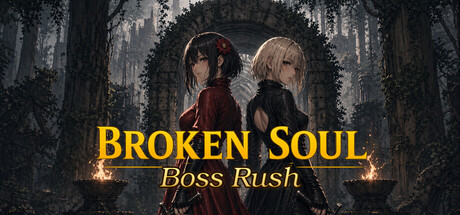
BROKEN SOUL : Boss Rush is a solo-developed game, and generative AI tools were used during development to assist with the creation of some visual assets and promotional materials. However, the game’s ideas, combat design, and system logic were all personally conceived and implemented, and every piece of content that appears in the final game was also directly selected, edited, and reviewed before completion. This is not a game that was made easily, but rather one that was brought to completion by making full use of every available tool and resource. If the game receives greater support in the future, there are plans to further expand and improve various elements, including the art assets, to an even higher level of quality. The game does not include any functionality that generates content with generative AI in real time during gameplay.
This game uses generative AI for a limited amount of pre-made content created during development, including some achievement icons and certain voice lines we could not perform ourselves. No AI-generated content is created during gameplay, and the game does not connect to any external third-party AI services while you play.
I use token-prediction tools to help create certain in-game background assets, including environment textures, secondary NPC voices, parts of the soundtrack, and translations into several languages.
AI tools were used to generate secondary visual assets, such as some skill icons, and background textures. All AI-generated assets have been heavily hand-edited and refined by the developer to ensure a consistent visual style that aligns with the game's aesthetic. All musical compositions were created entirely from scratch without the use of AI.
Graphics (Title Screen):
AI was used to generate the base image for the title screen. This output was then manually edited, adjusted for layout, and refined to create the final visual.
Localization (Translation):
AI was used as an assistant in the translation process. Following the initial AI-generated draft, all text has been manually reviewed and edited to ensure contextual accuracy and quality.
I'm a solo dev and the game is still in an early state of development. It contains AI generated assets that are being used as placeholders until I can replace them properly. This includes plugin illustrations, some module sprites, and a few sound effects.
None of the current assets, including the ones I made with Paint, will be kept in the final game.
This game includes content generated by generative AI.
Content created using generative AI:
BGM (in-game)
Advertisement images (in-game)
Translations (in-game)
Promotional video BGM (store page)
Advertisement images behind the logo (store page)
Translations of the game description (store page)
AI tools were used during development as a programming aid and for early concept exploration. All gameplay systems were developed by the creator, and all in-game assets are original, commissioned, or licensed.
We have used AI primarily for image generation and for optimizing the network system in Typer3000. AI-driven image generation allowed us to rapidly create and iterate visual assets such as backgrounds, interface elements, and stylistic variations, ensuring a consistent and scalable visual design.
In addition, we have used AI to support the setup and optimization of the multiplayer network architecture. It helped us refine data transmission strategies, reduce latency, and improve synchronization of player inputs, resulting in a smooth and responsive real-time gameplay experience.
This game uses generative AI in a limited capacity. Some in-game images and text were created or assisted by AI during development, but they are not entirely AI-generated. All such content has been manually edited, reviewed, and integrated by the developer to ensure consistency with the overall design and experience.
We use AI tools during development to speed up routine work, but all final decisions are made by the team.
Text translation
AI helps with draft translations of UI and in‑game texts, which are then reviewed and edited by human translators to keep the tone and meaning consistent.
Code generation
AI is used to generate boilerplate code and suggest improvements, while core systems, gameplay logic, optimization and security are always designed, reviewed and tested by developers.
I feel the AI tag for my game is not actually reasonable. i tried to explain myself to steam and to stop forcing me to set this AI toggle but the automated system is forcing me to say i used AI
This game uses generative AI in several components. As a solo/small developer, the project wouldn't be feasible without it, but my goal is to fund human-created replacements through the game's revenue after early acces release.
Artwork-
AI generates the base/reference character sprites, which I then paint over and animate by hand.
Item and tileset sprites follow the same treatment, some items may remain unedited in early access to be reviewed later.
Music - AI generated music with rights held by Bonehead Labs.
Capsule art - combination of AI generation and hand-work.
I am a single developer. AI is used to speed up some processes, some marketing and concept materials are made with AI as a base to improve on and deliver better game.
There are optional AI soundtracks in the game.
I was working on this game for more than 2 years without ai.
I started to use ai 1-2 months ago for:
Due to a lack of capital for professional sounds i bought sound packages and for
some few sounds i used AI software. Depending on the game's success, I will invest in replacing sounds and self-created elements with professional assistance.
AI was used mainly for bug fixing in the code and for translating the game text into different languages.
This game utilizes generative AI technology to create some 3D models, background music (BGM), and sound effects to efficiently generate resources during the production process.
Generative AI tools were used during development for concept exploration, prototyping, and internal reference materials. All gameplay systems, visuals, text, and audio included in the released game are authored, curated, and reviewed by the developer.
D.E.C.A.Y. has been developed by a single developer for over two years. Nearly all of the game’s content has been created by hand - from the environment to many objects inspired by real-world prototypes, helping make the world feel more atmospheric and alive.
Only a small number of images and certain visual elements were created using generative AI tools.
This game uses generative AI for some NPC images and background music.
These assets are reviewed and adjusted by the developer before being implemented in the game.
Most of the content is developed using traditional development practices.
However, AI tools were used to support the creation of certain 3D in-game assets and audio assets.
BROKEN SOUL : Boss Rush is a solo-developed game, and generative AI tools were used during development to assist with the creation of some visual assets and promotional materials. However, the game’s ideas, combat design, and system logic were all personally conceived and implemented, and every piece of content that appears in the final game was also directly selected, edited, and reviewed before completion. This is not a game that was made easily, but rather one that was brought to completion by making full use of every available tool and resource. If the game receives greater support in the future, there are plans to further expand and improve various elements, including the art assets, to an even higher level of quality. The game does not include any functionality that generates content with generative AI in real time during gameplay.
This game uses generative AI for a limited amount of pre-made content created during development, including some achievement icons and certain voice lines we could not perform ourselves. No AI-generated content is created during gameplay, and the game does not connect to any external third-party AI services while you play.
I use token-prediction tools to help create certain in-game background assets, including environment textures, secondary NPC voices, parts of the soundtrack, and translations into several languages.
AI tools were used to generate secondary visual assets, such as some skill icons, and background textures. All AI-generated assets have been heavily hand-edited and refined by the developer to ensure a consistent visual style that aligns with the game's aesthetic. All musical compositions were created entirely from scratch without the use of AI.
Graphics (Title Screen):
AI was used to generate the base image for the title screen. This output was then manually edited, adjusted for layout, and refined to create the final visual.
Localization (Translation):
AI was used as an assistant in the translation process. Following the initial AI-generated draft, all text has been manually reviewed and edited to ensure contextual accuracy and quality.
I'm a solo dev and the game is still in an early state of development. It contains AI generated assets that are being used as placeholders until I can replace them properly. This includes plugin illustrations, some module sprites, and a few sound effects.
None of the current assets, including the ones I made with Paint, will be kept in the final game.
This game includes content generated by generative AI.
Content created using generative AI:
BGM (in-game)
Advertisement images (in-game)
Translations (in-game)
Promotional video BGM (store page)
Advertisement images behind the logo (store page)
Translations of the game description (store page)
AI tools were used during development as a programming aid and for early concept exploration. All gameplay systems were developed by the creator, and all in-game assets are original, commissioned, or licensed.
We have used AI primarily for image generation and for optimizing the network system in Typer3000. AI-driven image generation allowed us to rapidly create and iterate visual assets such as backgrounds, interface elements, and stylistic variations, ensuring a consistent and scalable visual design.
In addition, we have used AI to support the setup and optimization of the multiplayer network architecture. It helped us refine data transmission strategies, reduce latency, and improve synchronization of player inputs, resulting in a smooth and responsive real-time gameplay experience.
This game uses generative AI in a limited capacity. Some in-game images and text were created or assisted by AI during development, but they are not entirely AI-generated. All such content has been manually edited, reviewed, and integrated by the developer to ensure consistency with the overall design and experience.
We use AI tools during development to speed up routine work, but all final decisions are made by the team.
Text translation
AI helps with draft translations of UI and in‑game texts, which are then reviewed and edited by human translators to keep the tone and meaning consistent.
Code generation
AI is used to generate boilerplate code and suggest improvements, while core systems, gameplay logic, optimization and security are always designed, reviewed and tested by developers.
I feel the AI tag for my game is not actually reasonable. i tried to explain myself to steam and to stop forcing me to set this AI toggle but the automated system is forcing me to say i used AI
This game uses generative AI in several components. As a solo/small developer, the project wouldn't be feasible without it, but my goal is to fund human-created replacements through the game's revenue after early acces release.
Artwork-
AI generates the base/reference character sprites, which I then paint over and animate by hand.
Item and tileset sprites follow the same treatment, some items may remain unedited in early access to be reviewed later.
Music - AI generated music with rights held by Bonehead Labs.
Capsule art - combination of AI generation and hand-work.
I am a single developer. AI is used to speed up some processes, some marketing and concept materials are made with AI as a base to improve on and deliver better game.
There are optional AI soundtracks in the game.
I was working on this game for more than 2 years without ai.
I started to use ai 1-2 months ago for:
Due to a lack of capital for professional sounds i bought sound packages and for
some few sounds i used AI software. Depending on the game's success, I will invest in replacing sounds and self-created elements with professional assistance.
AI was used mainly for bug fixing in the code and for translating the game text into different languages.
This game utilizes generative AI technology to create some 3D models, background music (BGM), and sound effects to efficiently generate resources during the production process.
Generative AI tools were used during development for concept exploration, prototyping, and internal reference materials. All gameplay systems, visuals, text, and audio included in the released game are authored, curated, and reviewed by the developer.
D.E.C.A.Y. has been developed by a single developer for over two years. Nearly all of the game’s content has been created by hand - from the environment to many objects inspired by real-world prototypes, helping make the world feel more atmospheric and alive.
Only a small number of images and certain visual elements were created using generative AI tools.
This game uses generative AI for some NPC images and background music.
These assets are reviewed and adjusted by the developer before being implemented in the game.
Most of the content is developed using traditional development practices.
However, AI tools were used to support the creation of certain 3D in-game assets and audio assets.