


Disclosure
Some art and text were created with the help of AI tools and then edited by the developer.
- Creator
- Berkay Turkmen
- Reviews
- -
- Added
- Nov 6, 2026
Public Steam disclosure research 27,951 disclosures tracked
Search developers’ Steam disclosures, compare classified AI use across games, and follow recorded changes. This index adds cross-game classifications and statistics to statements published on individual store pages.
Code help, debugging and other development work.
Capsule art, trailers and promotional material.
Pre-made art, audio, writing and other game assets.
Interactive or runtime AI features disclosed by the developer.
Groups reflect automatic analysis of public disclosures; mature records are excluded. These counts do not measure AI use across all of Steam. Missing or unclear statements cannot establish whether a game uses AI.
Some art and text were created with the help of AI tools and then edited by the developer.
Some programming, visuals and audio have been augmented with AI tools during development.
본 게임에는 AI로 사전 생성한 리소스가 포함되어 있습니다.
Some of the portraits, card art, backgrounds, story CGs, UI decorations, music and sound effects were made with AI during development. I picked and edited every piece before it went into the game. Nothing is generated by AI while you play.
Some of the game's art assets and text translations were done using AI tools.
FOLDEAD's game design is entirely human-led: the mechanics, the systems, the story and the art direction are our own decisions. During development, AI tools were used to help write in-game text (skill and enemy descriptions) and to help build a custom mesh editor that sped up our art production. The art itself is made by us with our own tools, in our own paper art style. No AI-generated images, voices or music are in the game. All sounds come from licensed sound libraries, and no content is generated by AI while the game is running.
Generative AI was used during development to assist with some character and environment artwork, interface illustrations, store promotional artwork, and narrative text. These are provided as pre-generated assets and pre-written text. The game does not generate AI dialogue, images, or other content during gameplay and does not connect to external AI services.
The paintings and illustrations in De Tocht were created using AI, as was the voice that narrates the story. AI also assists with the writing. The ideas, research into the Elfstedentocht events of 1986 and 1997, the story itself, and the final editing are all the work of the creator. No AI content is generated during gameplay: everything in the game has been created and reviewed beforehand.
AI has been used for translations and some art assets, both of which have been meticulously reviewed for quality as best as this human can manage.
Algunos recursos visuales de TepuLink fueron creados con ayuda de herramientas de IA generativa durante el desarrollo y posteriormente revisados, editados y ajustados manualmente por el desarrollador. TepuLink no utiliza IA generativa durante la ejecución ni permite que los jugadores generen contenido mediante IA.
Some assets in Afterwire were created with the assistance of generative AI tools, under the developer's direction and review: - Music and sound effects - generated with AI music/audio tools, then edited, mastered, and integrated by the developer. - Some 2D artwork - key art, loading and menu backdrop images, created with AI image tools and curated/edited by the developer. - Translations - non-English text drafted with AI assistance and reviewed against the English source. All gameplay code, 3D models, animations, shaders, level design, and game design were made without generative AI. No content is AI-generated during gameplay - the game does not use AI at runtime.
Saltwake is a solo project. The story, characters, level design and game systems are the developer's own. The art, audio and text were made with the help of AI tools to speed up the work. Nothing is generated while you play.
AI Creation Statement: The places where AI (deepseekV4.1flash) was used in this project are: Multilingual translation (100%): Apart from the Simplified Chinese text, which the author typed manually, all translations into other languages were completed by AI. Movie reviews (100%): Characters’ movie reviews. Script structure optimization (0.5%–1%): Bugs in the code that were difficult to fix were optimized by AI.
Iron & Instinct is made by a small, self-funded team with no dedicated artist. We used generative AI tools to help create some of the game’s art: monster designs were generated or adapted with AI image tools to match the game’s art style, and character sprite animations were produced with AI-assisted animation tools Name of AI model included with the game: Claude (Anthropic) for code; Gemini (Google) for art; AutoSprite for sprite animation. All used during development only. No AI runs during gameplay.
**AI has been used for:** - In-game images and illustrations - English text translation (the developer is a native French speaker) - Graphics Enhancement - Some plugin development **AI has not been used for:** - Story and scenario - Mapping - Music - Gameplay Mechanics I'm a solo developer who has spent ten years working on the Infasia project (2016-2026). I only started using AI to improve the game when it was already nearly finished. Since Infasia is completely free to play, with no in-game purchases, my only goal has ever been to share its story with others.
[Use of Generative AI]As a solo development project, this game uses generative AI in the following limited ways:- Graphics: Three images only were created with generative AI - the title screen background, the title logo, and the stage select background. These images are also used on the store page and in promotional material.- Translation: The ten languages other than Japanese (English, French, Italian, German, Spanish, Portuguese, Russian, Korean, Traditional Chinese andSimplified Chinese) are based on translations produced with generative AI.No other in-game asset - including pixel art, sound effects and music - was created with generative AI. No third-party asset was ever fed into a generative AI for training, generation or modification. All rights to the assets used in this game remain with their respective creators.
The game's code and artistic materials are generated by AI.
Generative AI tools were used as an aid in the creation of some game content and related materials.
Generative AI is used to assist with the initial English translation of the game's text. All AI-generated translations are reviewed, edited, and finalized by the development team to ensure accuracy and quality before being included in the game.
Pre-generated content: Concept art, key art, store art, boss scene paintings, icons and some interface art were generated with OpenAI and Google image models from the developer's direction, then selected, composited and edited. Some 3D models (creatures, props, gear and landmarks) were generated from those reference images with Meshy, then cleaned, rigged, animated and materialled by the developer. Most characters, enemies, bosses and map terrain assets were sourced from asset packs or custom-made. Character and narrator voices were produced with ElevenLabs, including voices made from the developer's own recordings. Some music tracks and some sound effects were generated with AI tools (including ElevenLabs sound effects), then selected and edited by the developer. Live-generated content: None. The game does not generate content with AI while you play.
AI was used in the creation of this game, and its important to be clear about this as a solo dev. But every aspect of the game that AI was used as a helper/producer was reviewed by me, and thoroughly edited, tested, reworked, perfected and placed with intention by me. AI was used to generate assets, code and tools to help me be able to finish this game working as a solo dev.
Several of the models in the game are generated with AI, often originated in own art. Game is co-created with generative AI. There is a 'My AI' feature in the game, where you can send out a bot to play games for you and it is trained on games you play. The function used is a simple softmax, not advanced LLM, and this is hosted privately.
Generative artificial intelligence has been used as an assistive tool to create the static 2D portraits of the gladiators and the background illustrations for the user interface. All generated assets have been manually supervised, filtered, and edited by the developer to ensure they perfectly fit the historical setting and the visual style of the game.
Generative AI tools were used during development as part of the production pipeline for visual assets and localization. AI-assisted visual material undergoes manual curation, editing, compositing, and final integration in image-editing software by the development team. AI-assisted localization goes through a multi-stage workflow that includes terminology and consistency checks, human proofreading, and final verification.
Generative AI is used during development to assist with some art assets, promotional artwork, and written content. These materials are selected and reviewed by the developer before release.
This game uses generative AI to assist in the creation of various assets, including environments, environmental objects, creatures, textures, and sound effects. The generated assets are selected, refined, and integrated into the game by the developer to fit the game's atmosphere and artistic vision. No content is generated by AI in real time during gameplay.
Galactic Tenebris Company believes in being transparent with the people who play our games. Here is an honest account of where AI tools contributed to this production: — Some icons and UI elements, texturres — Organizing and structuring text and documents. — Translation All 3D models were handcrafted by the developer. The music and sound effects were composed and not generated by AI tools. Our position as a company is simple — we use AI only where we have no other means or resources available. Where human craft was possible, human craft was used. Every creative decision — the story, the world, the characters, the quests, the writing — was made by the developer. The scenario and dialogues were authored by the developer and organised with AI assistance. The foundation of this game is firsthand experience. That part was not written by any tool. — Mr. M., Owner of Galactic Tenebris Company
The character, enemy and background artwork, their animations, the icons and the music were created with generative AI tools (Google Gemini and Lyria), then selected, cleaned up, cut out and checked by hand. Sound effects are synthesized in code. The game's code and texts were written with the help of an AI assistant, under the direction of the developer who designed the game. No AI content is generated while you play.
Generative AI tools were used during development to help create pre-generated artwork and marketing visuals, and to assist with written text and localization. These assets are included with the game or its store page. The game does not generate AI content or code during gameplay and does not connect to an AI service while playing.
Some of the art resources in the game are generated by AI.
My AI Game Studio uses local generative AI (via Ollama) to power your studio’s employees. Each employee’s personality, skills, and role shape how the AI drives their dialogue, decisions, and work. This includes what they say when you talk to them one-on-one or call a meeting, how they react to changes in the studio, and how they contribute to the game your team is building. The playable game your studio develops, the bug reports you file, your marketing results, and your studio’s growth all change over time based on these AI-driven decisions. All AI processing runs entirely on the player’s machine. No data is sent to external servers. Because dialogue is generated live, employees may occasionally say unexpected things. The AI runs with instructions that keep employees in character and on topic, and that restrict inappropriate content.
Glorybound was made with the help of generative AI tools during development. All 2D art (interface art, icons, portraits and store images) was created with AI image generation. The 3D models of the characters, monsters and bosses were generated with AI, then rigged, animated and adjusted by the developer. The music and sound effects were also generated with AI. Parts of the in-game and store text were written with AI assistance, and the Chinese, Russian, German and Spanish translations were made with AI. All AI content was created during development and checked by the developer. No AI is used while the game is running.
Generative AI tools are used to assist 3D modeling and code development
Some visual assets and marketing materials for Pixel Xanxia are created with the assistance of generative AI tools. These assets are selected, edited, integrated, and adjusted by the developer to match the game's visual direction. No live-generated AI content is used during gameplay.
AI-generated artwork is used for characters, enemies, environments, interface elements, opening artwork, and promotional images. AI tools also assisted with writing. These assets are created during development. Emberwatch does not generate AI content during gameplay or connect to an external AI service while you play.
Generative AI tools were used during development to assist with portions of the pre-generated pixel-art visuals, early text drafts, and Steam promotional artwork. All generated material was reviewed, edited, arranged, and integrated by the developer before release. The game does not use generative AI at runtime, generate content in real time, or send player input to external AI services.
Some visual assets, including background artwork and promotional images, were created with the assistance of generative AI and subsequently edited and refined by the development team. Generative AI is not used to create content in real time during gameplay.
Generative AI is used in sprites, backgrounds and other visual assets.
The story and its world are the author's own; all music is composed by humans. We write an original version in French or English, then use AI to translate and create a scene draft from it, then edit it by hand. Scenes remain a work in progress until the end of Early Access. We are perfectionists, so our editing takes time.
Cripta is made by a solo developer with the help of AI tools (Claude). AI assisted with programming, helped draft the game's text, and created visual effects and some icons as pixel art made by code, all reviewed and approved by the developer. A few sound effects were made with generative AI. Characters, enemies, tiles and most objects come from licensed asset packs, and no AI is used while you play.
The game logo and some graphics for the store page and intro screens (icon, title image, and backgrounds) were created using generative AI and subsequently edited by hand. Gameplay, levels, characters, and animations were created without generative AI.
Generative AI tools were used during development. Every AI output was hand-selected and edited by the developer before it went into the game: - Art: character portraits, title and interface art, maps, battlefield backgrounds and props, the source art for battlefield unit sprites, technique icons and ink-effect textures, story scene backdrops and full-screen backgrounds, base/camp backgrounds and the key art were generated with AI image tools, then hand-selected and edited (cropping, color grading, cleaning up garbled text and fake seals, touch-ups) before use. Unit walking and attack animations are generated procedurally from a bone rig. - Music: some background music was generated locally with the open-source AI music model ACE-Step 1.5, then selected, edited, mixed and looped by hand. - Text: story and dialogue were drafted with the help of AI writing tools and revised and finalized by the developer; the story is adapted from the classic Chinese novel Water Margin. English, Japanese and Korean translations were first drafted by AI, then reviewed and revised by hand. No content is generated by AI while the game is running. Sound effects come from CC0 public-domain libraries and were edited and layered by hand. Fonts are not AI-generated.
Generative AI tools were used in the creation of this game to produce pre-rendered visual assets and audio content. All generated assets have been carefully curated and reviewed to ensure quality and fit within the game's overall design.
This game's art, music and text were created with AI tools and edited by hand, alongside some AI-generated sound effects.
Programmer art isn't good - AI is used to supplement assets purchased from the Fab store.
The game's illustrations (characters, props, backgrounds and store art) and its short cinematic clips were created with generative AI tools, then selected, edited, animated and integrated into the game by the developer. Character voice lines are synthesized with a text-to-speech model, and the trailer music is an AI-made stock track. No AI content is generated during gameplay.
AI tools were used during development to help write code.
Image generation was used as a temporary placeholder for assets that were unavailable during development and will be replaced at the earliest opportunity. The entire soundtrack consists of generative content
During development, generative AI tools were used to assist in creating some store promotional illustrations, icons, and minor texture assets, all of which were manually selected, redrawn, and composited by the developer. The game does not include any real-time generative AI content or external AI service calls during gameplay.
Each creature (Echo) is inspired by real animals, objects and myths of its era, following real evolution: the Greek lion is a descendant of the prehistoric sabre-tooth, the Gaulish bull of the aurochs. Some creature and character sprites and animations started from AI pixel-art generators (PixelLab, SpriteCook). Others were drawn procedurally with code or adapted from CC0 resources. All were hand-edited and refined by the developer. Buildings and environments are based on real-world historical architecture and on permissively licensed open-source assets (CC0, CC-BY and other non-copyleft licenses), adapted, recreated and hand-edited into pixel art. No AI tools were used to generate the architectural artwork. The soundtrack is built upon open-source and Creative Commons compositions sourced from OpenGameArt, transformed, given new timbres and procedurally processed with custom Python scripts and algorithmic audio tools to fit each historical era. The storyline, dialogues, creature descriptions and English translation were drafted with the assistance of AI writing tools, then directed, manually reviewed and rewritten by the developer. No AI content is generated while the game runs. Name of AI model included with the game: PixelLab and SpriteCook (pixel-art sprites and animations); Claude by Anthropic (writing assistance and English translation)
| Title⇅ | Disclosure | Creator⇅ | Src | Reviews⇅ | Added↓ |
|---|---|---|---|---|---|
 Depthforged In-game content arttext | Some art and text were created with the help of AI tools and then edited by the developer. | Berkay Turkmen | - | Nov 6, 2026 | |
 Apocalypse LootRunner In-game content artaudiocode | Some programming, visuals and audio have been augmented with AI tools during development. | Avarus Games | - | Nov 6, 2026 | |
 The Silver Witch In-game content artaudiocodetext | 본 게임에는 AI로 사전 생성한 리소스가 포함되어 있습니다. | Reinfree | - | Nov 6, 2026 | |
 终末收容所 In-game content artaudiotext | Some of the portraits, card art, backgrounds, story CGs, UI decorations, music and sound effects were made with AI during development. I picked and edited every piece before it went into the game. Nothing is generated by AI while you play. | killer星 | - | Nov 6, 2026 | |
 Dicekin: Monster Tamer In-game content arttext | Some of the game's art assets and text translations were done using AI tools. | Cute clouds | - | Nov 6, 2026 | |
 FOLDEAD In-game content text | FOLDEAD's game design is entirely human-led: the mechanics, the systems, the story and the art direction are our own decisions. During development, AI tools were used to help write in-game text (skill and enemy descriptions) and to help build a custom mesh editor that sped up our art production. The art itself is made by us with our own tools, in our own paper art style. No AI-generated images, voices or music are in the game. All sounds come from licensed sound libraries, and no content is generated by AI while the game is running. | White Shark Games | - | Nov 6, 2026 | |
 Where Lanterns Lead In-game content arttext | Generative AI was used during development to assist with some character and environment artwork, interface illustrations, store promotional artwork, and narrative text. These are provided as pre-generated assets and pre-written text. The game does not generate AI dialogue, images, or other content during gameplay and does not connect to external AI services. | 照夜集工作室 | 11 | Nov 6, 2026 | |
 De Tocht In-game content artaudiotext | The paintings and illustrations in De Tocht were created using AI, as was the voice that narrates the story. AI also assists with the writing. The ideas, research into the Elfstedentocht events of 1986 and 1997, the story itself, and the final editing are all the work of the creator. No AI content is generated during gameplay: everything in the game has been created and reviewed beforehand. | Pieter Ytsma | - | Nov 6, 2026 | |
 Guild Adventures In-game content arttext | AI has been used for translations and some art assets, both of which have been meticulously reviewed for quality as best as this human can manage. | Consultio Games | - | Nov 6, 2026 | |
 TepuLink In-game content art | Algunos recursos visuales de TepuLink fueron creados con ayuda de herramientas de IA generativa durante el desarrollo y posteriormente revisados, editados y ajustados manualmente por el desarrollador. TepuLink no utiliza IA generativa durante la ejecución ni permite que los jugadores generen contenido mediante IA. | DinnoGames | - | Nov 6, 2026 | |
 Afterwire In-game content audioarttext | Some assets in Afterwire were created with the assistance of generative AI tools, under the developer's direction and review:
- Music and sound effects - generated with AI music/audio tools, then edited, mastered, and integrated by the developer.
- Some 2D artwork - key art, loading and menu backdrop images, created with AI image tools and curated/edited by the developer.
- Translations - non-English text drafted with AI assistance and reviewed against the English source.
All gameplay code, 3D models, animations, shaders, level design, and game design were made without generative AI. No content is AI-generated during gameplay - the game does not use AI at runtime. | mivialabs | - | Nov 6, 2026 | |
 Saltwake In-game content artaudiotext | Saltwake is a solo project. The story, characters, level design and game systems are the developer's own. The art, audio and text were made with the help of AI tools to speed up the work. Nothing is generated while you play. | Petersen Projects | - | Nov 5, 2026 | |
 Return to college In-game content textcode | AI Creation Statement:
The places where AI (deepseekV4.1flash) was used in this project are:
Multilingual translation (100%): Apart from the Simplified Chinese text, which the author typed manually, all translations into other languages were completed by AI.
Movie reviews (100%): Characters’ movie reviews.
Script structure optimization (0.5%–1%): Bugs in the code that were difficult to fix were optimized by AI. | 千琅邪 | - | Nov 5, 2026 | |
 Iron & Instinct In-game content art | Iron & Instinct is made by a small, self-funded team with no dedicated artist. We used generative AI tools to help create some of the game’s art: monster designs were generated or adapted with AI image tools to match the game’s art style, and character sprite animations were produced with AI-assisted animation tools
Name of AI model included with the game: Claude (Anthropic) for code; Gemini (Google) for art; AutoSprite for sprite animation. All used during development only. No AI runs during gameplay. | Break Knight Games | - | Nov 5, 2026 | |
 Infasia : Tears of Void In-game content arttext | **AI has been used for:**
- In-game images and illustrations
- English text translation (the developer is a native French speaker)
- Graphics Enhancement
- Some plugin development
**AI has not been used for:**
- Story and scenario
- Mapping
- Music
- Gameplay Mechanics
I'm a solo developer who has spent ten years working on the Infasia project (2016-2026).
I only started using AI to improve the game when it was already nearly finished.
Since Infasia is completely free to play, with no in-game purchases, my only goal has ever been to share its story with others. | Jarex | - | Nov 5, 2026 | |
 DUSKCRAWLER Minesweeper RPG In-game content arttext | [Use of Generative AI]As a solo development project, this game uses generative AI in the following limited ways:- Graphics: Three images only were created with generative AI - the title screen background, the title logo, and the stage select background. These images are also used on the store page and in promotional material.- Translation: The ten languages other than Japanese (English, French, Italian, German, Spanish, Portuguese, Russian, Korean, Traditional Chinese andSimplified Chinese) are based on translations produced with generative AI.No other in-game asset - including pixel art, sound effects and music - was created with generative AI. No third-party asset was ever fed into a generative AI for training, generation or modification. All rights to the assets used in this game remain with their respective creators. | GarageNova | - | Nov 5, 2026 | |
 Idle of Eternity In-game content artcode | The game's code and artistic materials are generated by AI. | NBLab | - | Nov 5, 2026 | |
 BEARBRICK HEROES Unclear | Generative AI tools were used as an aid in the creation of some game content and related materials. | ON UNIVERSE INC | - | Nov 5, 2026 | |
 Cloudwalker In-game content text | Generative AI is used to assist with the initial English translation of the game's text. All AI-generated translations are reviewed, edited, and finalized by the development team to ensure accuracy and quality before being included in the game. | Old Retina Museum | - | Nov 5, 2026 | |
 Gods to Dust In-game content artaudio | Pre-generated content: Concept art, key art, store art, boss scene paintings, icons and some interface art were generated with OpenAI and Google image models from the developer's direction, then selected, composited and edited. Some 3D models (creatures, props, gear and landmarks) were generated from those reference images with Meshy, then cleaned, rigged, animated and materialled by the developer. Most characters, enemies, bosses and map terrain assets were sourced from asset packs or custom-made. Character and narrator voices were produced with ElevenLabs, including voices made from the developer's own recordings. Some music tracks and some sound effects were generated with AI tools (including ElevenLabs sound effects), then selected and edited by the developer.
Live-generated content: None. The game does not generate content with AI while you play. | Tamer Designs | - | Nov 5, 2026 | |
 NanoPets In-game content artcode | AI was used in the creation of this game, and its important to be clear about this as a solo dev.
But every aspect of the game that AI was used as a helper/producer was reviewed by me, and thoroughly edited, tested, reworked, perfected and placed with intention by me.
AI was used to generate assets, code and tools to help me be able to finish this game working as a solo dev. | OtonPaiva | - | Nov 5, 2026 | |
 World of Mythos Live AI art | Several of the models in the game are generated with AI, often originated in own art.
Game is co-created with generative AI.
There is a 'My AI' feature in the game, where you can send out a bot to play games for you and it is trained on games you play. The function used is a simple softmax, not advanced LLM, and this is hosted privately. | Mikael | - | Nov 4, 2026 | |
 Dominus Manager In-game content art | Generative artificial intelligence has been used as an assistive tool to create the static 2D portraits of the gladiators and the background illustrations for the user interface. All generated assets have been manually supervised, filtered, and edited by the developer to ensure they perfectly fit the historical setting and the visual style of the game. | Baboon Dogma | - | Nov 4, 2026 | |
 Severed Souls — Chapter I In-game content arttext | Generative AI tools were used during development as part of the production pipeline for visual assets and localization.
AI-assisted visual material undergoes manual curation, editing, compositing, and final integration in image-editing software by the development team. AI-assisted localization goes through a multi-stage workflow that includes terminology and consistency checks, human proofreading, and final verification. | Lakos and Friends | - | Nov 4, 2026 | |
 幻想乡毋宁 Store/marketing arttext | Generative AI is used during development to assist with some art assets, promotional artwork, and written content. These materials are selected and reviewed by the developer before release. | 心舟 | - | Nov 4, 2026 | |
 ドクロ・マグロ In-game content artaudio | This game uses generative AI to assist in the creation of various assets, including environments, environmental objects, creatures, textures, and sound effects. The generated assets are selected, refined, and integrated into the game by the developer to fit the game's atmosphere and artistic vision.
No content is generated by AI in real time during gameplay. | ShuheiKaida | - | Nov 4, 2026 | |
 Jack Bonecroft 1 In-game content arttext | Galactic Tenebris Company believes in being transparent with the people who play our games. Here is an honest account of where AI tools contributed to this production:
— Some icons and UI elements, texturres
— Organizing and structuring text and documents.
— Translation
All 3D models were handcrafted by the developer. The music and sound effects were composed and not generated by AI tools.
Our position as a company is simple — we use AI only where we have no other means or resources available. Where human craft was possible, human craft was used.
Every creative decision — the story, the world, the characters, the quests, the writing — was made by the developer. The scenario and dialogues were authored by the developer and organised with AI assistance. The foundation of this game is firsthand experience. That part was not written by any tool.
— Mr. M., Owner of Galactic Tenebris Company | Galactic Tenebris Company | - | Nov 3, 2026 | |
 Vapeur & Rouages In-game content artaudiotextcode | The character, enemy and background artwork, their animations, the icons and the music were created with generative AI tools (Google Gemini and Lyria), then selected, cleaned up, cut out and checked by hand. Sound effects are synthesized in code. The game's code and texts were written with the help of an AI assistant, under the direction of the developer who designed the game. No AI content is generated while you play. | Dretz Studio | - | Nov 3, 2026 | |
 Task Bar Quest Store/marketing arttext | Generative AI tools were used during development to help create pre-generated artwork and marketing visuals, and to assist with written text and localization. These assets are included with the game or its store page. The game does not generate AI content or code during gameplay and does not connect to an AI service while playing. | Berleus Studio | 25 | Nov 3, 2026 | |
 迷雾 In-game content art | Some of the art resources in the game are generated by AI. | Nafuboay | - | Nov 3, 2026 | |
 My AI Game Studio Live AI text | My AI Game Studio uses local generative AI (via Ollama) to power your studio’s employees. Each employee’s personality, skills, and role shape how the AI drives their dialogue, decisions, and work. This includes what they say when you talk to them one-on-one or call a meeting, how they react to changes in the studio, and how they contribute to the game your team is building. The playable game your studio develops, the bug reports you file, your marketing results, and your studio’s growth all change over time based on these AI-driven decisions.
All AI processing runs entirely on the player’s machine. No data is sent to external servers.
Because dialogue is generated live, employees may occasionally say unexpected things. The AI runs with instructions that keep employees in character and on topic, and that restrict inappropriate content. | b8ve | - | Nov 3, 2026 | |
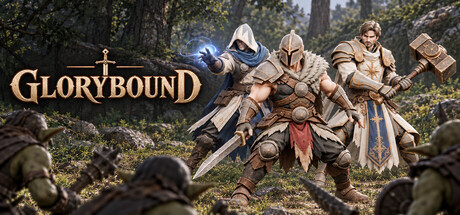 Glorybound In-game content artaudiotext | Glorybound was made with the help of generative AI tools during development. All 2D art (interface art, icons, portraits and store images) was created with AI image generation. The 3D models of the characters, monsters and bosses were generated with AI, then rigged, animated and adjusted by the developer. The music and sound effects were also generated with AI. Parts of the in-game and store text were written with AI assistance, and the Chinese, Russian, German and Spanish translations were made with AI. All AI content was created during development and checked by the developer. No AI is used while the game is running. | Glorybound game | - | Nov 3, 2026 | |
 The Guiding Light Dev only artcode | Generative AI tools are used to assist 3D modeling and code development | YiFangTongXing | - | Nov 3, 2026 | |
 Pixel Xanxia Store/marketing art | Some visual assets and marketing materials for Pixel Xanxia are created with the assistance of generative AI tools. These assets are selected, edited, integrated, and adjusted by the developer to match the game's visual direction. No live-generated AI content is used during gameplay. | Cezae | - | Nov 3, 2026 | |
 Emberwatch In-game content arttext | AI-generated artwork is used for characters, enemies, environments, interface elements, opening artwork, and promotional images. AI tools also assisted with writing. These assets are created during development. Emberwatch does not generate AI content during gameplay or connect to an external AI service while you play. | Defiant World Studios | - | Nov 3, 2026 | |
 语界奇旅 · Language Learning Quest Store/marketing arttext | Generative AI tools were used during development to assist with portions of the pre-generated pixel-art visuals, early text drafts, and Steam promotional artwork. All generated material was reviewed, edited, arranged, and integrated by the developer before release. The game does not use generative AI at runtime, generate content in real time, or send player input to external AI services. | Pandas League | - | Nov 3, 2026 | |
 Isekai Lord: Desktop Realm Store/marketing art | Some visual assets, including background artwork and promotional images, were created with the assistance of generative AI and subsequently edited and refined by the development team. Generative AI is not used to create content in real time during gameplay. | WebilStudio | - | Nov 3, 2026 | |
 Crestbound In-game content art | Generative AI is used in sprites, backgrounds and other visual assets. | Pudd Hogg Studios | - | Nov 3, 2026 | |
 Dead Week In-game content text | The story and its world are the author's own; all music is composed by humans. We write an original version in French or English, then use AI to translate and create a scene draft from it, then edit it by hand.
Scenes remain a work in progress until the end of Early Access.
We are perfectionists, so our editing takes time. | Elindos Phar | - | Nov 2, 2026 | |
 Cripta In-game content arttextaudio | Cripta is made by a solo developer with the help of AI tools (Claude). AI assisted with programming, helped draft the game's text, and created visual effects and some icons as pixel art made by code, all reviewed and approved by the developer. A few sound effects were made with generative AI. Characters, enemies, tiles and most objects come from licensed asset packs, and no AI is used while you play. | F32Lab | - | Nov 2, 2026 | |
 Prehistoric Lax In-game content art | The game logo and some graphics for the store page and intro screens (icon, title image, and backgrounds) were created using generative AI and subsequently edited by hand. Gameplay, levels, characters, and animations were created without generative AI. | Lukas Kalinowski | - | Nov 2, 2026 | |
 Water Margin: Rise of the Outlaws In-game content artaudiotext | Generative AI tools were used during development. Every AI output was hand-selected and edited by the developer before it went into the game:
- Art: character portraits, title and interface art, maps, battlefield backgrounds and props, the source art for battlefield unit sprites, technique icons and ink-effect textures, story scene backdrops and full-screen backgrounds, base/camp backgrounds and the key art were generated with AI image tools, then hand-selected and edited (cropping, color grading, cleaning up garbled text and fake seals, touch-ups) before use. Unit walking and attack animations are generated procedurally from a bone rig.
- Music: some background music was generated locally with the open-source AI music model ACE-Step 1.5, then selected, edited, mixed and looped by hand.
- Text: story and dialogue were drafted with the help of AI writing tools and revised and finalized by the developer; the story is adapted from the classic Chinese novel Water Margin. English, Japanese and Korean translations were first drafted by AI, then reviewed and revised by hand.
No content is generated by AI while the game is running. Sound effects come from CC0 public-domain libraries and were edited and layered by hand. Fonts are not AI-generated. | Net Kingkong Pte. Ltd. | - | Nov 2, 2026 | |
 Spirit Sealer In-game content artaudio | Generative AI tools were used in the creation of this game to produce pre-rendered visual assets and audio content. All generated assets have been carefully curated and reviewed to ensure quality and fit within the game's overall design. | Virtual Muse | - | Nov 2, 2026 | |
 The Last God In-game content artaudiotext | This game's art, music and text were created with AI tools and edited by hand, alongside some AI-generated sound effects. | Goblin Games Company | - | Nov 2, 2026 | |
 LFG In-game content art | Programmer art isn't good - AI is used to supplement assets purchased from the Fab store. | Bad Circuit Games | - | Nov 2, 2026 | |
 Solmallow In-game content artaudiotext | The game's illustrations (characters, props, backgrounds and store art) and its short cinematic clips were created with generative AI tools, then selected, edited, animated and integrated into the game by the developer. Character voice lines are synthesized with a text-to-speech model, and the trailer music is an AI-made stock track. No AI content is generated during gameplay. | AVAstr Games | - | Nov 2, 2026 | |
 Heart Of Slav Dev only code | AI tools were used during development to help write code. | Nim Nim Games | - | Nov 1, 2026 | |
 Bloodrights In-game content artaudio | Image generation was used as a temporary placeholder for assets that were unavailable during development and will be replaced at the earliest opportunity. The entire soundtrack consists of generative content | DangerHealtZ | - | Oct 31, 2026 | |
 东方形启舞 In-game content art | During development, generative AI tools were used to assist in creating some store promotional illustrations, icons, and minor texture assets, all of which were manually selected, redrawn, and composited by the developer. The game does not include any real-time generative AI content or external AI service calls during gameplay. | 心舟 | - | Oct 31, 2026 | |
 Echos of Eras In-game content arttext | Each creature (Echo) is inspired by real animals, objects and myths of its era, following real evolution: the Greek lion is a descendant of the prehistoric sabre-tooth, the Gaulish bull of the aurochs. Some creature and character sprites and animations started from AI pixel-art generators (PixelLab, SpriteCook). Others were drawn procedurally with code or adapted from CC0 resources. All were hand-edited and refined by the developer.
Buildings and environments are based on real-world historical architecture and on permissively licensed open-source assets (CC0, CC-BY and other non-copyleft licenses), adapted, recreated and hand-edited into pixel art. No AI tools were used to generate the architectural artwork.
The soundtrack is built upon open-source and Creative Commons compositions sourced from OpenGameArt, transformed, given new timbres and procedurally processed with custom Python scripts and algorithmic audio tools to fit each historical era.
The storyline, dialogues, creature descriptions and English translation were drafted with the assistance of AI writing tools, then directed, manually reviewed and rewritten by the developer.
No AI content is generated while the game runs.
Name of AI model included with the game: PixelLab and SpriteCook (pixel-art sprites and animations); Claude by Anthropic (writing assistance and English translation) | SivaGames | - | Oct 31, 2026 |


