Public Steam disclosure research25,376 disclosures tracked
Where do games disclose AI use?
Search developers’ Steam disclosures, compare classified AI use across
games, and follow recorded changes.
This index adds cross-game classifications and statistics to
statements published on individual store pages.
Groups reflect automatic analysis of public disclosures; mature records are excluded. These counts do not measure AI use across all of Steam.
Missing or unclear statements cannot establish whether a game uses AI.
We do not use AI generated images in the game. However, it's possible some images in the game could be interpreted as AI generated images. If you suspect some of images looks like AI generated images, please contact us through e-mail so we can make necessary adjustments.
Our workflow involves using store bought and legally acquired free 3D assets to render those assets into 2D images. We also use a few free photographs to serve as background images for certain scenes. Those 2D images are then touch-up using free image editing software. We also bought a few 2D art assets from reputable creators. We provide a list of most of 3D and 2D assets we used in the game in credits section in the game.
Some background music tracks were created with the assistance of generative AI tools and subsequently edited and modified by the developer. No generative AI content is created during gameplay.
Some of this game's assets were made with the assistance of generative AI tools and were reviewed, curated and hand-finished by the developer. No content is generated while you play.
Some of this game's art and music assets were created with the help of generative AI tools during development.
Art: Character portraits, unit and enemy sprites, environment tiles, map decorations, and item icons were produced with the assistance of AI image-generation tools (including Retro Diffusion, PixelLab, and FLUX), then curated, edited, assembled, and integrated by the developer.
Music: Background music was generated with a licensed AI music-generation tool and edited by the developer.
All AI-assisted content is pre-generated and fixed in the shipped game — no content is generated live during gameplay. Every asset was reviewed and approved by the developer to ensure it is original to this game, does not infringe third-party intellectual property, and is appropriate for the game's audience.
Generative AI tools were used during development to assist with early visual concepts, selected promotional artwork, and development support. All AI-assisted materials included in the final product were reviewed, edited, and integrated by the developer. The game does not generate AI content during gameplay and does not send player input to external generative AI services.
AI was used to create the full scores from chords and melody provided to create retro feel. All art and animations were drawn meticulously character by character using a personal editor I made, but I drew inspiration from generative AI to get the right feel or angles.
Assistance with the development of:
- Custom procedural 2D animation rig.
- Reinforcement learning (RL) layer for player and NPC animations in hand-authored 2D environments.
- Base designs for sprites and backgrounds (further iterated by hand using digital editing software like photoshop)
No ai tools were used in any capacity for writing or story elements, voice acting, music, or anywhere else.
Blood Vaults was independently developed by Cryptwake Studios with limited assistance from generative AI tools. These tools were used as part of the development workflow to assist with select visual assets, content, and development materials. The game’s design, systems, mechanics, direction, and implementation are developer-created. Any AI-assisted content appearing in the final game is reviewed, modified where appropriate, and integrated by the developer.
AI has been used to assist in the build process, but has absolutely not been used in thematic creative direction, game play or story direction whatsoever. Aveos is a solo developer project, and nothing has been left for AI to decide. All results have been tailored to fit the output of the vision, and it is used in lieu of a team of developers. Should those resources have been available, they would have been obviously preferred.
Pocket Pawns was made with the help of generative AI, and the game's own credits name every tool used.
Images and music: the chess piece art was generated with ChatGPT, the board art with Gemini, and the world and environment art from assets created with Nano Banana Pro alongside free-to-use CC0 packs found online. The soundtrack is from Suno.
Claude wrote the game's code, its writing, and its translations into ten languages — and made much of what you see and hear directly in code rather than from an image generator: the character pixel art, the in-world props and interface, the three-dimensional rooms, the animation, and the sound effects.
The chess itself is not generated. The puzzles come from the Lichess puzzle database, released under CC0, and your opponent is Stockfish, a classical open-source chess engine. Real positions, a real engine.
Nothing is generated while you play. Pocket Pawns creates no content at runtime and never connects to an AI service. It does not need an internet connection to play.
OpenAI ImageGen was used during development to generate and edit some pre-generated 2D pixel-art visual assets, including UI elements, icons, backgrounds, environment artwork, and character or animation source frames. All outputs were reviewed, selected, manually edited, cleaned up, resized, palette-normalized, and integrated by the developer as fixed game assets. The game does not use generative AI at runtime and does not generate live AI content.
This game uses pre-generated AI-assisted artwork for characters, scene backgrounds, and store promotional assets. All AI-generated content was created before release. No content is generated by AI during gameplay, and the game does not connect to external AI services.
We use about 15 seconds of AI footage in our trailer. All assets in the game are human authored.
We also use a local, small and offline LLM (meaning: no data ever leaves your computer, and it does not cause significant performance drops) as a Director that controls: enemy spawn and frequency of challenges, essentially choosing when to press with difficulty and when to hold the challenge based on parameters such as player frustration, boredom and an emergence metric.
This mechanic does not generate any text, narrative or story: it is just a mechanic that controls game balance to ensure the best challenge. And you can turn it off on the settings menu, if you want.
Generative AI was used to assist in creating select background artwork and visual assets for the game. All assets were manually edited and refined before being integrated.
Veil of Time is a hand-built game. The maps, the writing, the music, the interface, and the game design are all human work. Generative AI was used in five specific places, each reviewed and finished by hand:
1. Voice acting. Every line of dialogue and every in-game book can be spoken aloud (3,707 voice clips), synthesized with ElevenLabs from the game's own written script. We chose this so the story stays open to players with low vision or reading difficulties, and to younger players who are not fast readers yet. A voice cast of this size would otherwise be out of reach for a small studio. No performance was cloned from a real person without licence.
2. Character and bestiary portraits, generated from the game's original hand-made sprites and finished by hand.
3. Some character sprites and the party's battle animation sheets, produced with AI assistance from the project's own hand-drawn art, then hand-corrected and palette-locked.
4. The intro and outro cinematic stills, the title screen, and the store key art.
5. Ambient critters and butterflies, converted from hand-made source art.
Everything else you see, read, and hear was made by people.
Generative AI tools were used during development to create the artwork and audio used throughout the game. The generated assets were reviewed, selected, edited as needed, and incorporated into the final game by the developer.
OpenAI image generation was used to create a pre-generated background image used in some of the game's Steam store capsule artwork and screenshots. The image is fixed and was reviewed by the developer. No content is generated using AI during gameplay.
Generative AI tools were used during development to assist with the creation of game content. All generated products are carefully reviewed, edited, and assembled by the development team.
Pocket Adventurer is a solo-developed game that uses AI tools as part of its production pipeline. Character and monster artwork is originally hand-drawn, then processed with AI animation tools and converted into animated sprite sheets for use in the game. Code was written with AI coding assistance under direct human design, testing, and review. All content is pre-rendered; the game contains no live AI generation.
Some AI generation for promotional imagery
I cannot draw and I have no experience with graphics either, which is why I turned to AI for the images in the game: the creatures, items, zones and the class portraits. I picked, edited and placed every single one of them myself, and plenty were thrown out again before the rest fit together.
Generative AI was used as a development aid to create and modify program code, produce some visual assets, and draft localized text. All AI-generated content has been reviewed, edited, and adjusted by the developer. No AI content is generated while the game is running.
Generative AI tools were used to assist in the creation of some pre-generated visual assets for this game, including character and enemy artwork, scene and interface backgrounds, item and skill icons, and some promotional artwork for the Steam store. All such assets were manually selected, edited, cropped, adjusted, and reviewed by the developer before being integrated into the game.
As a solo game designer, bringing a video game to life is something I always dreamed of. To help realize my creative vision, I used AI tools to assist with certain aspects of development such as game backgrounds and sound effects.
It is important to note that AI was used as a starting point, not a final solution. Every asset was reviewed by hand to ensure it fits the game's world and artistic direction. The core gameplay, design, and story remain 100% created by me.
Thank you for supporting indie development!
Some art, the 3D models, the music beds, the sound effects and all character voice lines were produced with generative AI tools during development, then hand-reviewed, edited and shipped as fixed assets. Nothing is generated while you play: the game ships every asset on disc, runs no model, and makes no network call.
Save Point has been in continuous development since 2021 and is, to our knowledge, the world’s first purpose-built AI-native interactive cinematic engine. The Needle uses this technology to deliver a continuously responsive cinematic experience that goes far beyond conventional branching video. AI-assisted production tools helped create portions of the game’s pre-rendered audiovisual content, with every shipped asset human-directed, reviewed, edited, and integrated. The game also offers locally processed voice controls, alongside keyboard and gamepad support. No unreviewed audiovisual content is generated and delivered to players during gameplay. The project represents tens of thousands of hours of human design, engineering, direction, editing, and testing, with AI serving as the enabling technology behind an experience an independent studio could not otherwise produce at any cost, much less a reasonable one. We didn't use AI to save money, we used it because without AI there wasn't enough money in the world to build a game like this.
Lateral Crawl will launch in Early Access. The Early Access build will contain some AI-generated and developer-edited sound effects, which are planned to be replaced before the 1.0 release.
Uses voice cloning by Speechify.
Uses AI generated images uploaded by other users to Pixabay when there wasn't a better alternative available.
Most such images are for character portraits and similar placeholder assets of secondary importance.
There is no prompt or direct AI usage.
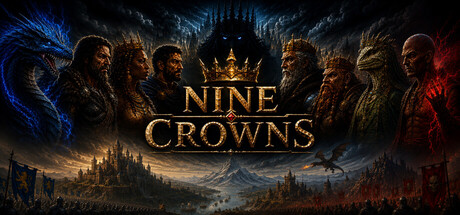
Nine Crowns uses generative AI as part of its art development process. AI-assisted tools are used to create and refine some character art, environments, sprites, and promotional artwork. These assets are selected, directed, edited, and reviewed by the development team before being included in the game. No AI content is generated during gameplay.
Part of the program code, art materials, and text content in this work were created using generative artificial intelligence and have been manually reviewed and adjusted to ensure a seamless gaming experience. During gameplay, AI does not generate content in real-time, all content is pre generated.
Generative AI was used to create and iteratively refine some graphics and promotional images, as well as to assist with writing and implementing the game’s code. All outputs were selected, reviewed, and integrated by the developer. No AI-generated content is produced during gameplay.
Generative AI was used to assist in creating pre-generated visual assets for the game and its promotional materials, including character artwork and event illustrations. It was also used to assist with portions of the game's text and localization. All included content was reviewed and curated by the developer. No content is generated by AI during gameplay.
This game uses generative AI tools during development to assist with the creation of certain visual assets. All content is reviewed and curated by the development team to ensure quality and consistency with the game's vision.
Some of the promotional artwork, store page banners, and/or trailer visuals for Ascend Idle: Chronicles were created with the assistance of Generative AI tools. The core game code and design were developed entirely by hand as a solo project.
Some of the 2D artwork in this game — character portraits, monster illustrations, board tiles, backgrounds and store art — was created with the help of generative AI image tools, then reviewed, edited and assembled by the developer. All generated assets were checked before shipping. The game does not generate any content live during play: everything is pre-rendered and included in the build. Game design, rules, code, text and level layout were authored by the developer.
Some art assets in the game and on the store page (story character portraits, some icons, backgrounds, and capsule images) were created with AI image generation tools, then manually curated and edited by the developer. All gameplay, code, and written story content is human-made. No AI content is generated at runtime.
We do not use AI generated images in the game. However, it's possible some images in the game could be interpreted as AI generated images. If you suspect some of images looks like AI generated images, please contact us through e-mail so we can make necessary adjustments.
Our workflow involves using store bought and legally acquired free 3D assets to render those assets into 2D images. We also use a few free photographs to serve as background images for certain scenes. Those 2D images are then touch-up using free image editing software. We also bought a few 2D art assets from reputable creators. We provide a list of most of 3D and 2D assets we used in the game in credits section in the game.
Some background music tracks were created with the assistance of generative AI tools and subsequently edited and modified by the developer. No generative AI content is created during gameplay.
Some of this game's assets were made with the assistance of generative AI tools and were reviewed, curated and hand-finished by the developer. No content is generated while you play.
Some of this game's art and music assets were created with the help of generative AI tools during development.
Art: Character portraits, unit and enemy sprites, environment tiles, map decorations, and item icons were produced with the assistance of AI image-generation tools (including Retro Diffusion, PixelLab, and FLUX), then curated, edited, assembled, and integrated by the developer.
Music: Background music was generated with a licensed AI music-generation tool and edited by the developer.
All AI-assisted content is pre-generated and fixed in the shipped game — no content is generated live during gameplay. Every asset was reviewed and approved by the developer to ensure it is original to this game, does not infringe third-party intellectual property, and is appropriate for the game's audience.
Generative AI tools were used during development to assist with early visual concepts, selected promotional artwork, and development support. All AI-assisted materials included in the final product were reviewed, edited, and integrated by the developer. The game does not generate AI content during gameplay and does not send player input to external generative AI services.
AI was used to create the full scores from chords and melody provided to create retro feel. All art and animations were drawn meticulously character by character using a personal editor I made, but I drew inspiration from generative AI to get the right feel or angles.
Assistance with the development of:
- Custom procedural 2D animation rig.
- Reinforcement learning (RL) layer for player and NPC animations in hand-authored 2D environments.
- Base designs for sprites and backgrounds (further iterated by hand using digital editing software like photoshop)
No ai tools were used in any capacity for writing or story elements, voice acting, music, or anywhere else.
Blood Vaults was independently developed by Cryptwake Studios with limited assistance from generative AI tools. These tools were used as part of the development workflow to assist with select visual assets, content, and development materials. The game’s design, systems, mechanics, direction, and implementation are developer-created. Any AI-assisted content appearing in the final game is reviewed, modified where appropriate, and integrated by the developer.
AI has been used to assist in the build process, but has absolutely not been used in thematic creative direction, game play or story direction whatsoever. Aveos is a solo developer project, and nothing has been left for AI to decide. All results have been tailored to fit the output of the vision, and it is used in lieu of a team of developers. Should those resources have been available, they would have been obviously preferred.
Pocket Pawns was made with the help of generative AI, and the game's own credits name every tool used.
Images and music: the chess piece art was generated with ChatGPT, the board art with Gemini, and the world and environment art from assets created with Nano Banana Pro alongside free-to-use CC0 packs found online. The soundtrack is from Suno.
Claude wrote the game's code, its writing, and its translations into ten languages — and made much of what you see and hear directly in code rather than from an image generator: the character pixel art, the in-world props and interface, the three-dimensional rooms, the animation, and the sound effects.
The chess itself is not generated. The puzzles come from the Lichess puzzle database, released under CC0, and your opponent is Stockfish, a classical open-source chess engine. Real positions, a real engine.
Nothing is generated while you play. Pocket Pawns creates no content at runtime and never connects to an AI service. It does not need an internet connection to play.
OpenAI ImageGen was used during development to generate and edit some pre-generated 2D pixel-art visual assets, including UI elements, icons, backgrounds, environment artwork, and character or animation source frames. All outputs were reviewed, selected, manually edited, cleaned up, resized, palette-normalized, and integrated by the developer as fixed game assets. The game does not use generative AI at runtime and does not generate live AI content.
This game uses pre-generated AI-assisted artwork for characters, scene backgrounds, and store promotional assets. All AI-generated content was created before release. No content is generated by AI during gameplay, and the game does not connect to external AI services.
We use about 15 seconds of AI footage in our trailer. All assets in the game are human authored.
We also use a local, small and offline LLM (meaning: no data ever leaves your computer, and it does not cause significant performance drops) as a Director that controls: enemy spawn and frequency of challenges, essentially choosing when to press with difficulty and when to hold the challenge based on parameters such as player frustration, boredom and an emergence metric.
This mechanic does not generate any text, narrative or story: it is just a mechanic that controls game balance to ensure the best challenge. And you can turn it off on the settings menu, if you want.
Generative AI was used to assist in creating select background artwork and visual assets for the game. All assets were manually edited and refined before being integrated.
Veil of Time is a hand-built game. The maps, the writing, the music, the interface, and the game design are all human work. Generative AI was used in five specific places, each reviewed and finished by hand:
1. Voice acting. Every line of dialogue and every in-game book can be spoken aloud (3,707 voice clips), synthesized with ElevenLabs from the game's own written script. We chose this so the story stays open to players with low vision or reading difficulties, and to younger players who are not fast readers yet. A voice cast of this size would otherwise be out of reach for a small studio. No performance was cloned from a real person without licence.
2. Character and bestiary portraits, generated from the game's original hand-made sprites and finished by hand.
3. Some character sprites and the party's battle animation sheets, produced with AI assistance from the project's own hand-drawn art, then hand-corrected and palette-locked.
4. The intro and outro cinematic stills, the title screen, and the store key art.
5. Ambient critters and butterflies, converted from hand-made source art.
Everything else you see, read, and hear was made by people.
Generative AI tools were used during development to create the artwork and audio used throughout the game. The generated assets were reviewed, selected, edited as needed, and incorporated into the final game by the developer.
OpenAI image generation was used to create a pre-generated background image used in some of the game's Steam store capsule artwork and screenshots. The image is fixed and was reviewed by the developer. No content is generated using AI during gameplay.
Generative AI tools were used during development to assist with the creation of game content. All generated products are carefully reviewed, edited, and assembled by the development team.
Pocket Adventurer is a solo-developed game that uses AI tools as part of its production pipeline. Character and monster artwork is originally hand-drawn, then processed with AI animation tools and converted into animated sprite sheets for use in the game. Code was written with AI coding assistance under direct human design, testing, and review. All content is pre-rendered; the game contains no live AI generation.
Some AI generation for promotional imagery
I cannot draw and I have no experience with graphics either, which is why I turned to AI for the images in the game: the creatures, items, zones and the class portraits. I picked, edited and placed every single one of them myself, and plenty were thrown out again before the rest fit together.
Generative AI was used as a development aid to create and modify program code, produce some visual assets, and draft localized text. All AI-generated content has been reviewed, edited, and adjusted by the developer. No AI content is generated while the game is running.
Generative AI tools were used to assist in the creation of some pre-generated visual assets for this game, including character and enemy artwork, scene and interface backgrounds, item and skill icons, and some promotional artwork for the Steam store. All such assets were manually selected, edited, cropped, adjusted, and reviewed by the developer before being integrated into the game.
As a solo game designer, bringing a video game to life is something I always dreamed of. To help realize my creative vision, I used AI tools to assist with certain aspects of development such as game backgrounds and sound effects.
It is important to note that AI was used as a starting point, not a final solution. Every asset was reviewed by hand to ensure it fits the game's world and artistic direction. The core gameplay, design, and story remain 100% created by me.
Thank you for supporting indie development!
Some art, the 3D models, the music beds, the sound effects and all character voice lines were produced with generative AI tools during development, then hand-reviewed, edited and shipped as fixed assets. Nothing is generated while you play: the game ships every asset on disc, runs no model, and makes no network call.
Save Point has been in continuous development since 2021 and is, to our knowledge, the world’s first purpose-built AI-native interactive cinematic engine. The Needle uses this technology to deliver a continuously responsive cinematic experience that goes far beyond conventional branching video. AI-assisted production tools helped create portions of the game’s pre-rendered audiovisual content, with every shipped asset human-directed, reviewed, edited, and integrated. The game also offers locally processed voice controls, alongside keyboard and gamepad support. No unreviewed audiovisual content is generated and delivered to players during gameplay. The project represents tens of thousands of hours of human design, engineering, direction, editing, and testing, with AI serving as the enabling technology behind an experience an independent studio could not otherwise produce at any cost, much less a reasonable one. We didn't use AI to save money, we used it because without AI there wasn't enough money in the world to build a game like this.
Lateral Crawl will launch in Early Access. The Early Access build will contain some AI-generated and developer-edited sound effects, which are planned to be replaced before the 1.0 release.
Uses voice cloning by Speechify.
Uses AI generated images uploaded by other users to Pixabay when there wasn't a better alternative available.
Most such images are for character portraits and similar placeholder assets of secondary importance.
There is no prompt or direct AI usage.
Nine Crowns uses generative AI as part of its art development process. AI-assisted tools are used to create and refine some character art, environments, sprites, and promotional artwork. These assets are selected, directed, edited, and reviewed by the development team before being included in the game. No AI content is generated during gameplay.
Part of the program code, art materials, and text content in this work were created using generative artificial intelligence and have been manually reviewed and adjusted to ensure a seamless gaming experience. During gameplay, AI does not generate content in real-time, all content is pre generated.
Generative AI was used to create and iteratively refine some graphics and promotional images, as well as to assist with writing and implementing the game’s code. All outputs were selected, reviewed, and integrated by the developer. No AI-generated content is produced during gameplay.
Generative AI was used to assist in creating pre-generated visual assets for the game and its promotional materials, including character artwork and event illustrations. It was also used to assist with portions of the game's text and localization. All included content was reviewed and curated by the developer. No content is generated by AI during gameplay.
This game uses generative AI tools during development to assist with the creation of certain visual assets. All content is reviewed and curated by the development team to ensure quality and consistency with the game's vision.
Some of the promotional artwork, store page banners, and/or trailer visuals for Ascend Idle: Chronicles were created with the assistance of Generative AI tools. The core game code and design were developed entirely by hand as a solo project.
Some of the 2D artwork in this game — character portraits, monster illustrations, board tiles, backgrounds and store art — was created with the help of generative AI image tools, then reviewed, edited and assembled by the developer. All generated assets were checked before shipping. The game does not generate any content live during play: everything is pre-rendered and included in the build. Game design, rules, code, text and level layout were authored by the developer.
Some art assets in the game and on the store page (story character portraits, some icons, backgrounds, and capsule images) were created with AI image generation tools, then manually curated and edited by the developer. All gameplay, code, and written story content is human-made. No AI content is generated at runtime.