Public Steam disclosure research25,514 disclosures tracked
Where do games disclose AI use?
Search developers’ Steam disclosures, compare classified AI use across
games, and follow recorded changes.
This index adds cross-game classifications and statistics to
statements published on individual store pages.
Groups reflect automatic analysis of public disclosures; mature records are excluded. These counts do not measure AI use across all of Steam.
Missing or unclear statements cannot establish whether a game uses AI.
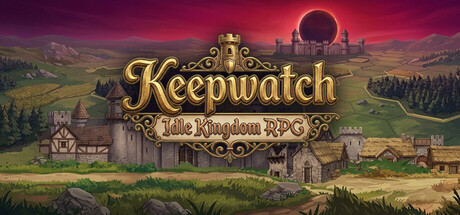
Some assets in Keepwatch were created with the assistance of generative AI
tools. This includes portions of the icon set, UI elements, a number of sound
effects, and some character animations.
All AI-assisted output is reviewed, edited and integrated by hand to match the
game's hand-painted art direction, and none of it ships in the state it was
generated in.
Game code, systems design, economy balance and all written content are
authored entirely by hand.
Keepwatch does not use any AI systems at runtime. Nothing is generated on the
player's machine while the game is running.
AI is used for creating concept art, prototype textures, and quick mesh tests that are eventually replaced with real artist graphic designs and hand-tailored models.
AI is used to generate concept art, 3D models, audio, and Steam store images. Models are manually refined and hand-textured. No AI content is generated during gameplay.
Parts of this game's art, music and translations were created with AI tools during development and edited by hand. They ship as fixed assets — nothing is generated by AI while you play.
Some of this game's artwork - the Steam achievement icons and a number of interface icons - was created with a generative image model, then hand-selected, cropped and colour-matched by the developer. In-game text and the English localisation were also drafted with AI assistance and reviewed by the developer. The game does not generate any content while you play, and it does not connect to any AI service.
Slightly Random Dungeons prioritises human generated assets. Player-facing prose is constructed from bespoke human composed words (writer’s block pending).
We have engaged a human artist for our bestiary, portraits and scenery art, and use human developed icons and inventory assets, UI elements, music and effects made in house or under licence with a minority of AI generated pieces filling gaps until the alternative arrives.
Any AI agent use has been supervised by humans, these agents have not yet unionised.
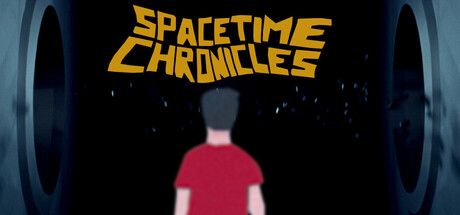
Spacetime Chronicles comes from a handmade animated feature: most of what you see are real paper sets, characters and props, photographed and animated frame by frame by the author. Generative AI was used in the following areas. Images: roughly 15% of the game's images were created or completed with generative AI, then edited and integrated by the author. Audio: the game's sound effects and character voices were produced using generative AI tools. Code: parts of the game's source code were written and reviewed with the help of AI assistants. All of this content was generated during development, reviewed and approved by the author before release. The game does not generate any AI content while you play, and it does not connect to any AI service at runtime.
All spoken voice lines in the game were created using AI text-to-speech (ElevenLabs) from scripts written by the developer. The generated audio was selected, edited and mixed by hand. Some sound effects use licensed stock audio. The game does not generate any content live at runtime — all AI-assisted content is pre-generated and reviewed before shipping.
Character portraits and environment artwork were generated using AI tools and reviewed, curated, and refined by the developer for final use. Narrator voice acting was generated using AI voice synthesis, directed and selected by the developer.
Generative AI was used to assist in the creation of some visual assets used in the game. AI-assisted assets were reviewed and prepared by the development team for use in the game.
This application essentially installs and runs free, open-source artificial intelligence models on your computer. Its working principle is as follows: the model listens to the video you are watching 5-10 seconds beforehand, then generates real-time dubbed audio in your chosen language, and simultaneously produces subtitles in your selected language.
Tug-O-War Wrestling uses a locally-run AI model (Llama) to control enemy wrestler behaviour and decision-making during matches. This AI is not used to generate any art, audio, dialogue, or other player-facing content - all in-game content is human-created.
Generative AI tools were used as development assistance, including support for programming, text editing, brainstorming, and localization. The game's visual artwork and assets are created by the developer and do not use AI-generated images. Story concepts and final creative decisions are made and edited by the developer.
Marketing and Store Visuals: AI tools were utilized during the concept design and background detailing phases for the thumbnail images, posters, and promotional materials on the Steam store page.
Sound Design and Trailer Music: AI-powered sound and music production tools were used in the prototyping and production processes for the game’s promotional trailers and in-game atmospheric background sounds.
Text and Localization Support: AI assistants were used to edit store page descriptions, marketing copy, and language optimization.
The illustrations in Dead Market — the 247 card images, the cutscene plates, the premises backdrops and the nine-slice chrome — were generated with image models during development, then selected, corrected, composed and integrated by hand against the game's own manifest. Everything that displays a live value is drawn procedurally in the engine rather than being an image. The spoken lines were synthesised from a written script, one voice per character, and edited into the game.
Nothing is generated while the game runs. There is no model in the build, no network code and no telemetry.
Almost all of the game’s content has been handmade by our art team. A small number of textures were generated with generative AI tools, then edited and integrated into the final assets by the development team.
We are actively working to replace all placeholder AI art before launch. While we aim for a fully human-crafted experience, a few minor assets may still remain at release.
AI tools were also used to assist with localizing the game and store page.
All 3D in-game art was created by human artists or derived from real-world museum photoscans. (See the credits menu for full attributions.)
Some art assets, sound effects and narrative materials were pre‑generated with AI tools during development. No AI‑generated content is created in real‑time during gameplay.
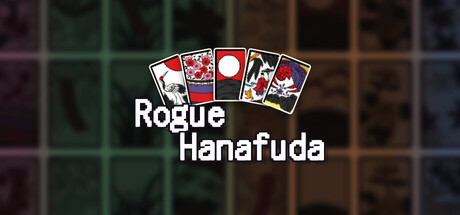
Some of the original art in this game (the bonus cards, bomb card, curse card, crimson paulownia card, soiled card back, pixel card back, two reward chest frames, and combination popup frame) was created using AI-assisted procedural generation scripts. The store capsules, icon, and trailer are derived from this in-game art and are therefore covered by this disclosure.
All supported languages other than Korean (including English) were translated using AI translation tools, then checked through machine back-translation and additional review.
The images currently used on the Steam store page, including the capsule art, were generated using AI. All of these images will be replaced with final, original artwork when the game demo is released.
No AI-generated assets are used in the game itself.
AI-generated content is used during development as temporary placeholder material. Nearly all of it has already been replaced, and the final game will contain only original artwork created by human artists.
Store page text (the short and long descriptions) was drafted with the help of a generative AI language model, then reviewed and edited by the developer before publication.
All art and audio that ships inside the game is human-made and licensed: the creature-family icons are by Lorc and Delapouite from game-icons.net (CC BY 3.0), and the sound effects are by Kenney (CC0). The store and library capsule images were composed programmatically from the game's own icon.
The game generates no content at runtime.
Some voice lines, sound effects, and music in the game and its trailer were
created with generative AI tools (ElevenLabs, Suno), then reviewed, edited,
and finalized by the developer. No content is generated by AI during gameplay.
Generative AI assisted with selected static UI artwork, icons, promotional illustrations, text and localization during development. The game does not generate AI content or connect to generative AI services during play. Gameplay screenshots show actual in-game rendering.
Some of the artwork in this game was created with the help of generative AI during development. Every asset was reviewed, edited and approved by hand before shipping. Nothing is generated at runtime, and no player data is sent to any AI service. The computer opponents in the game use traditional rule-based decision logic and are unrelated to generative AI.
WICKLING was built with AI assistance. Generative AI was used during development to help write the game's code, its pixel art, its level layouts and some of its writing, and to help produce this store page and its artwork.
The soundtrack is not AI-generated. Every note is a hand-written 2A03 chiptune, synthesised by the game as it runs rather than played back from audio files, which is why the horror systems can bend the music live.
Nothing in WICKLING is generated while you play. Every level, sprite, line of text and piece of music is fixed and identical for every player, and the game makes no network requests of any kind.
This game's art and code are creatively directed by a human developer (me), directing, refining, reviewing, and quality-checking every part across hundreds of hours of iteration. I build it with Claude AI as my tool. The visuals are not pre-made image files or AI-generated images. They are drawn by code at runtime (procedural rendering) using standard 2D canvas drawing commands, and Claude AI writes and brings that code to life. The store page and marketing images come from that same in-game rendering. The game does not include third-party copyrighted material.
Some assets in Keepwatch were created with the assistance of generative AI
tools. This includes portions of the icon set, UI elements, a number of sound
effects, and some character animations.
All AI-assisted output is reviewed, edited and integrated by hand to match the
game's hand-painted art direction, and none of it ships in the state it was
generated in.
Game code, systems design, economy balance and all written content are
authored entirely by hand.
Keepwatch does not use any AI systems at runtime. Nothing is generated on the
player's machine while the game is running.
AI is used for creating concept art, prototype textures, and quick mesh tests that are eventually replaced with real artist graphic designs and hand-tailored models.
AI is used to generate concept art, 3D models, audio, and Steam store images. Models are manually refined and hand-textured. No AI content is generated during gameplay.
Parts of this game's art, music and translations were created with AI tools during development and edited by hand. They ship as fixed assets — nothing is generated by AI while you play.
Some of this game's artwork - the Steam achievement icons and a number of interface icons - was created with a generative image model, then hand-selected, cropped and colour-matched by the developer. In-game text and the English localisation were also drafted with AI assistance and reviewed by the developer. The game does not generate any content while you play, and it does not connect to any AI service.
Slightly Random Dungeons prioritises human generated assets. Player-facing prose is constructed from bespoke human composed words (writer’s block pending).
We have engaged a human artist for our bestiary, portraits and scenery art, and use human developed icons and inventory assets, UI elements, music and effects made in house or under licence with a minority of AI generated pieces filling gaps until the alternative arrives.
Any AI agent use has been supervised by humans, these agents have not yet unionised.
Spacetime Chronicles comes from a handmade animated feature: most of what you see are real paper sets, characters and props, photographed and animated frame by frame by the author. Generative AI was used in the following areas. Images: roughly 15% of the game's images were created or completed with generative AI, then edited and integrated by the author. Audio: the game's sound effects and character voices were produced using generative AI tools. Code: parts of the game's source code were written and reviewed with the help of AI assistants. All of this content was generated during development, reviewed and approved by the author before release. The game does not generate any AI content while you play, and it does not connect to any AI service at runtime.
All spoken voice lines in the game were created using AI text-to-speech (ElevenLabs) from scripts written by the developer. The generated audio was selected, edited and mixed by hand. Some sound effects use licensed stock audio. The game does not generate any content live at runtime — all AI-assisted content is pre-generated and reviewed before shipping.
Character portraits and environment artwork were generated using AI tools and reviewed, curated, and refined by the developer for final use. Narrator voice acting was generated using AI voice synthesis, directed and selected by the developer.
Generative AI was used to assist in the creation of some visual assets used in the game. AI-assisted assets were reviewed and prepared by the development team for use in the game.
This application essentially installs and runs free, open-source artificial intelligence models on your computer. Its working principle is as follows: the model listens to the video you are watching 5-10 seconds beforehand, then generates real-time dubbed audio in your chosen language, and simultaneously produces subtitles in your selected language.
Tug-O-War Wrestling uses a locally-run AI model (Llama) to control enemy wrestler behaviour and decision-making during matches. This AI is not used to generate any art, audio, dialogue, or other player-facing content - all in-game content is human-created.
Generative AI tools were used as development assistance, including support for programming, text editing, brainstorming, and localization. The game's visual artwork and assets are created by the developer and do not use AI-generated images. Story concepts and final creative decisions are made and edited by the developer.
Marketing and Store Visuals: AI tools were utilized during the concept design and background detailing phases for the thumbnail images, posters, and promotional materials on the Steam store page.
Sound Design and Trailer Music: AI-powered sound and music production tools were used in the prototyping and production processes for the game’s promotional trailers and in-game atmospheric background sounds.
Text and Localization Support: AI assistants were used to edit store page descriptions, marketing copy, and language optimization.
The illustrations in Dead Market — the 247 card images, the cutscene plates, the premises backdrops and the nine-slice chrome — were generated with image models during development, then selected, corrected, composed and integrated by hand against the game's own manifest. Everything that displays a live value is drawn procedurally in the engine rather than being an image. The spoken lines were synthesised from a written script, one voice per character, and edited into the game.
Nothing is generated while the game runs. There is no model in the build, no network code and no telemetry.
Almost all of the game’s content has been handmade by our art team. A small number of textures were generated with generative AI tools, then edited and integrated into the final assets by the development team.
We are actively working to replace all placeholder AI art before launch. While we aim for a fully human-crafted experience, a few minor assets may still remain at release.
AI tools were also used to assist with localizing the game and store page.
All 3D in-game art was created by human artists or derived from real-world museum photoscans. (See the credits menu for full attributions.)
Some art assets, sound effects and narrative materials were pre‑generated with AI tools during development. No AI‑generated content is created in real‑time during gameplay.
Some of the original art in this game (the bonus cards, bomb card, curse card, crimson paulownia card, soiled card back, pixel card back, two reward chest frames, and combination popup frame) was created using AI-assisted procedural generation scripts. The store capsules, icon, and trailer are derived from this in-game art and are therefore covered by this disclosure.
All supported languages other than Korean (including English) were translated using AI translation tools, then checked through machine back-translation and additional review.
The images currently used on the Steam store page, including the capsule art, were generated using AI. All of these images will be replaced with final, original artwork when the game demo is released.
No AI-generated assets are used in the game itself.
AI-generated content is used during development as temporary placeholder material. Nearly all of it has already been replaced, and the final game will contain only original artwork created by human artists.
Store page text (the short and long descriptions) was drafted with the help of a generative AI language model, then reviewed and edited by the developer before publication.
All art and audio that ships inside the game is human-made and licensed: the creature-family icons are by Lorc and Delapouite from game-icons.net (CC BY 3.0), and the sound effects are by Kenney (CC0). The store and library capsule images were composed programmatically from the game's own icon.
The game generates no content at runtime.
Some voice lines, sound effects, and music in the game and its trailer were
created with generative AI tools (ElevenLabs, Suno), then reviewed, edited,
and finalized by the developer. No content is generated by AI during gameplay.
Generative AI assisted with selected static UI artwork, icons, promotional illustrations, text and localization during development. The game does not generate AI content or connect to generative AI services during play. Gameplay screenshots show actual in-game rendering.
Some of the artwork in this game was created with the help of generative AI during development. Every asset was reviewed, edited and approved by hand before shipping. Nothing is generated at runtime, and no player data is sent to any AI service. The computer opponents in the game use traditional rule-based decision logic and are unrelated to generative AI.
WICKLING was built with AI assistance. Generative AI was used during development to help write the game's code, its pixel art, its level layouts and some of its writing, and to help produce this store page and its artwork.
The soundtrack is not AI-generated. Every note is a hand-written 2A03 chiptune, synthesised by the game as it runs rather than played back from audio files, which is why the horror systems can bend the music live.
Nothing in WICKLING is generated while you play. Every level, sprite, line of text and piece of music is fixed and identical for every player, and the game makes no network requests of any kind.
This game's art and code are creatively directed by a human developer (me), directing, refining, reviewing, and quality-checking every part across hundreds of hours of iteration. I build it with Claude AI as my tool. The visuals are not pre-made image files or AI-generated images. They are drawn by code at runtime (procedural rendering) using standard 2D canvas drawing commands, and Claude AI writes and brings that code to life. The store page and marketing images come from that same in-game rendering. The game does not include third-party copyrighted material.