Public Steam disclosure research25,380 disclosures tracked
Where do games disclose AI use?
Search developers’ Steam disclosures, compare classified AI use across
games, and follow recorded changes.
This index adds cross-game classifications and statistics to
statements published on individual store pages.
Groups reflect automatic analysis of public disclosures; mature records are excluded. These counts do not measure AI use across all of Steam.
Missing or unclear statements cannot establish whether a game uses AI.
Some character artwork, visual assets, animations, and marketing images used in this game were created or assisted with generative AI tools during development. All such assets were reviewed and selected by the developer before being included in the game.
This game includes live-generated AI dialogue. When the player talks with Douki-Cyan, a language model may generate conversational responses in real time based on the player’s input and the current scene context.
This product uses AI to generate conversation responses and voice output in real time. All AI processing runs locally on the user's machine. No content is pre-generated or stored on external servers.
AIvy is a next-generation desktop mascot whose character dialogue is generated by AI on the fly.When you talk to AIvy, or when the character spontaneously speaks up about something happening on your PC, the words aren't pre-written scripts — the AI thinks them up and replies in real time. The generated dialogue is then read aloud by a text-to-speech engine, synchronized to the character's lip movements.[What the AI generates]- The character's dialogue (text)[What the AI does NOT generate]The 3D character itself (VRM model), facial expressions, animations, UI, and sound effects are all pre-authored assets. No images, video, or music are generated by AI during use.[About the AI models]Dialogue generation (default, local inference): AIvy is a local LLM runner built on llama.cpp (the same kind of architecture used by LM Studio, Jan, GPT4All). On first launch you pick from a dropdown the open-source language model best suited to your language — Sarashina 2.2 3B (MIT) for Japanese, Qwen 2.5 3B (Apache 2.0) for the others — and download it once from HuggingFace. From then on inference happens entirely on your PC, and your conversations are never transmitted externally. The in-app catalog only offers models under permissive licenses (Apache 2.0 / MIT).Dialogue generation (optional, cloud LLM): For users without local-LLM-capable hardware, AIvy additionally offers optional cloud LLM integration with OpenAI, Anthropic Claude, and Google Gemini. Network traffic occurs only when the user has explicitly registered their own API key with the chosen provider in the in-app settings. API keys are stored with OS-level encryption (Windows DPAPI) on the user's device and are never sent to any AIvy server (we don't run one). Usage costs are billed directly by the chosen provider. When this feature is not used, no external traffic occurs and inference runs entirely locally.[Streaming / video creation]You may freely stream, record, and share content created with AIvy. Just follow the license terms of the VRM model, each TTS engine, and the language model you actually use — commercial use, monetization, and credit requirements vary per VRM/engine/model.[Things to know]AI responses vary every time, depending on the model you choose, the personality you configure, and what you say. For the rare case of an unexpected response, you can switch personality presets, change models, or pause speech at any time.
Clairval uses AI in the following limited ways:
1) Optional AI bot players: When a game host enables "Allow AI players", the server may fill empty seats with computer-controlled bot accounts at game start. These bots follow scripted server-side game logic (votes, night actions, chat). They are not powered by generative AI or large language models, and they do not learn from player conversations.
2) AI-generated visual assets (optional): Some provisional role card illustrations (placeholder JPG artwork) were created with AI-assisted tools during development. Final redrafted role cards (PNG) are human-made and always shown. Players can disable display of AI-generated placeholder art at any time in Account Settings → "Display AI-generated content?" (default: hidden until the player opts in).
Clairval does not use generative AI to create in-match dialogue, role assignments, game outcomes, moderation decisions, or real-time gameplay content. All core game rules and results are determined by the game server.
The feedback on the in-game world state and the dynamic dialogues with NPCs are generated in real time during the game's operation by integrating a large language model (LLM).
Elftia is an AI agent platform. Through an included service, it connects to leading third-party AI models - large language models and image, video, music and speech generators - to power its agents. Elftia does not bundle, train or fine-tune any model of its own; all content is generated in real time by those models in response to the user's input. New users receive free starter credits, and additional usage can be purchased through Steam. Conversations and generated content are saved to the user's local library on their device.
VainGraphics is a local AI workspace application. Its core functionality heavily utilizes live-generated AI content, allowing users to run Large Language Models (LLMs) to generate text, stories, and code snippets, as well as image generation models to create local artwork. All generative processes run locally on the user's hardware.
The Moment of Panic uses generative artificial intelligence during gameplay to power its AI advisor characters. These locally running, open-source LLM-based advisors respond to intelligence signals, argue from assigned personalities, and attempt to influence the player’s decisions. Core game logic, threat truth, scoring, win/loss conditions, and outcomes are controlled by the game itself, not by the language model. Generative AI is used for dynamic in-game text responses only, and for some images shown alongside that text. Images are not generated at runtime.
Demon Rising uses generative AI for part of its content:
Live-generated narrative — The game includes a local AI language model that runs fully offline on your PC; no internet connection is required and no data is sent anywhere. During play it generates dynamic dialogue for your demon officers, war-council debates, prisoner interrogations and boss encounters, keeping conversations varied across runs. All generated text is constrained by the game's prompts to in-game characters and situations and is bounded by built-in safeguards. If the AI model is unavailable, the game automatically falls back to hand-written dialogue, so the full game is playable either way.
Pre-generated artwork — Some character portraits and illustrations were created with the help of AI image-generation tools, then selected and edited by the developer.
All AI-assisted content is curated and reviewed by the developer.
This game uses generative AI to power the companion's real-time conversation, personality responses, and contextual awareness. The AI model (e.g. GPT-4, Qwen, or any user-configured LLM) generates all dialogue and responses dynamically at runtime. AI-generated speech synthesis (TTS) and speech recognition (ASR) are also used for voice interaction. No AI-generated art assets or pre-rendered content are included — all AI usage occurs live during gameplay based on the player's own API configuration.
Pixel Q is a local AI assistant that utilizes large language models (LLMs) for real-time conversational AI. All AI models run locally on the user's device. Safety guardrails are enforced through restrictive prompt engineering, output filtering, and the inherent safety features of the underlying open-source models. The AI is designed to refuse requests for illegal, harmful, hateful, or sexually explicit content. No user data is sent to external servers.
This game uses generative AI to create live in-game dialogue, AI character responses, personality details, and evaluation feedback during gameplay. The generated content is text-based and is produced dynamically through an external AI API.
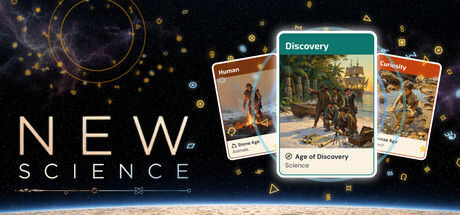
New Science uses generative AI as a core part of its discovery system. When a player attempts a combination, an AI model may be used to determine whether the two selected objects can logically produce a new result. Generative AI is also used to create an illustration for newly discovered objects. Known discoveries are stored and reused, so the same established combination does not need to be generated again for every player. This system allows New Science to support open-ended experimentation beyond a small, completely predefined recipe list. Players may therefore encounter newly generated combinations and images that have not previously been seen by the development team.
This game uses generative AI to generate NPC dialogue, thoughts, and decisions in real time. The AI model can run locally via the built-in llama.cpp engine,. In local mode, AI content is generated on your device. We have implemented content filtering and anomaly detection, but AI-generated content may occasionally produce unpredictable results.
FLATLINE utilizes advanced generative AI technologies to enhance both the visual and interactive experience:
Visual Assets (Pre-generated): To achieve the unique aesthetic of "clean decay" and the massive brutalist landscapes of London 2036, we employed AI-rendering tools (Nanobanana and Veo). All images and video sequences were pre-generated and underwent meticulous manual post-processing to align with the project’s artistic vision.
Interactivity (Live-generated): The episode’s climax features a live dialogue with the system "Anomaly." This character’s responses are generated in real-time using the GPT-4 model, allowing each player to find their own unique arguments in the final confrontation with the network.
We use AI as a force-multiplier for a solo creator, enabling the realization of a world that would otherwise be impossible to build at this scale using traditional methods
This application uses local AI technology for interaction, although the chosen TTS and STT plugins have not yet been selected because the word game is still under development.
However, it is confirmed that plugins from the FAB marketplace will be used. And AI processing will run offline on player's device. No internet connection will be required.
AI assisted assets and text are developer edited. The core game is playable without AI. Optional advisor commentary can use local Ollama or Anthropic only if the player enables it and provides their own key.
This game uses the DeepSeek AI model to generate character dialogue in real time. Based on player input, the AI responds according to preset character personalities, creating an immersive role-playing experience. All generated content is filtered through a content moderation system to prevent inappropriate or policy-violating outputs.
API and Billing Notice:
To use this feature, you need to register a DeepSeek account and add API credits at: https://platform.deepseek.com/usage
The AI service costs are charged directly by DeepSeek. The game developer does not collect any API fees.
Project AIRI uses live-generated AI for player-initiated companion conversations and synthesized voice responses. In the Steam edition, these features are provided through an AIRI account and AIRI-managed services. Players cannot enter third-party API keys or configure custom AI providers. Cloud AI features require an internet connection and a free AIRI account.
This game is a detective adventure in which the player investigates a murder in a small town.
An AI language model generates real-time dialogue when interacting with townspeople or interrogating suspects.
The AI creates dynamic and context-appropriate conversations based on each character’s personality and the situation.
All generated content is restricted to the game’s internal narrative and is filtered to prevent the inclusion of copyrighted material or inappropriate content.
There's a local Large Language Model that integrates with the game's systems and is used primarily for but not limited to dialogue generation.
Several other uses are planned, including localization.
AI has been used for coding and in a limited capacity for creating placeholder assets that will be replaced at a later date.
GeneWorld uses generative AI for dynamic NPC interactions and adaptive dialogue systems. NPC responses, quest interactions, trading behavior, and temporary buffs may be generated in real time based on player conversations. All AI-generated content is moderated and restricted from generating inappropriate or harmful content.
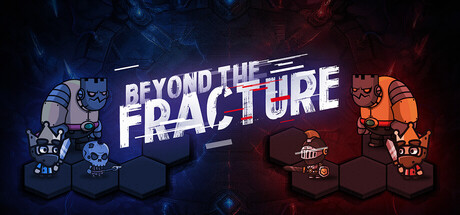
Beyond the Fracture contains both pre-generated and live-generated AI content.
Pre-generated AI content:
Some visual, audio, and voice assets were generated with AI tools during development and reviewed, edited, and curated by the developers before being included in the game. This includes selected construct opponent portraits, spoken name clips, character histories, and HERALD-7 commentary voice clips in German and English.
Live-generated AI content:
During first-time onboarding, the game uses external AI services to generate three candidate player identities live. Each identity includes a generated profile portrait and a generated spoken name introduction. The profile portraits are additionally guided by internal short character descriptions generated from predefined archetypes and prompt templates.
This live generation is constrained by predefined prompts, fixed character archetypes, a controlled name system, and no free-form text input from players. The player selects one of the three generated identities. The chosen identity cannot be changed during the current Playtest, and repeated regeneration is not available during normal gameplay.
No live AI generation occurs during normal matches after onboarding.
LiveMate uses a locally-run Large Language Model (LLM)
to generate real-time AI conversation, emotional
expressions, and voice synthesis for the desktop avatar.
All AI processing runs entirely on the player's device.
No user data is sent to external servers.
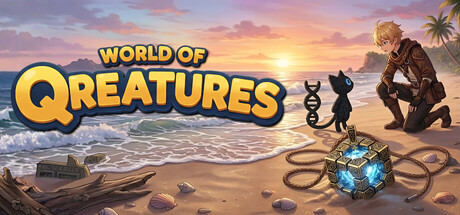
World of Qreatures features a cutting-edge 'Qreature Lab' where players can scan real-world QR codes or breed existing creatures to discover entirely new species.
The game utilizes a custom generative AI pipeline to create these unique assets at runtime, including 3D meshes, textures, procedural audio cries, and combat statistics. Additionally, some wild monsters found in the handcrafted world are pre-generated using this same pipeline and carefully curated by the developer to ensure high-quality gameplay and visual consistency. Every Qreature generated is a unique biological signature within the game's ecosystem.
Chrongrid is a narrative experience product powered by large language models (LLMs). In-game dialogue, scene descriptions, and character responses are generated in real time by an AI model — you can choose a third-party API service (such as DeepSeek, OpenAI, or Anthropic), or run a model locally on your machine via Ollama. You provide your own API credentials and bear the associated costs; we do not operate any server to relay your requests. The AI generates dialogue and descriptive text at runtime, always within the constraints of pre-authored narrative blueprints, characters, and world settings.
I believe in being fully transparent with my players regarding the tools used to bring this project to life. As a solo developer and non-native English speaker, I have utilized AI as a supportive tool to enhance the experience, though the core vision and logic of the game remain my own.
Art & Visuals: To ensure the game has a polished aesthetic, I used AI to refine my hand-drawn concepts into final assets. This allowed me to translate my original sketches into high-quality visuals that I otherwise could not have afforded as an independent creator.
Language & Localization: With over 1,500 unique glyphs and numerous Rune combinations, I used AI to assist with naming and linguistic consistency. This ensures that the English translation is natural and clear for all players.
Real-Time Community Chat: To foster an inclusive community, the game features an integrated translation tool. This allows players to chat in their native languages while providing instant translations for others, ensuring everyone can participate in the conversation.
Development & Optimization: AI assisted in proofing my original combat code and expanding on my base mechanics to create more diverse gameplay options. It also serves as a diagnostic tool to help me identify and patch bugs quickly, ensuring a stable and fair experience for everyone.
AI is a tool to empower my creativity, not a replacement for it. My goal is to use these technologies to deliver a deeper, more polished game than a solo project would typically allow.
Anchored Protocol uses generative AI throughout its development and gameplay:
• Most of our 3D assets, sound effects, and visual art were created with the help of generative AI tools and reviewed by our team before shipping.
• During play, the game live-generates NPC dialogue, voice lines (TTS), and certain artworks in response to your actions, so each playthrough feels different.
We use input filtering and output moderation on live-generated content to prevent illegal, harmful, or off-topic responses. If you encounter anything
inappropriate, please report it via https://aako.world/support
The game uses a generative AI model to evaluate the sentences players construct during verbal battles. The AI analyzes the player's input sentence for grammatical coherence and contextual appropriateness, and returns a grade (e.g., 'Good', 'Great', 'Excellent'). The raw AI output is not displayed to players — only the graded result affects gameplay. No AI-generated text, images, or audio is shown directly to the player.
EQUILIBRIUM uses generative AI to power its core gameplay mechanic: the Policy Terminal.
LIVE-GENERATED CONTENT
When a player types a directive or law in natural language (e.g., "Abolish the luxury car tax"), the AI Engine analyzes the request in real time and generates a structured governmental dossier, including:
- Legislative feasibility analysis
- Budget impact and financial coverage
- Macroeconomic effects (GDP, debt, inflation)
- Social and political consensus projections
- Parliamentary vote simulation
Model used: Anthropic Claude, accessed via API.
Guardrails: AI output is constrained to a fixed set of structured fields defined by the developer. All numeric effects are clamped within bounds enforced by the simulation engine, so no AI output can produce values outside the game's defined ranges. The model operates only on the simulation state provided to it and cannot invent game data: commands that cannot be mapped to a valid government action are refused, and the player is offered bounded policy alternatives instead. No image, audio, or user-data generation is involved, and no player data is used to train any model.
Because responses are generated at runtime, outputs vary between playthroughs: the same directive may produce different wording and different outcomes.
PRE-GENERATED CONTENT
The game's background music track was generated using AI tools during development and ships with the game.
Every Legend uses AI to generate dynamic role-playing content during gameplay. This includes story text, characters, quests, dialogue, scene descriptions, images, speech, and music.
The game can use bundled local AI models on your computer, and it can also use optional third-party cloud AI providers if you configure API keys in the settings. When cloud providers are used, your prompts and relevant game context may be sent to those external services to generate content.
AI-generated content may vary between playthroughs and can occasionally be inaccurate, unexpected, or inconsistent.
Game Demon uses large language models (Llama 3.1/3.3 via Groq API, plus optional local Ollama inference) to generate coaching text in real time from the user's match data. Vision models analyze user-sampled frames. No user content is sent to third parties without explicit opt-in. No generative images or audio in final output.
This game uses AI to generate dynamic NPC dialogue during gameplay. NPCs respond to player actions and choices with unique, contextual conversations. All AI-generated text is filtered to ensure appropriate content.
This game uses live-generated AI content during gameplay. Specifically, parts of the audio/signal layer are generated in real time based on game state and player interactions. No user prompts or user-generated text/images are required to play.
Unitra uses AI to translate the user's own spoken voice into another language and display the result as on-screen text in real time. The translation output is generated at runtime from voice input the user themselves provides; no pre-generated AI art, audio, or text is shipped as part of the product. For details on how voice and text data are handled, please refer to our Privacy Policy linked from the store page.
This game uses generative artificial intelligence to dynamically create towns, facilities, dungeons, NPCs, dialogue, event text, and some illustrations based on the player's actions and the current game state.
Rather than relying only on fixed scenarios, the game is designed so that each playthrough can produce different events, encounters, and story developments.
Some character images, backgrounds, and illustrations are also generated by AI.
Generated content is controlled according to the game's design rules and moderation systems.
This application utilizes local, offline Artificial Intelligence (AI) models as its primary infrastructure:
1. Speech-to-Text (ASR) using the offline Glint AI engine.
2. Neural Machine Translation (NMT) using the offline Glint AI engine.
3. Optional Local AI Translation Integration: Users can optionally activate and download local LLM models (such as Gemma and Qwen via the Ollama engine) to perform offline translations.
All AI models and libraries, including the optional local LLM integrations, are executed entirely locally on the user's hardware. The application DOES NOT require or connect to any third-party cloud services or external AI generators.
Evymind Realtime Subtitles uses AI speech recognition to generate subtitles from user-selected PC audio, microphone audio, or spoken content while the application is running.
The application does not provide pre-made AI-generated story, art, characters, or gameplay content. AI output depends on the audio provided by the user and may contain transcription or translation errors.
The app is intended as an accessibility tool for live captions/subtitles.
Some character artwork, visual assets, animations, and marketing images used in this game were created or assisted with generative AI tools during development. All such assets were reviewed and selected by the developer before being included in the game.
This game includes live-generated AI dialogue. When the player talks with Douki-Cyan, a language model may generate conversational responses in real time based on the player’s input and the current scene context.
This product uses AI to generate conversation responses and voice output in real time. All AI processing runs locally on the user's machine. No content is pre-generated or stored on external servers.
AIvy is a next-generation desktop mascot whose character dialogue is generated by AI on the fly.When you talk to AIvy, or when the character spontaneously speaks up about something happening on your PC, the words aren't pre-written scripts — the AI thinks them up and replies in real time. The generated dialogue is then read aloud by a text-to-speech engine, synchronized to the character's lip movements.[What the AI generates]- The character's dialogue (text)[What the AI does NOT generate]The 3D character itself (VRM model), facial expressions, animations, UI, and sound effects are all pre-authored assets. No images, video, or music are generated by AI during use.[About the AI models]Dialogue generation (default, local inference): AIvy is a local LLM runner built on llama.cpp (the same kind of architecture used by LM Studio, Jan, GPT4All). On first launch you pick from a dropdown the open-source language model best suited to your language — Sarashina 2.2 3B (MIT) for Japanese, Qwen 2.5 3B (Apache 2.0) for the others — and download it once from HuggingFace. From then on inference happens entirely on your PC, and your conversations are never transmitted externally. The in-app catalog only offers models under permissive licenses (Apache 2.0 / MIT).Dialogue generation (optional, cloud LLM): For users without local-LLM-capable hardware, AIvy additionally offers optional cloud LLM integration with OpenAI, Anthropic Claude, and Google Gemini. Network traffic occurs only when the user has explicitly registered their own API key with the chosen provider in the in-app settings. API keys are stored with OS-level encryption (Windows DPAPI) on the user's device and are never sent to any AIvy server (we don't run one). Usage costs are billed directly by the chosen provider. When this feature is not used, no external traffic occurs and inference runs entirely locally.[Streaming / video creation]You may freely stream, record, and share content created with AIvy. Just follow the license terms of the VRM model, each TTS engine, and the language model you actually use — commercial use, monetization, and credit requirements vary per VRM/engine/model.[Things to know]AI responses vary every time, depending on the model you choose, the personality you configure, and what you say. For the rare case of an unexpected response, you can switch personality presets, change models, or pause speech at any time.
Clairval uses AI in the following limited ways:
1) Optional AI bot players: When a game host enables "Allow AI players", the server may fill empty seats with computer-controlled bot accounts at game start. These bots follow scripted server-side game logic (votes, night actions, chat). They are not powered by generative AI or large language models, and they do not learn from player conversations.
2) AI-generated visual assets (optional): Some provisional role card illustrations (placeholder JPG artwork) were created with AI-assisted tools during development. Final redrafted role cards (PNG) are human-made and always shown. Players can disable display of AI-generated placeholder art at any time in Account Settings → "Display AI-generated content?" (default: hidden until the player opts in).
Clairval does not use generative AI to create in-match dialogue, role assignments, game outcomes, moderation decisions, or real-time gameplay content. All core game rules and results are determined by the game server.
The feedback on the in-game world state and the dynamic dialogues with NPCs are generated in real time during the game's operation by integrating a large language model (LLM).
Elftia is an AI agent platform. Through an included service, it connects to leading third-party AI models - large language models and image, video, music and speech generators - to power its agents. Elftia does not bundle, train or fine-tune any model of its own; all content is generated in real time by those models in response to the user's input. New users receive free starter credits, and additional usage can be purchased through Steam. Conversations and generated content are saved to the user's local library on their device.
VainGraphics is a local AI workspace application. Its core functionality heavily utilizes live-generated AI content, allowing users to run Large Language Models (LLMs) to generate text, stories, and code snippets, as well as image generation models to create local artwork. All generative processes run locally on the user's hardware.
The Moment of Panic uses generative artificial intelligence during gameplay to power its AI advisor characters. These locally running, open-source LLM-based advisors respond to intelligence signals, argue from assigned personalities, and attempt to influence the player’s decisions. Core game logic, threat truth, scoring, win/loss conditions, and outcomes are controlled by the game itself, not by the language model. Generative AI is used for dynamic in-game text responses only, and for some images shown alongside that text. Images are not generated at runtime.
Demon Rising uses generative AI for part of its content:
Live-generated narrative — The game includes a local AI language model that runs fully offline on your PC; no internet connection is required and no data is sent anywhere. During play it generates dynamic dialogue for your demon officers, war-council debates, prisoner interrogations and boss encounters, keeping conversations varied across runs. All generated text is constrained by the game's prompts to in-game characters and situations and is bounded by built-in safeguards. If the AI model is unavailable, the game automatically falls back to hand-written dialogue, so the full game is playable either way.
Pre-generated artwork — Some character portraits and illustrations were created with the help of AI image-generation tools, then selected and edited by the developer.
All AI-assisted content is curated and reviewed by the developer.
This game uses generative AI to power the companion's real-time conversation, personality responses, and contextual awareness. The AI model (e.g. GPT-4, Qwen, or any user-configured LLM) generates all dialogue and responses dynamically at runtime. AI-generated speech synthesis (TTS) and speech recognition (ASR) are also used for voice interaction. No AI-generated art assets or pre-rendered content are included — all AI usage occurs live during gameplay based on the player's own API configuration.
Pixel Q is a local AI assistant that utilizes large language models (LLMs) for real-time conversational AI. All AI models run locally on the user's device. Safety guardrails are enforced through restrictive prompt engineering, output filtering, and the inherent safety features of the underlying open-source models. The AI is designed to refuse requests for illegal, harmful, hateful, or sexually explicit content. No user data is sent to external servers.
This game uses generative AI to create live in-game dialogue, AI character responses, personality details, and evaluation feedback during gameplay. The generated content is text-based and is produced dynamically through an external AI API.
New Science uses generative AI as a core part of its discovery system. When a player attempts a combination, an AI model may be used to determine whether the two selected objects can logically produce a new result. Generative AI is also used to create an illustration for newly discovered objects. Known discoveries are stored and reused, so the same established combination does not need to be generated again for every player. This system allows New Science to support open-ended experimentation beyond a small, completely predefined recipe list. Players may therefore encounter newly generated combinations and images that have not previously been seen by the development team.
This game uses generative AI to generate NPC dialogue, thoughts, and decisions in real time. The AI model can run locally via the built-in llama.cpp engine,. In local mode, AI content is generated on your device. We have implemented content filtering and anomaly detection, but AI-generated content may occasionally produce unpredictable results.
FLATLINE utilizes advanced generative AI technologies to enhance both the visual and interactive experience:
Visual Assets (Pre-generated): To achieve the unique aesthetic of "clean decay" and the massive brutalist landscapes of London 2036, we employed AI-rendering tools (Nanobanana and Veo). All images and video sequences were pre-generated and underwent meticulous manual post-processing to align with the project’s artistic vision.
Interactivity (Live-generated): The episode’s climax features a live dialogue with the system "Anomaly." This character’s responses are generated in real-time using the GPT-4 model, allowing each player to find their own unique arguments in the final confrontation with the network.
We use AI as a force-multiplier for a solo creator, enabling the realization of a world that would otherwise be impossible to build at this scale using traditional methods
This application uses local AI technology for interaction, although the chosen TTS and STT plugins have not yet been selected because the word game is still under development.
However, it is confirmed that plugins from the FAB marketplace will be used. And AI processing will run offline on player's device. No internet connection will be required.
AI assisted assets and text are developer edited. The core game is playable without AI. Optional advisor commentary can use local Ollama or Anthropic only if the player enables it and provides their own key.
This game uses the DeepSeek AI model to generate character dialogue in real time. Based on player input, the AI responds according to preset character personalities, creating an immersive role-playing experience. All generated content is filtered through a content moderation system to prevent inappropriate or policy-violating outputs.
API and Billing Notice:
To use this feature, you need to register a DeepSeek account and add API credits at: https://platform.deepseek.com/usage
The AI service costs are charged directly by DeepSeek. The game developer does not collect any API fees.
Project AIRI uses live-generated AI for player-initiated companion conversations and synthesized voice responses. In the Steam edition, these features are provided through an AIRI account and AIRI-managed services. Players cannot enter third-party API keys or configure custom AI providers. Cloud AI features require an internet connection and a free AIRI account.
This game is a detective adventure in which the player investigates a murder in a small town.
An AI language model generates real-time dialogue when interacting with townspeople or interrogating suspects.
The AI creates dynamic and context-appropriate conversations based on each character’s personality and the situation.
All generated content is restricted to the game’s internal narrative and is filtered to prevent the inclusion of copyrighted material or inappropriate content.
There's a local Large Language Model that integrates with the game's systems and is used primarily for but not limited to dialogue generation.
Several other uses are planned, including localization.
AI has been used for coding and in a limited capacity for creating placeholder assets that will be replaced at a later date.
GeneWorld uses generative AI for dynamic NPC interactions and adaptive dialogue systems. NPC responses, quest interactions, trading behavior, and temporary buffs may be generated in real time based on player conversations. All AI-generated content is moderated and restricted from generating inappropriate or harmful content.
Beyond the Fracture contains both pre-generated and live-generated AI content.
Pre-generated AI content:
Some visual, audio, and voice assets were generated with AI tools during development and reviewed, edited, and curated by the developers before being included in the game. This includes selected construct opponent portraits, spoken name clips, character histories, and HERALD-7 commentary voice clips in German and English.
Live-generated AI content:
During first-time onboarding, the game uses external AI services to generate three candidate player identities live. Each identity includes a generated profile portrait and a generated spoken name introduction. The profile portraits are additionally guided by internal short character descriptions generated from predefined archetypes and prompt templates.
This live generation is constrained by predefined prompts, fixed character archetypes, a controlled name system, and no free-form text input from players. The player selects one of the three generated identities. The chosen identity cannot be changed during the current Playtest, and repeated regeneration is not available during normal gameplay.
No live AI generation occurs during normal matches after onboarding.
LiveMate uses a locally-run Large Language Model (LLM)
to generate real-time AI conversation, emotional
expressions, and voice synthesis for the desktop avatar.
All AI processing runs entirely on the player's device.
No user data is sent to external servers.
World of Qreatures features a cutting-edge 'Qreature Lab' where players can scan real-world QR codes or breed existing creatures to discover entirely new species.
The game utilizes a custom generative AI pipeline to create these unique assets at runtime, including 3D meshes, textures, procedural audio cries, and combat statistics. Additionally, some wild monsters found in the handcrafted world are pre-generated using this same pipeline and carefully curated by the developer to ensure high-quality gameplay and visual consistency. Every Qreature generated is a unique biological signature within the game's ecosystem.
Chrongrid is a narrative experience product powered by large language models (LLMs). In-game dialogue, scene descriptions, and character responses are generated in real time by an AI model — you can choose a third-party API service (such as DeepSeek, OpenAI, or Anthropic), or run a model locally on your machine via Ollama. You provide your own API credentials and bear the associated costs; we do not operate any server to relay your requests. The AI generates dialogue and descriptive text at runtime, always within the constraints of pre-authored narrative blueprints, characters, and world settings.
I believe in being fully transparent with my players regarding the tools used to bring this project to life. As a solo developer and non-native English speaker, I have utilized AI as a supportive tool to enhance the experience, though the core vision and logic of the game remain my own.
Art & Visuals: To ensure the game has a polished aesthetic, I used AI to refine my hand-drawn concepts into final assets. This allowed me to translate my original sketches into high-quality visuals that I otherwise could not have afforded as an independent creator.
Language & Localization: With over 1,500 unique glyphs and numerous Rune combinations, I used AI to assist with naming and linguistic consistency. This ensures that the English translation is natural and clear for all players.
Real-Time Community Chat: To foster an inclusive community, the game features an integrated translation tool. This allows players to chat in their native languages while providing instant translations for others, ensuring everyone can participate in the conversation.
Development & Optimization: AI assisted in proofing my original combat code and expanding on my base mechanics to create more diverse gameplay options. It also serves as a diagnostic tool to help me identify and patch bugs quickly, ensuring a stable and fair experience for everyone.
AI is a tool to empower my creativity, not a replacement for it. My goal is to use these technologies to deliver a deeper, more polished game than a solo project would typically allow.
Anchored Protocol uses generative AI throughout its development and gameplay:
• Most of our 3D assets, sound effects, and visual art were created with the help of generative AI tools and reviewed by our team before shipping.
• During play, the game live-generates NPC dialogue, voice lines (TTS), and certain artworks in response to your actions, so each playthrough feels different.
We use input filtering and output moderation on live-generated content to prevent illegal, harmful, or off-topic responses. If you encounter anything
inappropriate, please report it via https://aako.world/support
The game uses a generative AI model to evaluate the sentences players construct during verbal battles. The AI analyzes the player's input sentence for grammatical coherence and contextual appropriateness, and returns a grade (e.g., 'Good', 'Great', 'Excellent'). The raw AI output is not displayed to players — only the graded result affects gameplay. No AI-generated text, images, or audio is shown directly to the player.
EQUILIBRIUM uses generative AI to power its core gameplay mechanic: the Policy Terminal.
LIVE-GENERATED CONTENT
When a player types a directive or law in natural language (e.g., "Abolish the luxury car tax"), the AI Engine analyzes the request in real time and generates a structured governmental dossier, including:
- Legislative feasibility analysis
- Budget impact and financial coverage
- Macroeconomic effects (GDP, debt, inflation)
- Social and political consensus projections
- Parliamentary vote simulation
Model used: Anthropic Claude, accessed via API.
Guardrails: AI output is constrained to a fixed set of structured fields defined by the developer. All numeric effects are clamped within bounds enforced by the simulation engine, so no AI output can produce values outside the game's defined ranges. The model operates only on the simulation state provided to it and cannot invent game data: commands that cannot be mapped to a valid government action are refused, and the player is offered bounded policy alternatives instead. No image, audio, or user-data generation is involved, and no player data is used to train any model.
Because responses are generated at runtime, outputs vary between playthroughs: the same directive may produce different wording and different outcomes.
PRE-GENERATED CONTENT
The game's background music track was generated using AI tools during development and ships with the game.
Every Legend uses AI to generate dynamic role-playing content during gameplay. This includes story text, characters, quests, dialogue, scene descriptions, images, speech, and music.
The game can use bundled local AI models on your computer, and it can also use optional third-party cloud AI providers if you configure API keys in the settings. When cloud providers are used, your prompts and relevant game context may be sent to those external services to generate content.
AI-generated content may vary between playthroughs and can occasionally be inaccurate, unexpected, or inconsistent.
Game Demon uses large language models (Llama 3.1/3.3 via Groq API, plus optional local Ollama inference) to generate coaching text in real time from the user's match data. Vision models analyze user-sampled frames. No user content is sent to third parties without explicit opt-in. No generative images or audio in final output.
This game uses AI to generate dynamic NPC dialogue during gameplay. NPCs respond to player actions and choices with unique, contextual conversations. All AI-generated text is filtered to ensure appropriate content.
This game uses live-generated AI content during gameplay. Specifically, parts of the audio/signal layer are generated in real time based on game state and player interactions. No user prompts or user-generated text/images are required to play.
Unitra uses AI to translate the user's own spoken voice into another language and display the result as on-screen text in real time. The translation output is generated at runtime from voice input the user themselves provides; no pre-generated AI art, audio, or text is shipped as part of the product. For details on how voice and text data are handled, please refer to our Privacy Policy linked from the store page.
This game uses generative artificial intelligence to dynamically create towns, facilities, dungeons, NPCs, dialogue, event text, and some illustrations based on the player's actions and the current game state.
Rather than relying only on fixed scenarios, the game is designed so that each playthrough can produce different events, encounters, and story developments.
Some character images, backgrounds, and illustrations are also generated by AI.
Generated content is controlled according to the game's design rules and moderation systems.
This application utilizes local, offline Artificial Intelligence (AI) models as its primary infrastructure:
1. Speech-to-Text (ASR) using the offline Glint AI engine.
2. Neural Machine Translation (NMT) using the offline Glint AI engine.
3. Optional Local AI Translation Integration: Users can optionally activate and download local LLM models (such as Gemma and Qwen via the Ollama engine) to perform offline translations.
All AI models and libraries, including the optional local LLM integrations, are executed entirely locally on the user's hardware. The application DOES NOT require or connect to any third-party cloud services or external AI generators.
Evymind Realtime Subtitles uses AI speech recognition to generate subtitles from user-selected PC audio, microphone audio, or spoken content while the application is running.
The application does not provide pre-made AI-generated story, art, characters, or gameplay content. AI output depends on the audio provided by the user and may contain transcription or translation errors.
The app is intended as an accessibility tool for live captions/subtitles.