Public Steam disclosure research25,519 disclosures tracked
Where do games disclose AI use?
Search developers’ Steam disclosures, compare classified AI use across
games, and follow recorded changes.
This index adds cross-game classifications and statistics to
statements published on individual store pages.
Groups reflect automatic analysis of public disclosures; mature records are excluded. These counts do not measure AI use across all of Steam.
Missing or unclear statements cannot establish whether a game uses AI.
Automotive Empire was developed using AI-assisted tools across multiple disciplines. Visual assets, music, and audio were generated using AI tools. The game's code was developed with AI coding assistance.
Every element — every image, every track, every line of code — was reviewed, selected, refined, and approved by the developer as part of a deliberate creative vision.
The game design, systems, world-building, and writing are entirely human-made.
Automotive Empire is the product of one person's vision, built with the best tools available today.
This game uses AI tools in the following ways:
Music: Composed using Suno.
Code: Written and debugged with AI assistance.
Art: Created with AI assistance.
All AI-assisted content was reviewed, edited, and finalized by the developer.
Some of this game's assets were created with the assistance of generative AI tools and were then reviewed, edited, and integrated by the developer. This includes: base meshes of some 3D character models, some 2D artwork such as card illustrations and icons, voice lines and sound effects created with AI voice/audio generation, and parts of the localized text. All such content was pre-generated during development — the game does not generate any content with AI at runtime.
his game uses generative AI during development to assist in the creation of certain visual assets, including but not limited to store promotional images, concept illustrations, and decorative graphics. All AI-generated images have been reviewed, selected, and post-processed by the developer to ensure consistency with the game's overall art direction. The core gameplay, programming code, written content, numerical systems, music, and sound effects were independently designed and authored by the developer without the use of generative AI. AI tools were used solely to improve the production efficiency of visual assets and are not involved in any real-time in-game content generation.
Generative AI tools were used during development to create and refine visual artwork and music, and to assist with programming. All final content was directed, selected, edited and integrated by the developer. AI is not used at runtime and the game does not generate new content while you play.
The store artwork (capsules and key art) was generated with an image model and then composed, cropped and combined with our own logo by hand. The game's ambient background music tracks were generated with an AI music tool and edited afterwards.
This game uses content created with the assistance of generative AI tools. 2D image assets (including the game logo and in-game textures), 3D models, and some sound effects and music were generated with AI and then reviewed, edited, and integrated by the developer. Localization into supported languages was also produced with AI assistance. All game design, narrative, and text content were written by the developer. No content is generated in real time during gameplay.
The soundtrack of PERIHELIA was created with the assistance of generative AI music tools. All tracks were curated, edited and integrated by hand, and each ships with a hand-authored beatmap. All other content — art, code, visual effects — is authored directly and drawn procedurally, with no AI involvement.
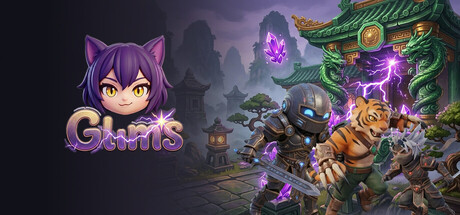
Some of the 3D character models in Glims were made with the help of generative AI: reference art was produced with an AI image tool and turned into 3D meshes with Meshy. Every model was then cleaned up, re-rigged, animated and hand-tuned by us, and all game code, design, UI art and animation work is human-made. No generative AI runs while you play — nothing is generated live.
Generative AI was used during development to assist with visual concept exploration and the creation of certain pre-generated art assets. No generative AI content is generated during gameplay.
Generative AI was used only to assist with drafting and translating written text for the Steam store page. No in-game artwork, audio, gameplay assets, or runtime content is generated by AI.
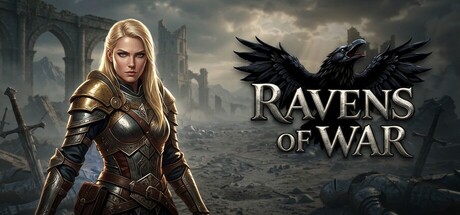
Ravens of War uses generative AI to create some of the artwork and illustrations used in the game, including card artwork. This content is pre-generated and included as part of the game; the game does not generate new AI content during gameplay.
Some 2D artwork was created with the assistance of AI image-generation tools (the mascot character portrait, generated with Recraft and then hand-edited; it appears in-game and in store artwork). All gameplay, code, design, text and audio are made by hand. The game does not use live/runtime AI generation.
Some of the 2D artwork used for this game's branding and store page - including the app icon and the key art - was created with the help of generative AI image tools, then cropped, edited and finalized by hand. No AI-generated content is produced while you play: all gameplay, 3D models, animation and audio come from licensed or hand-authored assets.
During the development process, we may use procedural- and AI-based tools to assist with content creation. In all such cases, the final product reflects the creativity and expression of our own development team.
Selected pre-generated visual and audio assets used in Tracked and its store materials were created with the assistance of generative AI tools during development. Every AI-assisted asset was selected, reviewed, and edited by the development team before use. No content is generated during gameplay, and the game does not connect to external AI services.
During the development of this game, generative AI was used to assist with the creation of some art assets, sound effects, music, text translations, and development reference materials. All AI-assisted generated content was manually reviewed, edited, integrated, and approved before being included in the game. No content is generated in real time based on player input during gameplay.
Guildfire uses pre-generated AI-assisted content in parts of its visual art, localization, sound effects, and soundtrack. AI-generated material is manually selected, edited, and integrated by the developer. No generative AI is used during gameplay, and the game does not connect to external AI services at runtime.
Assistance with the development of:
- Custom procedural 2D animation rig.
- Reinforcement learning (RL) layer for player and NPC animations in hand-authored 2D environments.
- Base designs for sprites and backgrounds (further iterated by hand using digital editing software like photoshop)
No ai tools were used in any capacity for writing or story elements, voice acting, music, or anywhere else.
Some background art, still images, videos, and music were created with the assistance of generative AI tools; every asset was reviewed and curated by the developer. During gameplay, callers' dialogue is performed by an AI language model running entirely on the player's PC — fully offline, with no external AI service. The AI performs characters only within hand-written script boundaries, all story outcomes are decided by deterministic game logic, and generated text is filtered before display. Voice input is transcribed locally and never leaves your machine.
English — artwork (yes, pre-generated):
Visual art (scene backgrounds, character art, GUI covers, and visual FX) was drafted with generative image models, then human-reviewed, cropped, and accepted into the shipping game. Store capsules and library art produced the same way are included in this disclosure. Unreviewed generator output is not shipped.
English — writing (human, not AI narrative):
All narrative, dialogue, in-game text, and store copy are human-written. This game is not an AI-authored story. Planned English localization is human-translated, not model-generated.
English — audio / runtime (so reviewers do not assume the rest):
Audio is CC0 / public-domain / project-synthesized sound effects. There is no voice acting and no generative AI voice. The game does not call generative models at runtime.
During the development of *A Bad Dream: Trypophobia*, generative AI was used as a supporting tool to create and refine certain textures, 3D models, and visual elements, as well as to assist in programming specific systems. All content was manually reviewed, edited, configured, and integrated by Big Mount Interactive. The game does not generate content via AI during gameplay, nor does it connect to external AI services.
Generative AI tools were used during development to assist with the creation and iteration of some pre-generated 2D pixel-art assets and promotional imagery. All AI-assisted content was reviewed and selected before being included in the game.
**Pre-Generated AI Content**
Generative AI tools were used during development to assist in creating some of the pre-generated content included in the game. The AI-assisted content includes images, music, written text, and translations.
All AI-assisted content was generated before release and is included in the game as fixed assets or data. The developer reviewed, selected, edited, and integrated the content before including it in the product. No content is generated by AI while the game is running.
The developer reviewed the included content and only incorporated material believed to have the necessary rights for distribution. Third-party copyrighted characters, trademarks, or other protected material were not intentionally requested or included.
**Live-Generated AI Content**
The game does not use live-generated AI. It does not connect to any generative AI service or generate AI-assisted content while the game is running.
AI was used during development, particularly to assist in creating and refining some artwork and audio assets. All content was reviewed, selected, improved upon, and integrated manually. This game does not generate AI content during gameplay.
I'm not a good artist or audio producer but using current tools lets me deliver what I think is a fun game that I wouldn't be able to deliver at anywhere near the same quality without them. Fortress Breaker is still very much a one person project, just one with great tools.
Some 2D art assets in this game, such as menu backgrounds, UI icons and
character illustrations, were created with the assistance of generative
AI tools. All AI-assisted assets were reviewed and edited by our team
before being included in the game. No content is generated by AI while
the game is running. Game code, design and text were created by humans.
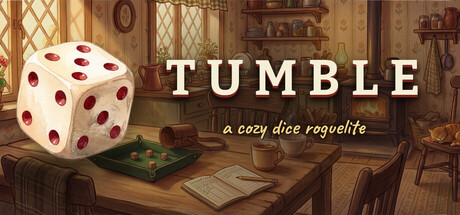
Tumble's visual art (character and charm illustrations, backdrops, item sprites, and store capsule art) was generated with Google's Gemini image models and then selected, cropped, retouched, colour-matched and in many cases regenerated by hand against a fixed reference style until it fit the game. Music and sound effects were generated with Suno under a commercial licence, then cut, mixed and placed by hand.
The game's design, rules, balance, and code are not generated content. Every mechanic, number and line of player-facing text was written, tested and revised by the developer, including through automated balance simulation and four rounds of human playtesting.
No content is generated live during play. Nothing in Tumble is produced at runtime by an AI model; the game runs entirely offline with no model calls of any kind.
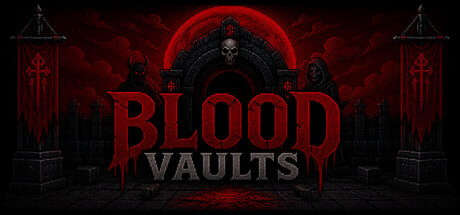
Blood Vaults was independently developed by Cryptwake Studios with limited assistance from generative AI tools. These tools were used as part of the development workflow to assist with select visual assets, content, and development materials. The game’s design, systems, mechanics, direction, and implementation are developer-created. Any AI-assisted content appearing in the final game is reviewed, modified where appropriate, and integrated by the developer.
Store page and marketing capsule artwork was drafted with generative AI, then quantized to a fixed 9-colour pixel palette and hand-adjusted before use. Interface translations outside Simplified Chinese and English were produced by machine translation and have not been reviewed by native speakers.
All in-game visuals, the user interface, the wordmark and the achievement icons are drawn programmatically in code and contain no AI-generated content. The game does not invoke generative AI at runtime; nothing is generated while you play.
We used Artificial Intelligence tools as an aid during development and in the creation of some game content. All AI-assisted material was personally reviewed and adjusted by our team, who were involved throughout every stage of the creative process.
As a solo independent developer, I used generative AI as a support tool to assist in the creation of selected promotional artwork displayed on the Steam store page. All final assets were manually selected, edited, and integrated by me. No generative AI content is created during gameplay.
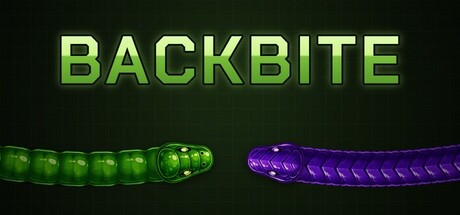
BACKBITE's in-game visual art — the snakes, power-up icons and other graphics —
was created with generative AI image tools and then prepared as sprites for the
game. In-game text was translated into the supported languages with AI
assistance. All music and sound effects come from licensed, human-made audio
libraries.
本作在开发阶段使用了生成式 AI 辅助制作以下内容:美术(场景与背景、卡面插画、角色头像、界面位图、物品图标等游戏与商店页中的图像素材)由 AI 生成母图、经开发者逐项筛选、修复、裁切与组装后定稿;游戏内文本(事件与叙事文案)由开发者设计框架、AI 辅助起草、逐条经人工审查修改后定稿。游戏运行过程中不会实时生成任何 AI 内容,也不会连接任何 AI 服务。核心玩法、世界设定、事件结构与全部最终内容取舍均由开发者完成。
Generative AI tools were used during development to create and edit some visual assets and promotional artwork, and to assist with portions of the game's code. All AI-assisted content was reviewed and curated by the developer. The game does not generate AI content during gameplay.
Automotive Empire was developed using AI-assisted tools across multiple disciplines. Visual assets, music, and audio were generated using AI tools. The game's code was developed with AI coding assistance.
Every element — every image, every track, every line of code — was reviewed, selected, refined, and approved by the developer as part of a deliberate creative vision.
The game design, systems, world-building, and writing are entirely human-made.
Automotive Empire is the product of one person's vision, built with the best tools available today.
This game uses AI tools in the following ways:
Music: Composed using Suno.
Code: Written and debugged with AI assistance.
Art: Created with AI assistance.
All AI-assisted content was reviewed, edited, and finalized by the developer.
Some of this game's assets were created with the assistance of generative AI tools and were then reviewed, edited, and integrated by the developer. This includes: base meshes of some 3D character models, some 2D artwork such as card illustrations and icons, voice lines and sound effects created with AI voice/audio generation, and parts of the localized text. All such content was pre-generated during development — the game does not generate any content with AI at runtime.
his game uses generative AI during development to assist in the creation of certain visual assets, including but not limited to store promotional images, concept illustrations, and decorative graphics. All AI-generated images have been reviewed, selected, and post-processed by the developer to ensure consistency with the game's overall art direction. The core gameplay, programming code, written content, numerical systems, music, and sound effects were independently designed and authored by the developer without the use of generative AI. AI tools were used solely to improve the production efficiency of visual assets and are not involved in any real-time in-game content generation.
Generative AI tools were used during development to create and refine visual artwork and music, and to assist with programming. All final content was directed, selected, edited and integrated by the developer. AI is not used at runtime and the game does not generate new content while you play.
The store artwork (capsules and key art) was generated with an image model and then composed, cropped and combined with our own logo by hand. The game's ambient background music tracks were generated with an AI music tool and edited afterwards.
This game uses content created with the assistance of generative AI tools. 2D image assets (including the game logo and in-game textures), 3D models, and some sound effects and music were generated with AI and then reviewed, edited, and integrated by the developer. Localization into supported languages was also produced with AI assistance. All game design, narrative, and text content were written by the developer. No content is generated in real time during gameplay.
The soundtrack of PERIHELIA was created with the assistance of generative AI music tools. All tracks were curated, edited and integrated by hand, and each ships with a hand-authored beatmap. All other content — art, code, visual effects — is authored directly and drawn procedurally, with no AI involvement.
Some of the 3D character models in Glims were made with the help of generative AI: reference art was produced with an AI image tool and turned into 3D meshes with Meshy. Every model was then cleaned up, re-rigged, animated and hand-tuned by us, and all game code, design, UI art and animation work is human-made. No generative AI runs while you play — nothing is generated live.
Generative AI was used during development to assist with visual concept exploration and the creation of certain pre-generated art assets. No generative AI content is generated during gameplay.
Generative AI was used only to assist with drafting and translating written text for the Steam store page. No in-game artwork, audio, gameplay assets, or runtime content is generated by AI.
Ravens of War uses generative AI to create some of the artwork and illustrations used in the game, including card artwork. This content is pre-generated and included as part of the game; the game does not generate new AI content during gameplay.
Some 2D artwork was created with the assistance of AI image-generation tools (the mascot character portrait, generated with Recraft and then hand-edited; it appears in-game and in store artwork). All gameplay, code, design, text and audio are made by hand. The game does not use live/runtime AI generation.
Some of the 2D artwork used for this game's branding and store page - including the app icon and the key art - was created with the help of generative AI image tools, then cropped, edited and finalized by hand. No AI-generated content is produced while you play: all gameplay, 3D models, animation and audio come from licensed or hand-authored assets.
During the development process, we may use procedural- and AI-based tools to assist with content creation. In all such cases, the final product reflects the creativity and expression of our own development team.
Selected pre-generated visual and audio assets used in Tracked and its store materials were created with the assistance of generative AI tools during development. Every AI-assisted asset was selected, reviewed, and edited by the development team before use. No content is generated during gameplay, and the game does not connect to external AI services.
During the development of this game, generative AI was used to assist with the creation of some art assets, sound effects, music, text translations, and development reference materials. All AI-assisted generated content was manually reviewed, edited, integrated, and approved before being included in the game. No content is generated in real time based on player input during gameplay.
Guildfire uses pre-generated AI-assisted content in parts of its visual art, localization, sound effects, and soundtrack. AI-generated material is manually selected, edited, and integrated by the developer. No generative AI is used during gameplay, and the game does not connect to external AI services at runtime.
Assistance with the development of:
- Custom procedural 2D animation rig.
- Reinforcement learning (RL) layer for player and NPC animations in hand-authored 2D environments.
- Base designs for sprites and backgrounds (further iterated by hand using digital editing software like photoshop)
No ai tools were used in any capacity for writing or story elements, voice acting, music, or anywhere else.
Some background art, still images, videos, and music were created with the assistance of generative AI tools; every asset was reviewed and curated by the developer. During gameplay, callers' dialogue is performed by an AI language model running entirely on the player's PC — fully offline, with no external AI service. The AI performs characters only within hand-written script boundaries, all story outcomes are decided by deterministic game logic, and generated text is filtered before display. Voice input is transcribed locally and never leaves your machine.
English — artwork (yes, pre-generated):
Visual art (scene backgrounds, character art, GUI covers, and visual FX) was drafted with generative image models, then human-reviewed, cropped, and accepted into the shipping game. Store capsules and library art produced the same way are included in this disclosure. Unreviewed generator output is not shipped.
English — writing (human, not AI narrative):
All narrative, dialogue, in-game text, and store copy are human-written. This game is not an AI-authored story. Planned English localization is human-translated, not model-generated.
English — audio / runtime (so reviewers do not assume the rest):
Audio is CC0 / public-domain / project-synthesized sound effects. There is no voice acting and no generative AI voice. The game does not call generative models at runtime.
During the development of *A Bad Dream: Trypophobia*, generative AI was used as a supporting tool to create and refine certain textures, 3D models, and visual elements, as well as to assist in programming specific systems. All content was manually reviewed, edited, configured, and integrated by Big Mount Interactive. The game does not generate content via AI during gameplay, nor does it connect to external AI services.
Generative AI tools were used during development to assist with the creation and iteration of some pre-generated 2D pixel-art assets and promotional imagery. All AI-assisted content was reviewed and selected before being included in the game.
**Pre-Generated AI Content**
Generative AI tools were used during development to assist in creating some of the pre-generated content included in the game. The AI-assisted content includes images, music, written text, and translations.
All AI-assisted content was generated before release and is included in the game as fixed assets or data. The developer reviewed, selected, edited, and integrated the content before including it in the product. No content is generated by AI while the game is running.
The developer reviewed the included content and only incorporated material believed to have the necessary rights for distribution. Third-party copyrighted characters, trademarks, or other protected material were not intentionally requested or included.
**Live-Generated AI Content**
The game does not use live-generated AI. It does not connect to any generative AI service or generate AI-assisted content while the game is running.
AI was used during development, particularly to assist in creating and refining some artwork and audio assets. All content was reviewed, selected, improved upon, and integrated manually. This game does not generate AI content during gameplay.
I'm not a good artist or audio producer but using current tools lets me deliver what I think is a fun game that I wouldn't be able to deliver at anywhere near the same quality without them. Fortress Breaker is still very much a one person project, just one with great tools.
Some 2D art assets in this game, such as menu backgrounds, UI icons and
character illustrations, were created with the assistance of generative
AI tools. All AI-assisted assets were reviewed and edited by our team
before being included in the game. No content is generated by AI while
the game is running. Game code, design and text were created by humans.
Tumble's visual art (character and charm illustrations, backdrops, item sprites, and store capsule art) was generated with Google's Gemini image models and then selected, cropped, retouched, colour-matched and in many cases regenerated by hand against a fixed reference style until it fit the game. Music and sound effects were generated with Suno under a commercial licence, then cut, mixed and placed by hand.
The game's design, rules, balance, and code are not generated content. Every mechanic, number and line of player-facing text was written, tested and revised by the developer, including through automated balance simulation and four rounds of human playtesting.
No content is generated live during play. Nothing in Tumble is produced at runtime by an AI model; the game runs entirely offline with no model calls of any kind.
Blood Vaults was independently developed by Cryptwake Studios with limited assistance from generative AI tools. These tools were used as part of the development workflow to assist with select visual assets, content, and development materials. The game’s design, systems, mechanics, direction, and implementation are developer-created. Any AI-assisted content appearing in the final game is reviewed, modified where appropriate, and integrated by the developer.
Store page and marketing capsule artwork was drafted with generative AI, then quantized to a fixed 9-colour pixel palette and hand-adjusted before use. Interface translations outside Simplified Chinese and English were produced by machine translation and have not been reviewed by native speakers.
All in-game visuals, the user interface, the wordmark and the achievement icons are drawn programmatically in code and contain no AI-generated content. The game does not invoke generative AI at runtime; nothing is generated while you play.
We used Artificial Intelligence tools as an aid during development and in the creation of some game content. All AI-assisted material was personally reviewed and adjusted by our team, who were involved throughout every stage of the creative process.
As a solo independent developer, I used generative AI as a support tool to assist in the creation of selected promotional artwork displayed on the Steam store page. All final assets were manually selected, edited, and integrated by me. No generative AI content is created during gameplay.
BACKBITE's in-game visual art — the snakes, power-up icons and other graphics —
was created with generative AI image tools and then prepared as sprites for the
game. In-game text was translated into the supported languages with AI
assistance. All music and sound effects come from licensed, human-made audio
libraries.
本作在开发阶段使用了生成式 AI 辅助制作以下内容:美术(场景与背景、卡面插画、角色头像、界面位图、物品图标等游戏与商店页中的图像素材)由 AI 生成母图、经开发者逐项筛选、修复、裁切与组装后定稿;游戏内文本(事件与叙事文案)由开发者设计框架、AI 辅助起草、逐条经人工审查修改后定稿。游戏运行过程中不会实时生成任何 AI 内容,也不会连接任何 AI 服务。核心玩法、世界设定、事件结构与全部最终内容取舍均由开发者完成。
Generative AI tools were used during development to create and edit some visual assets and promotional artwork, and to assist with portions of the game's code. All AI-assisted content was reviewed and curated by the developer. The game does not generate AI content during gameplay.