Public Steam disclosure research27,951 disclosures tracked
Where do games disclose AI use?
Search developers’ Steam disclosures, compare classified AI use across
games, and follow recorded changes.
This index adds cross-game classifications and statistics to
statements published on individual store pages.
Groups reflect automatic analysis of public disclosures; mature records are excluded. These counts do not measure AI use across all of Steam.
Missing or unclear statements cannot establish whether a game uses AI.
We use AI-assisted tools in parts of our development process to assist with content creation, improve productivity, and streamline routine tasks so our team has more time for creative work. Where we use these tools, the work is directed, reviewed, and finalized by our team.
Finesse uses generative AI tools for select pre-generated content created during development:
- Meshy — 3D model generation for some character and environment assets
- ElevenLabs — voice line generation for in-game audio
- Suno — music track generation for soundtrack and ambient audio
- Anthropic Claude — assistance with in-game text content (descriptions, narrative copy)
All AI-generated content is pre-rendered during development and shipped as static assets. No generative AI runs at runtime; nothing is generated live or unique per player. All AI outputs are reviewed, edited, and curated by the developer before being included in the final game.
Generative AI was used as one of many development tools while creating Snake: Gridbreaker.
As a solo developer, I used it to support programming, localization, UI work, visual assets, icons, and the development of quality-of-life and accessibility improvements.
Every AI-assisted element was reviewed, edited, tested, and implemented by me. I designed the game, its mechanics, progression, and creative direction, and I remain fully responsible for the final experience.
The game does not generate content with AI during gameplay.
AI-assisted tools were used as part of the development workflow for prototyping, implementation support, and content iteration. The released game content was selected, edited, and curated by the developer. The game does not use live generative AI during gameplay.
Non-English localizations are AI-assisted and reviewed by our team for quality. Simplified Chinese was additionally reviewed by a native speaker. We welcome community feedback to help improve translations over time.
Current store artwork, in-game loading screen images, and background music were created with assistance from generative AI tools. These assets were manually reviewed and edited by the development team.
Clairval uses AI in the following limited ways:
1) Optional AI bot players: When a game host enables "Allow AI players", the server may fill empty seats with computer-controlled bot accounts at game start. These bots follow scripted server-side game logic (votes, night actions, chat). They are not powered by generative AI or large language models, and they do not learn from player conversations.
2) AI-generated visual assets (optional): Some provisional role card illustrations (placeholder JPG artwork) were created with AI-assisted tools during development. Final redrafted role cards (PNG) are human-made and always shown. Players can disable display of AI-generated placeholder art at any time in Account Settings → "Display AI-generated content?" (default: hidden until the player opts in).
Clairval does not use generative AI to create in-match dialogue, role assignments, game outcomes, moderation decisions, or real-time gameplay content. All core game rules and results are determined by the game server.
Some art assets are generative and some are not. Many assets were purchased and then updated with generative AI in order to look different from the original purchased assets. We would love to change these out for custom art if the game does well.
This game uses generative AI tools during development to assist with the creation of certain art assets and some repetitive development tasks. All content is manually designed, reviewed, selected, and integrated by the developer.
Character, monster, and object sprites, as well as the app icon, were created using AI image generation tools and subsequently hand-edited and refined by the developer. Some in-game text was written with AI assistance.
Some visual and written content in this game was created with the assistance of generative AI during development, then reviewed, edited, and integrated by the developer. The game does not include live-generated AI features, and players cannot generate content during gameplay.
This game uses generative AI tools during development to assist with creating some art assets:
- 2D artwork: ability/skill icons, equipment/item icons, concept art, in-game UI/HUD elements, and some promotional/store artwork (capsule images, key art).
- 3D assets: some item and world prop models created with generative 3D tools.
All AI-assisted assets are reviewed, curated, and edited by the developer before inclusion. No content is generated by AI at runtime — all assets are fixed and pre-generated. Remaining art, animation, and audio come from licensed asset packs or were created by the developer.
Game design, code, mechanics, gameplay systems, sprites, and writing are entirely human-made. All AI-generated assets were reviewed, edited, composed, and integrated manually by the developer. No AI content is generated at runtime — every asset is pre-authored and curated.
Generative AI was used in the creation of:
Marketing and store page artwork (capsules, banners, hero, logo)
In-game background art, sprites directions
Music tracks
Some visual assets, concept materials, and marketing images may use generative AI during the production process. All final assets used in the game and store page are reviewed, selected, and edited by the developer before publication. The game does not generate AI content during gameplay.
In our game, some sections of code are generated by artificial intelligence, a common practice among developers and quality assurance engineers. Some images are also generated by artificial intelligence.
Some visual elements in this game, such as textures and illustrations, were partially generated or enhanced using artificial intelligence tools, and then manually refined and integrated by the development team.
Realm of Balls was developed with the help of generative AI tools during production, but the game does not include live AI-generated content for players.
Translations and text content are AI-generated. Some of the UI and game backgrounds are AI generated with manual post-processing. Some of the VFX for the animations are AI generated with post-processing.
Generative AI tools were used during development to assist with code, localization text, store page copy, and procedural geometric marketing assets. The game does not use live generative AI during gameplay. All AI-assisted content was reviewed, edited, and integrated by the developer.
Some music tracks in IconicQuest are generated using AI based on the developer's creative direction and prompts, then curated and edited for in-game use. Some sound effects are generated using AI.
Promotional artwork on the Steam store page (capsule images) was generated with AI image tools as a creative starting point, then edited, composited with hand-crafted typography, and color-corrected by the developer in post-production.
All in-game artwork, character sprites, tiles, environments, UI
elements, and animations, is created entirely by the developer in Aseprite or sourced from art professionals. No AI is used for in-game pixel art.
All in-game text content (quest dialogue, item names, NPC scripts, lore, and tutorials) is written by the developer and AI.
No live AI generation occurs during gameplay. All AI-assisted content is finalized and shipped as static assets.
This game uses generative AI for the following elements during development:
Visual assets (characters, tiles, effects, title screen, Steam store assets, etc.): Nano Banana / GPT Image / MiniMax H3
Programming assistance, map design, in-game text (proper nouns, messages, etc.) including translations into other languages, and BGM composition: Anthropic Claude
Development of asset-generation tools: OpenAI Codex
All generated material is reviewed by the developer before use, and care is taken not to intentionally copy or imitate third-party copyrighted works.
We are a team of two developers with a limited budget, so we use AI to assist with certain illustration assets, such as character portraits, icons, and backgrounds.
However, all core game assets—including UI HUD and UI interface, enemy 3D models and animations, weapons, and environments are created by the two developers themselves.
This game use generative AI to setup theming, characters and monsters sprites and sounds to speed-up and fill the gap I don't capable of. After generated they're well test and tune to ensure player can have fun with it.
This is my first game project, created as a learning experience and a personal milestone in my journey as a developer.
Some of the game assets, including 3D models and music, have been generated using artificial intelligence tools. These resources are used to support the creative process and allow me to focus on gameplay design, programming, and overall game development.
All AI-generated content has been carefully selected, integrated, and refined to fit the artistic direction and gameplay experience of the project.
Since I’m mostly developing this game on my own, I couldn’t have done it without a little help from AI. Portraits, some sound effects, and UI elements were refined or generated using AI. Still, most of the game is old-school manual work! I ran around with a microphone recording individual sounds, wrote entire music tracks, modeled and textured objects, and of course designed levels and much more, all with my own hands using the full range of available NO-AI classic tools. Over time, I’ve been removing more and more AI-generated content with the help of some talented friends.
Some visual assets (card art and character portraits) generated using Google Gemini image models. Some SFX partially generated via ElevenLabs where Unity Assets were not available. All licensed for commercial use. Game design, code, and text content are original.
All code in this game is generated with AI assistance. The game’s visuals and music also involve AI-aided processes, including image adjustments and extension of music segments. The gameplay concepts and skill/item designs are partially inspired by AI, with some skill and item names originating from AI-generated ideas.
Generative AI tools were used as development assistance for portions of the source code, including drafting, organization, and commenting. No live AI-generated content is produced during gameplay.
We believe in being transparent about how we build Hollowed Oath including where we use AI, and why. For a thoughtful look at how AI is used in Hollowed Oath, please visit: https://hollowedoath.com/ai-use
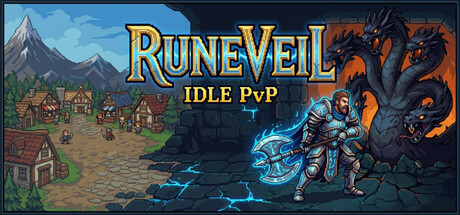
Runeveil: Idle PvP uses generative AI tools only during the design phase of 2D pixel art assets (characters, monsters, items, environments and icons). These visuals serve as a working base and are then edited, integrated and manually reviewed by the team before being added to the game.
No generative AI is used for the game's code, for generating content in real time during gameplay, nor for the soundtrack, narrative text or translations. All content you see in the game has been checked and assembled by hand.
All art and music in the game other than icons and sound effects were generated with AI. While I would prefer to ship the game with human artistry, I do not have the means at this time.
I use AI agents to aid in development of Visseron Idle as well. I am the brains, it is my hands when I need it.
No real-time generative AI in the client. Static in-game and store art/audio may include material initially produced with generative AI, revised and approved by the developer before release.
AI technology is used in a supplementary capacity during the conceptual and prototyping stages of our 2D assets. Any such assets are replaced through our production pipeline by our artists.