Public Steam disclosure research25,394 disclosures tracked
Where do games disclose AI use?
Search developers’ Steam disclosures, compare classified AI use across
games, and follow recorded changes.
This index adds cross-game classifications and statistics to
statements published on individual store pages.
Groups reflect automatic analysis of public disclosures; mature records are excluded. These counts do not measure AI use across all of Steam.
Missing or unclear statements cannot establish whether a game uses AI.
We used Artificial Intelligence tools as an aid during development and in the creation of some game content. All AI-assisted material was personally reviewed and adjusted by our team, who were involved throughout every stage of the creative process.
Some 2D‑art assets in this game are created with the assistance of generative‑AI tools. These assets have been filtered, edited, composited and manually reviewed by the developer before being used in‑game. The game does not perform real‑time content generation based on player input during runtime, nor does it send any player input to generative‑AI services.
The text on this game's Steam store page was drafted with the help of generative AI and then edited by the developer. All in-game art, models, sounds and the game's logo are made by hand. No AI-generated content is produced while the game is running.
Galithia uses generative AI during development for some concepting, visual iteration, and content support. Any AI-assisted assets or materials are reviewed, modified, and integrated by the developer, with final approval and creative direction remaining fully human-led. Gameplay systems, combat balance, encounter design, and final implementation are developer-controlled.
Generative AI was used during development to assist with editing and reviewing some narrative text and with localization. AI-assisted text was reviewed and edited manually by the developer before being included in the game. No AI-generated content is created live during gameplay.
Artwork, music and parts of the text were created with AI tools and individually curated, refined and hand-fitted into the game by the developer. No AI content is generated at runtime.
Some of MORTAROT's visual assets were created with the assistance of generative AI image tools and then edited, composited, and refined by hand by the artist. Some interface text and the English localization were drafted with AI assistance and reviewed by the team. AI coding assistants were also used during development. All AI-generated content has been reviewed to ensure that it does not contain infringing or illegal material.
Soulforge uses generative AI for part of its asset production. All AI-assisted content is pre-generated, fixed in the shipped build, and reviewed by the developer before release — the game generates no content at runtime.
• 2D art: UI frames and chrome, spell and passive ability icons, class portraits, key art and store capsule art were produced using AI image generation from written style briefs, then selected, corrected, cropped, rescaled, composited and colour-graded by the developer before being imported into the game.
• 3D models and textures: a portion of environment and prop assets were produced with AI generation tools, then edited, retopologised and hand-adjusted before being used in the game.
• Localization: the game's 20 interface languages were produced with AI translation, each language then passed through a separate independent AI review pass and a mechanical validator. Native-speaker review is ongoing and corrections ship as they arrive.
Audio is procedurally synthesised with hand-written DSP code, not generated by an AI model.
We have reviewed the shipped assets and believe they contain no illegal or infringing content.
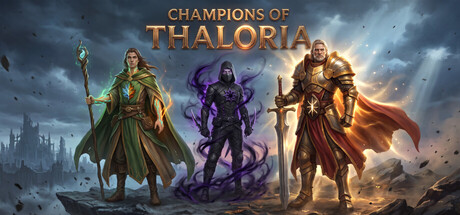
Some of the visual assets in Champions of Thaloria were created with the help
of generative AI tools during development. This includes parts of the store
page artwork and trailer, along with a portion of the in-game 2D art such as
item icons, avatar frames and class emblems.
Every AI-assisted asset was selected, edited and assembled by hand before it
went into the game, and all of it was reviewed by the developer.
The game does not generate anything while you play. No content is created at
runtime and no AI service is contacted during gameplay — everything ships
with the game.
Generative AI was used during development to assist in creating and refining some visual assets and development materials. All AI-assisted content included in the game and its marketing is reviewed, selected, and edited by the developer before publication. No AI-generated content is created during gameplay.
All voices are Ai generated along with the soundtracks. They are however created under strict instructions and hours of testing to get them right. Ai assisted in creating models/props.
This game utilizes adaptive AI technology during gameplay to power the police interrogator's responses. Player input is evaluated live to generate dynamic, context-aware dialogue and push the interrogation forward.
Generative AI tools were used during development to create and assist with many of the game's visual assets, including character artwork, card illustrations, backgrounds, and UI elements. These assets were generated during development and are included in the game as pre-generated, static content. The game does not use generative AI to create content during gameplay.
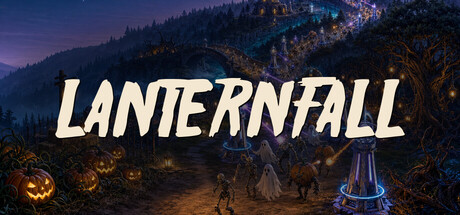
Some of Lanternfall's visual assets were produced with the help of AI tools. Concept art, 3D character and prop models, and character rigging and animation were generated with AI and then edited, corrected, lit, rendered and integrated by hand by the developer. Level backgrounds are hand-composed 3D scenes rendered offline. All shipped content is reviewed, adjusted and owned by EverLabs Software Ltd. No generative AI runs at runtime; nothing is generated live during play.
Development used generative tools to assist with pre-generated pixel-art characters, environments, UI, effects and reference images (PixelLab and OpenAI image generation); pre-generated sound effects and voices (ElevenLabs); pre-generated music (Stable Audio); and portions of game code, tests and documentation (OpenAI Codex, Claude Code). Outputs were selected, edited, integrated and tested by the developer. The shipped game does not generate AI content at runtime and does not send player prompts to an AI service.
Generative AI tools were used during development to assist with selected pre-generated visual assets, promotional and store-page materials, and localization/text. All AI-assisted content was reviewed, edited, curated, and approved by the developer before inclusion. No generative AI is used during gameplay, and the game does not connect to external AI services while running.
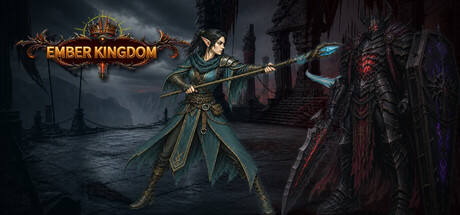
During development, Ember Kingdom used generative AI to assist in creating some pre-generated game art assets, including backgrounds, UI icons, character and monster images, visual effects, and branding artwork. All assets were manually reviewed, edited, and integrated before being added to the game, and are included with the game as fixed files.
The game does not connect to any generative AI services during gameplay, nor does it generate text, images, sound effects, characters, or other content in real time based on player input. All journeys, events, and combat outcomes in the game are determined by pre-designed data and game rules.
Background artwork and enemy character art in this game were created with the assistance of AI image-generation tools, then curated and refined by the developer. All AI-assisted content is pre-rendered during development — nothing is generated live during gameplay. Story, dialogue, and game design are entirely human-authored.
Generative AI has been used to assist in the creation of certain promotional artwork and visual assets. AI tools have also been used during development to assist with programming, documentation, and iteration. All generated content has been reviewed, integrated, and validated by the developer before being included in the final product.
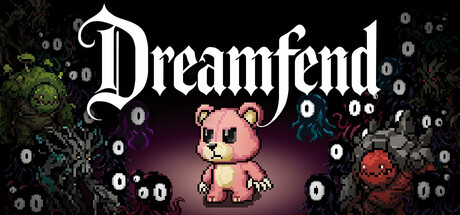
Some assets in Dreamfend were created using generative AI tools. This applies to the music and to some of the visual assets. All such content is reviewed and refined by hand to match the game's style and the author's intent. No content is generated during gameplay.
Artificial intelligence tools were utilized as a reference and assistive aid in the creation of certain art assets, audio elements, and localization translations for this game.
Generative AI was used to assist in creating some visual assets, including certain background images and the game start screen artwork. Other game content, including gameplay, programming, character design, and world-building, was created independently by the development team.
The 2D art in OBOLUS is made with image generation models running locally on my own machine — Stable Diffusion XL through ComfyUI, including a style model I trained myself on 1930s cartoon references. None of it is a raw output: every sprite, backdrop, card frame and icon was directed through many passes, then cut out, colour-corrected, upscaled and assembled frame by frame into animation sheets.
Everything else is not AI: the rules, every card and every number on it, the balance, the 22 heroes, the six lands, the writing and the interface. The sound effects are synthesised by code written for this game.
Nothing is generated while you play. The game makes no network calls and ships with no model — nothing runs on your machine, and none of your data goes anywhere.
Pre-generated only. Nothing is generated live while the game runs, and the game makes no network calls of any kind.
2D card illustrations were produced with an AI image tool from hand-written art-direction prompts, then cropped, recoloured and composited by hand into the game's painted card frames. A small number of 3D prop meshes were produced with an image-to-3D model (Microsoft TRELLIS, MIT licensed) and edited before use; most world geometry is built procedurally in code rather than generated. Ambient beds and music were produced with an AI music tool against a fixed written spec (key of D, 72 BPM, fades in from silence, no climax) and are mixed and crossfaded by the game's own audio code.
All code, game design, UI layout, in-game text and store text are human-authored. Some combat sound effects are CC0 samples from Freesound.
No player data is sent to any AI service.
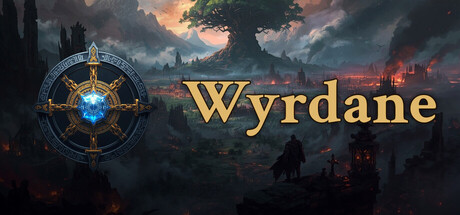
Wyrdane uses AI-generated artwork for its card illustrations. As a solo developer working without a starting budget, this is a pragmatic choice to bring the game's world to life and test its mechanics without a professional illustration budget. If the project finds its audience, the goal is to progressively replace these visuals with artwork made by human illustrators.
Game design, card balance, game mechanics, world-building, and creative direction are entirely human-made. AI is a production tool, not the creator of this game.
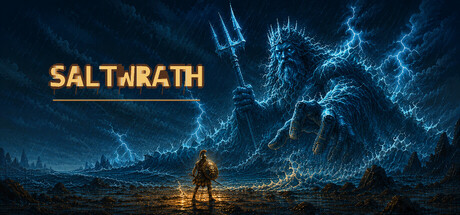
Some of SALTWRATH's audio and store artwork was created using generative AI tools and then edited by hand. The music and sound effects were generated with Suno, then trimmed, mixed and levelled manually before being used in the game. Some store page and capsule artwork was generated with an AI image tool and edited before use.
The game itself does not use generative AI while you play. Nothing is generated live during a run, no content changes between playthroughs because of AI, and no player input is ever sent to an AI service.
Generative AI tools were used in part during the development of this
game.
· Some character concept art and illustrations were produced using
generative AI tools. All such images were subsequently reviewed and
adjusted by our development team before being used in the game.
· The images shipped in the game are the result of that review and
adjustment process.
Game design, systems, programming, rules, and balancing were created
by our development team without generative AI.
Some of the visual material for this game was created with the help of generative AI tools. Specifically, the opening cinematic and several of the promotional images on this store page were produced using AI-assisted image generation, followed by manual editing, compositing and art direction by our team. All gameplay, code, design and audio were created without generative AI.
Generative AI tools were used only as an editing and proofreading aid for selected portions of the final game text. The original scenario, characters, direction, and final text review were created and handled by the developer.
Generative AI was only used to assist in creating some of the inventory icons and promotional artwork, as TEMPORARY PLACEHOLDERS.
The game's environments, gameplay systems, characters, mechanics, world design, and narrative were created by the developer. No AI content is generated during gameplay.
Some of this store page's assets were drafted with AI assistance for speed and only as placeholders.
All in-game content, models, animations, shaders, effects, and every system you play is hand built, licensed, or generated by procedural code written for this game; no AI image, voice, or video generation is used in SINISTERVEIN itself.
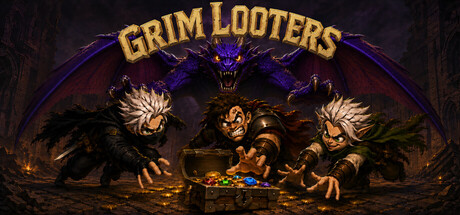
The visual assets in Grim Looters — character, monster, item and card artwork, plus the store and marketing images — were created with the assistance of generative AI image tools and then curated, edited, and assembled by the developer. Some background music was AI-assisted. All AI-generated content is reviewed by the developer to ensure it is appropriate and cleared for use. No AI content is generated live during gameplay.
Generative AI tools were used during development to create and refine the promotional capsule art, library graphics, and marketing assets for the store page. The game itself does not contain or generate any AI content during gameplay.
This game uses generative AI in a limited way. Some in-game and store-page text was drafted, edited, or partially translated with the help of an AI model, then reviewed, adapted, and finalized by the developer. None of the game's art, sprites, animation, music or sound is AI-generated.
We used Artificial Intelligence tools as an aid during development and in the creation of some game content. All AI-assisted material was personally reviewed and adjusted by our team, who were involved throughout every stage of the creative process.
Some 2D‑art assets in this game are created with the assistance of generative‑AI tools. These assets have been filtered, edited, composited and manually reviewed by the developer before being used in‑game. The game does not perform real‑time content generation based on player input during runtime, nor does it send any player input to generative‑AI services.
The text on this game's Steam store page was drafted with the help of generative AI and then edited by the developer. All in-game art, models, sounds and the game's logo are made by hand. No AI-generated content is produced while the game is running.
Galithia uses generative AI during development for some concepting, visual iteration, and content support. Any AI-assisted assets or materials are reviewed, modified, and integrated by the developer, with final approval and creative direction remaining fully human-led. Gameplay systems, combat balance, encounter design, and final implementation are developer-controlled.
Generative AI was used during development to assist with editing and reviewing some narrative text and with localization. AI-assisted text was reviewed and edited manually by the developer before being included in the game. No AI-generated content is created live during gameplay.
Artwork, music and parts of the text were created with AI tools and individually curated, refined and hand-fitted into the game by the developer. No AI content is generated at runtime.
Some of MORTAROT's visual assets were created with the assistance of generative AI image tools and then edited, composited, and refined by hand by the artist. Some interface text and the English localization were drafted with AI assistance and reviewed by the team. AI coding assistants were also used during development. All AI-generated content has been reviewed to ensure that it does not contain infringing or illegal material.
Soulforge uses generative AI for part of its asset production. All AI-assisted content is pre-generated, fixed in the shipped build, and reviewed by the developer before release — the game generates no content at runtime.
• 2D art: UI frames and chrome, spell and passive ability icons, class portraits, key art and store capsule art were produced using AI image generation from written style briefs, then selected, corrected, cropped, rescaled, composited and colour-graded by the developer before being imported into the game.
• 3D models and textures: a portion of environment and prop assets were produced with AI generation tools, then edited, retopologised and hand-adjusted before being used in the game.
• Localization: the game's 20 interface languages were produced with AI translation, each language then passed through a separate independent AI review pass and a mechanical validator. Native-speaker review is ongoing and corrections ship as they arrive.
Audio is procedurally synthesised with hand-written DSP code, not generated by an AI model.
We have reviewed the shipped assets and believe they contain no illegal or infringing content.
Some of the visual assets in Champions of Thaloria were created with the help
of generative AI tools during development. This includes parts of the store
page artwork and trailer, along with a portion of the in-game 2D art such as
item icons, avatar frames and class emblems.
Every AI-assisted asset was selected, edited and assembled by hand before it
went into the game, and all of it was reviewed by the developer.
The game does not generate anything while you play. No content is created at
runtime and no AI service is contacted during gameplay — everything ships
with the game.
Generative AI was used during development to assist in creating and refining some visual assets and development materials. All AI-assisted content included in the game and its marketing is reviewed, selected, and edited by the developer before publication. No AI-generated content is created during gameplay.
All voices are Ai generated along with the soundtracks. They are however created under strict instructions and hours of testing to get them right. Ai assisted in creating models/props.
This game utilizes adaptive AI technology during gameplay to power the police interrogator's responses. Player input is evaluated live to generate dynamic, context-aware dialogue and push the interrogation forward.
Generative AI tools were used during development to create and assist with many of the game's visual assets, including character artwork, card illustrations, backgrounds, and UI elements. These assets were generated during development and are included in the game as pre-generated, static content. The game does not use generative AI to create content during gameplay.
Some of Lanternfall's visual assets were produced with the help of AI tools. Concept art, 3D character and prop models, and character rigging and animation were generated with AI and then edited, corrected, lit, rendered and integrated by hand by the developer. Level backgrounds are hand-composed 3D scenes rendered offline. All shipped content is reviewed, adjusted and owned by EverLabs Software Ltd. No generative AI runs at runtime; nothing is generated live during play.
Development used generative tools to assist with pre-generated pixel-art characters, environments, UI, effects and reference images (PixelLab and OpenAI image generation); pre-generated sound effects and voices (ElevenLabs); pre-generated music (Stable Audio); and portions of game code, tests and documentation (OpenAI Codex, Claude Code). Outputs were selected, edited, integrated and tested by the developer. The shipped game does not generate AI content at runtime and does not send player prompts to an AI service.
Generative AI tools were used during development to assist with selected pre-generated visual assets, promotional and store-page materials, and localization/text. All AI-assisted content was reviewed, edited, curated, and approved by the developer before inclusion. No generative AI is used during gameplay, and the game does not connect to external AI services while running.
During development, Ember Kingdom used generative AI to assist in creating some pre-generated game art assets, including backgrounds, UI icons, character and monster images, visual effects, and branding artwork. All assets were manually reviewed, edited, and integrated before being added to the game, and are included with the game as fixed files.
The game does not connect to any generative AI services during gameplay, nor does it generate text, images, sound effects, characters, or other content in real time based on player input. All journeys, events, and combat outcomes in the game are determined by pre-designed data and game rules.
Background artwork and enemy character art in this game were created with the assistance of AI image-generation tools, then curated and refined by the developer. All AI-assisted content is pre-rendered during development — nothing is generated live during gameplay. Story, dialogue, and game design are entirely human-authored.
Generative AI has been used to assist in the creation of certain promotional artwork and visual assets. AI tools have also been used during development to assist with programming, documentation, and iteration. All generated content has been reviewed, integrated, and validated by the developer before being included in the final product.
Some assets in Dreamfend were created using generative AI tools. This applies to the music and to some of the visual assets. All such content is reviewed and refined by hand to match the game's style and the author's intent. No content is generated during gameplay.
Artificial intelligence tools were utilized as a reference and assistive aid in the creation of certain art assets, audio elements, and localization translations for this game.
Generative AI was used to assist in creating some visual assets, including certain background images and the game start screen artwork. Other game content, including gameplay, programming, character design, and world-building, was created independently by the development team.
The 2D art in OBOLUS is made with image generation models running locally on my own machine — Stable Diffusion XL through ComfyUI, including a style model I trained myself on 1930s cartoon references. None of it is a raw output: every sprite, backdrop, card frame and icon was directed through many passes, then cut out, colour-corrected, upscaled and assembled frame by frame into animation sheets.
Everything else is not AI: the rules, every card and every number on it, the balance, the 22 heroes, the six lands, the writing and the interface. The sound effects are synthesised by code written for this game.
Nothing is generated while you play. The game makes no network calls and ships with no model — nothing runs on your machine, and none of your data goes anywhere.
Pre-generated only. Nothing is generated live while the game runs, and the game makes no network calls of any kind.
2D card illustrations were produced with an AI image tool from hand-written art-direction prompts, then cropped, recoloured and composited by hand into the game's painted card frames. A small number of 3D prop meshes were produced with an image-to-3D model (Microsoft TRELLIS, MIT licensed) and edited before use; most world geometry is built procedurally in code rather than generated. Ambient beds and music were produced with an AI music tool against a fixed written spec (key of D, 72 BPM, fades in from silence, no climax) and are mixed and crossfaded by the game's own audio code.
All code, game design, UI layout, in-game text and store text are human-authored. Some combat sound effects are CC0 samples from Freesound.
No player data is sent to any AI service.
Wyrdane uses AI-generated artwork for its card illustrations. As a solo developer working without a starting budget, this is a pragmatic choice to bring the game's world to life and test its mechanics without a professional illustration budget. If the project finds its audience, the goal is to progressively replace these visuals with artwork made by human illustrators.
Game design, card balance, game mechanics, world-building, and creative direction are entirely human-made. AI is a production tool, not the creator of this game.
Some of SALTWRATH's audio and store artwork was created using generative AI tools and then edited by hand. The music and sound effects were generated with Suno, then trimmed, mixed and levelled manually before being used in the game. Some store page and capsule artwork was generated with an AI image tool and edited before use.
The game itself does not use generative AI while you play. Nothing is generated live during a run, no content changes between playthroughs because of AI, and no player input is ever sent to an AI service.
Generative AI tools were used in part during the development of this
game.
· Some character concept art and illustrations were produced using
generative AI tools. All such images were subsequently reviewed and
adjusted by our development team before being used in the game.
· The images shipped in the game are the result of that review and
adjustment process.
Game design, systems, programming, rules, and balancing were created
by our development team without generative AI.
Some of the visual material for this game was created with the help of generative AI tools. Specifically, the opening cinematic and several of the promotional images on this store page were produced using AI-assisted image generation, followed by manual editing, compositing and art direction by our team. All gameplay, code, design and audio were created without generative AI.
Generative AI tools were used only as an editing and proofreading aid for selected portions of the final game text. The original scenario, characters, direction, and final text review were created and handled by the developer.
Generative AI was only used to assist in creating some of the inventory icons and promotional artwork, as TEMPORARY PLACEHOLDERS.
The game's environments, gameplay systems, characters, mechanics, world design, and narrative were created by the developer. No AI content is generated during gameplay.
Some of this store page's assets were drafted with AI assistance for speed and only as placeholders.
All in-game content, models, animations, shaders, effects, and every system you play is hand built, licensed, or generated by procedural code written for this game; no AI image, voice, or video generation is used in SINISTERVEIN itself.
The visual assets in Grim Looters — character, monster, item and card artwork, plus the store and marketing images — were created with the assistance of generative AI image tools and then curated, edited, and assembled by the developer. Some background music was AI-assisted. All AI-generated content is reviewed by the developer to ensure it is appropriate and cleared for use. No AI content is generated live during gameplay.
Generative AI tools were used during development to create and refine the promotional capsule art, library graphics, and marketing assets for the store page. The game itself does not contain or generate any AI content during gameplay.
This game uses generative AI in a limited way. Some in-game and store-page text was drafted, edited, or partially translated with the help of an AI model, then reviewed, adapted, and finalized by the developer. None of the game's art, sprites, animation, music or sound is AI-generated.