Public Steam disclosure research25,376 disclosures tracked
Where do games disclose AI use?
Search developers’ Steam disclosures, compare classified AI use across
games, and follow recorded changes.
This index adds cross-game classifications and statistics to
statements published on individual store pages.
Groups reflect automatic analysis of public disclosures; mature records are excluded. These counts do not measure AI use across all of Steam.
Missing or unclear statements cannot establish whether a game uses AI.
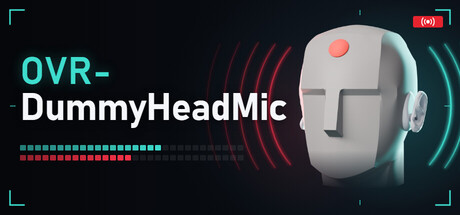
AI assistants were used to help write the application's code. The store images were created with the help of an AI assistant by rendering the actual dummy head 3D model in Blender. The app does not generate any content with AI while it runs.
Some store page artwork, the voices in the trailers and the sample phrases included with the app were created with the help of AI tools.
While you use the app, the text you type is converted into speech by AI speech synthesis: VOICEVOX and Kokoro running on your PC, Windows built-in voices, cloud services you choose to use with your own API key (Google Gemini TTS, ElevenLabs), or speech engines you install and run yourself (VOICEVOX-compatible engines, Irodori-TTS). The app never writes text on its own; it only reads aloud what you type.
SoundGoat includes an optional real-time AI voice changer and offline dictation. Both run entirely on your own PC. One community RVC voice model ("Egirl") is included. Parts of the code and texts were written with AI assistance
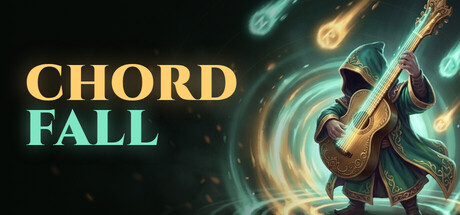
Parts of the game's code and in-game text were written with AI assistance and edited by hand. The store capsule art was generated with AI image tools from the game's own visual style and then edited. No AI-generated image or audio files ship inside the game itself: every graphic is drawn in code while it runs, and all music and sound are synthesised live.
This game includes assets created with generative AI during development (official music, song artwork, and drum animations). Nothing is generated while you play, and the game does not connect to an AI service at runtime. Players cannot send prompts to any AI.
Soundgun does not use AI while it runs, and it ships no AI-generated sounds. Some of its interface text, translations and store page text were drafted with the help of AI tools and reviewed by the developer.
This utility app uses artificial intelligence models to perform real-time speech-to-text transcription (ASR), live subtitle translation (MT), and local text-to-speech synthesis (TTS) based on the user's voice or PC audio stream.
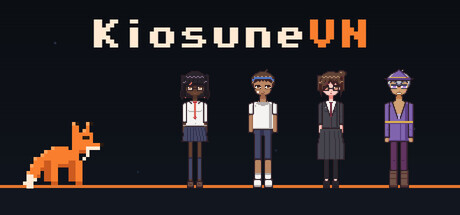
KiosuneVN ships no generative AI: nothing it draws, composes or exports comes out of an AI model, it makes no calls to any AI service, and nothing you make is collected or sent anywhere. The developer used an AI assistant (Claude) to help write parts of the application's code and this store page's text; every character, sprite, cue and starter script the tools produce comes from hand-built, deterministic engines.
Generative AI tools were used during development to assist with the creation of some pre-generated employee portrait images, written interface content, localization, and development assets.
All AI-assisted content was reviewed, selected, edited, and integrated by the developer. The employee portraits represent fictional individuals and are not intended to depict real people.
The game does not generate content using AI during gameplay and does not connect to any external generative AI service.
Generative AI tools were used during production of mascot artwork and animation, and non-English interface and store-page localization. These are pre-generated assets. The application does not use generative AI or connect to an AI service during use. Music is generated locally using deterministic composition rules.
The application itself does not use generative AI. Maps are produced by a deterministic, rule-based algorithm from signal analysis of the user's own audio file (tempo, beat grid, onsets, song structure); no machine-learning models are involved, and nothing is generated at runtime by AI.
Generative AI was used only for marketing: the animated scenes in the store trailer were produced with AI image and video tools from our own storyboard and prompts. Store screenshots are real captures of the application, and the capsule artwork was designed by hand.
RealSub uses AI technology as its core function: it runs speech-recognition and voice-activity-detection models (OpenAI Whisper via faster-whisper, and Silero VAD) locally on the user's own computer to turn audio the user is already playing into live subtitles. If the user enables translation, the recognized subtitle text is sent to the translation service the user selected (Microsoft Translator by default, or an OpenAI-compatible LLM endpoint, DeepL, or a translation server the user runs locally) and the returned translation is displayed. Audio is never uploaded.
The subtitles and translations produced this way are generated at runtime, from the user's own audio, and are shown only to that user on their own screen. RealSub does not generate art, music, voice-over, or narrative content, and it does not share generated text with other users or publish it anywhere.
None of the shipped content assets are generated by AI: interface text, icons, store artwork, screenshots and video are written, laid out or recorded by us. The store capsules are programmatic layouts, and the demo footage is real screen recording of licensed material.
Generative AI was used to assist with localization and some written text, and to create selected artwork for official Steam Workshop content, including the abstract fallback cover in PULSE INDEX. ECHO does not generate content with AI during use or connect to external AI services during use.
This application essentially installs and runs free, open-source artificial intelligence models on your computer. Its working principle is as follows: the model listens to the video you are watching 5-10 seconds beforehand, then generates real-time dubbed audio in your chosen language, and simultaneously produces subtitles in your selected language.
Generative AI tools were used to assist in creating some promotional artwork for the Steam store and library, and in drafting and translating portions of the store description. All outputs were reviewed and edited by the developer. The application does not generate AI content at runtime.
Epoch Studio is a private writing and worldbuilding studio. When you ask it to, it can generate text suggestions and illustrations to help you develop your own manuscript. All generation runs locally on your own machine using bundled, permissively-licensed AI models — or optional cloud providers you connect with your own API key. Nothing is generated on its own: every suggestion is a deliberate action you take, and you review, edit, and decide what becomes part of your book. Your writing never leaves your device and is never used to train any AI model.
The optional cursor-buddy 3D character included in this application was pre-generated with Meshy AI under a paid commercial license. No other shipped content is AI-generated, and this application does not generate AI content during use. Built-in tools such as automatic subtitles run local machine-learning models on this device to process the user's own media only.
Rippusion is a music generation tool: every track it produces is created by a generative AI model. The app bundles the Stable Audio 3 Small (Music) model from Stability AI, used under the Stability AI Community License, and runs it entirely on your own device. Generation happens offline on your GPU or CPU - no cloud service is involved, no account is required, and no data is sent anywhere. Music featured in our trailer was generated using Rippusion itself.
We used AI image-generation tools to help create some 2D art assets in the game, such as in-game banners, posters, and signage. All AI-assisted content was reviewed and edited by the developer.
All speech audio is generated at runtime by a local text-to-speech model (Kokoro) running on the player's PC. Memnon reads text that is already visible on the player's screen and speaks it aloud. It does not write stories, create images, or generate any other content. If the player connects their own cloud API key, those voices are synthesized by their chosen provider under their own account.
Some of the app's code was written with the assistance of AI coding tools. All artwork and store assets are human-made.
Generative AI tools assisted with some pre-generated player-facing text, localization, visual designs, and store and marketing content. All resulting material was reviewed and edited before inclusion. Random Mix does not use generative AI at runtime or connect to an AI service. Its music is generated locally through conventional procedural algorithms based on music-theory rules; no machine-learning model is involved.
AI tools were used to support portions of the development process. All product decisions, rigorous testing, review, and final releases remain under full human direction and oversight.
Part of the game's art illustrations and promotional materials are assisted by generative AI. All AI-generated assets have been manually reviewed, edited and verified for compliance, with no infringing or illegal content.
Store page capsule artwork was generated using AI tools. Application code was developed with AI assistance. All output was reviewed and tested by the developer.
HyperION DAW uses generative AI only for optional music and audio-production features. Depending on the installed local model and enabled feature, users may generate instrumental audio, sound effects, MIDI ideas, and related production material. Generated results remain editable inside the DAW and can be inserted into an arrangement, mixed, exported, or discarded.
The application does not generate visual, adult, hateful, violent, or explicit text content. Users are responsible for reviewing generated material and ensuring that their use complies with applicable laws, licenses, provider terms, and copyright requirements. HyperION does not guarantee that generated material is free from third-party claims.
Generative AI was used as part of the creation process for certain store artwork and promotional materials. All final assets were selected, edited, and reviewed by the developer. SlapBox itself does not generate AI content and does not connect to external AI services during use.
ChimpChat is an AI application. Its core feature uses a generative AI text-to-speech model, running entirely on your own device, to synthesize character voices from text you write. Generative AI was also used to produce this store page's assets, including the artwork and the trailer; the character voices in the trailer were generated with ChimpChat itself.
This software uses generative artificial intelligence to create custom voice output based on user‑provided text or prompts. The AI system analyzes the input and produces natural‑sounding speech in real time.
Art assets (pre-generated): In-game scene backgrounds, UI icons, and store page promotional images are generated using Doubao as initial drafts. After manual screening, modification, and style unification, they are packaged into the game. All AI-generated art assets have been reviewed manually one by one, confirming that they do not contain any violations such as violence or pornography, and no copyrighted third-party assets have been used as input for generation. The AI tools used all have commercial use licenses.
Code (pre-generated): Some game logic code is generated with AI assistance during the development stage. After manual review, testing, and modification, it is compiled and packaged. The game does not call AI to generate code in real-time during runtime.
During the game's runtime, there is no AI-generated content in real-time. All AI-generated content visible to players are pre-generated static resources.
During Early Access, generative AI will be used to translate human-written English text for the Steam store page and application into other languages, due to limited resources.
The English localization is not AI generated. No AI-generated artwork or audio is included, and no content is generated by AI at runtime.
Our goal is to replace all AI-generated translations with translations created and reviewed by professional human translators for the full release. This disclosure will remain while any AI-assisted translations are included.
NarrationOS uses generative AI to create its output. It synthesizes speech from your books using an AI voice model (Resemble AI's Chatterbox) and can generate a custom voice from a short recording you supply. A local AI language model assists with text analysis. All generation happens locally on your device. You are responsible for having the rights to any content or voice you use, and voice cloning requires your confirmation of consent.
This application uses AI-powered text-to-speech (Microsoft Edge-TTS) to read
aloud text files that you import yourself. An on-device language model (or an
optional API you configure) analyzes the imported text to identify speakers and
assign voices. The app does not generate any original story, art, or music
content — all audio is synthesized from text you provide.
P·A·L - Personal Artificial Lifeform is a generative AI software suite. P·A·L generates written word, spoken word, voice to text, generative images, generative music and sound, game code, and is capable of learning through user choices.
Always use AI responsibly.
GenderShift uses generative AI in two ways:
1. Live audio: AI converts your speech or text into the voice you select
2. Voice portraits and sample audio (in the app, trailer, and screenshots) were pre-created with generative AI. You can also generate these yourself in the app.
IKANDY includes an optional AI scene generator. When you choose to use it, it creates new audio-reactive visual scenes in real time from a text prompt you write. This content is generated live, only when you request it, using an AI service you connect with your own API key. Not required to use IKANDY. Some of IKANDY's artwork and promotional media (key art, trailer visuals and music, and some in-app imagery) was created with generative AI tools and is reviewed by the developer.
Pre-generated only. The application's theme selector icons, some of the audio visualizer icons, synthwave transition/effect tree graphics were created with generative-AI image tools (OpenAI) during development and ship as static images, in all cases hand-edited afterward. All other content (visualizers, characters, themes, audio handling, and code...) is hand-authored. No AI-generated content is produced at runtime.
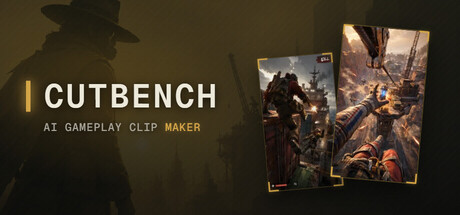
CutBench is a local video tool whose core feature runs bundled, pre-trained AI models entirely on-device: they analyze the user's own locally recorded gameplay footage (visual scene understanding, speech transcription, audio event detection) and generate short text for each clip - titles, captions, and hashtags. All processing happens locally on the user's GPU; no third-party AI service is contacted and no user content is uploaded. Some store page artwork (capsules, hero, and library images) was created with the assistance of generative AI image tools and was manually reviewed and edited; screenshots are real captures of the application.
dreamstrobe uses generative AI as a core live feature. When you chat with the visualizer, your prompt is sent to Anthropic's Claude model. Claude writes a Three.js scene — geometry, shaders, motion, post-processing, and audio-reactive behavior — in real time, and the running engine loads and renders it on the fly. Each scene you create is freshly, generated JavaScript that runs in a sandboxed browser context. Outputs are filtered by Anthropic's built-in safety systems to block illegal or harmful content. Generated code is executed locally; no model weights ship with the game. Some textures, environment maps, and sample assets used by the engine were also created or refined with generative AI tools during development, and were reviewed before inclusion. You can use dreamstrobe without writing prompts — a library of pre-authored scenes ships with the game and runs on its own.
Some 2D character art (cat portraits / cosmetics previews) and a subset of sound effects were created with AI-assisted tools. All final assets were curated, edited, and reviewed by the developer. The game does not run any generative AI at runtime — no user input is sent to AI services.
Elftia is an AI agent platform. Through an included service, it connects to leading third-party AI models - large language models and image, video, music and speech generators - to power its agents. Elftia does not bundle, train or fine-tune any model of its own; all content is generated in real time by those models in response to the user's input. New users receive free starter credits, and additional usage can be purchased through Steam. Conversations and generated content are saved to the user's local library on their device.
Pixel Q is a local AI assistant that utilizes large language models (LLMs) for real-time conversational AI. All AI models run locally on the user's device. Safety guardrails are enforced through restrictive prompt engineering, output filtering, and the inherent safety features of the underlying open-source models. The AI is designed to refuse requests for illegal, harmful, hateful, or sexually explicit content. No user data is sent to external servers.
AI assistants were used to help write the application's code. The store images were created with the help of an AI assistant by rendering the actual dummy head 3D model in Blender. The app does not generate any content with AI while it runs.
Some store page artwork, the voices in the trailers and the sample phrases included with the app were created with the help of AI tools.
While you use the app, the text you type is converted into speech by AI speech synthesis: VOICEVOX and Kokoro running on your PC, Windows built-in voices, cloud services you choose to use with your own API key (Google Gemini TTS, ElevenLabs), or speech engines you install and run yourself (VOICEVOX-compatible engines, Irodori-TTS). The app never writes text on its own; it only reads aloud what you type.
SoundGoat includes an optional real-time AI voice changer and offline dictation. Both run entirely on your own PC. One community RVC voice model ("Egirl") is included. Parts of the code and texts were written with AI assistance
Parts of the game's code and in-game text were written with AI assistance and edited by hand. The store capsule art was generated with AI image tools from the game's own visual style and then edited. No AI-generated image or audio files ship inside the game itself: every graphic is drawn in code while it runs, and all music and sound are synthesised live.
This game includes assets created with generative AI during development (official music, song artwork, and drum animations). Nothing is generated while you play, and the game does not connect to an AI service at runtime. Players cannot send prompts to any AI.
Soundgun does not use AI while it runs, and it ships no AI-generated sounds. Some of its interface text, translations and store page text were drafted with the help of AI tools and reviewed by the developer.
This utility app uses artificial intelligence models to perform real-time speech-to-text transcription (ASR), live subtitle translation (MT), and local text-to-speech synthesis (TTS) based on the user's voice or PC audio stream.
KiosuneVN ships no generative AI: nothing it draws, composes or exports comes out of an AI model, it makes no calls to any AI service, and nothing you make is collected or sent anywhere. The developer used an AI assistant (Claude) to help write parts of the application's code and this store page's text; every character, sprite, cue and starter script the tools produce comes from hand-built, deterministic engines.
Generative AI tools were used during development to assist with the creation of some pre-generated employee portrait images, written interface content, localization, and development assets.
All AI-assisted content was reviewed, selected, edited, and integrated by the developer. The employee portraits represent fictional individuals and are not intended to depict real people.
The game does not generate content using AI during gameplay and does not connect to any external generative AI service.
Generative AI tools were used during production of mascot artwork and animation, and non-English interface and store-page localization. These are pre-generated assets. The application does not use generative AI or connect to an AI service during use. Music is generated locally using deterministic composition rules.
The application itself does not use generative AI. Maps are produced by a deterministic, rule-based algorithm from signal analysis of the user's own audio file (tempo, beat grid, onsets, song structure); no machine-learning models are involved, and nothing is generated at runtime by AI.
Generative AI was used only for marketing: the animated scenes in the store trailer were produced with AI image and video tools from our own storyboard and prompts. Store screenshots are real captures of the application, and the capsule artwork was designed by hand.
RealSub uses AI technology as its core function: it runs speech-recognition and voice-activity-detection models (OpenAI Whisper via faster-whisper, and Silero VAD) locally on the user's own computer to turn audio the user is already playing into live subtitles. If the user enables translation, the recognized subtitle text is sent to the translation service the user selected (Microsoft Translator by default, or an OpenAI-compatible LLM endpoint, DeepL, or a translation server the user runs locally) and the returned translation is displayed. Audio is never uploaded.
The subtitles and translations produced this way are generated at runtime, from the user's own audio, and are shown only to that user on their own screen. RealSub does not generate art, music, voice-over, or narrative content, and it does not share generated text with other users or publish it anywhere.
None of the shipped content assets are generated by AI: interface text, icons, store artwork, screenshots and video are written, laid out or recorded by us. The store capsules are programmatic layouts, and the demo footage is real screen recording of licensed material.
Generative AI was used to assist with localization and some written text, and to create selected artwork for official Steam Workshop content, including the abstract fallback cover in PULSE INDEX. ECHO does not generate content with AI during use or connect to external AI services during use.
This application essentially installs and runs free, open-source artificial intelligence models on your computer. Its working principle is as follows: the model listens to the video you are watching 5-10 seconds beforehand, then generates real-time dubbed audio in your chosen language, and simultaneously produces subtitles in your selected language.
Generative AI tools were used to assist in creating some promotional artwork for the Steam store and library, and in drafting and translating portions of the store description. All outputs were reviewed and edited by the developer. The application does not generate AI content at runtime.
Epoch Studio is a private writing and worldbuilding studio. When you ask it to, it can generate text suggestions and illustrations to help you develop your own manuscript. All generation runs locally on your own machine using bundled, permissively-licensed AI models — or optional cloud providers you connect with your own API key. Nothing is generated on its own: every suggestion is a deliberate action you take, and you review, edit, and decide what becomes part of your book. Your writing never leaves your device and is never used to train any AI model.
The optional cursor-buddy 3D character included in this application was pre-generated with Meshy AI under a paid commercial license. No other shipped content is AI-generated, and this application does not generate AI content during use. Built-in tools such as automatic subtitles run local machine-learning models on this device to process the user's own media only.
Rippusion is a music generation tool: every track it produces is created by a generative AI model. The app bundles the Stable Audio 3 Small (Music) model from Stability AI, used under the Stability AI Community License, and runs it entirely on your own device. Generation happens offline on your GPU or CPU - no cloud service is involved, no account is required, and no data is sent anywhere. Music featured in our trailer was generated using Rippusion itself.
We used AI image-generation tools to help create some 2D art assets in the game, such as in-game banners, posters, and signage. All AI-assisted content was reviewed and edited by the developer.
All speech audio is generated at runtime by a local text-to-speech model (Kokoro) running on the player's PC. Memnon reads text that is already visible on the player's screen and speaks it aloud. It does not write stories, create images, or generate any other content. If the player connects their own cloud API key, those voices are synthesized by their chosen provider under their own account.
Some of the app's code was written with the assistance of AI coding tools. All artwork and store assets are human-made.
Generative AI tools assisted with some pre-generated player-facing text, localization, visual designs, and store and marketing content. All resulting material was reviewed and edited before inclusion. Random Mix does not use generative AI at runtime or connect to an AI service. Its music is generated locally through conventional procedural algorithms based on music-theory rules; no machine-learning model is involved.
AI tools were used to support portions of the development process. All product decisions, rigorous testing, review, and final releases remain under full human direction and oversight.
Part of the game's art illustrations and promotional materials are assisted by generative AI. All AI-generated assets have been manually reviewed, edited and verified for compliance, with no infringing or illegal content.
Store page capsule artwork was generated using AI tools. Application code was developed with AI assistance. All output was reviewed and tested by the developer.
HyperION DAW uses generative AI only for optional music and audio-production features. Depending on the installed local model and enabled feature, users may generate instrumental audio, sound effects, MIDI ideas, and related production material. Generated results remain editable inside the DAW and can be inserted into an arrangement, mixed, exported, or discarded.
The application does not generate visual, adult, hateful, violent, or explicit text content. Users are responsible for reviewing generated material and ensuring that their use complies with applicable laws, licenses, provider terms, and copyright requirements. HyperION does not guarantee that generated material is free from third-party claims.
Generative AI was used as part of the creation process for certain store artwork and promotional materials. All final assets were selected, edited, and reviewed by the developer. SlapBox itself does not generate AI content and does not connect to external AI services during use.
ChimpChat is an AI application. Its core feature uses a generative AI text-to-speech model, running entirely on your own device, to synthesize character voices from text you write. Generative AI was also used to produce this store page's assets, including the artwork and the trailer; the character voices in the trailer were generated with ChimpChat itself.
This software uses generative artificial intelligence to create custom voice output based on user‑provided text or prompts. The AI system analyzes the input and produces natural‑sounding speech in real time.
Art assets (pre-generated): In-game scene backgrounds, UI icons, and store page promotional images are generated using Doubao as initial drafts. After manual screening, modification, and style unification, they are packaged into the game. All AI-generated art assets have been reviewed manually one by one, confirming that they do not contain any violations such as violence or pornography, and no copyrighted third-party assets have been used as input for generation. The AI tools used all have commercial use licenses.
Code (pre-generated): Some game logic code is generated with AI assistance during the development stage. After manual review, testing, and modification, it is compiled and packaged. The game does not call AI to generate code in real-time during runtime.
During the game's runtime, there is no AI-generated content in real-time. All AI-generated content visible to players are pre-generated static resources.
During Early Access, generative AI will be used to translate human-written English text for the Steam store page and application into other languages, due to limited resources.
The English localization is not AI generated. No AI-generated artwork or audio is included, and no content is generated by AI at runtime.
Our goal is to replace all AI-generated translations with translations created and reviewed by professional human translators for the full release. This disclosure will remain while any AI-assisted translations are included.
NarrationOS uses generative AI to create its output. It synthesizes speech from your books using an AI voice model (Resemble AI's Chatterbox) and can generate a custom voice from a short recording you supply. A local AI language model assists with text analysis. All generation happens locally on your device. You are responsible for having the rights to any content or voice you use, and voice cloning requires your confirmation of consent.
This application uses AI-powered text-to-speech (Microsoft Edge-TTS) to read
aloud text files that you import yourself. An on-device language model (or an
optional API you configure) analyzes the imported text to identify speakers and
assign voices. The app does not generate any original story, art, or music
content — all audio is synthesized from text you provide.
P·A·L - Personal Artificial Lifeform is a generative AI software suite. P·A·L generates written word, spoken word, voice to text, generative images, generative music and sound, game code, and is capable of learning through user choices.
Always use AI responsibly.
GenderShift uses generative AI in two ways:
1. Live audio: AI converts your speech or text into the voice you select
2. Voice portraits and sample audio (in the app, trailer, and screenshots) were pre-created with generative AI. You can also generate these yourself in the app.
IKANDY includes an optional AI scene generator. When you choose to use it, it creates new audio-reactive visual scenes in real time from a text prompt you write. This content is generated live, only when you request it, using an AI service you connect with your own API key. Not required to use IKANDY. Some of IKANDY's artwork and promotional media (key art, trailer visuals and music, and some in-app imagery) was created with generative AI tools and is reviewed by the developer.
Pre-generated only. The application's theme selector icons, some of the audio visualizer icons, synthwave transition/effect tree graphics were created with generative-AI image tools (OpenAI) during development and ship as static images, in all cases hand-edited afterward. All other content (visualizers, characters, themes, audio handling, and code...) is hand-authored. No AI-generated content is produced at runtime.
CutBench is a local video tool whose core feature runs bundled, pre-trained AI models entirely on-device: they analyze the user's own locally recorded gameplay footage (visual scene understanding, speech transcription, audio event detection) and generate short text for each clip - titles, captions, and hashtags. All processing happens locally on the user's GPU; no third-party AI service is contacted and no user content is uploaded. Some store page artwork (capsules, hero, and library images) was created with the assistance of generative AI image tools and was manually reviewed and edited; screenshots are real captures of the application.
dreamstrobe uses generative AI as a core live feature. When you chat with the visualizer, your prompt is sent to Anthropic's Claude model. Claude writes a Three.js scene — geometry, shaders, motion, post-processing, and audio-reactive behavior — in real time, and the running engine loads and renders it on the fly. Each scene you create is freshly, generated JavaScript that runs in a sandboxed browser context. Outputs are filtered by Anthropic's built-in safety systems to block illegal or harmful content. Generated code is executed locally; no model weights ship with the game. Some textures, environment maps, and sample assets used by the engine were also created or refined with generative AI tools during development, and were reviewed before inclusion. You can use dreamstrobe without writing prompts — a library of pre-authored scenes ships with the game and runs on its own.
Some 2D character art (cat portraits / cosmetics previews) and a subset of sound effects were created with AI-assisted tools. All final assets were curated, edited, and reviewed by the developer. The game does not run any generative AI at runtime — no user input is sent to AI services.
Elftia is an AI agent platform. Through an included service, it connects to leading third-party AI models - large language models and image, video, music and speech generators - to power its agents. Elftia does not bundle, train or fine-tune any model of its own; all content is generated in real time by those models in response to the user's input. New users receive free starter credits, and additional usage can be purchased through Steam. Conversations and generated content are saved to the user's local library on their device.
Pixel Q is a local AI assistant that utilizes large language models (LLMs) for real-time conversational AI. All AI models run locally on the user's device. Safety guardrails are enforced through restrictive prompt engineering, output filtering, and the inherent safety features of the underlying open-source models. The AI is designed to refuse requests for illegal, harmful, hateful, or sexually explicit content. No user data is sent to external servers.