Public Steam disclosure research25,383 disclosures tracked
Where do games disclose AI use?
Search developers’ Steam disclosures, compare classified AI use across
games, and follow recorded changes.
This index adds cross-game classifications and statistics to
statements published on individual store pages.
Groups reflect automatic analysis of public disclosures; mature records are excluded. These counts do not measure AI use across all of Steam.
Missing or unclear statements cannot establish whether a game uses AI.
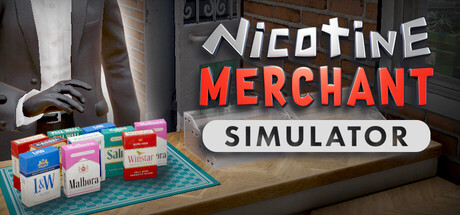
AI tools were used to create certain loading screen images, background music and music for the game trailer. All of these Assets were reviewed and modified as necessary to ensure they comply with copyright and content guidelines.
Narrative dialogue and story text were generated with AI assistance. Placeholder textures generated with AI appear in store page screenshots and marketing assets.
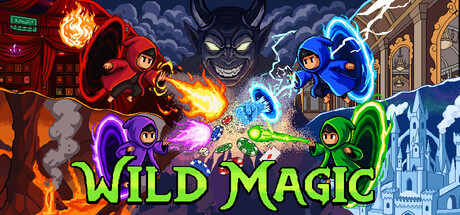
Parts of this game's assets were produced with the help of generative AI tools, then reviewed and edited by the developer before being included.
This applies to:
- Character and background artwork, UI art, and store/marketing images
- Portions of the dialogue text
- Translation into English, Simplified Chinese, Traditional Chinese, Korean, and Spanish
The game does not generate any content while you play, and it never connects to an external AI service. Everything you see and hear ships with the build.
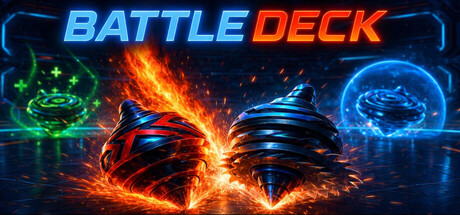
BattleDeck uses AI tools in the following areas:
Artwork, audio and as a development assistant during coding. All AI generated content has been reviewed and refined by the developer.
I am a solo developer with a very limited budget. The announcer voice lines are AI generated. I plan on replacing it completely with a human voice actor when I have the budget to do so.
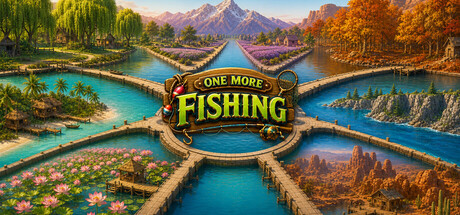
One More Fishing contains selected pre-generated content created or refined with generative AI tools during development. This includes selected in-game artwork and UI assets, selected Steam store and marketing artwork, audio assets such as music, ambience, sound effects and selected character voice lines, plus assistance with narrative and quest drafting and localization. All shipped content is selected, edited and integrated before release.
The game does not use live-generated AI. It does not contact generative AI services while running and does not send player prompts or player data to such services. At runtime it only loads, selects, animates, processes and mixes fixed content prepared before shipping.
I mostly use AI for debugging and I make it document my code for me. I've been using it for placeholder art but intend on replacing all, or at least most of them by release. I use it like a tool I can turn to for general tasks rather then a crutch that does everything.
AI was occasionally used to assist in the creation of certain textures. However, these instances are light-hearted and do not impact the creative vision of Static Field Interactive.
GRIDFALL was developed with extensive AI assistance (Anthropic's Claude): the game's code — including the procedural generators that produce all in-game art (pre-baked at build time) and synthesize all audio and music at runtime — was written with AI pair-programming under human direction and review. The game contains no pre-rendered AI-generated images or audio files; all art and audio assets are produced by deterministic code, and the sole third-party asset is the SIL-licensed Noto Sans UI font. Story, dialogue, and text were authored with AI assistance under human editorial control.
Elemancer is a solo-developed game. Every system, all gameplay code, the balance, and all writing are human-made and hand-tuned. The 2D art and audio were created with AI tools, then hand-curated, edited, and quality-checked asset by asset before shipping.
The following content in Nova Warp was created with the help of generative AI tools during development (pre-generated):• Music - created with Suno• Sound effects - created with ElevenLabs• Visual assets (in-game and store/marketing images) – created with FLUX.2 [klein] (Black Forest Labs)All AI-generated assets were reviewed by the developer. Nova Warp does not use any live or real-time AI generation during gameplay.
Generative AI was used during pre-production to create early concept sketches, used purely as visual inspiration and reference. None of these initial AI-generated images appear in the final game, all art assets were subsequently created and replaced by the development team. Generative AI tools were also used to assist with writing portions of the game's code and with translating the game's text into other languages. In all cases, all output was reviewed, tested, and approved by human developers before being used in the final product.
Some of the content in Broken Pixel was created using generative AI. All of it was produced during development, reviewed by us, and shipped as fixed, pre-generated assets — no AI runs while you play.
- Story narration: the roughly ten hours of spoken narration were generated with an AI text-to-speech model (ElevenLabs). The scripts were written with AI assistance and edited by hand.
- Player avatars: the 3D character avatars were generated with an AI image-to-3D tool (Meshy).
- Store & marketing art: the capsule and marketing images were generated with an AI image model (Runware / fal.ai).
- Soundtrack: the lounge soundtrack was generated with an AI music model (Mureka).
The gameplay itself contains no AI-generated content — every room, screen, painting and level layout is built by traditional procedural code. Nothing is generated live, and the game never connects to an AI service while you play.
Generative AI tools were used during development to assist with programming tasks and to generate some reference assets and 3D models. All AI-generated content was reviewed, modified, and integrated by the developers.
This game uses a bundled on-device AI model to estimate body-shape parameters from a player-selected full-body photo and apply them to a predefined 3D character mesh. The photo is processed locally and is not sent to an external AI service. Photo-based appearance projection is handled separately as user-provided character customization and is not open-ended AI image generation.
GloomDelve's visuals, audio, and dungeons are generated procedurally by hand-written code; calculated geometry, synthesized sound, and deterministic seed-based level generation, not by generative AI. Generative AI tools were used during development to assist with translating the interface into non-English languages. The game generates no content at runtime and connects to no AI service while you play. Every run is produced by the same deterministic procedural systems.
Artificial intelligence tools were used throughout development, assisting with the game’s programming as well as the creation of capsule artwork and other minor graphical assets.
Some desk doodle or promotional art assets may have been created with AI-assisted tools and edited by the developer before being included in the game. No real-time generative AI is used during gameplay.
Some of this game's assets were made with the assistance of generative AI tools and were reviewed, curated and hand-finished by the developer. No content is generated while you play.
The game includes licensed background music from Pixabay. Some of the music tracks used in the game are labeled by their creators as AI-generated. No AI-generated gameplay, artwork, or code is used.
Claude was used as a coding assistant throughout the creation process. All artwork/sound/music/gameplay/creative stuff was designed by humans as should be.
Some music tracks and visual art assets in this game were created with the help of generative AI tools. All such assets were curated, edited, and approved by the development team before being included in the build, and all required commercial-use rights have been secured.
All AI-generated content is pre-rendered and shipped with the game — no live AI generation occurs during gameplay, and the game does not connect to any external AI service at runtime.
Generative AI tools (img2img / AI styling) were used to enhance and stylize original, hand-created base artwork and concept sketches into finalized high-fidelity assets.
Generative AI was used during development to assist in creating selected pre-rendered visual assets, including character and boss artwork. These assets were reviewed, edited, animated, and integrated by the developer. Star Claw does not generate content using AI while the game is running.
Some of Pick Playground's development was assisted by generative AI tools, including parts of the code and some of the art. Everything in the game was reviewed and finalized by the developer.
Portions of the game's written content (interface text, in-game help, Russian/English localization) and store page texts were created with the assistance of AI tools, directed, reviewed and edited by the developer. All graphics are hand-coded procedural visuals and all audio is procedurally synthesized in code — no AI-generated images or audio are included.
Machine translation has been used for language localization.
Some background elements, such as grass and trees, were created using AI-generated images and then manually edited and refined.
Generative AI was used during the early development phase to create placeholders, concept art base layers, and certain visual assets/sprites. As a solo developer working alongside a demanding full-time job, this technology served as a vital tool to help bring the project's vision to life within limited hours. All AI-generated art has been manually edited, stylized, and integrated by the developer to fit the game's pixel art aesthetic.
Note on Future Development: The developer is fully committed to replacing 100% of the AI-generated visual content with handcrafted, original artwork by the time of the full 1.0 release.
Pre-generated generative AI was used to create selected Steam store-page and library marketing images based on original in-game screenshots, character designs and branding supplied by the developers.
Some of the game's visual assets — both 2D and 3D — are built from AI-generated drafts that our artists rework and refine by hand into their final form. Localization was drafted with AI tools and edited by the team. The final look, content, and quality of every element of the game are defined and approved by humans.
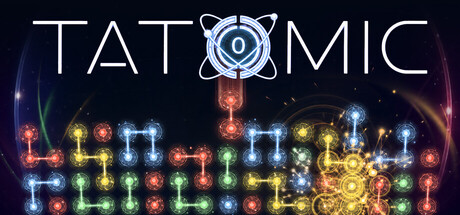
Tatomic was originally created in 2008 for the first-generation iPhone, with artwork designed for its 480 × 320 display.
Generative AI was used only to upscale and recreate the original artwork at higher resolutions while preserving the game’s original visual style. No generative AI was used to create the game’s design, gameplay, sound effects, music, or original art direction.
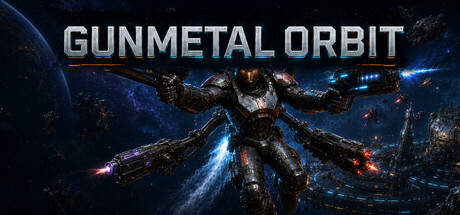
Some of Gunmetal Orbit's art and audio assets - including concept art used to build 3D models, UI icons, sound effects, and the store page key art - were created during development with the help of generative AI tools, then curated, edited, and integrated by the developers. All gameplay code and game design are human-made, and the game does not generate any AI content while you play.
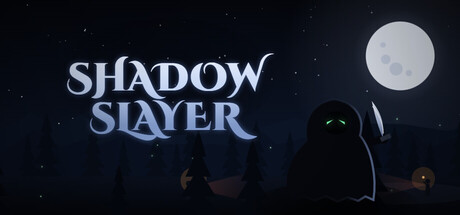
Shadow Slayer is built almost entirely in code. The character and enemy art is
drawn procedurally as vector graphics, and the sound effects and adaptive music
layers are synthesized in real time in the browser - none of that is AI-generated.
Generative AI tools were used to help create some of the content that ships with
the game:
- Music: several of the recorded background-music tracks were produced with the
help of generative AI music tools.
- Localization: the non-English translations were produced with AI-assisted
translation and reviewed by the developer.
- Store page & marketing images: some capsule/promotional artwork was created
with generative AI image tools.
All AI-assisted content was selected, edited, and integrated by a human
developer. No AI content is generated live while you play - everything ships
pre-made and reviewed.
AI tools were used to create certain loading screen images, background music and music for the game trailer. All of these Assets were reviewed and modified as necessary to ensure they comply with copyright and content guidelines.
Narrative dialogue and story text were generated with AI assistance. Placeholder textures generated with AI appear in store page screenshots and marketing assets.
Parts of this game's assets were produced with the help of generative AI tools, then reviewed and edited by the developer before being included.
This applies to:
- Character and background artwork, UI art, and store/marketing images
- Portions of the dialogue text
- Translation into English, Simplified Chinese, Traditional Chinese, Korean, and Spanish
The game does not generate any content while you play, and it never connects to an external AI service. Everything you see and hear ships with the build.
BattleDeck uses AI tools in the following areas:
Artwork, audio and as a development assistant during coding. All AI generated content has been reviewed and refined by the developer.
I am a solo developer with a very limited budget. The announcer voice lines are AI generated. I plan on replacing it completely with a human voice actor when I have the budget to do so.
One More Fishing contains selected pre-generated content created or refined with generative AI tools during development. This includes selected in-game artwork and UI assets, selected Steam store and marketing artwork, audio assets such as music, ambience, sound effects and selected character voice lines, plus assistance with narrative and quest drafting and localization. All shipped content is selected, edited and integrated before release.
The game does not use live-generated AI. It does not contact generative AI services while running and does not send player prompts or player data to such services. At runtime it only loads, selects, animates, processes and mixes fixed content prepared before shipping.
I mostly use AI for debugging and I make it document my code for me. I've been using it for placeholder art but intend on replacing all, or at least most of them by release. I use it like a tool I can turn to for general tasks rather then a crutch that does everything.
AI was occasionally used to assist in the creation of certain textures. However, these instances are light-hearted and do not impact the creative vision of Static Field Interactive.
GRIDFALL was developed with extensive AI assistance (Anthropic's Claude): the game's code — including the procedural generators that produce all in-game art (pre-baked at build time) and synthesize all audio and music at runtime — was written with AI pair-programming under human direction and review. The game contains no pre-rendered AI-generated images or audio files; all art and audio assets are produced by deterministic code, and the sole third-party asset is the SIL-licensed Noto Sans UI font. Story, dialogue, and text were authored with AI assistance under human editorial control.
Elemancer is a solo-developed game. Every system, all gameplay code, the balance, and all writing are human-made and hand-tuned. The 2D art and audio were created with AI tools, then hand-curated, edited, and quality-checked asset by asset before shipping.
The following content in Nova Warp was created with the help of generative AI tools during development (pre-generated):• Music - created with Suno• Sound effects - created with ElevenLabs• Visual assets (in-game and store/marketing images) – created with FLUX.2 [klein] (Black Forest Labs)All AI-generated assets were reviewed by the developer. Nova Warp does not use any live or real-time AI generation during gameplay.
Generative AI was used during pre-production to create early concept sketches, used purely as visual inspiration and reference. None of these initial AI-generated images appear in the final game, all art assets were subsequently created and replaced by the development team. Generative AI tools were also used to assist with writing portions of the game's code and with translating the game's text into other languages. In all cases, all output was reviewed, tested, and approved by human developers before being used in the final product.
Some of the content in Broken Pixel was created using generative AI. All of it was produced during development, reviewed by us, and shipped as fixed, pre-generated assets — no AI runs while you play.
- Story narration: the roughly ten hours of spoken narration were generated with an AI text-to-speech model (ElevenLabs). The scripts were written with AI assistance and edited by hand.
- Player avatars: the 3D character avatars were generated with an AI image-to-3D tool (Meshy).
- Store & marketing art: the capsule and marketing images were generated with an AI image model (Runware / fal.ai).
- Soundtrack: the lounge soundtrack was generated with an AI music model (Mureka).
The gameplay itself contains no AI-generated content — every room, screen, painting and level layout is built by traditional procedural code. Nothing is generated live, and the game never connects to an AI service while you play.
Generative AI tools were used during development to assist with programming tasks and to generate some reference assets and 3D models. All AI-generated content was reviewed, modified, and integrated by the developers.
This game uses a bundled on-device AI model to estimate body-shape parameters from a player-selected full-body photo and apply them to a predefined 3D character mesh. The photo is processed locally and is not sent to an external AI service. Photo-based appearance projection is handled separately as user-provided character customization and is not open-ended AI image generation.
GloomDelve's visuals, audio, and dungeons are generated procedurally by hand-written code; calculated geometry, synthesized sound, and deterministic seed-based level generation, not by generative AI. Generative AI tools were used during development to assist with translating the interface into non-English languages. The game generates no content at runtime and connects to no AI service while you play. Every run is produced by the same deterministic procedural systems.
Artificial intelligence tools were used throughout development, assisting with the game’s programming as well as the creation of capsule artwork and other minor graphical assets.
Some desk doodle or promotional art assets may have been created with AI-assisted tools and edited by the developer before being included in the game. No real-time generative AI is used during gameplay.
Some of this game's assets were made with the assistance of generative AI tools and were reviewed, curated and hand-finished by the developer. No content is generated while you play.
The game includes licensed background music from Pixabay. Some of the music tracks used in the game are labeled by their creators as AI-generated. No AI-generated gameplay, artwork, or code is used.
Claude was used as a coding assistant throughout the creation process. All artwork/sound/music/gameplay/creative stuff was designed by humans as should be.
Some music tracks and visual art assets in this game were created with the help of generative AI tools. All such assets were curated, edited, and approved by the development team before being included in the build, and all required commercial-use rights have been secured.
All AI-generated content is pre-rendered and shipped with the game — no live AI generation occurs during gameplay, and the game does not connect to any external AI service at runtime.
Generative AI tools (img2img / AI styling) were used to enhance and stylize original, hand-created base artwork and concept sketches into finalized high-fidelity assets.
Generative AI was used during development to assist in creating selected pre-rendered visual assets, including character and boss artwork. These assets were reviewed, edited, animated, and integrated by the developer. Star Claw does not generate content using AI while the game is running.
Some of Pick Playground's development was assisted by generative AI tools, including parts of the code and some of the art. Everything in the game was reviewed and finalized by the developer.
Portions of the game's written content (interface text, in-game help, Russian/English localization) and store page texts were created with the assistance of AI tools, directed, reviewed and edited by the developer. All graphics are hand-coded procedural visuals and all audio is procedurally synthesized in code — no AI-generated images or audio are included.
Machine translation has been used for language localization.
Some background elements, such as grass and trees, were created using AI-generated images and then manually edited and refined.
Generative AI was used during the early development phase to create placeholders, concept art base layers, and certain visual assets/sprites. As a solo developer working alongside a demanding full-time job, this technology served as a vital tool to help bring the project's vision to life within limited hours. All AI-generated art has been manually edited, stylized, and integrated by the developer to fit the game's pixel art aesthetic.
Note on Future Development: The developer is fully committed to replacing 100% of the AI-generated visual content with handcrafted, original artwork by the time of the full 1.0 release.
Pre-generated generative AI was used to create selected Steam store-page and library marketing images based on original in-game screenshots, character designs and branding supplied by the developers.
Some of the game's visual assets — both 2D and 3D — are built from AI-generated drafts that our artists rework and refine by hand into their final form. Localization was drafted with AI tools and edited by the team. The final look, content, and quality of every element of the game are defined and approved by humans.
Tatomic was originally created in 2008 for the first-generation iPhone, with artwork designed for its 480 × 320 display.
Generative AI was used only to upscale and recreate the original artwork at higher resolutions while preserving the game’s original visual style. No generative AI was used to create the game’s design, gameplay, sound effects, music, or original art direction.
Some of Gunmetal Orbit's art and audio assets - including concept art used to build 3D models, UI icons, sound effects, and the store page key art - were created during development with the help of generative AI tools, then curated, edited, and integrated by the developers. All gameplay code and game design are human-made, and the game does not generate any AI content while you play.
Shadow Slayer is built almost entirely in code. The character and enemy art is
drawn procedurally as vector graphics, and the sound effects and adaptive music
layers are synthesized in real time in the browser - none of that is AI-generated.
Generative AI tools were used to help create some of the content that ships with
the game:
- Music: several of the recorded background-music tracks were produced with the
help of generative AI music tools.
- Localization: the non-English translations were produced with AI-assisted
translation and reviewed by the developer.
- Store page & marketing images: some capsule/promotional artwork was created
with generative AI image tools.
All AI-assisted content was selected, edited, and integrated by a human
developer. No AI content is generated live while you play - everything ships
pre-made and reviewed.