Public Steam disclosure research25,996 disclosures tracked
Where do games disclose AI use?
Search developers’ Steam disclosures, compare classified AI use across
games, and follow recorded changes.
This index adds cross-game classifications and statistics to
statements published on individual store pages.
Groups reflect automatic analysis of public disclosures; mature records are excluded. These counts do not measure AI use across all of Steam.
Missing or unclear statements cannot establish whether a game uses AI.
This game uses generative AI-assisted tools for some pre-generated art and audio assets, including portions of Steam store artwork, character and background assets, the application icon, and some BGM / SFX. All assets are selected, edited, integrated, and tested by the developer. The game does not include live-generated AI content during gameplay, and players will not encounter dynamically generated AI text, images, audio, or other content.
This game utilizes generative AI technology to assist in the batch processing and optimization of certain art assets, including but not limited to: style unification of character sprites, detail enhancement of background elements, and rapid generation of some UI icons. All AI-generated content has been manually reviewed, adjusted, and integrated by the developers to ensure consistency with the game's overall art direction. The core gameplay design, system architecture, balance tuning, and all other critical elements were completed independently by the developers.
Some visual and audio assets in this game were created with the assistance of generative AI tools
and then reviewed, edited, and curated by the developer. The game does not use live generative AI
during gameplay and does not generate content from player input.
Wealth of Nations: Economic Strategy uses AI-assisted visual production for some store, capsule, and in-game artwork, including promotional key art and selected interface illustrations. These assets are curated, edited, and integrated by the developer to match the game’s political-economic strategy style.
During gameplay, the game can generate short newspaper-style articles, cabinet briefings, and political dilemmas based on the current simulation state, including economic indicators, policy choices, world conditions, and regional tensions. Gameplay text generation runs locally on the player’s machine. No gameplay data, prompts, or player data are sent to external AI providers.
SonderSoft uses generative AI for localization to make games accessible to more players worldwide.
This free game with no monetization uses generated music that can be disabled in the settings. Whenever possible, SonderSoft prioritizes paying artists, creators, and actors.
AI tools helped making some textures and part of the translations. The game itself runs no AI: nothing is generated while you play, and it never connects to an online service.
Generative AI is used during development to assist with some character portraits, 3D environment assets, UI elements, narrative polish, and initial localization drafts.
AI-assisted visual content is based on concepts and art direction created by our team and is reviewed, edited, and refined before use. Localization will be reviewed and finalized by a professional localization provider.
Generative AI tools (including Tripo3D and Meshy) were used during development to generate base 3D models for characters and environment assets, which were then manually adjusted and refined. AI tools were also used to create ambient background textures for marketing materials and Steam capsule illustrations. No live-generated AI content is used during runtime.
Network Engineer leverages generative artificial intelligence to enhance gameplay immersion and realism. AI-driven systems dynamically simulate customer behavior, hardware issues, and environmental challenges, creating unique scenarios and ensuring no two playthroughs are alike. Your feedback will help refine these systems!
Some assets within the game are generated with the help of AI, this includes but is not limited to:
- Contracts (Company Names, Locations etc.)
- Hardware Names (For the networking device)
- Company Logos
AI was used to assist/create with some 2D artwork in the game, some 3D models have been created with Meshy AI 3D model generator, as well as some promotional and store page images. No AI was used to generate gameplay, code, animations, or core game content. All gameplay systems and in‑game mechanics are manually created.
Hire uses AI for its live character conversations and generated portraits, connecting to your own ChatGPT account (it uses your existing ChatGPT plan, with no separate purchase).
Generative AI was used to create some in-game radio audio, including text-to-speech announcements and background music tracks generated using AI tools.
AI-enabled software were used for some artwork, using hand drawn assets and enhancing it with the use of image-editing software to ensure consistent theme and styling. The game allows you to disable AI-enhanced artwork if that is your preference.
Code development is supported with the use of AI coding assistants to refactor and integrate code written by the developer to speed up delivery.
No content is generated in real time during gameplay.
Some of this game's in-game text, including character dialogue and narrative/flavor writing was created with the help of generative AI tools during development, then reviewed and edited by the developer before release. The game's visual art is generated procedurally (algorithmically, not by AI). BrainRot Defender does not generate any content using AI in real time during gameplay, and does not connect to any external AI services.
The game includes generative AI in the form of relatively structured conversation (voice and/or text to prompt) in context with the setting and era of the documented sites (caravanserai) you will visit.
During the development process, generative AI was utilized to assist in drafting and refining select in-game text, as well as to facilitate the multilingual localization of the store page copy. Furthermore, generative AI tools were employed to aid in concept design during the creation of the game's store page key art, various marketing materials, and community assets.
AI tools were used to generate some of the bulk flavor text/copy (which were human-reviewed/modified/tested).
All other assets (music, sound effects, artwork, sprites, core game text, etc) were created by humans.
Generative AI tools were used to create some assets
in this game, including capsule art, promotional
images, background music, and select NPC voice lines.
All AI-generated content is pre-rendered and included
as static game assets. No AI content is generated in
real time during gameplay, and the game does not
connect to external AI services while playing.
This game uses AI tools in the following ways:
Music: Composed using Suno.
Code: Written and debugged with AI assistance.
Art: Created with AI assistance.
All AI-assisted content was reviewed, edited, and finalized by the developer.
Artificial intelligence was used solely for text localization and language translations. The pixel art visuals, animations, and the original game soundtrack were created by the professional artists and composer listed in the game's 'Credits' section. Generative AI was not used at any stage of the artistic, visual, or audio production.
All 3D assets are from Synty Studios. Due to budget constraints (rideshare driver) I used generative AI for some pre-rendered artwork, store/marketing imagery, and voiceover content (I intend to replace all that by human-made content over time). The game does not use live generative AI during gameplay.
Pirate Twist uses generative AI for some art, music, and sound effects. Every asset included in the final game was personally selected, refined, placed, and directed by me to match the game’s overall vision.
No AI runs during gameplay.
Fully commissioned art and audio is gradually being replaced already.
We utilized generative AI tools to assist in creating certain visual assets, UI elements, and background music (BGM) during the development process.
Additionally, AI was used to optimize coding efficiency and assist with text localization to improve the quality of the English translation.
All AI-assisted contents and scripts have been thoroughly reviewed, verified, and refined manually by the developer to ensure quality.
Generative AI tools were used during parts of the asset prototyping and ideation process. All final game assets were significantly modified, refined, and curated by the development team before inclusion in the game.
We want to be fully transparent with our community about how we develop our game. In this project, we have integrated Artificial Intelligence (AI) tools as an operational support for our team.
How we use it:
- Process optimization: It helps us streamline technical tasks and repetitive workflows.
- Efficiency: It allows us to deliver better work and move forward much faster.
- Resource maximization: It enables the team to save time on mechanical processes to focus on the final game polish.
Our commitment to craftsmanship:
- Total human control: No element of the final game has been left solely to AI.
- Expert review: Every technical asset or piece of content goes through a rigorous human editing filter.
- Manual work behind everything: Technology only optimizes our delivery times, but there is always genuine craftsmanship behind every asset.
- Guaranteed quality: We use AI to empower our team's capabilities, ensuring the essence and final finish of the game remain 100% human.
Thank you for your constant support!
Generative AI was used as part of the art production process for selected store page visuals, story illustrations, and some card artwork. All AI-assisted assets were reviewed and refined before being included in the game.
Some visual assets used in the game were created with the help of generative AI. This includes certain service icons, such as Express Delivery, some NPC purchase icons, such as Cook and Burger Maker, and some burger ingredient images. These AI-generated visuals are used as in-game UI/store assets and item icons.
Generative AI was used as a development assistant for pre-release asset iteration, writing support, localization drafts, ideation and productivity tasks. Some visual assets and draft text/assets may have been assisted or iterated with generative AI before being reviewed and integrated into the game. This content is static and does not generate new content at runtime. The game does not use live generative AI to create content during gameplay. No player prompts are sent to an AI service at runtime. AI-assisted material is reviewed manually before inclusion. It is adjusted to match the game's style, naming, tone and technical requirements, and content that would be inappropriate, infringing or inconsistent with the project is not intentionally included.
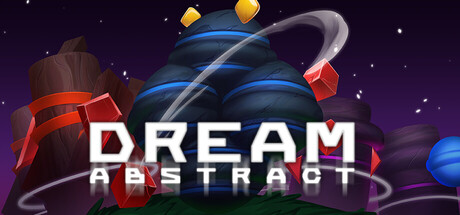
Generative AI was not used to create artwork, audio, narrative content, or marketing assets for Dream Abstract. Generative AI tools were used during development to assist with coding and debugging.
Various AI tools were utilized during the development of this game to increase efficiency. Character portraits and certain visual assets were pre-generated using AI, and then manually edited by the developer to fit the game's style. AI tools were also used in the creation of the game's music, sound effects, and localization (translation) processes. Additionally, AI was used as a coding assistant during the programming phase. All of this content was pre-generated during development; the game does not generate real-time AI content during gameplay, nor does it connect to any external AI services.