Public Steam disclosure research27,964 disclosures tracked
Where do games disclose AI use?
Search developers’ Steam disclosures, compare classified AI use across
games, and follow recorded changes.
This index adds cross-game classifications and statistics to
statements published on individual store pages.
Groups reflect automatic analysis of public disclosures; mature records are excluded. These counts do not measure AI use across all of Steam.
Missing or unclear statements cannot establish whether a game uses AI.
Some cosmetic assets and sticker designs used in the game were created or assisted with the help of generative AI tools. All AI-generated content was reviewed and modified before being included in the final product.
Some music tracks in IconicQuest are generated using AI based on the developer's creative direction and prompts, then curated and edited for in-game use. Some sound effects are generated using AI.
Promotional artwork on the Steam store page (capsule images) was generated with AI image tools as a creative starting point, then edited, composited with hand-crafted typography, and color-corrected by the developer in post-production.
All in-game artwork, character sprites, tiles, environments, UI
elements, and animations, is created entirely by the developer in Aseprite or sourced from art professionals. No AI is used for in-game pixel art.
All in-game text content (quest dialogue, item names, NPC scripts, lore, and tutorials) is written by the developer and AI.
No live AI generation occurs during gameplay. All AI-assisted content is finalized and shipped as static assets.
- Two in-game images have been upscaled/enhanced using generative AI: the NeuroLink portrait and one UI border asset.
- Achievement icon art is AI assisted.
While we prefer to avoid the use of generative AI, its limited use helped improve presentation given the constraints of our team.
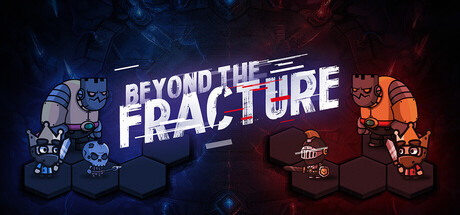
Beyond the Fracture contains both pre-generated and live-generated AI content.
Pre-generated AI content:
Some visual, audio, and voice assets were generated with AI tools during development and reviewed, edited, and curated by the developers before being included in the game. This includes selected construct opponent portraits, spoken name clips, character histories, and HERALD-7 commentary voice clips in German and English.
Live-generated AI content:
During first-time onboarding, the game uses external AI services to generate three candidate player identities live. Each identity includes a generated profile portrait and a generated spoken name introduction. The profile portraits are additionally guided by internal short character descriptions generated from predefined archetypes and prompt templates.
This live generation is constrained by predefined prompts, fixed character archetypes, a controlled name system, and no free-form text input from players. The player selects one of the three generated identities. The chosen identity cannot be changed during the current Playtest, and repeated regeneration is not available during normal gameplay.
No live AI generation occurs during normal matches after onboarding.
Some artwork and visual assets in Crowned, including
card illustrations and background graphics, were created with the assistance of generative AI tools. All content was
reviewed, curated and integrated by the developer.
Most of this game is AI-generated. In-game text (UI, game names, descriptions), graphics (player icons, vector elements), code and the majority of the micro-game implementations — all AI, then reviewed and curated by the developer. Localization to all non-English languages is AI-translated. No AI runs at runtime; everything is pre-generated and shipped statically.
Generative AI tools were used as supportive assistance in the creation of certain promotional materials, concept art, temporary text, and marketing content during development.
All final in-game content is manually reviewed, edited, and integrated by the development team.
Temporary pre-rendered visual assets were created with the assistance of generative AI tools. The game does not use generative AI during gameplay and does not connect to external AI services while running.
In the development of BABY PEAK, we utilized artificial intelligence as a supportive tool to enhance our creative vision. Here is how it was integrated:
Conceptual Brainstorming: AI was used as a sounding board during the early stages of development for brainstorming core mechanics, naming suggestions, and general concepts.
Routine Tasks & Optimization: We employed AI tools to handle repetitive technical tasks, such as optimizing small code snippets and organizing data, to increase our workflow efficiency.
Human-Driven Craftsmanship: All core game design, level architecture, visual identity, and gameplay balancing are entirely the result of our team’s manual work and creativity.
In short, AI did not act as the "creator" of this game; instead, it served as a digital assistant to help us bring our unique ideas to life more efficiently.
World of Qreatures features a cutting-edge 'Qreature Lab' where players can scan real-world QR codes or breed existing creatures to discover entirely new species.
The game utilizes a custom generative AI pipeline to create these unique assets at runtime, including 3D meshes, textures, procedural audio cries, and combat statistics. Additionally, some wild monsters found in the handcrafted world are pre-generated using this same pipeline and carefully curated by the developer to ensure high-quality gameplay and visual consistency. Every Qreature generated is a unique biological signature within the game's ecosystem.
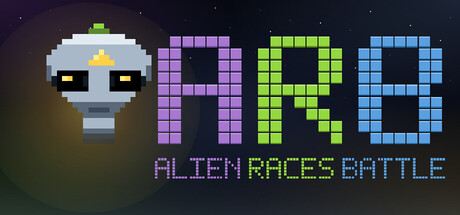
ARB: Alien Races Battle is developed by a solo human author (Raphael Tremblay) with assistance from Anthropic's Claude AI as a coding, art, and writing collaborator throughout production. Specifically:
- Some pixel-art unit sprites, ability icons, and UI elements were generated as SVG code with Claude's help, then reviewed, edited, and approved by the developer.
- In-game ability descriptions, Field Manual codex entries, and supplementary lore text were written with Claude as a writing collaborator, all building on the existing canon of The Alien Races Book (a separate, fully human-authored book by the same author that predates this game by years).
- Game code (gameplay engine, multiplayer infrastructure, UI logic) was developed with Claude as a coding-pair assistant.
Every piece of AI-assisted content was reviewed and edited by the human developer before shipping. The game's core IP — the 60+ documented alien races, their homeworlds, and their first-contact records — comes from The Alien Races Book and is entirely human-authored.
ARB does not use AI to generate content live during gameplay. All in-game content (units, sprites, abilities, sound, text, music) is finalized at build time and shipped as static assets.
I believe in being fully transparent with my players regarding the tools used to bring this project to life. As a solo developer and non-native English speaker, I have utilized AI as a supportive tool to enhance the experience, though the core vision and logic of the game remain my own.
Art & Visuals: To ensure the game has a polished aesthetic, I used AI to refine my hand-drawn concepts into final assets. This allowed me to translate my original sketches into high-quality visuals that I otherwise could not have afforded as an independent creator.
Language & Localization: With over 1,500 unique glyphs and numerous Rune combinations, I used AI to assist with naming and linguistic consistency. This ensures that the English translation is natural and clear for all players.
Real-Time Community Chat: To foster an inclusive community, the game features an integrated translation tool. This allows players to chat in their native languages while providing instant translations for others, ensuring everyone can participate in the conversation.
Development & Optimization: AI assisted in proofing my original combat code and expanding on my base mechanics to create more diverse gameplay options. It also serves as a diagnostic tool to help me identify and patch bugs quickly, ensuring a stable and fair experience for everyone.
AI is a tool to empower my creativity, not a replacement for it. My goal is to use these technologies to deliver a deeper, more polished game than a solo project would typically allow.
Billionaire MAX is an indie game where the core game design, mechanics, balance, and creative direction were authored by the developer, while the implementation work was assisted by AI tools.
The following content was created with AI assistance:
- Source code: Game logic, UI, networking, and other code was written with the help of AI coding assistants. All code was reviewed, tested, and integrated by the developer.
- Visual assets: Achievement icons, sector illustrations, and in-game card art were generated with AI image generation tools. The developer curated, edited, and selected every asset before inclusion.
- Sound effects: Created with AI audio generation tools. The developer curated and selected each sound effect before inclusion.
- Localization: Initial drafts of English, Korean, and Simplified Chinese translations were produced with AI assistance, then proofread and refined by the developer.
The following content was NOT created with AI:
- Game design and rules
- Music
- Final QA and gameplay tuning
No AI generation occurs at runtime. The game does not invoke any AI service during gameplay; players never see content produced live by AI.
WinBolo's core engine and gameplay code was originally written by John Morrison between 1998 and 2008. The 2.0 modernization — including build system updates, the networking rewrite and platform ports — was developed with assistance from AI coding tools, with all architectural decisions, code review, and final integration handled by John Morrison.
Some non-gameplay marketing materials — including images and video elements used in trailers, social media, and the store page — were created using AI image generation as a starting point, with composition, editing, effects, and final selection done by hand. Gameplay screenshots and video footage are unedited captures from the actual game.
The game itself contains no generative AI content at runtime. Player-facing in-game assets (graphics, sound, music, text, UI) are human-created. The in-game AI opponents ("Brains," including NewAutopilot and future ML-trained agents) use traditional game AI techniques and trained reinforcement-learning models — they don't generate text, images, or audio during play.
Heart Duels is a solo-developed game. I use AI-assisted tools for some art and audio. All assets are curated and integrated by me to create a cohesive experience.
"The game utilizes generative AI tools for the creation of concept art, UI icons, and English-to-Turkish localization. These assets are pre-generated during the development phase and are fully reviewed and polished by our team to ensure quality and originality."
Game Demon uses large language models (Llama 3.1/3.3 via Groq API, plus optional local Ollama inference) to generate coaching text in real time from the user's match data. Vision models analyze user-sampled frames. No user content is sent to third parties without explicit opt-in. No generative images or audio in final output.
Gridholm uses AI-generated imagery for its card art, champion portraits, and 3D models. As the sole developer, it's how I bring a full 250+ card game to life with a cohesive, painterly dark-fantasy look.
During the development process, we may use procedural- and AI-based tools to assist with content creation. In all such cases, the final product reflects the creativity and expression of our own development team.
Some visual assets in Triad were created with the assistance of AI tools and further refined by the developer.
Triad is a solo-developed project, and these tools helped make its creation possible.
— Raph, developer of Triad
This game contains content created with the assistance of generative AI tools:
Artwork: Some visual assets were generated using AI image tools as a starting
point, then edited and refined by the developer. All final in-game artwork
has been reviewed, modified, and approved by human hands.
Music & Sound Effects: Background music and sound effects were created using
AI-based music generation tools, then selected and curated by the developer.
Localization: Translations for Japanese, Korean, Traditional Chinese, Spanish,
and Russian were produced with AI translation tools and reviewed by the
developer. Simplified Chinese and English were authored directly by the
developer.
Store Page Copy: Portions of the store page description were drafted with AI
writing assistance and finalized by the developer.
No generative AI runs during gameplay. The AI opponent in single-player mode
uses rule-based logic, not generative AI.