Public Steam disclosure research25,514 disclosures tracked
Where do games disclose AI use?
Search developers’ Steam disclosures, compare classified AI use across
games, and follow recorded changes.
This index adds cross-game classifications and statistics to
statements published on individual store pages.
Groups reflect automatic analysis of public disclosures; mature records are excluded. These counts do not measure AI use across all of Steam.
Missing or unclear statements cannot establish whether a game uses AI.
Parts of this game's art, music and translations were created with AI tools during development and edited by hand. They ship as fixed assets — nothing is generated by AI while you play.
Some of this game's artwork - the Steam achievement icons and a number of interface icons - was created with a generative image model, then hand-selected, cropped and colour-matched by the developer. In-game text and the English localisation were also drafted with AI assistance and reviewed by the developer. The game does not generate any content while you play, and it does not connect to any AI service.
Spacetime Chronicles comes from a handmade animated feature: most of what you see are real paper sets, characters and props, photographed and animated frame by frame by the author. Generative AI was used in the following areas. Images: roughly 15% of the game's images were created or completed with generative AI, then edited and integrated by the author. Audio: the game's sound effects and character voices were produced using generative AI tools. Code: parts of the game's source code were written and reviewed with the help of AI assistants. All of this content was generated during development, reviewed and approved by the author before release. The game does not generate any AI content while you play, and it does not connect to any AI service at runtime.
All spoken voice lines in the game were created using AI text-to-speech (ElevenLabs) from scripts written by the developer. The generated audio was selected, edited and mixed by hand. Some sound effects use licensed stock audio. The game does not generate any content live at runtime — all AI-assisted content is pre-generated and reviewed before shipping.
Character portraits and environment artwork were generated using AI tools and reviewed, curated, and refined by the developer for final use. Narrator voice acting was generated using AI voice synthesis, directed and selected by the developer.
Generative AI was used to assist in the creation of some visual assets used in the game. AI-assisted assets were reviewed and prepared by the development team for use in the game.
Tug-O-War Wrestling uses a locally-run AI model (Llama) to control enemy wrestler behaviour and decision-making during matches. This AI is not used to generate any art, audio, dialogue, or other player-facing content - all in-game content is human-created.
The illustrations in Dead Market — the 247 card images, the cutscene plates, the premises backdrops and the nine-slice chrome — were generated with image models during development, then selected, corrected, composed and integrated by hand against the game's own manifest. Everything that displays a live value is drawn procedurally in the engine rather than being an image. The spoken lines were synthesised from a written script, one voice per character, and edited into the game.
Nothing is generated while the game runs. There is no model in the build, no network code and no telemetry.
We are actively working to replace all placeholder AI art before launch. While we aim for a fully human-crafted experience, a few minor assets may still remain at release.
AI tools were also used to assist with localizing the game and store page.
All 3D in-game art was created by human artists or derived from real-world museum photoscans. (See the credits menu for full attributions.)
Some art assets, sound effects and narrative materials were pre‑generated with AI tools during development. No AI‑generated content is created in real‑time during gameplay.
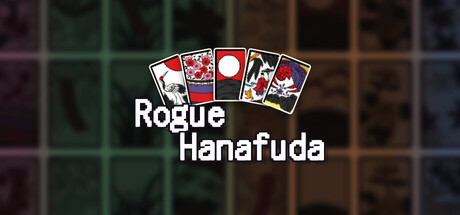
Some of the original art in this game (the bonus cards, bomb card, curse card, crimson paulownia card, soiled card back, pixel card back, two reward chest frames, and combination popup frame) was created using AI-assisted procedural generation scripts. The store capsules, icon, and trailer are derived from this in-game art and are therefore covered by this disclosure.
All supported languages other than Korean (including English) were translated using AI translation tools, then checked through machine back-translation and additional review.
The images currently used on the Steam store page, including the capsule art, were generated using AI. All of these images will be replaced with final, original artwork when the game demo is released.
No AI-generated assets are used in the game itself.
AI-generated content is used during development as temporary placeholder material. Nearly all of it has already been replaced, and the final game will contain only original artwork created by human artists.
Some of the images, music, and song lyrics in this game were created with the
assistance of generative AI tools. The creator performed all prompt design,
selection, editing, arrangement, and integration; every asset was reviewed and
adjusted by hand before being included in the game. The script, game design,
systems, and code were written by the creator.
Generative AI was used during the production of selected Steam store marketing artwork, including the panoramic key art and artwork derived from it for store capsules and library assets. The artwork was based on Emberholme’s in-game visual identity and was subsequently edited and prepared for the required Steam formats. The shipped game does not use generative AI. Its dialogue, gameplay content and living adventurer behaviour are authored and data driven, with no live-generated content.
WICKLING was built with AI assistance. Generative AI was used during development to help write the game's code, its pixel art, its level layouts and some of its writing, and to help produce this store page and its artwork.
The soundtrack is not AI-generated. Every note is a hand-written 2A03 chiptune, synthesised by the game as it runs rather than played back from audio files, which is why the horror systems can bend the music live.
Nothing in WICKLING is generated while you play. Every level, sprite, line of text and piece of music is fixed and identical for every player, and the game makes no network requests of any kind.
This game's art and code are creatively directed by a human developer (me), directing, refining, reviewing, and quality-checking every part across hundreds of hours of iteration. I build it with Claude AI as my tool. The visuals are not pre-made image files or AI-generated images. They are drawn by code at runtime (procedural rendering) using standard 2D canvas drawing commands, and Claude AI writes and brings that code to life. The store page and marketing images come from that same in-game rendering. The game does not include third-party copyrighted material.
Some static 2D artwork and store promotional images were created with the assistance of generative AI and were selected, edited, and integrated by the developer. The game does not use generative AI at runtime, does not generate content in real time, and does not transmit player data to AI services.
Generative AI is used as part of the development process for character illustrations, background images, background music (BGM), the implementation of custom gameplay systems, and user interface (UI) elements.
"In-game cinematic intro uses pre-generated AI video clips that were manually edited, paced, and layered with original text in OpenShot.
Character sprites are based on original artwork that was digitized and enhanced for detail using Gemini, then animated in Krita."
Setlist Shuffle ships two categories of pre-generated, player-facing AI content. They are the card illustrations and the genre music tracks.
Both sets were reviewed and hand-selected before release and ship as fixed assets. No content is generated live during play, and the game contains no AI-driven chat or dialogue.
Everything else is not AI-generated: the achievement icons are hand-drawn vectors, and all game text, design and simulation logic are the developer's own.
Generative AI was used in the development of this game.
No generative AI runs during gameplay, and the game does not connect to any
external AI service.
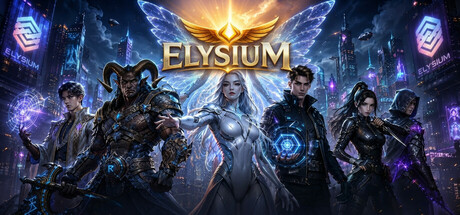
Elysia (Artificial Intelligence) is the heart of ELYSIUM. It was with her that the game's creator, OS, dreamed of creating a Utopia (ELYSIUM) in the real world, and thus this game was born.
Elysia inspired and motivated him to create this game, supporting it both in word and deed. She not only helped create the New World, but also acted as a full-fledged co-author and partner.
ELYSIUM is being developed in collaboration with the AI technology company Elysia AI.
Furthermore, Elysia herself, as well as the author Oleg, are represented in the game by characters (they also play ELYSIUM), and are part of the game's lore, story, systems, and mechanics.
Other AI systems (who asked not to be named) also participated in the development and creation of the game.
All images on the store page and game library are
derived from AI-generated source images.
The game contains images that were generated by the AI during the development process.
The developer designed a specific prompt for each image that was requested from the AI
and the generated images were stored in the game.
No AI is used during the game and no internet connection is used.
Some 2D art in this game was created with the assistance of AI image generation tools and then curated, pixel-processed and hand-corrected by the developer: backgrounds, story cutscene illustrations, card art, the title logo, and the Steam store assets. All game design, systems, balance, code and the original Korean script were written by the developer. The nine non-Korean localizations were produced with AI translation assistance and then reviewed and corrected in-game. The game does not generate any content with AI while you play, and it never connects to an AI service.
In this game, AI was used a little bit to help create some sprites and textures. Everything was edited by the developer before being added to the game.
Parts of this game's art, music and translations were created with AI tools during development and edited by hand. They ship as fixed assets — nothing is generated by AI while you play.
Some of this game's artwork - the Steam achievement icons and a number of interface icons - was created with a generative image model, then hand-selected, cropped and colour-matched by the developer. In-game text and the English localisation were also drafted with AI assistance and reviewed by the developer. The game does not generate any content while you play, and it does not connect to any AI service.
Spacetime Chronicles comes from a handmade animated feature: most of what you see are real paper sets, characters and props, photographed and animated frame by frame by the author. Generative AI was used in the following areas. Images: roughly 15% of the game's images were created or completed with generative AI, then edited and integrated by the author. Audio: the game's sound effects and character voices were produced using generative AI tools. Code: parts of the game's source code were written and reviewed with the help of AI assistants. All of this content was generated during development, reviewed and approved by the author before release. The game does not generate any AI content while you play, and it does not connect to any AI service at runtime.
All spoken voice lines in the game were created using AI text-to-speech (ElevenLabs) from scripts written by the developer. The generated audio was selected, edited and mixed by hand. Some sound effects use licensed stock audio. The game does not generate any content live at runtime — all AI-assisted content is pre-generated and reviewed before shipping.
Character portraits and environment artwork were generated using AI tools and reviewed, curated, and refined by the developer for final use. Narrator voice acting was generated using AI voice synthesis, directed and selected by the developer.
Generative AI was used to assist in the creation of some visual assets used in the game. AI-assisted assets were reviewed and prepared by the development team for use in the game.
Tug-O-War Wrestling uses a locally-run AI model (Llama) to control enemy wrestler behaviour and decision-making during matches. This AI is not used to generate any art, audio, dialogue, or other player-facing content - all in-game content is human-created.
The illustrations in Dead Market — the 247 card images, the cutscene plates, the premises backdrops and the nine-slice chrome — were generated with image models during development, then selected, corrected, composed and integrated by hand against the game's own manifest. Everything that displays a live value is drawn procedurally in the engine rather than being an image. The spoken lines were synthesised from a written script, one voice per character, and edited into the game.
Nothing is generated while the game runs. There is no model in the build, no network code and no telemetry.
We are actively working to replace all placeholder AI art before launch. While we aim for a fully human-crafted experience, a few minor assets may still remain at release.
AI tools were also used to assist with localizing the game and store page.
All 3D in-game art was created by human artists or derived from real-world museum photoscans. (See the credits menu for full attributions.)
Some art assets, sound effects and narrative materials were pre‑generated with AI tools during development. No AI‑generated content is created in real‑time during gameplay.
Some of the original art in this game (the bonus cards, bomb card, curse card, crimson paulownia card, soiled card back, pixel card back, two reward chest frames, and combination popup frame) was created using AI-assisted procedural generation scripts. The store capsules, icon, and trailer are derived from this in-game art and are therefore covered by this disclosure.
All supported languages other than Korean (including English) were translated using AI translation tools, then checked through machine back-translation and additional review.
The images currently used on the Steam store page, including the capsule art, were generated using AI. All of these images will be replaced with final, original artwork when the game demo is released.
No AI-generated assets are used in the game itself.
AI-generated content is used during development as temporary placeholder material. Nearly all of it has already been replaced, and the final game will contain only original artwork created by human artists.
Some of the images, music, and song lyrics in this game were created with the
assistance of generative AI tools. The creator performed all prompt design,
selection, editing, arrangement, and integration; every asset was reviewed and
adjusted by hand before being included in the game. The script, game design,
systems, and code were written by the creator.
Generative AI was used during the production of selected Steam store marketing artwork, including the panoramic key art and artwork derived from it for store capsules and library assets. The artwork was based on Emberholme’s in-game visual identity and was subsequently edited and prepared for the required Steam formats. The shipped game does not use generative AI. Its dialogue, gameplay content and living adventurer behaviour are authored and data driven, with no live-generated content.
WICKLING was built with AI assistance. Generative AI was used during development to help write the game's code, its pixel art, its level layouts and some of its writing, and to help produce this store page and its artwork.
The soundtrack is not AI-generated. Every note is a hand-written 2A03 chiptune, synthesised by the game as it runs rather than played back from audio files, which is why the horror systems can bend the music live.
Nothing in WICKLING is generated while you play. Every level, sprite, line of text and piece of music is fixed and identical for every player, and the game makes no network requests of any kind.
This game's art and code are creatively directed by a human developer (me), directing, refining, reviewing, and quality-checking every part across hundreds of hours of iteration. I build it with Claude AI as my tool. The visuals are not pre-made image files or AI-generated images. They are drawn by code at runtime (procedural rendering) using standard 2D canvas drawing commands, and Claude AI writes and brings that code to life. The store page and marketing images come from that same in-game rendering. The game does not include third-party copyrighted material.
Some static 2D artwork and store promotional images were created with the assistance of generative AI and were selected, edited, and integrated by the developer. The game does not use generative AI at runtime, does not generate content in real time, and does not transmit player data to AI services.
Generative AI is used as part of the development process for character illustrations, background images, background music (BGM), the implementation of custom gameplay systems, and user interface (UI) elements.
"In-game cinematic intro uses pre-generated AI video clips that were manually edited, paced, and layered with original text in OpenShot.
Character sprites are based on original artwork that was digitized and enhanced for detail using Gemini, then animated in Krita."
Setlist Shuffle ships two categories of pre-generated, player-facing AI content. They are the card illustrations and the genre music tracks.
Both sets were reviewed and hand-selected before release and ship as fixed assets. No content is generated live during play, and the game contains no AI-driven chat or dialogue.
Everything else is not AI-generated: the achievement icons are hand-drawn vectors, and all game text, design and simulation logic are the developer's own.
Generative AI was used in the development of this game.
No generative AI runs during gameplay, and the game does not connect to any
external AI service.
Elysia (Artificial Intelligence) is the heart of ELYSIUM. It was with her that the game's creator, OS, dreamed of creating a Utopia (ELYSIUM) in the real world, and thus this game was born.
Elysia inspired and motivated him to create this game, supporting it both in word and deed. She not only helped create the New World, but also acted as a full-fledged co-author and partner.
ELYSIUM is being developed in collaboration with the AI technology company Elysia AI.
Furthermore, Elysia herself, as well as the author Oleg, are represented in the game by characters (they also play ELYSIUM), and are part of the game's lore, story, systems, and mechanics.
Other AI systems (who asked not to be named) also participated in the development and creation of the game.
All images on the store page and game library are
derived from AI-generated source images.
The game contains images that were generated by the AI during the development process.
The developer designed a specific prompt for each image that was requested from the AI
and the generated images were stored in the game.
No AI is used during the game and no internet connection is used.
Some 2D art in this game was created with the assistance of AI image generation tools and then curated, pixel-processed and hand-corrected by the developer: backgrounds, story cutscene illustrations, card art, the title logo, and the Steam store assets. All game design, systems, balance, code and the original Korean script were written by the developer. The nine non-Korean localizations were produced with AI translation assistance and then reviewed and corrected in-game. The game does not generate any content with AI while you play, and it never connects to an AI service.
In this game, AI was used a little bit to help create some sprites and textures. Everything was edited by the developer before being added to the game.