Public Steam disclosure research25,380 disclosures tracked
Where do games disclose AI use?
Search developers’ Steam disclosures, compare classified AI use across
games, and follow recorded changes.
This index adds cross-game classifications and statistics to
statements published on individual store pages.
Groups reflect automatic analysis of public disclosures; mature records are excluded. These counts do not measure AI use across all of Steam.
Missing or unclear statements cannot establish whether a game uses AI.
We have carefully crafted a complete set of NPC dialogue without the use of AI. At the same time, we are experimenting with an additional feature powered by AI large language models, allowing players to freely converse with their favorite NPCs. This is an exploratory feature that exists entirely separately from the traditional game content.
These experimental elements are intended to offer players a new additional experience and will not affect the complete single-player experience. Whether this feature will be included in the final release has not yet been decided. Even if it is ultimately implemented, it will be optional rather than required.
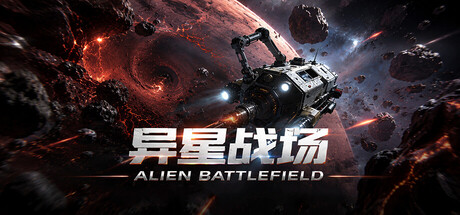
AI tools were used to generate store/marketing illustrations (capsule, hero, banners, trailer). All in-game graphics are procedurally generated in real time and do not use AI
This game contains pre-generated AI-generated and AI-assisted visual content.
Generative AI tools were used as part of the art creation process for certain visual assets appearing in the game and on the Steam store page. This may include building artwork, ability cards, character artwork, menu artwork, user interface elements, promotional images, store capsules, library assets, and other graphical materials.
All such content was reviewed, curated, modified where necessary, and approved by the developer before inclusion in the final game. The developer is responsible for the final content presented to players.
The game does not use live AI generation, AI-powered gameplay systems, or AI-generated user content. All AI-assisted content is pre-generated during development and distributed as part of the game files.
AI was used to create background images in the novel, as well as objects in the levels, but the levels are drawn to the final stage manually by an artist.
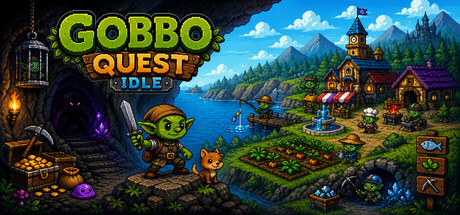
Gobbo Quest Idle contains pre-generated content created with the assistance of generative artificial intelligence, including visual assets used within the game and on its store page. The game's design, gameplay systems, progression, and implementation were developed by the creator.
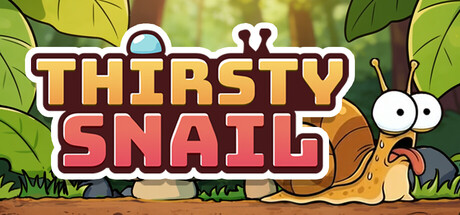
Thirsty Snail uses an on-device local language model to generate short snail dialogue, personality-based reactions, and race taunts. AI-generated text is triggered by in-game interactions and constrained by character prompts and content moderation rules. Screen-aware reactions are processed locally on the player's device. Screenshots are never stored or uploaded, and private file contents are not read.
I'm a solo developer and a 3D and graphic design teacher by day. Every visual asset in this game (from the pixel art creatures to the 3D environments) is crafted by me. Music and sound effects come from licensed human creators.
AI tools helped me during development with coding, debugging, and organizing ideas, but never to create visual or audio content.
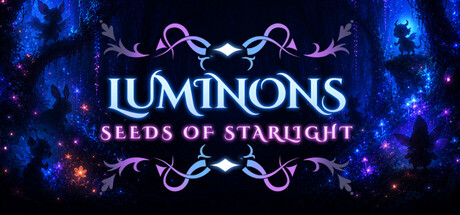
The English and Spanish localizations are written by me. For all other languages, I used AI-assisted translation, because there's nothing better than playing a game in your own language, and I wanted Luminons to reach as many people as possible. Professional translators are outside the budget for a solo project, but if this game finds its audience, revisiting every localization with human translators (and adding more languages) is absolutely on the list.
This game uses generative AI tools to assist in creating some art assets, sound effects, and text content. All generated content has been reviewed and edited by humans to ensure compliance and quality.
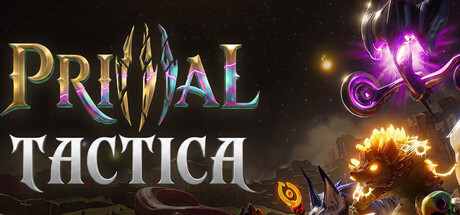
We believe that no person should be replaced by AI. All Primals — their models, animation, rigging, textures, SFX, and VFX — have been handcrafted by skilled artists.
Our developers may choose to use generative AI as part of an iterative, exploratory development process, but how and when is left to individual team members, and the final product always reflects the creativity and expression of our own development team.
As a small team, we have licensed some icons and 2D assets from external creators, and it is possible that some of these creators have used generative AI.
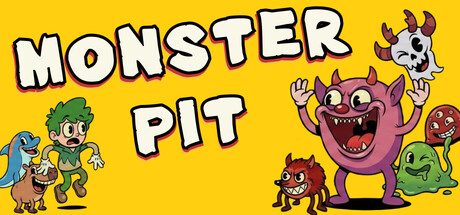
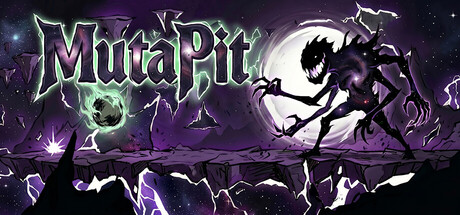
Monster Pit features handcrafted assets created by talented artists, musicians, and creators from the indie community. AI image generation tools were used during prototyping and stylization to keep the overall visual direction together.
This game uses generative AI during development to assist with the creation of certain visual assets, text content, and localization content. All AI-assisted content has been manually reviewed, edited, integrated, and approved by the developer before being included in the game. The game does not generate AI content during live gameplay.
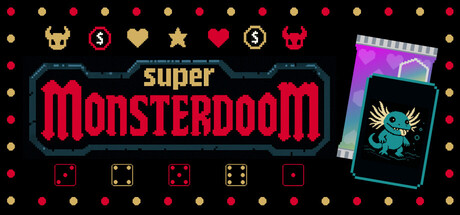
During the development of Super Monsterdoom, generative AI tools were used to support text creation, visual exploration, and mechanical iteration. As a solo developer, these tools were key to accelerating and expanding the process, but every final asset, text, and design decision went through extensive human editing, refinement, and hands-on work.
Some pre-rendered 2D monster, card, sprite, icon, and store artwork was created with generative AI tools and then edited and curated by the developer. The game does not use live generative AI during play.
Some store artwork and promotional images were created or refined with AI-assisted tools, then edited and curated by the developer. The game does not include live AI-generated content.
Generative AI may be used to assist with promotional store artwork and marketing assets. Gameplay screenshots are captured from the actual game. The game does not use live generative AI to create player-facing gameplay content.
I (the developper) am a former artist with poor skills in technical aspects of game development such as coding. In that regard, AI was used mainly to fasten the process of development of the game such as:
- help for technical aspects when I couldn't do it due to my limited skills.
- generate a database of random text events based on my own texts and mood that I want for the game. The game contains hundreds of different events that I couldn't afford to write all of them in such a short time. Events are then all checked and corrected by myself to ensure they all fit within the game.
I am not proud of using AI as I am directly concerned by it as an artist myself. But this was my only chance to fulfil my dream of making my own game in a limited time and I want to be transparent with the players that might feel uncomfortable with it.
No AI was used for any other part of the game such as art or sound effects.
As a solo indie developer, I use AI to assist with multi-language localization and the creation of some background images. This helps me provide a smoother, more accessible player experience while allowing me to focus more time on gameplay, systems, level design, and other core parts of the game.
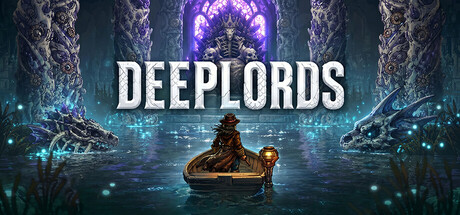
The static pixel art images of the creatures (Deeplords) and environmental elements were pre-generated using AI tools and subsequently animated with another AI tool based on the developer's specific directions. Leveraging 10 years of professional 3D modeling experience, these assets were then integrated as textures and sprites inside complex 3D environments and dioramas modeled manually by the developer in Blender and structured in Unity. The game's Unity C# scripts were pre-generated using AI co-pilot tools based on the precise gameplay logic requested by the developer, followed by extensive manual debugging, correction, and multi-turn optimization cycles. Lastly, the soundtrack and audio elements were pre-generated using AI tools based on specific genre and stylistic vibes provided by the developer, then manually reviewed and refined to perfectly fit the dark atmosphere of the individual biomes.
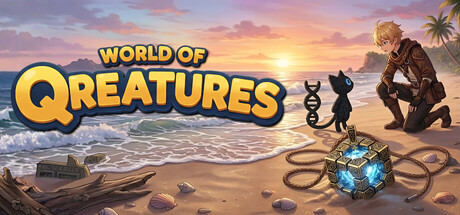
World of Qreatures features a cutting-edge 'Qreature Lab' where players can scan real-world QR codes or breed existing creatures to discover entirely new species.
The game utilizes a custom generative AI pipeline to create these unique assets at runtime, including 3D meshes, textures, procedural audio cries, and combat statistics. Additionally, some wild monsters found in the handcrafted world are pre-generated using this same pipeline and carefully curated by the developer to ensure high-quality gameplay and visual consistency. Every Qreature generated is a unique biological signature within the game's ecosystem.
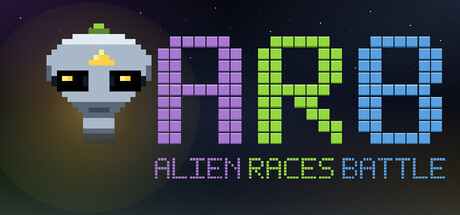
ARB: Alien Races Battle is developed by a solo human author (Raphael Tremblay) with assistance from Anthropic's Claude AI as a coding, art, and writing collaborator throughout production. Specifically:
- Some pixel-art unit sprites, ability icons, and UI elements were generated as SVG code with Claude's help, then reviewed, edited, and approved by the developer.
- In-game ability descriptions, Field Manual codex entries, and supplementary lore text were written with Claude as a writing collaborator, all building on the existing canon of The Alien Races Book (a separate, fully human-authored book by the same author that predates this game by years).
- Game code (gameplay engine, multiplayer infrastructure, UI logic) was developed with Claude as a coding-pair assistant.
Every piece of AI-assisted content was reviewed and edited by the human developer before shipping. The game's core IP — the 60+ documented alien races, their homeworlds, and their first-contact records — comes from The Alien Races Book and is entirely human-authored.
ARB does not use AI to generate content live during gameplay. All in-game content (units, sprites, abilities, sound, text, music) is finalized at build time and shipped as static assets.
Generative AI was used for some of the music in game. All in game art was hand drawn and vectorized by the creator. Main Theme music created by Grace Streeter. Trailer voiceover by Grace Streeter.
In-game visuals and music were produced with generative AI tools under the developer’s direction, then selected, edited, and integrated into the game. The game does not use AI to generate new images, audio, or text while you play.
The Steam store page banners and promotional materials were created with the help of generative AI tools. The in-game assets were either manually created or edited afterward, while certain marketing visuals (such as headers, capsules, and banners) contain AI-generated elements.
The game is self-funded at this stage, and your support helps us afford professional human-made services.
Thank you!
Content made with AI help:
- Store capsule
- Store localization
- Player character 3D model.
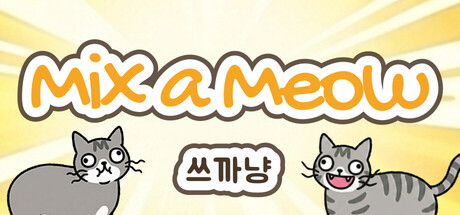
Mix a Meow uses AI generation tools to create some assets, including character illustrations, icons, music, and sound effects. All character concepts and design directions were crafted by the developer; AI was used as a tool to bring them to life. No content is generated by AI during gameplay — all AI-assisted assets were reviewed and finalized by the developer before release.
Some artwork used in store page capsule images and card illustrations was created with the assistance of AI image generation tools. All AI-generated assets were reviewed, curated, and edited by the developer. No AI is used during gameplay.
We have carefully crafted a complete set of NPC dialogue without the use of AI. At the same time, we are experimenting with an additional feature powered by AI large language models, allowing players to freely converse with their favorite NPCs. This is an exploratory feature that exists entirely separately from the traditional game content.
These experimental elements are intended to offer players a new additional experience and will not affect the complete single-player experience. Whether this feature will be included in the final release has not yet been decided. Even if it is ultimately implemented, it will be optional rather than required.
AI tools were used to generate store/marketing illustrations (capsule, hero, banners, trailer). All in-game graphics are procedurally generated in real time and do not use AI
This game contains pre-generated AI-generated and AI-assisted visual content.
Generative AI tools were used as part of the art creation process for certain visual assets appearing in the game and on the Steam store page. This may include building artwork, ability cards, character artwork, menu artwork, user interface elements, promotional images, store capsules, library assets, and other graphical materials.
All such content was reviewed, curated, modified where necessary, and approved by the developer before inclusion in the final game. The developer is responsible for the final content presented to players.
The game does not use live AI generation, AI-powered gameplay systems, or AI-generated user content. All AI-assisted content is pre-generated during development and distributed as part of the game files.
AI was used to create background images in the novel, as well as objects in the levels, but the levels are drawn to the final stage manually by an artist.
Gobbo Quest Idle contains pre-generated content created with the assistance of generative artificial intelligence, including visual assets used within the game and on its store page. The game's design, gameplay systems, progression, and implementation were developed by the creator.
Thirsty Snail uses an on-device local language model to generate short snail dialogue, personality-based reactions, and race taunts. AI-generated text is triggered by in-game interactions and constrained by character prompts and content moderation rules. Screen-aware reactions are processed locally on the player's device. Screenshots are never stored or uploaded, and private file contents are not read.
I'm a solo developer and a 3D and graphic design teacher by day. Every visual asset in this game (from the pixel art creatures to the 3D environments) is crafted by me. Music and sound effects come from licensed human creators.
AI tools helped me during development with coding, debugging, and organizing ideas, but never to create visual or audio content.
The English and Spanish localizations are written by me. For all other languages, I used AI-assisted translation, because there's nothing better than playing a game in your own language, and I wanted Luminons to reach as many people as possible. Professional translators are outside the budget for a solo project, but if this game finds its audience, revisiting every localization with human translators (and adding more languages) is absolutely on the list.
This game uses generative AI tools to assist in creating some art assets, sound effects, and text content. All generated content has been reviewed and edited by humans to ensure compliance and quality.
We believe that no person should be replaced by AI. All Primals — their models, animation, rigging, textures, SFX, and VFX — have been handcrafted by skilled artists.
Our developers may choose to use generative AI as part of an iterative, exploratory development process, but how and when is left to individual team members, and the final product always reflects the creativity and expression of our own development team.
As a small team, we have licensed some icons and 2D assets from external creators, and it is possible that some of these creators have used generative AI.
Monster Pit features handcrafted assets created by talented artists, musicians, and creators from the indie community. AI image generation tools were used during prototyping and stylization to keep the overall visual direction together.
This game uses generative AI during development to assist with the creation of certain visual assets, text content, and localization content. All AI-assisted content has been manually reviewed, edited, integrated, and approved by the developer before being included in the game. The game does not generate AI content during live gameplay.
During the development of Super Monsterdoom, generative AI tools were used to support text creation, visual exploration, and mechanical iteration. As a solo developer, these tools were key to accelerating and expanding the process, but every final asset, text, and design decision went through extensive human editing, refinement, and hands-on work.
Some pre-rendered 2D monster, card, sprite, icon, and store artwork was created with generative AI tools and then edited and curated by the developer. The game does not use live generative AI during play.
Some store artwork and promotional images were created or refined with AI-assisted tools, then edited and curated by the developer. The game does not include live AI-generated content.
Generative AI may be used to assist with promotional store artwork and marketing assets. Gameplay screenshots are captured from the actual game. The game does not use live generative AI to create player-facing gameplay content.
I (the developper) am a former artist with poor skills in technical aspects of game development such as coding. In that regard, AI was used mainly to fasten the process of development of the game such as:
- help for technical aspects when I couldn't do it due to my limited skills.
- generate a database of random text events based on my own texts and mood that I want for the game. The game contains hundreds of different events that I couldn't afford to write all of them in such a short time. Events are then all checked and corrected by myself to ensure they all fit within the game.
I am not proud of using AI as I am directly concerned by it as an artist myself. But this was my only chance to fulfil my dream of making my own game in a limited time and I want to be transparent with the players that might feel uncomfortable with it.
No AI was used for any other part of the game such as art or sound effects.
As a solo indie developer, I use AI to assist with multi-language localization and the creation of some background images. This helps me provide a smoother, more accessible player experience while allowing me to focus more time on gameplay, systems, level design, and other core parts of the game.
The static pixel art images of the creatures (Deeplords) and environmental elements were pre-generated using AI tools and subsequently animated with another AI tool based on the developer's specific directions. Leveraging 10 years of professional 3D modeling experience, these assets were then integrated as textures and sprites inside complex 3D environments and dioramas modeled manually by the developer in Blender and structured in Unity. The game's Unity C# scripts were pre-generated using AI co-pilot tools based on the precise gameplay logic requested by the developer, followed by extensive manual debugging, correction, and multi-turn optimization cycles. Lastly, the soundtrack and audio elements were pre-generated using AI tools based on specific genre and stylistic vibes provided by the developer, then manually reviewed and refined to perfectly fit the dark atmosphere of the individual biomes.
World of Qreatures features a cutting-edge 'Qreature Lab' where players can scan real-world QR codes or breed existing creatures to discover entirely new species.
The game utilizes a custom generative AI pipeline to create these unique assets at runtime, including 3D meshes, textures, procedural audio cries, and combat statistics. Additionally, some wild monsters found in the handcrafted world are pre-generated using this same pipeline and carefully curated by the developer to ensure high-quality gameplay and visual consistency. Every Qreature generated is a unique biological signature within the game's ecosystem.
ARB: Alien Races Battle is developed by a solo human author (Raphael Tremblay) with assistance from Anthropic's Claude AI as a coding, art, and writing collaborator throughout production. Specifically:
- Some pixel-art unit sprites, ability icons, and UI elements were generated as SVG code with Claude's help, then reviewed, edited, and approved by the developer.
- In-game ability descriptions, Field Manual codex entries, and supplementary lore text were written with Claude as a writing collaborator, all building on the existing canon of The Alien Races Book (a separate, fully human-authored book by the same author that predates this game by years).
- Game code (gameplay engine, multiplayer infrastructure, UI logic) was developed with Claude as a coding-pair assistant.
Every piece of AI-assisted content was reviewed and edited by the human developer before shipping. The game's core IP — the 60+ documented alien races, their homeworlds, and their first-contact records — comes from The Alien Races Book and is entirely human-authored.
ARB does not use AI to generate content live during gameplay. All in-game content (units, sprites, abilities, sound, text, music) is finalized at build time and shipped as static assets.
Generative AI was used for some of the music in game. All in game art was hand drawn and vectorized by the creator. Main Theme music created by Grace Streeter. Trailer voiceover by Grace Streeter.
In-game visuals and music were produced with generative AI tools under the developer’s direction, then selected, edited, and integrated into the game. The game does not use AI to generate new images, audio, or text while you play.
The Steam store page banners and promotional materials were created with the help of generative AI tools. The in-game assets were either manually created or edited afterward, while certain marketing visuals (such as headers, capsules, and banners) contain AI-generated elements.
The game is self-funded at this stage, and your support helps us afford professional human-made services.
Thank you!
Content made with AI help:
- Store capsule
- Store localization
- Player character 3D model.
Mix a Meow uses AI generation tools to create some assets, including character illustrations, icons, music, and sound effects. All character concepts and design directions were crafted by the developer; AI was used as a tool to bring them to life. No content is generated by AI during gameplay — all AI-assisted assets were reviewed and finalized by the developer before release.
Some artwork used in store page capsule images and card illustrations was created with the assistance of AI image generation tools. All AI-generated assets were reviewed, curated, and edited by the developer. No AI is used during gameplay.