Public Steam disclosure research25,380 disclosures tracked
Where do games disclose AI use?
Search developers’ Steam disclosures, compare classified AI use across
games, and follow recorded changes.
This index adds cross-game classifications and statistics to
statements published on individual store pages.
Groups reflect automatic analysis of public disclosures; mature records are excluded. These counts do not measure AI use across all of Steam.
Missing or unclear statements cannot establish whether a game uses AI.
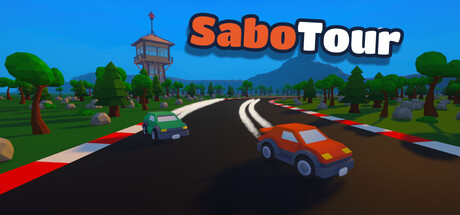
The observation tower model in SaboTour was initially created using an
AI-based 3D generation tool, then manually repaired, retopologized and
finished in Blender. No other AI-generated content is included, and the
game does not generate any content using AI while it is running.
Generative AI tools were used during development to assist with portions of debugging and gameplay balancing. All AI-assisted output was reviewed, modified, tested, and integrated by the developer. The game does not connect to generative AI services or generate AI content during gameplay.
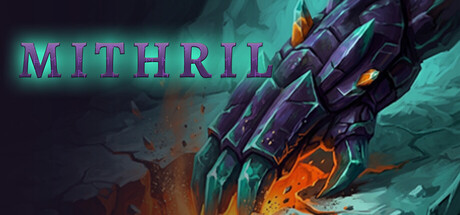
Mithril uses generative AI in much of its art and audio. This includes 3D models, textures and materials throughout the game — cave and terrain surfaces, environment art and interface textures — 2D item and UI icons, store page and marketing images, music and sound effects. All of it was edited and finalised by hand against the game's art direction.
No AI-generated voice is used, and no generative AI runs while you play — the game generates nothing at runtime.
Not AI-generated: world generation (hand-written procedural algorithms, not AI), model animations, game code, and level and systems design.
Generative AI was used during development to assist with programming and the creation of certain visual, textual, and other development assets. All content included in the final game was reviewed, edited, and approved by the developer. The game does not generate AI content during gameplay.
Ring Cosmos was developed by a solo developer with AI assistance during programming. The store page capsule images were also produced with AI assistance, generated programmatically through custom drawing code rather than image generation models. All game visuals are drawn in real time by the game's own rendering code. The soundtrack is licensed human-made music by JDSherbert. No AI content is generated while you play.
Generative AI tools were used during development to assist with some pre-generated visual assets and store marketing images. These assets are fixed in advance and are not generated during gameplay. The released game does not call an external generative AI service and does not generate text, images, audio, code, or other content at runtime.
Some 2D vector artwork and portions of game text/localization were created with the assistance of generative AI (Claude); all AI-generated content was reviewed by the developer
Ski Lines is a solo-developed indie game created with the help of generative AI tools. AI was used throughout production to support artwork creation, music and sound design, code assistance, prototyping, iteration, and marketing assets.
Every AI-assisted element was curated, edited, and integrated by the developer to fit the game’s minimalist ski-map aesthetic and gameplay vision. The use of AI helped accelerate production while preserving human creative direction, design decisions, quality control, and final authorship.
Generative AI was used as an assistive tool during development and for localization support. All such content was reviewed and edited by the developer before inclusion. The game does not generate AI content live during gameplay.
Generated code is applied to:
Create some shaders (like smoke and vertex snapping)
Procedurally draw billboard objects like pins and balls.
Procedurally produce sfx like pin knock sounds.
Some Store art is temporary generative concept art.
In-game Graffiti is hand drawn and not a product of generative AI.
Crownsink is a hand-crafted game built the modern way: the developer writes and directs the code with the support of AI tools, while every sprite, sound and note of music springs from the game's own hand-written algorithms.
Development is AI-assisted: source code, the procedural asset factories (meshes, MetaSound hero sounds, code-driven UMG) and docs are written with AI tooling under human review in-repo. No external generative-AI image/audio assets are imported; everything ships from the code-authored pipeline.
Breathtoll includes some AI-generated content, all of it created during development. Nothing is generated live while you play.
Cinematic cutscenes: the video imagery and animation are AI-generated.
Creatures: the 3D creature models began as AI-generated base meshes and were hand-refined through multiple Blender passes (cleanup, retopology, and texturing) before use in the game.
Store and marketing art: some capsule and store images are composed from frames of the AI-generated cutscenes.
All other content is human-made, including the game code, systems, design, all writing (scripts, narration, and story), and the hand-authored card art. We hold the rights to the AI-generated content under the generating tools' commercial licenses.
This disclosure reflects the current build. We are in the process of bringing on an artist for human-made renderings, and some of the AI-generated content above will be replaced with human-created work for the full launch. We will update this disclosure as that happens.
The capsule artwork, logo, some card illustrations, and soundtrack were created with the assistance of generative AI tools. All other in-game content — including UI, effects, and text — is hand-crafted without AI generation. No AI content is generated during gameplay.
During development, as a solo developer, Claude Code was especially helpful for debugging, development and testing. There is no LLM usage within Frontier Protocol and no external connection is required to play Frontier Protocol.
In this game, generative AI is used for the following purposes:
・Selecting options based on voice commands input by the user
・Generating portions of the display text
・Generating portions of the narration script
・The narration audio is created using a speech synthesis engine; generative AI is not used.
Generative AI tools were used to assist in the creation of marketing artwork and store page assets. All game content is procedurally generated through Thalyn's proprietary algorithms
Some assets in this game were created using generative AI tools. The theme song and its stem tracks were generated with Suno and edited by the developer. Some 3D models (the pursuer, corpse and flower props) were generated with Meshy. Some in-game images, such as photographs and posters, were created with image-generation AI. All program code was designed and implemented by the developer, with AI coding assistance. The game contains no live AI-generated content.
This game contains pre-generated AI-assisted visual assets. Specifically, the background HDRI environment texture used for lighting/background purposes was created using generative AI. No live-generated AI content is presented to players during gameplay.
GnollHack features 'Overseer', an optional in-game AI assistant. Using external generative AI models, Overseer provides live-generated text responses to players during gameplay. Players can ask questions about mechanics or request contextual hints based on their current game state. AI content is strictly limited to text chat, and the service utilizes safety filters and prompt guardrails to ensure responses are safe, relevant, and free of illegal or harmful content.
Some in-game text and store page copy was drafted with an AI assistant and edited by the developer. No generative AI runs in the game or generates content at runtime. All artwork is programmatically composited from photographs taken by the developer.
Parts of this game's source code and in-game text were produced with the assistance of generative AI tools during development.
The planet itself is not AI-generated. It is built by conventional deterministic algorithms : noise functions, Voronoi tessellation, plate tectonics, erosion and climate simulation (the same family of techniques used in procedural generation for decades. Every world is reproducible from its seed).
No AI runs while you play, and the game never connects to an external AI service.
Generative AI tools were used to assist in creating and refining some pre-generated visual assets, narrative text, localization, and store/marketing artwork. All AI-assisted content was reviewed, edited, and curated by Plants Game. No content is generated during gameplay, and the game does not connect to external AI services.
All 2D artwork (hwatu card illustrations, character portraits, backgrounds) and music tracks were created using generative AI tools, then curated, edited, and assembled by the developer. All AI content is pre-rendered during development — nothing is generated live at runtime. Localization was machine-assisted and human-reviewed. Store page assets were produced the same way.
Arch Rogue was developed with extensive use of generative AI. Most of the game's code was written with AI assistance. The pixel-art sprites, tiles, animations, and store artwork were created with AI image-generation tools and then curated and integrated by the developer. Dialogue, quest text, and lore were AI-generated from developer-designed prompts and story structure. All AI content is created during development, not at runtime — the game does not generate any content with AI at runtime.
Se ha usado IA para la creación de la música de fondo durante el juego, la imagen de la tienda en Steam y para la corrección de errores bajo supervisión personal.
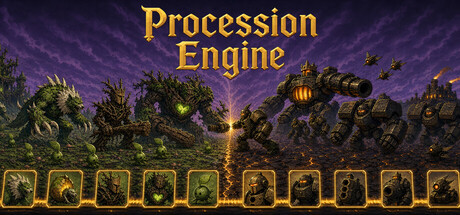
Procession Engine is a hand-designed game that uses AI tools to speed up development. Every card, faction, and system was designed, balanced, and playtested by its developer. Generative AI tools were used under human direction as part of the production pipeline: 2D artwork (card illustrations and icons) and 3D model bases were generated to the developer's specifications and then reviewed, curated, and integrated by hand. Sound effects were produced with AI audio tools and individually selected and mixed. Portions of the game code were written with AI assistance and reviewed by a human. No AI content is generated at runtime.
Generative AI tools were used during development to assist with the creation and iteration of some 2D visual assets, UI elements, concept artwork, and selected audio assets. All AI-assisted content was reviewed, edited, and integrated by the developer. The game does not generate AI content during gameplay.
Generative AI tools were used during development to assist with the refinement of certain visual assets and to improve the quality and consistency of translations. All AI-assisted content was reviewed and edited by the developer before being included in the final game. No generative AI is used to create content dynamically during gameplay.
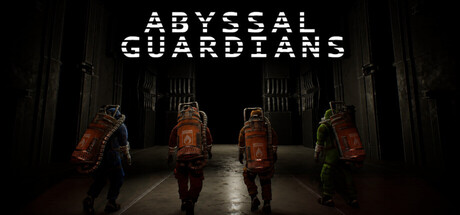
All voice content in Abyssal Guardians is recorded using actor's real voices but some content might be modified with AI to achieve certain styles that match our game.
Dungeon Cooking uses generative AI tools for some of its content, created during development (pre-generated, not generated in real time):
- Part of the creature art: 6 of the game's 18 monsters were made with AI image tools, then edited and integrated by the developer.
- Some in-game dungeon event content was drafted with AI assistance and edited by the developer.
- The announcement trailer was produced using AI tools.
The rest of the game's art comes from licensed asset packs and the developer's own work. All AI-generated content was reviewed and curated by the developer before shipping.
When developing V.E.N.T. I used close to no generative AI tools, it was only used for production support. AI was used to assist with refining Danish to English translations for subtitles and store page text to make sure clarity and accuracy were good. I also used voice processing tools to modify my own recorded voice for in-game audio in order to protect personal privacy and strong lore consistency. No AI was used to generate core creative content such as story, gameplay systems, artwork, or level design.
This game uses AI-generated tools as part of its development, including AI-assisted voice lines and background music. All AI-generated content was reviewed and curated by the developer.
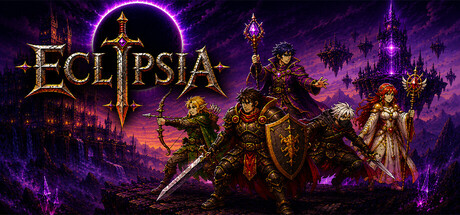
Eclipsia uses generative AI as part of the development process to assist in creating certain visual assets. All AI-assisted content is reviewed, edited, and integrated by the development team. The game does not use generative AI to generate gameplay, game logic, or player-created content in real time.
The developer uses generative AI tools during the development process to create pre-generated content. Specifically, Leonardo.ai was utilized to assist in the creation of promotional marketing artwork, concept art, images, and user interface buttons. Additionally, Suno was used to compose the game's background music and soundtracks. All AI-generated content is static, finalized prior to release, and integrated into the game build; the game does not feature any live or real-time AI generation during gameplay.
This game uses AI-assisted tools solely for programming and logic development. AI helped generate some basic code frameworks, but all core game logic was manually written, tested, and optimized.
Generative AI tools were used as development assistants for portions of game code, UI text, localization, and the preparation of some store-page copy and marketing layouts. All results were reviewed and edited by the developer. No generative AI is used during gameplay, and the game does not connect to external AI services.
The key art on this store page, on the splash screen and on the menu cards was created using generative AI tools and then edited by hand. Nothing inside the game itself is AI-generated. Every visual in play is procedural — drawn by code at runtime — and all audio is ynthesised in real time. The build ships with no textures, no meshes, no sprites and no audio files.
Developed under human creative direction with extensive generative AI assistance for game code, systems implementation, and visual/marketing assets. No generative AI runs live during play.
Starscrip uses short-form in-game text content that was created with the assistance of generative artificial intelligence.
Player facing marketing content, like release notes, may also be created with the assistance of generative artificial intelligence.
Some store page artwork was created with the assistance of generative AI and manually reviewed and edited. All in-game content and gameplay systems are made by the developer.
Generative AI tools were used to assist with programming, debugging, and improving written content.
However, the developer remained fully responsible for the game's design, direction, overall programming, integration, testing, and all final decisions.
Promotional materials and store page artwork were created with the help of generative AI and then reviewed and edited by the developer. No generative AI is used during gameplay or connects to external AI services.
This is not actually required to disclose but since it crosses the line for some people, I should admit that AI coding tools were used during the game's production.
No AI was used to generate any images, audio, text, or design.
Its purpose was to help code mechanics according to my design, assist in debugging, and (most importantly) eliminate crunch.
The observation tower model in SaboTour was initially created using an
AI-based 3D generation tool, then manually repaired, retopologized and
finished in Blender. No other AI-generated content is included, and the
game does not generate any content using AI while it is running.
Generative AI tools were used during development to assist with portions of debugging and gameplay balancing. All AI-assisted output was reviewed, modified, tested, and integrated by the developer. The game does not connect to generative AI services or generate AI content during gameplay.
Mithril uses generative AI in much of its art and audio. This includes 3D models, textures and materials throughout the game — cave and terrain surfaces, environment art and interface textures — 2D item and UI icons, store page and marketing images, music and sound effects. All of it was edited and finalised by hand against the game's art direction.
No AI-generated voice is used, and no generative AI runs while you play — the game generates nothing at runtime.
Not AI-generated: world generation (hand-written procedural algorithms, not AI), model animations, game code, and level and systems design.
Generative AI was used during development to assist with programming and the creation of certain visual, textual, and other development assets. All content included in the final game was reviewed, edited, and approved by the developer. The game does not generate AI content during gameplay.
Ring Cosmos was developed by a solo developer with AI assistance during programming. The store page capsule images were also produced with AI assistance, generated programmatically through custom drawing code rather than image generation models. All game visuals are drawn in real time by the game's own rendering code. The soundtrack is licensed human-made music by JDSherbert. No AI content is generated while you play.
Generative AI tools were used during development to assist with some pre-generated visual assets and store marketing images. These assets are fixed in advance and are not generated during gameplay. The released game does not call an external generative AI service and does not generate text, images, audio, code, or other content at runtime.
Some 2D vector artwork and portions of game text/localization were created with the assistance of generative AI (Claude); all AI-generated content was reviewed by the developer
Ski Lines is a solo-developed indie game created with the help of generative AI tools. AI was used throughout production to support artwork creation, music and sound design, code assistance, prototyping, iteration, and marketing assets.
Every AI-assisted element was curated, edited, and integrated by the developer to fit the game’s minimalist ski-map aesthetic and gameplay vision. The use of AI helped accelerate production while preserving human creative direction, design decisions, quality control, and final authorship.
Generative AI was used as an assistive tool during development and for localization support. All such content was reviewed and edited by the developer before inclusion. The game does not generate AI content live during gameplay.
Generated code is applied to:
Create some shaders (like smoke and vertex snapping)
Procedurally draw billboard objects like pins and balls.
Procedurally produce sfx like pin knock sounds.
Some Store art is temporary generative concept art.
In-game Graffiti is hand drawn and not a product of generative AI.
Crownsink is a hand-crafted game built the modern way: the developer writes and directs the code with the support of AI tools, while every sprite, sound and note of music springs from the game's own hand-written algorithms.
Development is AI-assisted: source code, the procedural asset factories (meshes, MetaSound hero sounds, code-driven UMG) and docs are written with AI tooling under human review in-repo. No external generative-AI image/audio assets are imported; everything ships from the code-authored pipeline.
Breathtoll includes some AI-generated content, all of it created during development. Nothing is generated live while you play.
Cinematic cutscenes: the video imagery and animation are AI-generated.
Creatures: the 3D creature models began as AI-generated base meshes and were hand-refined through multiple Blender passes (cleanup, retopology, and texturing) before use in the game.
Store and marketing art: some capsule and store images are composed from frames of the AI-generated cutscenes.
All other content is human-made, including the game code, systems, design, all writing (scripts, narration, and story), and the hand-authored card art. We hold the rights to the AI-generated content under the generating tools' commercial licenses.
This disclosure reflects the current build. We are in the process of bringing on an artist for human-made renderings, and some of the AI-generated content above will be replaced with human-created work for the full launch. We will update this disclosure as that happens.
The capsule artwork, logo, some card illustrations, and soundtrack were created with the assistance of generative AI tools. All other in-game content — including UI, effects, and text — is hand-crafted without AI generation. No AI content is generated during gameplay.
During development, as a solo developer, Claude Code was especially helpful for debugging, development and testing. There is no LLM usage within Frontier Protocol and no external connection is required to play Frontier Protocol.
In this game, generative AI is used for the following purposes:
・Selecting options based on voice commands input by the user
・Generating portions of the display text
・Generating portions of the narration script
・The narration audio is created using a speech synthesis engine; generative AI is not used.
Generative AI tools were used to assist in the creation of marketing artwork and store page assets. All game content is procedurally generated through Thalyn's proprietary algorithms
Some assets in this game were created using generative AI tools. The theme song and its stem tracks were generated with Suno and edited by the developer. Some 3D models (the pursuer, corpse and flower props) were generated with Meshy. Some in-game images, such as photographs and posters, were created with image-generation AI. All program code was designed and implemented by the developer, with AI coding assistance. The game contains no live AI-generated content.
This game contains pre-generated AI-assisted visual assets. Specifically, the background HDRI environment texture used for lighting/background purposes was created using generative AI. No live-generated AI content is presented to players during gameplay.
GnollHack features 'Overseer', an optional in-game AI assistant. Using external generative AI models, Overseer provides live-generated text responses to players during gameplay. Players can ask questions about mechanics or request contextual hints based on their current game state. AI content is strictly limited to text chat, and the service utilizes safety filters and prompt guardrails to ensure responses are safe, relevant, and free of illegal or harmful content.
Some in-game text and store page copy was drafted with an AI assistant and edited by the developer. No generative AI runs in the game or generates content at runtime. All artwork is programmatically composited from photographs taken by the developer.
Parts of this game's source code and in-game text were produced with the assistance of generative AI tools during development.
The planet itself is not AI-generated. It is built by conventional deterministic algorithms : noise functions, Voronoi tessellation, plate tectonics, erosion and climate simulation (the same family of techniques used in procedural generation for decades. Every world is reproducible from its seed).
No AI runs while you play, and the game never connects to an external AI service.
Generative AI tools were used to assist in creating and refining some pre-generated visual assets, narrative text, localization, and store/marketing artwork. All AI-assisted content was reviewed, edited, and curated by Plants Game. No content is generated during gameplay, and the game does not connect to external AI services.
All 2D artwork (hwatu card illustrations, character portraits, backgrounds) and music tracks were created using generative AI tools, then curated, edited, and assembled by the developer. All AI content is pre-rendered during development — nothing is generated live at runtime. Localization was machine-assisted and human-reviewed. Store page assets were produced the same way.
Arch Rogue was developed with extensive use of generative AI. Most of the game's code was written with AI assistance. The pixel-art sprites, tiles, animations, and store artwork were created with AI image-generation tools and then curated and integrated by the developer. Dialogue, quest text, and lore were AI-generated from developer-designed prompts and story structure. All AI content is created during development, not at runtime — the game does not generate any content with AI at runtime.
Se ha usado IA para la creación de la música de fondo durante el juego, la imagen de la tienda en Steam y para la corrección de errores bajo supervisión personal.
Procession Engine is a hand-designed game that uses AI tools to speed up development. Every card, faction, and system was designed, balanced, and playtested by its developer. Generative AI tools were used under human direction as part of the production pipeline: 2D artwork (card illustrations and icons) and 3D model bases were generated to the developer's specifications and then reviewed, curated, and integrated by hand. Sound effects were produced with AI audio tools and individually selected and mixed. Portions of the game code were written with AI assistance and reviewed by a human. No AI content is generated at runtime.
Generative AI tools were used during development to assist with the creation and iteration of some 2D visual assets, UI elements, concept artwork, and selected audio assets. All AI-assisted content was reviewed, edited, and integrated by the developer. The game does not generate AI content during gameplay.
Generative AI tools were used during development to assist with the refinement of certain visual assets and to improve the quality and consistency of translations. All AI-assisted content was reviewed and edited by the developer before being included in the final game. No generative AI is used to create content dynamically during gameplay.
All voice content in Abyssal Guardians is recorded using actor's real voices but some content might be modified with AI to achieve certain styles that match our game.
Dungeon Cooking uses generative AI tools for some of its content, created during development (pre-generated, not generated in real time):
- Part of the creature art: 6 of the game's 18 monsters were made with AI image tools, then edited and integrated by the developer.
- Some in-game dungeon event content was drafted with AI assistance and edited by the developer.
- The announcement trailer was produced using AI tools.
The rest of the game's art comes from licensed asset packs and the developer's own work. All AI-generated content was reviewed and curated by the developer before shipping.
When developing V.E.N.T. I used close to no generative AI tools, it was only used for production support. AI was used to assist with refining Danish to English translations for subtitles and store page text to make sure clarity and accuracy were good. I also used voice processing tools to modify my own recorded voice for in-game audio in order to protect personal privacy and strong lore consistency. No AI was used to generate core creative content such as story, gameplay systems, artwork, or level design.
This game uses AI-generated tools as part of its development, including AI-assisted voice lines and background music. All AI-generated content was reviewed and curated by the developer.
Eclipsia uses generative AI as part of the development process to assist in creating certain visual assets. All AI-assisted content is reviewed, edited, and integrated by the development team. The game does not use generative AI to generate gameplay, game logic, or player-created content in real time.
The developer uses generative AI tools during the development process to create pre-generated content. Specifically, Leonardo.ai was utilized to assist in the creation of promotional marketing artwork, concept art, images, and user interface buttons. Additionally, Suno was used to compose the game's background music and soundtracks. All AI-generated content is static, finalized prior to release, and integrated into the game build; the game does not feature any live or real-time AI generation during gameplay.
This game uses AI-assisted tools solely for programming and logic development. AI helped generate some basic code frameworks, but all core game logic was manually written, tested, and optimized.
Generative AI tools were used as development assistants for portions of game code, UI text, localization, and the preparation of some store-page copy and marketing layouts. All results were reviewed and edited by the developer. No generative AI is used during gameplay, and the game does not connect to external AI services.
The key art on this store page, on the splash screen and on the menu cards was created using generative AI tools and then edited by hand. Nothing inside the game itself is AI-generated. Every visual in play is procedural — drawn by code at runtime — and all audio is ynthesised in real time. The build ships with no textures, no meshes, no sprites and no audio files.
Developed under human creative direction with extensive generative AI assistance for game code, systems implementation, and visual/marketing assets. No generative AI runs live during play.
Starscrip uses short-form in-game text content that was created with the assistance of generative artificial intelligence.
Player facing marketing content, like release notes, may also be created with the assistance of generative artificial intelligence.
Some store page artwork was created with the assistance of generative AI and manually reviewed and edited. All in-game content and gameplay systems are made by the developer.
Generative AI tools were used to assist with programming, debugging, and improving written content.
However, the developer remained fully responsible for the game's design, direction, overall programming, integration, testing, and all final decisions.
Promotional materials and store page artwork were created with the help of generative AI and then reviewed and edited by the developer. No generative AI is used during gameplay or connects to external AI services.
This is not actually required to disclose but since it crosses the line for some people, I should admit that AI coding tools were used during the game's production.
No AI was used to generate any images, audio, text, or design.
Its purpose was to help code mechanics according to my design, assist in debugging, and (most importantly) eliminate crunch.