


Disclosure
During the development of the video game DEPTH STRIKE, I used neural networks, but I did most of the work myself.
- Creator
- Victoria Games
- Reviews
- 10
- Added
- Sep 7, 2026
Public Steam disclosure research 27,953 disclosures tracked
Search developers’ Steam disclosures, compare classified AI use across games, and follow recorded changes. This index adds cross-game classifications and statistics to statements published on individual store pages.
Code help, debugging and other development work.
Capsule art, trailers and promotional material.
Pre-made art, audio, writing and other game assets.
Interactive or runtime AI features disclosed by the developer.
Groups reflect automatic analysis of public disclosures; mature records are excluded. These counts do not measure AI use across all of Steam. Missing or unclear statements cannot establish whether a game uses AI.
During the development of the video game DEPTH STRIKE, I used neural networks, but I did most of the work myself.
During development, we may use procedural and AI-assisted tools to support content creation. The final product reflects the creative direction, authorship, and expression of the development team.
Currently, many illustrations have been enhanced by AI using our own artworks and 3D models as a basis. In addition, the audio versions of dialogues are produced using AI-generated voices.
Some assets were fine tuned with the help of AI.
Generative AI was not used to create any gameplay visual nor sound asset. The only generated asset is the enhanced game logo (the game name).
Generative AI was not used to create any gameplay visual nor sound asset. The only generated asset is the enhanced game logo (the game name).
Some of this game's assets were made with the assistance of generative AI tools and were reviewed, curated and hand-finished by the developer. No content is generated while you play.
Some content was created with the assistance of generative AI tools: 2D store and marketing art (library capsule and library hero), the game's localization into non-English languages, and portions of in-game flavour text. All localization was reviewed before shipping. All in-game visuals are generated procedurally at runtime from code, all sound effects are synthesised at runtime, and all music is human-composed and licensed under CC BY 4.0. The game performs no AI generation at runtime and connects to no external AI service.
Some of the game's textures, models, and code were generated with the assistance of AI.
Kaperfahrt uses AI generated assets in two places. Both are placeholders and are being replaced with commissioned work. The portrait illustrations on the wanted posters of the 23 Blacklist pirates were made with an AI image generator. They were bought as finished assets. The soundtrack, the ambient audio and the spoken lines of the Blacklist pirates were made with Suno under a paid commercial licence.
The non-English text is AI machine-translated for now (English is the only hand-written one), and it's labelled as AI in-game. If you're a native speaker and want to help fix the rough spots, there'll be an open localization repo for corrections, which ship in updates.
Some of the art and audio assets in this game were created with the assistance of generative AI tools. Specifically, certain 3D models, UI icons, and background music tracks were generated using AI and then reviewed, edited, and integrated by the developer. No AI-generated content is created live during gameplay.
Operation: Horumus is a "vibe coding" experiment. Most of the game's content — code, game design, pixel art, sound effects, procedural music, narrative writing, and all four language localizations (English, Korean, Japanese, Simplified Chinese) — was developed with extensive use of generative AI tools, under the developer's direction. Every creative and technical decision was made by the developer, and all AI-generated output was reviewed and curated before inclusion. No AI is invoked during gameplay. The game runs entirely offline and makes no calls to external AI services. This is a parody experiment, and the use of AI is part of the experiment itself. We disclose it here so you can decide whether that approach is interesting to you.
Generative AI tools were used as an editorial and localization assistant for some written content in the game and on the Steam store page. All such text is reviewed, revised, and approved by the development team. The game does not use generative AI at runtime.
Some non-gameplay assets in March of Reveille were made with the help of generative AI tools. Music — composed using AI music generation. Store page and marketing artwork — the key art on this page began as renders captured in-engine from the game's own 3D models, terrain and units, then restyled using AI image editing. It depicts the actual game. All 3D models, environments, unit designs, UI and game design are the developer's own work, built from scratch in Blender and Godot.
Most of the art assets in this game are human-made, but there are some AI-generated portraits of African, Indian, and East Asian characters, since the (human-made) portrait packs used did not contain all ethnic groups represented in the game. All dialogue in the game is human-directed and edited, but some was AI-generated in order to flesh out the world with unique dialogue for every region and situation.
The default tile look (Painted) was created with generative AI image tools, then curated, edited and integrated by the developer. That includes its terrain, figures, reefs and the Governor's Ball ballroom. The store capsule and marketing images were made the same way. The other tile looks in Settings (Painted: Pixel, Rich, Watercolour and Vector, the colour packs and Retro Teal) are drawn in code or come from CC0 packs, and the game can also be played in plain ASCII. The music and sound effects are rendered from code and CC0 recorded instruments. Portions of the game's code and text were written with AI coding assistance under full human review. The game does not generate any content with AI at runtime, and contains no AI chat features.
We used generative AI as a stand-in reference for aircraft icons while we commission an artist to make our own bespoke art.
Some graphics (e.g. backgrounds, unit art, UI elements and store page images) were created by the developer with AI assistance. AI also assisted in writing the in-game texts and in translating game and store page texts into the supported languages.
Some placeholder artwork and images currently use generative AI or AI-assisted enhancement. These assets may be replaced or revised during development.
The game uses AI generated icons.
This game uses generative AI to assist with parts of the localization process. All AI-assisted translations are reviewed and edited by the developer before being included in the game. Pre-generated content: Some in-game visual content is produced by procedural code written with the assistance of an AI coding assistant (Anthropic Claude). This includes certain 3D building shapes (e.g., palace halls, storehouses, pagodas), procedural textures (roof tiles, rammed-earth walls), town layouts, and terrain painting. No AI image or 3D-model generators were used for shipped art; character and unit art was made by the developer. All AI-assisted output was reviewed and edited by the developer.
Some art assets, textures, and sound effects are created with the assistance of AI tools, then curated and edited by the developer. All game design, gameplay systems, code architecture, physics simulation, and mission design are human-made. No AI-generated content is created at runtime. As a solo developer with a limited budget, I use AI tools to help produce some assets and sounds. This lets me keep my time focused where a solo dev's hours matter most — the core gameplay, the physics simulation, and mission design — while still delivering production quality that would normally require an extended team. Every AI-assisted asset is curated, edited, and integrated by hand.
Some visual assets, images, or concept materials used in this game are created with AI-assisted tools and further selected, adjusted, integrated, or refined by the author for use in the game's artistic presentation and content production.
This game contains AI-generated content.
We utilized generative AI strictly as a development tool to assist in the creation of select visual and audio elements. All such content was pre-generated and heavily modified by hand before release. Plunder Bay does not feature any real-time AI generation or connect to external AI services.
Some marketing and store page artwork (capsule images, avatars and banners) were created with the assistance of generative AI tools. Some audio assets were also generated or assisted with AI tools. All AI-generated assets are reviewed and edited by the developer to ensure quality and consistency with the game's identity.
This game uses generative AI during development to assist with concept art, texture drafts, store media preparation, and iteration of visual assets. Final in-game assets are reviewed, edited, and integrated by the developer before release. The game does not use generative AI to create live gameplay content during play.
All 3D assets are from Synty Studios. Due to budget constraints (rideshare driver) I used generative AI for some pre-rendered artwork, store/marketing imagery, and voiceover content (I intend to replace all that by human-made content over time). The game does not use live generative AI during gameplay.
Pirate Twist uses generative AI for some art, music, and sound effects. Every asset included in the final game was personally selected, refined, placed, and directed by me to match the game’s overall vision. No AI runs during gameplay. Fully commissioned art and audio is gradually being replaced already.
This game uses generative AI tools during development for selected visual, audio, and programming-related tasks. 【AI-assisted content and development】 • Visual assets: Some in-game visuals, including ship sprites, scenario artwork, terrain textures, UI illustrations, and other decorative assets, were created with generative AI image tools, then selected, edited, modified, and integrated by the developer. • Audio assets: Some background and combat music tracks were created with AI music generation tools, then edited, mastered, and loudness-normalized for in-game use. • Programming assistance: AI coding tools are used to assist with code generation, implementation, debugging, and development. Game systems, mechanics, simulation rules, balance, and overall technical design are directed and determined by the developer. 【Runtime and game content】 • No generative AI operates during gameplay or at runtime. All required assets and game logic are included with the game and run locally. • Scenario design, gameplay rules, ship statistics, historical information, and overall game design are researched, designed, reviewed, and integrated by the developer. All AI-assisted assets and generated code are reviewed, tested, and integrated by the developer before being included in the released game.
Generative AI was used as an assistive tool during development to draft text and translations, and to create some 2D images and graphical assets. As there is currently no budget to hire a dedicated artist, certain visual elements are initially generated with AI and then manually modified and refined. No AI content is generated live at runtime.
本游戏使用生成式 AI 作为辅助开发工具。该技术主要用于加速 2D/3D 美术资产的原型设计及部分代码的编写。游戏的核心玩法逻辑与主要叙事均由人工设计并编写,AI 仅作为生产力工具使用,不涉及任何形式的玩家数据收集或训练。
Master of the Ages is a grand strategy game engineered by a solo developer with 15+ years of senior software engineering and programming competition experience. To achieve grand-strategy scale as a single creator, a generative AI workflow was utilized to co-design the code architecture and write the codebase under the developer's supervision, backed by a rigorous framework of over 2,500 automated tests to catch edge-case bugs and prevent regressions during development. Generative AI was also used to produce all player-facing graphics (including all unit, building, and technology assets) and generate the historical text layers.
The game contains in-game narrative and dialogue text that was created with the assistance of generative AI and then reviewed by the developer. All artwork and music are human-created.
Skill icons were created with generative AI and edited by the developer. Some music tracks were created with generative AI. The 3D models, item icons, sound effects, images and store artwork are not AI generated. All store screenshots are captured in the game.
I have used AI Image generation for Illustration and Icons.
AI tools including ChatGPT, Gemini, Meshy, Tripo, and Fish AI were used to assist in generating some concepts, translations, voiceovers, and distant model processing.
Sound-tracks were created with the assistance of diffusion generation.
AI was used as limited support in creating certain elements. All generated content was reviewed and manually adjusted by the developer. There is no AI-generated content during gameplay. All assets used have valid commercial licenses.
While we are generally against generative AI, we cannot guarantee that no AI generated content will end up in the game. We are using store bought assets and third party translations and we are not taking on the additional stress of verifying if they are 100% AI free. We will however deliver as much handcrafted material as possible.
Yes, I use AI tools to help build this game, and I'm not going to pretend I don't. I'm one person. Every system, mechanic, and design decision is made, tested, and tuned by me personally. I use the best tools available, AI among them, to let a one-person studio punch way above its weight. That's the entire point of being indie: no rules except the ones that make a better game. Assets are a fluid mix of commercially licensed, hand-crafted, AI-generated, AI-generated then hand-adjusted, and hand-crafted then AI-polished. I'll use whatever it takes to make this the best game it can be.
We are a small studio with only six people actively involved in development. For teams like ours, generative AI is a supportive tool that helps us realize a creative vision that would otherwise be completely out of reach within our budget. Here is exactly how we utilized generative AI in our game: • We used generative AI during the prototyping and concept art phases. Every AI-generated image was manually modified, iterated upon, and finalized by our artist. • The sea shanties in the game feature AI-generated vocals and music, but the lyrics are original and written by our team. • Certain voice-over (VO) lines were generated using AI.
AI has been used for coding, game assets, music, promotional art, etc...
The card artwork in the current version of the game was created using generative AI tools and then manually edited and refined by the developer. AI was not used for gameplay code or core story content. These artworks are intended as temporary assets and are planned to be replaced with commissioned artwork in the future.
AI is being used only on promotional materials of the game as such as posters, banners.
some voices are generated
Some visual assets in the game may involve the use of AI-assisted tools during the early stages of their creation. However, all such assets undergo extensive manual editing, refinement, and artistic rework by our team. As a result, no artwork in the final game is presented in a purely AI-generated form. All visuals are carefully curated and significantly enhanced to meet our artistic standards.
AI Disclosure: This game uses generative AI tools to assist in creating some of the music. All other content is handmade by the developer, and no AI is used during gameplay.
UI,Log , and descrption
| Title⇅ | Disclosure | Creator⇅ | Src | Reviews⇅ | Added↓ |
|---|---|---|---|---|---|
 DEPTH STRIKE Dev only | During the development of the video game DEPTH STRIKE, I used neural networks, but I did most of the work myself. | Victoria Games | 10 | Sep 7, 2026 | |
 Macrostate Dev only | During development, we may use procedural and AI-assisted tools to support content creation. The final product reflects the creative direction, authorship, and expression of the development team. | Leveraged Interactive | - | Sep 4, 2026 | |
 Overseas Wars In-game content artaudio | Currently, many illustrations have been enhanced by AI using our own artworks and 3D models as a basis.
In addition, the audio versions of dialogues are produced using AI-generated voices. | Studio 213 | - | Aug 29, 2026 | |
 Keep to the Blue Unclear | Some assets were fine tuned with the help of AI. | Kool Matter | - | Aug 28, 2026 | |
 Admirals of Ophiuchus Store/marketing art | Generative AI was not used to create any gameplay visual nor sound asset.
The only generated asset is the enhanced game logo (the game name). | Mantegral Studio | - | Aug 23, 2026 | |
 Battleships Combat: Evolved Store/marketing art | Generative AI was not used to create any gameplay visual nor sound asset.
The only generated asset is the enhanced game logo (the game name). | Mantegral Studio | - | Aug 23, 2026 | |
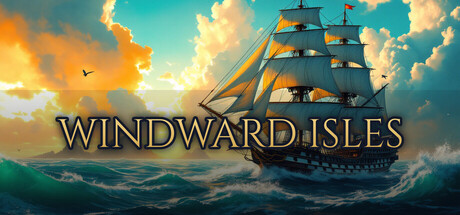 Windward Isles In-game content artaudiotextcode | Some of this game's assets were made with the assistance of generative AI tools and were reviewed, curated and hand-finished by the developer. No content is generated while you play. | Meridian Studios | - | Aug 20, 2026 | |
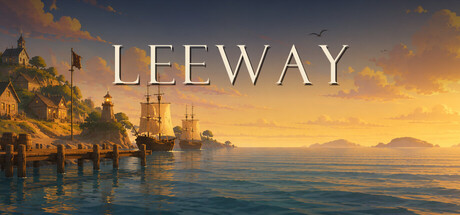 Leeway In-game content arttext | Some content was created with the assistance of generative AI tools: 2D store and
marketing art (library capsule and library hero), the game's localization into
non-English languages, and portions of in-game flavour text. All localization was
reviewed before shipping. All in-game visuals are generated procedurally at runtime
from code, all sound effects are synthesised at runtime, and all music is
human-composed and licensed under CC BY 4.0. The game performs no AI generation at
runtime and connects to no external AI service. | Singularity Reach Studios | - | Aug 20, 2026 | |
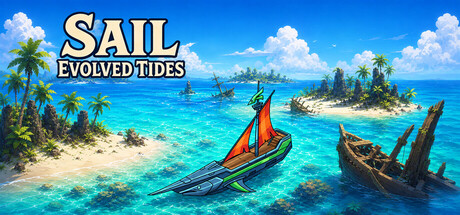 Sail: Evolved Tides In-game content artcode | Some of the game's textures, models, and code were generated with the assistance of AI. | Aellora Games | - | Aug 19, 2026 | |
 Kaperfahrt In-game content artaudio | Kaperfahrt uses AI generated assets in two places. Both are placeholders and are being replaced with commissioned work.
The portrait illustrations on the wanted posters of the 23 Blacklist pirates were made with an AI image generator. They were bought as finished assets.
The soundtrack, the ambient audio and the spoken lines of the Blacklist pirates were made with Suno under a paid commercial licence. | Kleinod Games | - | Aug 16, 2026 | |
 DRONECOM In-game content text | The non-English text is AI machine-translated for now (English is the only hand-written one), and it's labelled as AI in-game. If you're a native speaker and want to help fix the rough spots, there'll be an open localization repo for corrections, which ship in updates. | Big Beard Games | - | Aug 15, 2026 | |
 Give Me More Missile! In-game content artaudio | Some of the art and audio assets in this game were created with the assistance of generative AI tools. Specifically, certain 3D models, UI icons, and background music tracks were generated using AI and then reviewed, edited, and integrated by the developer. No AI-generated content is created live during gameplay. | Void Cosmos | - | Aug 10, 2026 | |
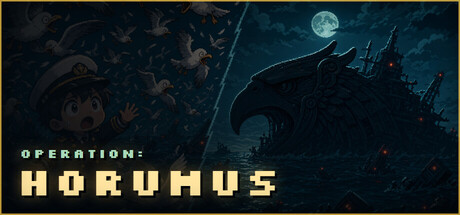 Operation: Horumus In-game content artaudiotextcode | Operation: Horumus is a "vibe coding" experiment. Most of the game's content — code, game design, pixel art, sound effects, procedural music, narrative writing, and all four language localizations (English, Korean, Japanese, Simplified Chinese) — was developed with extensive use of generative AI tools, under the developer's direction. Every creative and technical decision was made by the developer, and all AI-generated output was reviewed and curated before inclusion.
No AI is invoked during gameplay. The game runs entirely offline and makes no calls to external AI services.
This is a parody experiment, and the use of AI is part of the experiment itself. We disclose it here so you can decide whether that approach is interesting to you. | Park JongHwa | - | Aug 10, 2026 | |
 InFlood In-game content text | Generative AI tools were used as an editorial and localization assistant for some written content in the game and on the Steam store page. All such text is reviewed, revised, and approved by the development team. The game does not use generative AI at runtime. | Ilya Maslennikov | - | Aug 8, 2026 | |
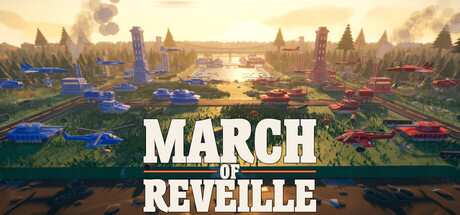 March of Reveille In-game content audioart | Some non-gameplay assets in March of Reveille were made with the help of generative AI tools.
Music — composed using AI music generation.
Store page and marketing artwork — the key art on this page began as renders captured in-engine from the game's own 3D models, terrain and units, then restyled using AI image editing. It depicts the actual game.
All 3D models, environments, unit designs, UI and game design are the developer's own work, built from scratch in Blender and Godot. | xbig | - | Aug 5, 2026 | |
 Marque & Reprisal In-game content arttext | Most of the art assets in this game are human-made, but there are some AI-generated portraits of African, Indian, and East Asian characters, since the (human-made) portrait packs used did not contain all ethnic groups represented in the game.
All dialogue in the game is human-directed and edited, but some was AI-generated in order to flesh out the world with unique dialogue for every region and situation. | Iron Pagoda | 86 | Jul 30, 2026 | |
 Caribbean Prospector In-game content arttextcode | The default tile look (Painted) was created with generative AI image tools, then curated, edited and integrated by the developer. That includes its terrain, figures, reefs and the Governor's Ball ballroom. The store capsule and marketing images were made the same way. The other tile looks in Settings (Painted: Pixel, Rich, Watercolour and Vector, the colour packs and Retro Teal) are drawn in code or come from CC0 packs, and the game can also be played in plain ASCII. The music and sound effects are rendered from code and CC0 recorded instruments. Portions of the game's code and text were written with AI coding assistance under full human review. The game does not generate any content with AI at runtime, and contains no AI chat features. | Denis Salanta | - | Jul 29, 2026 | |
 Flotsam Front In-game content art | We used generative AI as a stand-in reference for aircraft icons while we commission an artist to make our own bespoke art. | PurityWorks | - | Jul 25, 2026 | |
 Tides of Empires In-game content arttext | Some graphics (e.g. backgrounds, unit art, UI elements and store page images) were created by the developer with AI assistance. AI also assisted in writing the in-game texts and in translating game and store page texts into the supported languages. | AtomicPixelGames | - | Jul 23, 2026 | |
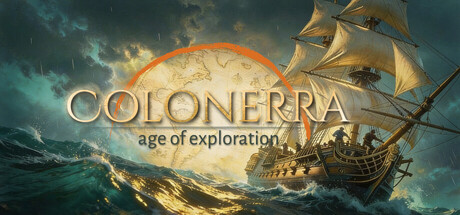 Colonerra: Age of Exploration In-game content art | Some placeholder artwork and images currently use generative AI or AI-assisted enhancement. These assets may be replaced or revised during development. | The Game Tzar | - | Jul 23, 2026 | |
 Sea Drifter In-game content art | The game uses AI generated icons. | Xerxz | - | Jul 23, 2026 | |
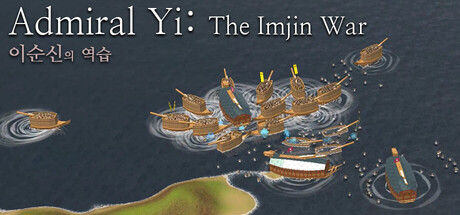 이순신의 역습 In-game content textart | This game uses generative AI to assist with parts of the localization process. All AI-assisted translations are reviewed and edited by the developer before being included in the game.
Pre-generated content: Some in-game visual content is produced by procedural code written with the assistance of an AI coding assistant (Anthropic Claude). This includes certain 3D building shapes (e.g., palace halls, storehouses, pagodas), procedural textures (roof tiles, rammed-earth walls), town layouts, and terrain painting. No AI image or 3D-model generators were used for shipped art; character and unit art was made by the developer. All AI-assisted output was reviewed and edited by the developer. | Kim Yusok | - | Jul 17, 2026 | |
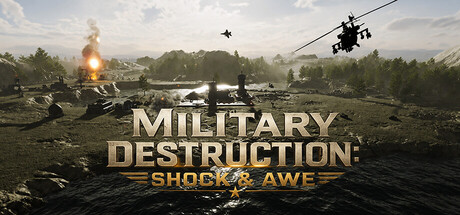 Military Destruction: Shock & Awe In-game content artaudio | Some art assets, textures, and sound effects are created with the assistance of AI tools, then curated and edited by the developer. All game design, gameplay systems, code architecture, physics simulation, and mission design are human-made. No AI-generated content is created at runtime.
As a solo developer with a limited budget, I use AI tools to help produce some assets and sounds. This lets me keep my time focused where a solo dev's hours matter most — the core gameplay, the physics simulation, and mission design — while still delivering production quality that would normally require an extended team. Every AI-assisted asset is curated, edited, and integrated by hand. | Bax Studios | - | Jul 8, 2026 | |
 Fantasy Air-Sea Battles Showdown In-game content art | Some visual assets, images, or concept materials used in this game are created with AI-assisted tools and further selected, adjusted, integrated, or refined by the author for use in the game's artistic presentation and content production. | WANG WENJIE | - | Jun 28, 2026 | |
 中国篮球模拟器 Unclear | This game contains AI-generated content. | DaiFire | - | Jun 28, 2026 | |
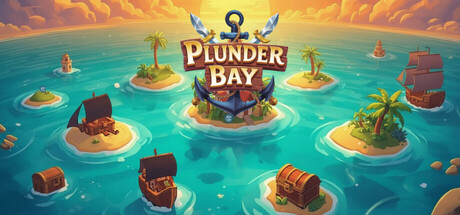 Plunder Bay In-game content artaudio | We utilized generative AI strictly as a development tool to assist in the creation of select visual and audio elements. All such content was pre-generated and heavily modified by hand before release. Plunder Bay does not feature any real-time AI generation or connect to external AI services. | MustDev | - | Jun 16, 2026 | |
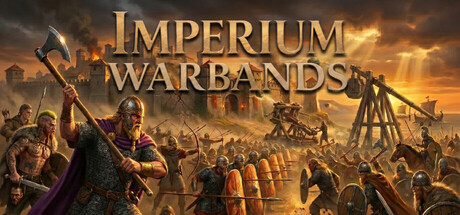 Imperium Warbands | Some marketing and store page artwork (capsule
images, avatars and banners) were created with
the assistance of generative AI tools. Some
audio assets were also generated or assisted
with AI tools. All AI-generated assets are
reviewed and edited by the developer to ensure
quality and consistency with the game's
identity. | Jhulyan Studio | - | Jun 16, 2026 | |
 Wreckwake Endless Sea art | This game uses generative AI during development to assist with concept art,
texture drafts, store media preparation, and iteration of visual assets.
Final in-game assets are reviewed, edited, and integrated by the developer
before release. The game does not use generative AI to create live gameplay
content during play. | Jetsan Inc | - | Jun 14, 2026 | |
 Plunderfall Store/marketing artaudio | All 3D assets are from Synty Studios. Due to budget constraints (rideshare driver) I used generative AI for some pre-rendered artwork, store/marketing imagery, and voiceover content (I intend to replace all that by human-made content over time). The game does not use live generative AI during gameplay. | Rocha Games | - | Jun 12, 2026 | |
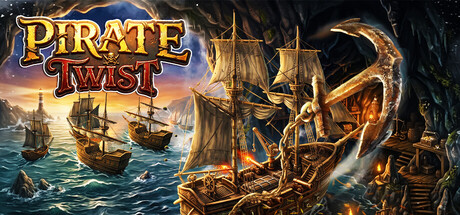 Pirate Twist In-game content artaudio | Pirate Twist uses generative AI for some art, music, and sound effects. Every asset included in the final game was personally selected, refined, placed, and directed by me to match the game’s overall vision.
No AI runs during gameplay.
Fully commissioned art and audio is gradually being replaced already. | BTG Labs | 13 | Jun 12, 2026 | |
 Ship of the Line In-game content artaudiocode | This game uses generative AI tools during development for selected visual, audio, and programming-related tasks.
【AI-assisted content and development】
• Visual assets: Some in-game visuals, including ship sprites, scenario artwork, terrain textures, UI illustrations, and other decorative assets, were created with generative AI image tools, then selected, edited, modified, and integrated by the developer.
• Audio assets: Some background and combat music tracks were created with AI music generation tools, then edited, mastered, and loudness-normalized for in-game use.
• Programming assistance: AI coding tools are used to assist with code generation, implementation, debugging, and development. Game systems, mechanics, simulation rules, balance, and overall technical design are directed and determined by the developer.
【Runtime and game content】
• No generative AI operates during gameplay or at runtime. All required assets and game logic are included with the game and run locally.
• Scenario design, gameplay rules, ship statistics, historical information, and overall game design are researched, designed, reviewed, and integrated by the developer.
All AI-assisted assets and generated code are reviewed, tested, and integrated by the developer before being included in the released game. | YDS | 20 | Jun 12, 2026 | |
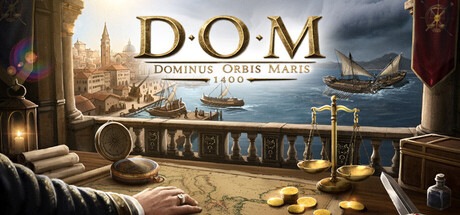 Dominus Orbis Maris 1400: Mare Nostrum In-game content arttext | Generative AI was used as an assistive tool during development to draft text and translations, and to create some 2D images and graphical assets. As there is currently no budget to hire a dedicated artist, certain visual elements are initially generated with AI and then manually modified and refined. No AI content is generated live at runtime. | Alderman Beneke | - | Jun 9, 2026 | |
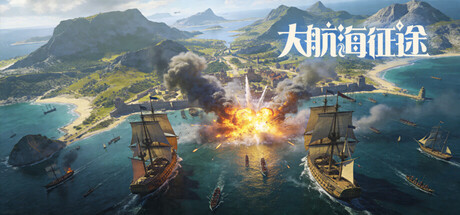 大航海征途 Dev only artcode | 本游戏使用生成式 AI 作为辅助开发工具。该技术主要用于加速 2D/3D 美术资产的原型设计及部分代码的编写。游戏的核心玩法逻辑与主要叙事均由人工设计并编写,AI 仅作为生产力工具使用,不涉及任何形式的玩家数据收集或训练。 | AoXiaQu Tech Co., Ltd. | 10 | Jun 8, 2026 | |
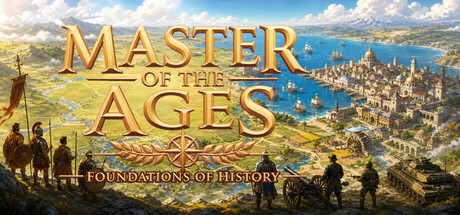 Master of the Ages: Foundations of History In-game content arttextcode | Master of the Ages is a grand strategy game engineered by a solo developer with 15+ years of senior software engineering and programming competition experience. To achieve grand-strategy scale as a single creator, a generative AI workflow was utilized to co-design the code architecture and write the codebase under the developer's supervision, backed by a rigorous framework of over 2,500 automated tests to catch edge-case bugs and prevent regressions during development. Generative AI was also used to produce all player-facing graphics (including all unit, building, and technology assets) and generate the historical text layers. | Sovereign Era Games | - | Jun 3, 2026 | |
 Age of Magellan: Sail the entire Planet In-game content text | The game contains in-game narrative and dialogue text that was created with the assistance of generative AI and then reviewed by the developer. All artwork and music are human-created. | Boanerges Games | - | Jun 3, 2026 | |
 FOAMGRAVE In-game content artaudio | Skill icons were created with generative AI and edited by the developer. Some music tracks were created with generative AI. The 3D models, item icons, sound effects, images and store artwork are not AI generated. All store screenshots are captured in the game. | TriadPixel | - | Jun 3, 2026 | |
 Crisis Commander: Strait Of Hormuz In-game content art | I have used AI Image generation for Illustration and Icons. | Kra Kra Games | - | May 23, 2026 | |
 Silent Wreckage|寂靜沉輪 textaudioart | AI tools including ChatGPT, Gemini, Meshy, Tripo, and Fish AI
were used to assist in generating some concepts, translations,
voiceovers, and distant model processing. | DeepEcho | - | May 23, 2026 | |
 Storm Clan In-game content audio | Sound-tracks were created with the assistance of diffusion generation. | Studio Zamudio One | - | May 23, 2026 | |
 1982 Tenacious of the Air Unclear | AI was used as limited support in creating certain elements.
All generated content was reviewed and manually adjusted by the developer.
There is no AI-generated content during gameplay.
All assets used have valid commercial licenses. | Tenacious Studio | - | May 23, 2026 | |
 TechnoMayan In-game content arttext | While we are generally against generative AI, we cannot guarantee that no AI generated content will end up in the game. We are using store bought assets and third party translations and we are not taking on the additional stress of verifying if they are 100% AI free. We will however deliver as much handcrafted material as possible. | SparkInBox studio | - | May 23, 2026 | |
 Infinite Empire In-game content art | Yes, I use AI tools to help build this game, and I'm not going to pretend I don't.
I'm one person. Every system, mechanic, and design decision is made, tested, and tuned by me personally. I use the best tools available, AI among them, to let a one-person studio punch way above its weight. That's the entire point of being indie: no rules except the ones that make a better game.
Assets are a fluid mix of commercially licensed, hand-crafted, AI-generated, AI-generated then hand-adjusted, and hand-crafted then AI-polished. I'll use whatever it takes to make this the best game it can be. | Better Tools LLC | - | May 23, 2026 | |
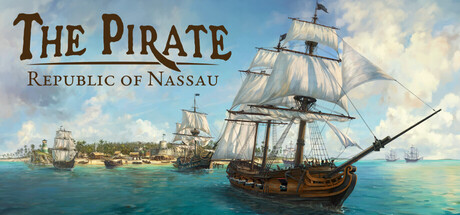 The Pirate: Republic of Nassau In-game content artaudiotext | We are a small studio with only six people actively involved in development. For teams like ours, generative AI is a supportive tool that helps us realize a creative vision that would otherwise be completely out of reach within our budget.
Here is exactly how we utilized generative AI in our game:
• We used generative AI during the prototyping and concept art phases. Every AI-generated image was manually modified, iterated upon, and finalized by our artist.
• The sea shanties in the game feature AI-generated vocals and music, but the lyrics are original and written by our team.
• Certain voice-over (VO) lines were generated using AI. | Home Net Games | 23 | May 23, 2026 | |
 Nodwar In-game content artaudiocode | AI has been used for coding, game assets, music, promotional art, etc... | PROX.TEAM | 25 | May 23, 2026 | |
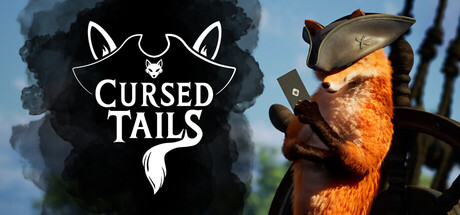 Cursed Tails In-game content art | The card artwork in the current version of the game was created using generative AI tools and then manually edited and refined by the developer. AI was not used for gameplay code or core story content. These artworks are intended as temporary assets and are planned to be replaced with commissioned artwork in the future. | Sycix | - | May 23, 2026 | |
 CALYPSO - BRETHREN OF THE COAST art | AI is being used only on promotional materials of the game as such as posters, banners. | Madbyte Games | - | May 23, 2026 | |
 The Great Serpent Beholds In-game content audio | some voices are generated | Zorge Lab | - | May 23, 2026 | |
 Modern Warships In-game content art | Some visual assets in the game may involve the use of AI-assisted tools during the early stages of their creation. However, all such assets undergo extensive manual editing, refinement, and artistic rework by our team.
As a result, no artwork in the final game is presented in a purely AI-generated form. All visuals are carefully curated and significantly enhanced to meet our artistic standards. | Artstorm FZE | 1.5k | May 23, 2026 | |
 The graveyard duty fall of the last demon In-game content audio | AI Disclosure:
This game uses generative AI tools to assist in creating some of the music. All other content is handmade by the developer, and no AI is used during gameplay. | Faustina Mutamba | - | May 23, 2026 | |
 郑成功传 Clash of Armadas: Koxinga Unclear text | UI,Log , and descrption | Memorial | - | Mar 18, 2026 |


